• Win a Free Custom Engraved Brass Coin!!!
    As a way to introduce our brass coins to the community, we will raffle off a free coin during the month of August. Follow link ABOVE for instructions for entering.
  • PRE-ORDER SHIPS IN SCALE TODAY!

    The beloved Ships in Scale Magazine is back and charting a new course for 2026!
    Discover new skills, new techniques, and new inspirations in every issue.

    NOTE THAT OUR FIRST ISSUE WILL BE JAN/FEB 2026

Am I mad?

Joined
Jan 2, 2026
Messages
10
Points
48

Hi everyone, newbie here so the below is a little introduction from me and a question or two about my first major build. I've also posted the below on Philliparts build log thread as he is currently building the exact model I wish to attempt, but thought I'd share it here too for a variety of responses and thoughts, so please share as I'm genuinely interested. Thanking you all in advance.


"Hi Phillip, I hope you don't mind me hijacking your thread to ask a few questions as I'm seriously considering getting this exact kit even though I would be considered a novice in model shipbuilding.

I realise many would consider me crazy for attempting such a build with such little experience (my previous build was a plank on frame galleon that I built about 15 years ago - can't remember the exact model). However, I am a skilled carpenter with 50 years of experience working with all types of wood on all sorts of projects. I also have at my disposal a fully kitted out workshop with the following machines; Table saw, double compound mitre saw, band saw, router table, planer thicknesser, pillar drill, and linisher. In addition to those I also have a good selection of Milwaukee 18v power tools and many hand tools collected over the years.

Now a little about me. I'm 68 years old. I've recently retired (about 6 months ago) and I lost my nearest and dearest 5 years ago, so now live alone. I've kept myself busy during the warmer summer months making things in my workshop, but during the winter months it gets too cold to go out there so I end up sat indoors most days and I get bored silly, hence me wanting to return to model making, something I could do sat at my dining room table (with the occasional excursion into my workshop when needed). And 2 things I do now have in abundance that I didn't have when I was working - time and patience, I've become a lot more laid back and patient as I've got older.

Now you might be wondering why I have chosen such a huge complicated model to get back into this pastime. 3 main reasons. Firstly I think this ship is a masterpiece of beauty and character. Secondly, I like challenge myself and my abilities. And thirdly SIZE. Now I might be wrong here but this is how I see it. Because this model is such large scale I believe it would actually be easier to work on than a smaller model, especially the more intricate parts, especially as I'm not as nimble fingered as I used to be. The woodworking part of the construction I feel confident about, even fabricating parts if required. The only part of the build that scares me a little is the rigging, but I guess I'll cross that bridge when I get to it.

With regard to experience, as mentioned above my only other boat build was 15 or so years ago when the only modelling tools I had were a pin pusher and plank bender (they came in the kit). I have built diorama's from scratch and taught myself new diorama skills by watching Youtube videos. Since retirement I have built bird nesting boxes and pet homes which I've sold to make a little extra income. However the nesting boxes are not the usual run of the mill stuff you would buy in a garden centre but more themed and intricate, a feature for your garden. These were all created from scratch with no plans, just an idea in my head. I've attached a photo below of one I recently made called "The Haunted House". I realise that building a model ship will require a lot more intricate work than building a bird house but posted the pictures as a reference to my skill set.

So I'd be interested in your thoughts. Am I crazy for wanting to attempt such a monster build? Should I reintroduce myself to the hobby with something simpler or shall I do as my heart suggests and dive in at the deep end? I'm anticipating the build to take me probably a year to complete. Is this realistic?

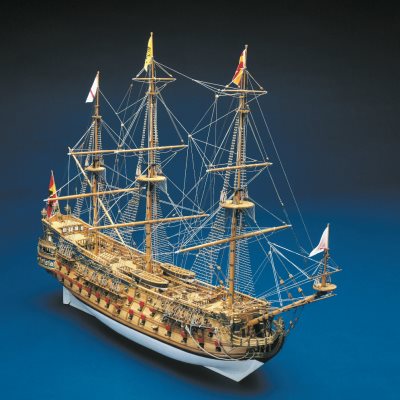
Here is the kit on ebay San Felipe 1/50th scale

Thank you

Graham."

Haunted house.jpg


Haunted.jpg
 
Hi, just go for it! If, at some point you feel overwhelmed with her, then just put her aside for a while. You may build a "Villa Kunterbunt"(the home of Pippi Longstocking in German) for the neighboring birds, or another less intricate model. And when you feel OK enough, then tackle her again. It's a hobby, not a lifelong obligation, so take it easy.
 
Hi Graham - first let me extend a warm welcome to the forum from the Finger Lakes of New York.

Second, I must compliment you on the extraordinary bird house! Wow! That is just fantastic. Plus, the way you photographed it makes it look enormous. At first, I thought it was a child's playhouse. It wasn't until I looked closer and realized it was sitting atop a picnic table, and then saw the entry hole - that was the aha moment. Well done!

Finally, you are probably about to be inundated by recommendations about your project. Some will say, "No, no - you should build something smaller and easier first!" Others will say, "Go for it!" I say, do what you want to do. If you are in love with that ship, then by all means, build it.

Now, that said, I feel I must qualify my statement. If you said you had absolutely no model building experience or woodworking experience, or even if you had said that all you had ever built were plastic models, my recommendation would be different. You've already proven that you know how to work with wood. One of the things you will find with model shipbuilding, is that the kit parts are not always up to snuff or are made from an inferior wood. That's where your existing talent will help. You already know how to make things from scratch - with or without drawings.

Many first-timers have built very beautiful models. One only has to look at Paul Kattner's Vasa to see what can be done by a rank beginner. Paul went on to create another absolutely stunning model of the Kingfisher and is now working on a scratch built stern section.

You have the time, the patience and the experience with tools and wood, I say, "Build what will make you happy!"

Again, welcome!
 
Am I Mad??
You asked.......
This is just one opinion but it is based on my own experience:
No, maybe just overly ambitious, but you are not alone.

For my first two builds I was stupid enough to build Victory,,,,,,,,,, twice,,,,,,,,, from scratch, using Mantua plans I found (could not afford a kit), I actually sold the first one immediately after finishing so was even more foolish and built a second Victory. Would I do it again. NO WAY. If I was to start over and go with a kit, I would do a LONG study of the build logs here at SoS, You could also invest in a few good books and download tutorials from the internet to study before and during the building process. Maybe set your kit aside for now then start with a high quality kit and consider something less complex as that would be a much easier way to help learn the basics and yield a beautiful model. No matter what route you take, start a build log and do not hesitate to continue to ask questions.

Allan
 
Last edited:
You are probably not at all mad. It is quite possible that you do not fully understand just what is involved with your anticipated entry into all this.
It is possible that you are thinking that this will be just a bit more complicated linear progression from your previous work.
In actuality you will be moving to a different planet, with its own atmosphere, dangers and language. Surprisingly little will translate - your experience with tools will give you a big leg up there over many of us. Your present set of tools allows you to be your own lumberyard and sawmill. You have the means to obtain wood that most kit builders only dream about. If you can get castoff from a tree service of the proper species - your only cost is your labor and the power company. But this is scratch.

The attrition rate of those who start with ambition and excitement and walk away because of the unexpected complexity and sink or swim nature of it is probably well above 90%. Those of us who advise starting small, low cost, and relatively simple are just following the numbers and trying to save you from making a large money expenditure that will be totally lost. That you are asking the question is an indication that you are one of the majority. Your money - but I am betting that those of us who make the cut probably red line - peg the gauge in certain personality traits. Traits that tend to be opposite of being the life of the party.

something I could do sat at my dining room table
You will want a dedicated bench - more than one is handy- as in a biomedical lab - you can never have too much bench space.
One of my benches is a low cost 36 in. x 80 in. No Panel Primed White Smooth Flush Hardboard Hollow Core Composite Interior Door Slab
It sits on two really low cost cheesy two drawer file cabinets. I discarded the drawers. I fixed plywood shelves where they were.
I glued a socket frame on the underside of the door from strips of Pine cut from a 2x4 to take the top of each cabinet so that all stays in place.
I screwed the bottom to a piece of 3/4" ply that has a layer of felt glued to slide on the floor. Used a furring strip as a back splash to keep things from falling over the edge of the back.
A couple of power strips and you are ready to go. I cut holes in the back splash for the cords - they should have been bigger
My last refinement was to use a hole saw to bore a place for a 1 1/4" power tool vac hose to come up thru the deck from below and at the back and not be in the way.
 
Your money - but I am betting that those of us who make the cut probably red line - peg the gauge in certain personality traits. Traits that tend to be opposite of being the life of the party.

Well aren't you just a little ray of sunshine! My party skills are just fine, thank you. :cool:
 
Are you crazy? No, not crazy. Just uninformed. There's always somebody who will tell you that "You can do it.", especially when they are trying to sell you a ship model kit. Misery loves company and it's not completely impossible. Allan, above, is the exception that proves the rule. Scratch-building a credible Victory as a first effort is virtually unheard of. Allan is a savant. You probably aren't You seem to have the woodworking knowledge necessary. Do you have any boatbuilding experience? How much woodworking have you done that involved wooden structures that were all curves and no straight lines? Do you know how a square-rigged ship works? Can you tie tiny sutures in inaccessible areas using instruments like a micro-surgeon can? Can you do fine metalworking like jewelers do? Building a complex ship model kit is a lot like being married. It's all too easy to convince yourself you've made the right choice before you have the information necessary to make an informed decision. Except that the ship model kit is a lot easier to walk away from when you realize you've made a terrible mistake! :D

Now you might be wondering why I have chosen such a huge, complicated model to get back into this pastime.

No, not wondering at all. The advertising is quite slick, and the concept is quite seductive. People think that building a wood and string ship model kit is just a matter of following the step-by-step instructions. For openers, while I have no hands-on experience with this particular kit, as a general rule, Chinese ship model kit instructions tend to be written by someone whose first language is not English. In fact, some only have photographic instructions with no translation from the Chinese available at all. Note also that the only way ZHL can sell a model like San Felipe for less than $300 USD is by selling clones of putting their label on the products of other manufacturers and providing substandard parts and materials. If you want your model to even begin to look like "the picture on the box" you are going to have to purchase the Swiss pear wood carvings upgrade for $700 USD and the photoetched brass sheets for the metal detail parts such as the cannon port hinges for a price ZHL doesn't reveal in their advertising. The bottom line is that there are a lot of far higher quality ship model kits for between $1,000 and $1,500 USD, which is what you'll have in the ZHL San Felipe before all is said and done. I would urge you to read every build log and review of this kit critically, recognizing that the builders/reviewers are people who spent a lot more than the kit is worth and likely were, as yourself, inexperienced ship model kit builders when they did, so they may be trying to convince themselves as well as the reader that the kit is better than it is. (And I know ZHL has its fan base and I risk hurting feelings saying it, but if you are going to spend thousands of dollars and thousands of hours on assembling a "paint-by-number" ship model kit, you should spend more time on "consumer research" before proceeding. (Hint: The kit you are contemplating has consistently received terrible reviews from experienced kit builders.)

3 main reasons. Firstly I think this ship is a masterpiece of beauty and character.

And you know this how? Seriously. Are you sufficiently familiar with 17th and 18th century naval shipbuilding to recognize a "masterpiece of beauty?" As a ship model kit, it is one that has been around for more than long enough to have become boring and unremarkable. Beauty is in the eye, and taste in the mouth, of the beholder, of course.

... And thirdly SIZE. Now I might be wrong here but this is how I see it. Because this model is such large scale, I believe it would actually be easier to work on than a smaller model, especially the more intricate parts, especially as I'm not as nimble fingered as I used to be.

You are right. You not just might be wrong here, but you're definitely wrong here. The larger the scale of the model, the more detail it demands to be portrayed. This means many more intricate parts. This is just a scale modeling fact of life.

The woodworking part of the construction I feel confident about, even fabricating parts if required. The only part of the build that scares me a little is the rigging, but I guess I'll cross that bridge when I get to it.

There is more than woodworking and rigging to be mastered. As for the rigging, you will have to become at least conversant with a language you probably don't speak and a technology with which you are probably unfamiliar. Every bit of rigging has its own name and function. Plan on spending some time watching YouTube medical school instructional videos on surgical instrument knot tying. You will also probably find the rigging cordage that comes with the kit to be unsuitable, necessitating laying up your own rigging material from thread or buying scale cordage from one of the aftermarket ship model specialty houses. You will also need to acquire some of the skills of a jeweler, as you will be working with small metal parts. As a woodworker, you probably have some finishing skills, but you will have to learn the unique specialized skills of scale model painting in addition to the more common aspects of that craft.

You certainly should be able to master all the requisite skills, but the important thing is that you understand and recognize the magnitude of what you are contemplating and, assuming after making an informed decision as to magnitude you decide to proceed, the question you should answer before proceeding is whether the model kit you select will produce a model worth the time, effort, and money you will have to invest to finish it. There are no certain statistics as far as I know, but indications are about one in ten of these "gingerbread"-encrusted period mega-kits is ever finished. That's not because their would-be builders lacked "patience," "skill," or "perseverance." It's because they inevitably came to recognize that they'd made a mistake in buying a kit that, at the end of the day, wasn't worth the effort.
 
Those of us who advise starting small, low cost, and relatively simple are just following the numbers and trying to save you from making a large money expenditure that will be totally lost. That you are asking the question is an indication that you are one of the majority. Your money - but I am betting that those of us who make the cut probably red line - peg the gauge in certain personality traits. Traits that tend to be opposite of being the life of the party.
There's actually a lot of truth to that, 'however'. I personally have a 'lot' of hobbies (the Mrs. says I have 'too many'... but that's just 'her' opinion), and in such. I find that all of my previously purchased equipment and tools, for one 'specific' hobby, are now constantly overlapping and being used with all of my old and newer hobbies combined. I simply call it "Progressively Needful Acquisitions". There's a science behind this, I think. What I've discovered, through my own personal research and experimentation is that a person's PNA is oft times directly proportional to their age times the square of that person's level of interest in things. PNA = A* i². It's quite similar to the equation E=MC² with the only difference being that we cannot collect our tools at the speed of light, no matter how hard we try... more less we try to do so at the speed of light 'squared'... which would definitely be the preferred method, but I digress. While this formula doesn't seem to apply to 'all' hobbyist's, its effects 'do' seem to have a major influence on the real estate industry and stuff, in general. In short, people collect tools and toys, run out of room and then need more square footage to house their collected toys and tools, plus those expected to come. Tell me I'm wrong! Ask a realtor! :cool:

In short, and all kidding aside. I've never purchased a tool, for one specific thing that I don't still use today on 'other' things that were never even thought of back when. You'll always find a use for 'that' tool sometime, somewhere, for something else... even if you abandon the ship, per se... especially if you are active and like tinkering with different things! Don't fear the tools and equipment. They are always worthwhile investments for future needs! ;)
 
Last edited:
Hi Graham,
I don't know that I would call you crazy, just maybe an uneducated dreamer. However, your mental competence has little to do with what model ship you wish to build. :D I will say that our bird nesting box is beautiful and the skill it takes to build that will help a lot.

Firstly, if you are looking to build a kit, you will not need any of the power tools you have listed. You might be able to use the 18v drill, but that is about it.

The biggest challenges you will face are:
1. Not knowing the nomenclature of the parts of the ship.
2. Complications of not knowing the above with an instruction that is largely written in Chinese.

You are somewhat correct about the larger size helping, but it also makes it more difficult because there will be more parts and even at 1/50 scale, the blocks and lines for the rigging is still going to be very small work.

I would point you toward a more simple kit to see how you feel about the rigging work. If you are able to complete it with no/little difficulty, then you might consider the kit you are interested in.

Maybe consider the Occre Albatross and see how you feel after that. :)
 
Are you crazy? No, not crazy. Just uninformed. There's always somebody who will tell you that "You can do it.", especially when they are trying to sell you a ship model kit. Misery loves company and it's not completely impossible. Allan, above, is the exception that proves the rule. Scratch-building a credible Victory as a first effort is virtually unheard of. Allan is a savant. You probably aren't You seem to have the woodworking knowledge necessary. Do you have any boatbuilding experience? How much woodworking have you done that involved wooden structures that were all curves and no straight lines? Do you know how a square-rigged ship works? Can you tie tiny sutures in inaccessible areas using instruments like a micro-surgeon can? Can you do fine metalworking like jewelers do? Building a complex ship model kit is a lot like being married. It's all too easy to convince yourself you've made the right choice before you have the information necessary to make an informed decision. Except that the ship model kit is a lot easier to walk away from when you realize you've made a terrible mistake! :D


No, not wondering at all. The advertising is quite slick, and the concept is quite seductive. People think that building a wood and string ship model kit is just a matter of following the step-by-step instructions. For openers, while I have no hands-on experience with this particular kit, as a general rule, Chinese ship model kit instructions tend to be written by someone whose first language is not English. In fact, some only have photographic instructions with no translation from the Chinese available at all. Note also that the only way ZHL can sell a model like San Felipe for less than $300 USD is by selling clones of putting their label on the products of other manufacturers and providing substandard parts and materials. If you want your model to even begin to look like "the picture on the box" you are going to have to purchase the Swiss pear wood carvings upgrade for $700 USD and the photoetched brass sheets for the metal detail parts such as the cannon port hinges for a price ZHL doesn't reveal in their advertising. The bottom line is that there are a lot of far higher quality ship model kits for between $1,000 and $1,500 USD, which is what you'll have in the ZHL San Felipe before all is said and done. I would urge you to read every build log and review of this kit critically, recognizing that the builders/reviewers are people who spent a lot more than the kit is worth and likely were, as yourself, inexperienced ship model kit builders when they did, so they may be trying to convince themselves as well as the reader that the kit is better than it is. (And I know ZHL has its fan base and I risk hurting feelings saying it, but if you are going to spend thousands of dollars and thousands of hours on assembling a "paint-by-number" ship model kit, you should spend more time on "consumer research" before proceeding. (Hint: The kit you are contemplating has consistently received terrible reviews from experienced kit builders.)


And you know this how? Seriously. Are you sufficiently familiar with 17th and 18th century naval shipbuilding to recognize a "masterpiece of beauty?" As a ship model kit, it is one that has been around for more than long enough to have become boring and unremarkable. Beauty is in the eye, and taste in the mouth, of the beholder, of course.


You are right. You not just might be wrong here, but you're definitely wrong here. The larger the scale of the model, the more detail it demands to be portrayed. This means many more intricate parts. This is just a scale modeling fact of life.


There is more than woodworking and rigging to be mastered. As for the rigging, you will have to become at least conversant with a language you probably don't speak and a technology with which you are probably unfamiliar. Every bit of rigging has its own name and function. Plan on spending some time watching YouTube medical school instructional videos on surgical instrument knot tying. You will also probably find the rigging cordage that comes with the kit to be unsuitable, necessitating laying up your own rigging material from thread or buying scale cordage from one of the aftermarket ship model specialty houses. You will also need to acquire some of the skills of a jeweler, as you will be working with small metal parts. As a woodworker, you probably have some finishing skills, but you will have to learn the unique specialized skills of scale model painting in addition to the more common aspects of that craft.

You certainly should be able to master all the requisite skills, but the important thing is that you understand and recognize the magnitude of what you are contemplating and, assuming after making an informed decision as to magnitude you decide to proceed, the question you should answer before proceeding is whether the model kit you select will produce a model worth the time, effort, and money you will have to invest to finish it. There are no certain statistics as far as I know, but indications are about one in ten of these "gingerbread"-encrusted period mega-kits is ever finished. That's not because their would-be builders lacked "patience," "skill," or "perseverance." It's because they inevitably came to recognize that they'd made a mistake in buying a kit that, at the end of the day, wasn't worth the effort.
No one is disputing the experience behind this warning. It clearly comes from watching many builders struggle, stall, or walk away, and that perspective has value. Large period kits are difficult, demanding, and unforgiving; that much is obvious to anyone who has built even a modest one.
Where this goes off the rails is when the warning turns into a lecture, complete with comparisons to marriage, life choices, and other grand metaphors meant to underline how “uninformed” the reader supposedly is. Those analogies don’t strengthen the argument — they dramatize it. Building a ship model is not a marriage, not a life commitment, and not a moral failing if one walks away.
The repeated framing of builders as deluded, seduced by advertising, or subconsciously trying to justify their own mistakes says more about the narrator’s frustration than about the builders themselves. Difficulty does not equal illegitimacy, and abandonment rates are not a universal measure of a kit’s worth.

Yes, skills must be learned! Yes, research matters! None of that requires portraying the builder as naïve or the project as a near-fatal error in judgment. Warnings are useful; sermons are not! ;)
In short, the warning is fair; the absolutism is not. Let people understand the scale of the challenge without being talked down to. This is a hobby — not a cautionary tale about failed marriages. IMHO
 
OK..In 1979 , I built my first kit,the Swift..still have it...I didn't know what a scupper was..now I ARE one.. scratchbuilding from plans now with billets of pearwood .. 1/48 scale cross section of victory using Longridge ,Biesty';s pictorial (quite accurate) and scratch logs from Ziled and others.. I was contemplating a high quality cross, but, alot of money, so I had the time, tools and wood..what the hell? research is part of the fun. and .Allen is always there for advice. I will be back in FL Thursday. I need a break from cutting futtocks, and risers! Plan on frames B to 17 , so lots of pear. I'm also on chapter two of the Winchelsea.. In Fl. I have to finish rigging the Hahn style Hannah, my OKESA scratchbuild and work on a Swan class Admiralty gifted to me.. For some reason, I find myself working on three at a time in two different states! So back to scuppers.. Graham.. build what you love and don't doubt yourself.. I generally follow build logs..I built the large, 1/30 Royal Caroline last year and without Neptune, Shipbuilder and others , it would have been quite difficult.. This is a remarkable site with lots of great advice.. I would pass on the San Filipe.. If you want a nice kit. consider Vanguard, Syren or similar..you get what you pay for.. most EU kits same old stuff in my opinion..don't rule out a cross section as well. So, since 1979, I think I've come a long way, long way to go,.. looking back, no internet, no clubs and until three years ago, no group to share my passion. I am now member of Naples Shipbuilders. at 77 yrs young, still going.. being solo now , you need this hobby! In one year, I went from great health to heart stent and reoccurring prostate cancer.. shipbuilding throughout the time kept me sane...go for it Graham!! Let us know what you decide to build!! PS I think I now know what a scupper is.
 
In short, and all kidding aside. I've never purchased a tool, for one specific thing that I don't still use today on 'other' things that were never even thought of back when. You'll always find a use for 'that' tool sometime, somewhere, for something else... even if you abandon the ship, per se... especially if you are active and like tinkering with different things! Don't fear the tools and equipment. They are always worthwhile investments for future needs! ;)

He who dies with the most tools wins!
 
Building a ship model is not a marriage, not a life commitment, and not a moral failing if one walks away.

Quite so! Therein lies a major distinction between "a ship model" and "a high-quality scale ship model."

"A high-quality scale ship model provides a compelling impression of an actual vessel within the constraints of historical accuracy.

"Historical accuracy" encompasses all the objective, or measurable, standards of technical exactness that might apply to a ship model. These embrace the obvious hull shape and fairness; precision in fittings, rigging, and colors; lack of anachronisms; and so forth. But it also encompasses all aspects of craftsmanship because the lack of craftsmanship creates unrealistic and, therefore, historically inaccurate blemishes on a model. ... The phrase "historically accurate" alone effectively replaces the intention of the now-vapid "museum quality."

"... (A "compelling impression") allows and encourages aesthetic interpretation of a vessel that will help propel the viewers to make the leap of faith that allows a model to work or to willingly suspend the disbelief that keeps a model from working. Both processes help viewers accept the invitation to visit a ship instead of a model. Compelling impression is the result of applying artistic and interpretive decision-making processes... to amplify a model beyond being a mere assemblage of parts.

"It is important to recognize that neither arm of our definition considers how a model was made. There is no assessment of whether entire models or components of them are built from scratch, built from kits, or built by teams of modelers. The main thing is the appearance of the finished model. The ends justify the means.

"One could argue that it is more important and more difficult to teach inexperienced modelers how to tell if their model yields a compelling impression than it is to teach them how to put the thing together. If they are only interested in being satisfied with the latter, then the former is even tougher."

Rob Napier, Caring for Ship Models - A Narrative of Thought and Application
(2022) Seawatch Books.

See: https://seawatchbooks.com/products/...tive-of-thought-and-application-by-rob-napier
 
Last edited:
Quite so! Therein lies a major distinction between "a ship model" and "a high-quality scale ship model."

"A high-quality scale ship model provides a compelling impression of an actual vessel within the constraints of historical accuracy.
"Historical accuracy" encompasses all the objective, or measurable, standards of technical exactness that might apply to a ship model. These embrace the obvious hull shape and fairness; precision in fittings, rigging, and colors; lack of anachronisms; and so forth. But it also encompasses all aspects of craftsmanship because the lack of craftsmanship creates unrealistic and, therefore, historically inaccurate blemishes on a model. ... The phrase "historically accurate" alone effectively replaces the intention of the now-vapid "museum quality."
"... (A "compelling impression") allows and encourages aesthetic interpretation of a vessel that will help propel the viewers to make the leap of faith that allows a model to work or to willingly suspend the disbelief that keeps a model from working. Both processes help viewers accept the invitation to visit a ship instead of a model. Compelling impression is the result of applying artistic and interpretive decision-making processes... to amplify a model beyond being a mere assemblage of parts.
"It is important to recognize that neither arm of our definition considers how a model was made. There is no assessment of whether entire models or components of them are built from scratch, built from kits, or built by teams or modelers. The main thing is the appearance of the finished model. The ends justify the means.

"One could argue that it is more important and more difficult to teach inexperienced modelers how to tell if their model yields a compelling impression than it is to teach them how to put the thing together. If they are only interested in being satisfied with the latter, then the former is even tougher."


Rob Napier, Caring for Ship Models - A Narrative of Thought and Application
(2022) Seawatch Books.
Here we come again:

You’re welcome to quote Rob Napier, but let’s be clear about one thing: here, we do not classify or rank models by someone else’s theoretical framework, however eloquently written it may be.
This forum is not an academic jury, a museum committee, or a gatekeeping exercise in defining who has achieved a “compelling impression” and who has not. We don’t separate “real” models from “lesser” ones based on subjective interpretations dressed up as objective standards. A finished model is a model — full stop.
Historical accuracy, craftsmanship, and aesthetics are all valid discussion topics, but they are not admission criteria, nor are they used here to draw lines between builders. We are interested in the process, the learning, the enjoyment, and the sharing — not in elevating one group by diminishing another.

Quoting authority to imply that some members’ work doesn’t qualify as a “high-quality scale ship model” misses the point of this community entirely. People build for different reasons, at different levels, and by different means — and we don’t need a philosophical definition to legitimize that.
So by all means, discuss standards, theory, or museum practice if that’s your interest — but don’t confuse that with how this forum measures value. We don’t.

“The best model is the one that looks right.”Sheperd Paine
 
We don’t separate “real” models from “lesser” ones based on subjective interpretations dressed up as objective standards. A finished model is a model — full stop.
Historical accuracy, craftsmanship, and aesthetics are all valid discussion topics, but they are not admission criteria, nor are they used here to draw lines between builders. We are interested in the process, the learning, the enjoyment, and the sharing — not in elevating one group by diminishing another.

Quoting authority to imply that some members’ work doesn’t qualify as a “high-quality scale ship model” misses the point of this community entirely. People build for different reasons, at different levels, and by different means — and we don’t need a philosophical definition to legitimize that.
So by all means, discuss standards, theory, or museum practice if that’s your interest — but don’t confuse that with how this forum measures value. We don’t.

“The best model is the one that looks right.”
Sheperd Paine

"It is important to recognize that neither arm of our definition considers how a model was made. There is no assessment of whether entire models or components of them are built from scratch, built from kits, or built by teams of modelers. The main thing is the appearance of the finished model. The ends justify the means.

Rob Napier, Caring for Ship Models - A Narrative of Thought and Application
(2022) Seawatch Books.

I do believe your Mr. Paine's qualitative standard, which he applied to his particular modeling expertise, shadow boxed military and fantasy dioramas, is entirely consistent with Mr. Napier's qualitative standard for "high-quality scale ship models," the specific genre of models he was addressing as quoted. There are many types of ship models other than "high-quality scale ship models. There are "toy ships," a general classification which includes antique wind-up spring-powered tinplate miniature ships. There are "folk art ship models" which are distinguished by their "folk art" artistic characteristics. There are "decorative ship models" intended to be appreciated for their attractiveness without regard to their historical accuracy. There are "sailing ship models," intended to be displayed and appreciated moving in the water, and within that category, the subcategory of "pond yachts," which are miniature sailing yachts intended to be raced in competitions. There are "kit models" appreciated by many in their assembling, although, as completed, may validly be categorized in one of the other categories. Within each category's purpose- and intent-based standards of excellence, further value may be added for a given model's provenance, for its authors, or its materials, among which are sometimes found models made exclusively of precious metals or blown glass. Examples of such are the English Navy Board models, which are both old and contemporary, the "Napoleonic Era Prisoner of War models," which make use of bone, ivory, and horsehair in their construction, the European votive "Church Models, and a wide variety of "funerary models" created as "grave goods" by various ancient civilizations.

The concept of a "ship model" is a varied one indeed and they are all good! All of these model ships and boats have value. Every type of ship model has its own qualitative standards for judging excellence. Models from most every category can be found winning prizes in modeling competitions, on display in museums, and commanding high prices in the auction houses and fine arts galleries.

Just as Mr. Paine's qualitative measure applies specifically to his shadow-boxed military and fantasy dioramas, so also does Mr. Naiper's qualitative measure apply specifically to the genre of "scale ship models of actual vessels built within the constraints of historical accuracy." Those modelers who elect not to express themselves artistically while subject to the constraints of strict scale or historical accuracy, are simply not building a "scale ship model within the constraints of historical accuracy," but rather some other type of ship model, and therefore the discussion of what is a "high-quality scale ship model" has no application to them. Their miniature ships may run the quality range from fine art sculpture to folk-art toys and should be judged independently in comparison to their peers. It is entirely possible to create a miniature ship which is a high-quality fine art sculpture or folk-art toy indisputably worthy of appreciation and value. Model ships
whose builders never intended them to be scale models providing a compelling impression of an actual vessel within the constraints of historical accuracy should be judged, if at all, in the context of what they are, rather than as "high-quality scale ship models," which they aren't.

In a forum called Ships of Scale, I wouldn't expect it to be unreasonable, absent some express clarification to the contrary, to presume that the "default" subject of discussion is the "high-quality scale ship model" as that genre is conventionally defined, and the works of those who opt out of that subject... particularly those who do not ascribe to the "scale" and "historical accuracy" aspects of the definition... , ought not be thought less of because there are no valid qualitative comparisons to be made between the two at all. Those works which are not intended to be "high-quality scale ship models" should be judged on their own merits and not as something their builders never intended them to be.
 
...you are probably about to be inundated by recommendations about your project.

Did I nail this one or not? Graham, you do you, my brother across the pond - and have fun with it. Don't be intimidated by all of this drivel. You seem to be intelligent enough to recognize whether or not you've gotten in over your head, and if so, you can always set the project aside and try something different until you feel confident that you can handle it. I'm hoping you surprise all these nay-sayers and produce a stunner. Either way, it's a hobby - a way to pass the time. Enjoy it and please share your experiences in a log. When you get stuck, there are plenty of folks who will be happy to offer advice.
 
Welcome aboard from Connecticut. The old saying is "advice is with what you pay for it". That being said, my own 2 cents worth is to use the resources here first before you invest a lot in kits. Especially this area of the forums.


Look at the build logs of kits you are interested in. They are vital. There are also numerous you tube videos and other forms like model ship world. I was a plastic modeler for many years when I got a Constitution cross section at a great price. After I unboxed it and read the instructions I realized it was far above my abilities. I started with something simpler. (You can see links to my build logs after my name on the side of this) I think that was the best decision I made.

I am jealous of all those power tools you have, but realistically will you use those for the projects when the parts you will be assembling are only a few inches big at the maximum?

When you do decide where to start I think the smartest thing to do is to start a build log. If you get into difficulties or have a question that's the best way to get them addressed. There are many wonderful people here with much more experience than I have who have had overcome whatever problem you have.


Most importantly, take you time and enjoy yourself!

Rob
 
Back
Top