
• Win a Free Custom Engraved Brass Coin!!!
    As a way to introduce our brass coins to the community, we will raffle off a free coin during the month of August. Follow link ABOVE for instructions for entering.
  • SUBSCRIBE TO SHIPS IN SCALE TODAY!

    The beloved Ships in Scale Magazine is back and charting a new course for 2026!
    Discover new skills, new techniques, and new inspirations in every issue.

    NOTE THAT OUR NEXT ISSUE WILL BE MARCH/APRIL 2026

Question about Nylon Threads after many failed attempts to create my own ropes! HELP!!!!

Joined
Apr 7, 2026
Messages
40
Points
48

**Hello to all forum members,**

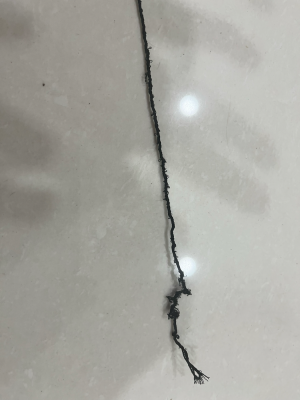
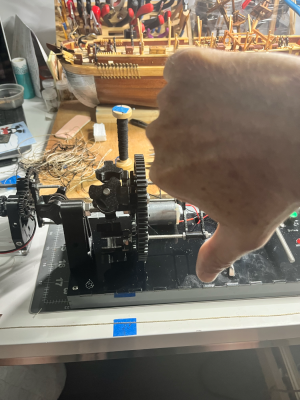
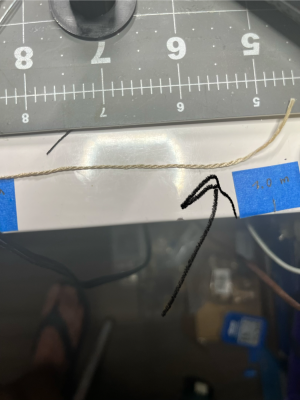
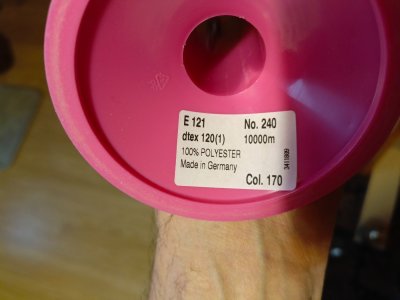
After extensive testing in an attempt to make my own ropes—including what turned out to be a very disappointing purchase of a *PL4-3* machine from Shipworkshop (Mr. Aleksei Domanov). I felt it might be helpful to share my experience. Unfortunately, I cannot recommend this machine. It is quite expensive, the braiding quality was poor, the components felt very cheap, and most importantly, I received absolutely no support from the seller.

In addition to that, I’ve invested in various types of thread and spent months trying to make progress on my model, but without much success.

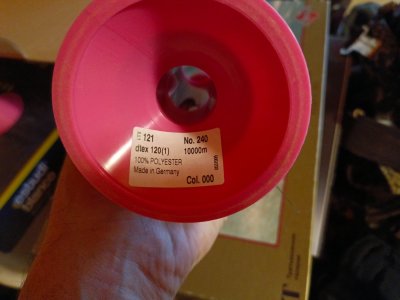
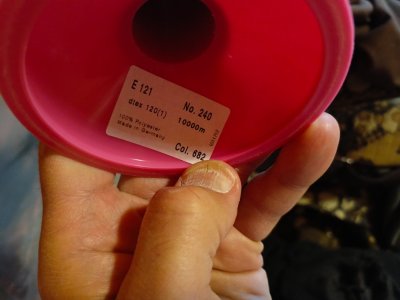
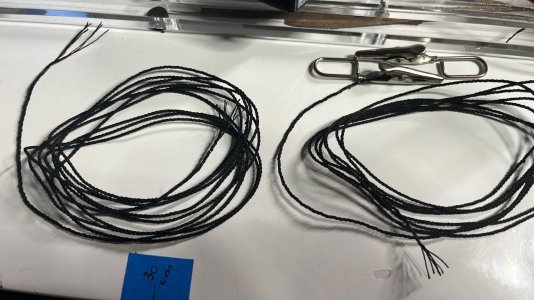
Yesterday, while browsing U.S. vendors, I came across a type of thread that caught my attention. It is described as neither cotton nor polyester, but nylon, and it comes in different thicknesses, sold on spools ranging from 120 m to 600 m depending on the gauge. I’ve attached a photo so you can see exactly what I’m referring to.

My question to the group is:
- Do you think this type of nylon thread could be a suitable substitute for the low-quality threads typically included in model kits? Or does it tend to look too “plastic-like” for scale modeling purposes?

I truly appreciate any feedback or experience you can share.

Thank you all in advance, and I wish everyone an excellent weekend!

Greetings from Florida — “The Sunshine State”!!!!!!
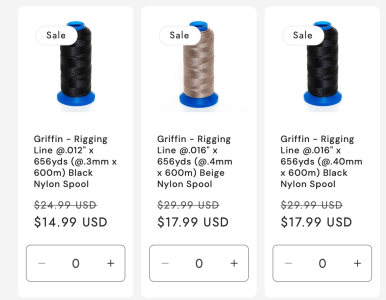
Screenshot 2026-05-01 at 7.57.14 AM.png
 
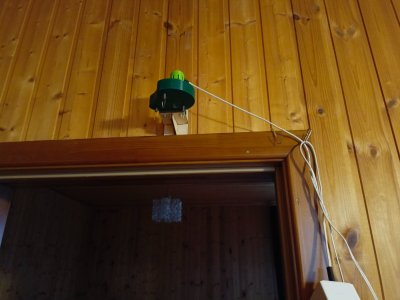
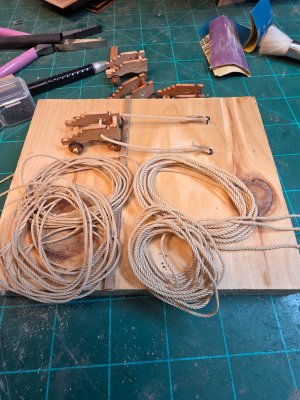
Interesting. I own small cheap Domanoff rope maker machine for many years and can’t say nothing but that it’s very good. My machine winds rope in vertical position.
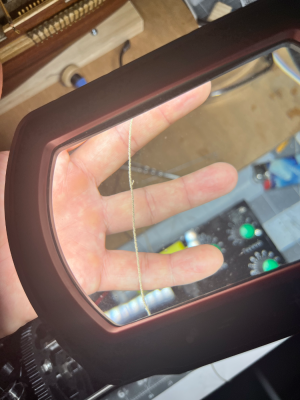
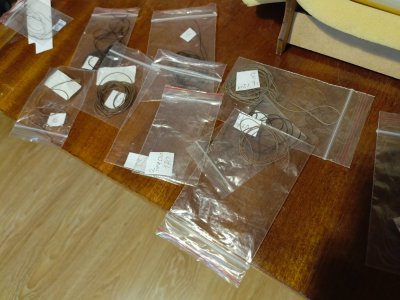
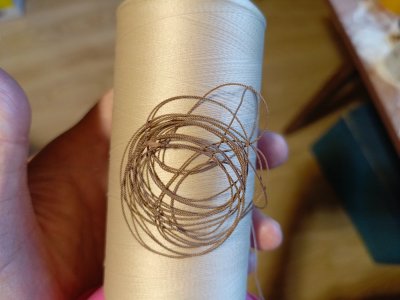
Let me know your honest opinion about that mi friend!! You can see part of what got ruined behind the machine, to the left! And that is just a small percentage of everything I had to throw in the trash. Furthermore, I'm talking about a wind machine not the vertical one. That is my opinion regarding the PL4-3 that I bought, on which I lost over $300.

IMG_0170.jpg

tempImageYAla3q.png

tempImageMkscU8.png

tempImage8llV0q.png

tempImager12GZM.png
 
Last edited:
**Hello to all forum members,**

After extensive testing in an attempt to make my own ropes—including what turned out to be a very disappointing purchase of a *PL4-3* machine from Shipworkshop (Mr. Aleksei Domanov). I felt it might be helpful to share my experience. Unfortunately, I cannot recommend this machine. It is quite expensive, the braiding quality was poor, the components felt very cheap, and most importantly, I received absolutely no support from the seller.

In addition to that, I’ve invested in various types of thread and spent months trying to make progress on my model, but without much success.

Yesterday, while browsing U.S. vendors, I came across a type of thread that caught my attention. It is described as neither cotton nor polyester, but nylon, and it comes in different thicknesses, sold on spools ranging from 120 m to 600 m depending on the gauge. I’ve attached a photo so you can see exactly what I’m referring to.

My question to the group is:
- Do you think this type of nylon thread could be a suitable substitute for the low-quality threads typically included in model kits? Or does it tend to look too “plastic-like” for scale modeling purposes?

I truly appreciate any feedback or experience you can share.

Thank you all in advance, and I wish everyone an excellent weekend!

Greetings from Florida — “The Sunshine State”!!!!!!

View attachment 595964

Sent you a PM
 
You shouldn't have bought a planetary hoist. You need to know how to use it. A vertical hoist is much easier to use. For spooling, use a Guttermann e121 or a Gutterman Tera, but the Tera is more difficult to work with.
Obviously, if I had known that machine wouldn't solve my problem, I wouldn't have bought it, or do we come out of the womb already knowing how to run? There is plenty of time in this life to learn. I learned that I made a mistake and perhaps should have considered the cheaper machine instead. I’m generally of the opinion that buying cheap ends up costing you more in the long run; that’s precisely why I decided to buy that specific machine rather than a different one. Besides, there isn't much variety available on the market, and I’ve already had a bad experience with Chinese-made products. Perhaps in your case, the cheap machine actually worked out for you! I congratulate you on that, and thank you for your comment and for the photos; I’m seriously going to consider building that vertical machine myself.
 
Obviously, if I had known that machine wouldn't solve my problem, I wouldn't have bought it, or do we come out of the womb already knowing how to run? There is plenty of time in this life to learn. I learned that I made a mistake and perhaps should have considered the cheaper machine instead. I’m generally of the opinion that buying cheap ends up costing you more in the long run; that’s precisely why I decided to buy that specific machine rather than a different one. Besides, there isn't much variety available on the market, and I’ve already had a bad experience with Chinese-made products. Perhaps in your case, the cheap machine actually worked out for you! I congratulate you on that, and thank you for your comment and for the photos; I’m seriously going to consider building that vertical machine myself.
On my PM I show you the tool I use:

Rope making machine. VR. Vertical type. | ShipWorkshop.com https://share.google/Injprwy7ejXiFXtEq

20260116_180527.jpg


Cheers
Daniel
 
Obviously, if I had known that machine wouldn't solve my problem, I wouldn't have bought it, or do we come out of the womb already knowing how to run? There is plenty of time in this life to learn. I learned that I made a mistake and perhaps should have considered the cheaper machine instead. I’m generally of the opinion that buying cheap ends up costing you more in the long run; that’s precisely why I decided to buy that specific machine rather than a different one. Besides, there isn't much variety available on the market, and I’ve already had a bad experience with Chinese-made products. Perhaps in your case, the cheap machine actually worked out for you! I congratulate you on that, and thank you for your comment and for the photos; I’m seriously going to consider building that vertical machine myself.
If you live nearby Tampa we can meet and I show you how I use it. Or I can do a few short videos. I am NOT an expert at all. But you really don't need to be it to get the ropes I posted. Those were my first. in my life :-) . Very easy tool that vertical rope maker.

Cheers
Daniel
 
**Hello to all forum members,**

After extensive testing in an attempt to make my own ropes—including what turned out to be a very disappointing purchase of a *PL4-3* machine from Shipworkshop (Mr. Aleksei Domanov). I felt it might be helpful to share my experience. Unfortunately, I cannot recommend this machine. It is quite expensive, the braiding quality was poor, the components felt very cheap, and most importantly, I received absolutely no support from the seller.

In addition to that, I’ve invested in various types of thread and spent months trying to make progress on my model, but without much success.

Yesterday, while browsing U.S. vendors, I came across a type of thread that caught my attention. It is described as neither cotton nor polyester, but nylon, and it comes in different thicknesses, sold on spools ranging from 120 m to 600 m depending on the gauge. I’ve attached a photo so you can see exactly what I’m referring to.

My question to the group is:
- Do you think this type of nylon thread could be a suitable substitute for the low-quality threads typically included in model kits? Or does it tend to look too “plastic-like” for scale modeling purposes?

I truly appreciate any feedback or experience you can share.

Thank you all in advance, and I wish everyone an excellent weekend!

Greetings from Florida — “The Sunshine State”!!!!!!

View attachment 595964
Hi
I cannot make any recommendation about which rope system is the best i can only advice you choosing the rope material. My personal experience polyamidfiber (nylon) is more sensitive if a constant tension is required (e.g. Standing Rigging). Irreversible Stretching after a certain time occurs and also temperature sensitive. Natural- and Polyester fibers or a blend of them give much better results.
 
**Hello to all forum members,**

After extensive testing in an attempt to make my own ropes—including what turned out to be a very disappointing purchase of a *PL4-3* machine from Shipworkshop (Mr. Aleksei Domanov). I felt it might be helpful to share my experience. Unfortunately, I cannot recommend this machine. It is quite expensive, the braiding quality was poor, the components felt very cheap, and most importantly, I received absolutely no support from the seller.

In addition to that, I’ve invested in various types of thread and spent months trying to make progress on my model, but without much success.

Yesterday, while browsing U.S. vendors, I came across a type of thread that caught my attention. It is described as neither cotton nor polyester, but nylon, and it comes in different thicknesses, sold on spools ranging from 120 m to 600 m depending on the gauge. I’ve attached a photo so you can see exactly what I’m referring to.

My question to the group is:
- Do you think this type of nylon thread could be a suitable substitute for the low-quality threads typically included in model kits? Or does it tend to look too “plastic-like” for scale modeling purposes?

I truly appreciate any feedback or experience you can share.

Thank you all in advance, and I wish everyone an excellent weekend!

Greetings from Florida — “The Sunshine State”!!!!!!
View attachment 595964
I can't comment on your rope making machine as I use my own home made one and it works just fine for me. I used nylon thread for the many, many sizes of rope for my 1:64 scale HMS Victory. Some were right-hand lay and some were left-hand lay. In my opinion the nylon thread produces a realistic rope appearance superior to any other thread material. There is absolutely no fuzzing.
 
Interesting. I own small cheap Domanoff rope maker machine for many years and can’t say nothing but that it’s very good. My machine winds rope in vertical position.
I'm afraid my opninium of this vertical is the same as David Webber's of his. On my first attempt to load threads, they all twisted themselves together, I found it needed 3 hands for success! I gave up the vertical setup & made up a replica of my large ropewalk in my workshop. I used a length of 'plastic' sill, as used by conservative builders, mounted the Domanoff on it, & then made a tail stock. First off, the threads all twisted together then broke up - attempt 2; a cone was added, but still the threads would not form into a satisfactory looking rope, only in places, then they broke up as before. Verdict; In the trash! Utter waste of my time & effort. I stick to my trusted Mk (phase) 4 ropewalk!
 
I'm afraid my opninium of this vertical is the same as David Webber's of his. On my first attempt to load threads, they all twisted themselves together, I found it needed 3 hands for success! I gave up the vertical setup & made up a replica of my large ropewalk in my workshop. I used a length of 'plastic' sill, as used by conservative builders, mounted the Domanoff on it, & then made a tail stock. First off, the threads all twisted together then broke up - attempt 2; a cone was added, but still the threads would not form into a satisfactory looking rope, only in places, then they broke up as before. Verdict; In the trash! Utter waste of my time & effort. I stick to my trusted Mk (phase) 4 ropewalk!
The vertical rope making tool works great !!!! See my examples. Is sooooo easy to use it.

Best
Daniel
 
I use the thread you posted and make my own left hand rigging thread with it. It works very well.
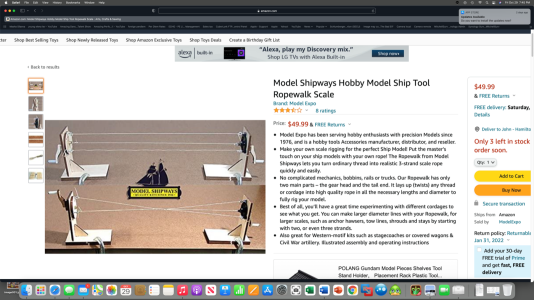
I use the rope walk machine from Model Shipways with great success to make left hand rope of any diameter I want.

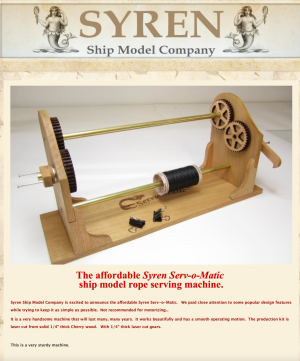
I also use the Syren Serve-o-matic machine to serve lines and to tie lines onto blocks.

Rope walk tool.png

Syren serve-o-matic machine.png
 
I can't comment on your rope making machine as I use my own home made one and it works just fine for me. I used nylon thread for the many, many sizes of rope for my 1:64 scale HMS Victory. Some were right-hand lay and some were left-hand lay. In my opinion the nylon thread produces a realistic rope appearance superior to any other thread material. There is absolutely no fuzzing.
Hi David, that sounds good, but someone mentioned something about nylon, specifically that it can lose its tension due to heat or temperature fluctuations. And here in Florida, one thing we have plenty of is heat! Haha. What is your experience with this? Is that true? Another question: I know it looks very similar to the real thing, but how do you go about dulling the shine on the thread? Or do you just leave it with its factory finish? Thanks in advance for your prompt reply.
Cheers
 
Back
Top