

• "Thank you for your Donations and Support"
    As we close this Annual Donations Drive, we want to thank you all for your Generosity in Donating to Ships of Scale. It is Greatly Apreciated !!!
    Ships of Scale continues to explore exciting things to offer to the Ship Building Community.
  • SUBSCRIBE TO SHIPS IN SCALE TODAY!

    The beloved Ships in Scale Magazine is back and charting a new course for 2026!
    Discover new skills, new techniques, and new inspirations in every issue.

    NOTE THAT OUR NEXT ISSUE WILL BE MARCH/APRIL 2026
  • Win a Free Custom Engraved Brass Coin!!!
    As a way to introduce our brass coins to the community, we will raffle off a free coin during the month of August. Follow link ABOVE for instructions for entering.

HMS Fowey 44 - Gun 1744 by AllanKP69

Joined
May 9, 2024
Messages
5,230
Points
638

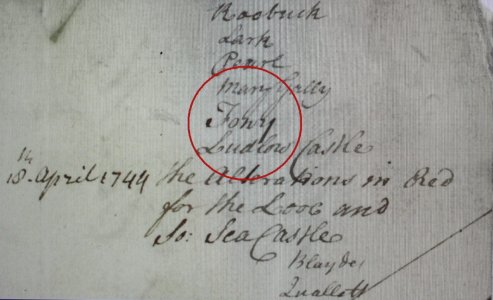
This will be a little bit of history and a build log for the 44 gun fifth rate HMS Fowey built by Blaydes at Kingston upon Hull and launched in August, 1744. She was lost when she sank at Legare Anchorage in Biscayne Bay, thankfully without loss of life. There is a wealth of information including the book Lost and Found by Fischer and Skowronek. There is also more recent information in articles by archeologist Joshua Marano, one of which is attached below, and at least one thesis, A SUBMERGED CULTURAL RESOURCES SITE REPORT: HMS FOWEY by Cornelia Lowerre, also attached below. For fans of wrecks and history, these are interesting ;papers. I could go on for pages, but I think most build log followers (myself included) quit reading after a paragraph or two. I did purchase the high resolutiuon drawing from RMG which has brought up some interesting things that I will go into later.
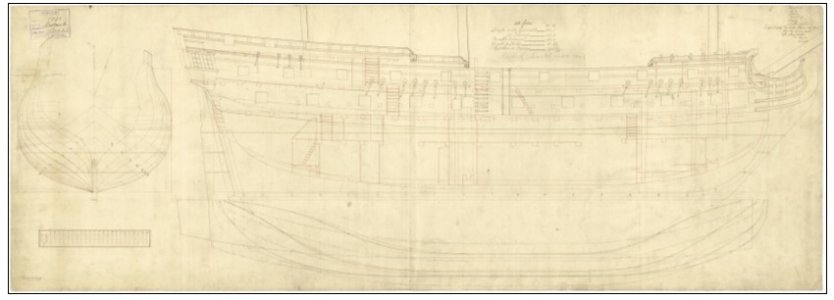
1780570545439.jpeg

She was one of eight 44 gun fifth rates built in the early 1740's built to the 1741 Establishment. Her basic dimensions are as follows:
Length of Gundeck 126' 9"Imperial Feet
Length of Keel 102' 6"Imperial Feet
Breadth 36' 1"Imperial Feet
Depth in Hold 15' 5 ½"Imperial Feet
Burthen 709 82⁄94Tons builders' old measurement

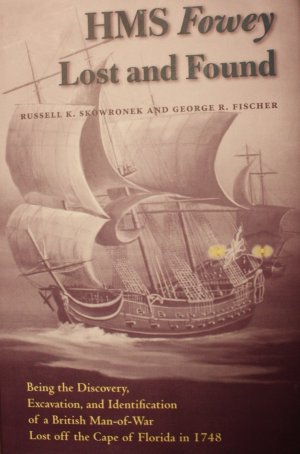
A book with a lot of interesting information on the ship and wreck site.
1780517194552.jpeg

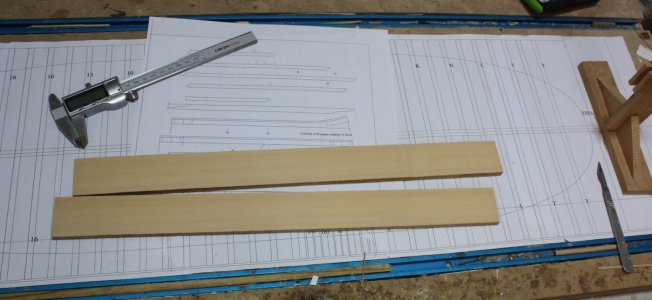
Not much saw dust but the layout is on the build board and some Castello has been sawn, planed, and thickness sanded for the keel, false keel, and rising wood. As the model will be planked except at the dead flat, fully framed construction will be used midships, and alternate framing forward and aft of midships will be used elsewhere. More on the framing to be used will be posted later.
1780570891082.jpeg
Allan
 

Attachments

NB: I am wide open to any questions, suggestions, comments, recommendations or hearing about any errors anyone spots. The model will be going to the National Parks Museum in Biscayne Bay and sit amongst the HMS Fowey artifacts on display, so I am striving for the highest quality I can achieve on this project.
Allan
 
Allan,
Which ZAZ#### is your plan?

I have ZAZ2290 Torrington.
ZAZ2278 Pearl has the stern.
I have eight lines plans for this group - they are the small JPEG but only this one shows the stern from the rear view.

Are you going 1:48?

It would be nice if the cover artist for the book had .........
 
Which ZAZ#### is your plan?
Hi Dean
ZAZ2236. In the top right corner there is a list of the ships planned for drawing. There are two others that were probably used for Anglesea and possibly one or two other early 1740 44s. ZAZ2290 and ZAZ2296. The reason 2236 was chosen originally by the staff is because Fowey is one of the ships listed.

1780619282831.jpeg
 
I have ZAZ2236 - it is cleaner than ZAZ2290 - it just does not come up for me at the RMG prints site.
Either your sponsors know somebody or they paid a lot more. RMG charges more for a JPEG download that for a print.
If they have to scan it because the request is the first one, there is an additional fee.
Anyway, it does not have galleries or windows either. Enlarging a KB ZAZ2278 JPEG gets messy but it is better than guessing.

I am not going to do a canvas of my files, but I think a plan with an exposition of the framing is decades in the future.
,Based on pattern of behavior, I would bet that it was bends at the stations and singleton frames in between.

Checking Torrington - the stations are at near three bend intervals.
You are probably aware that I do stylized framing so for Torrington I planned 13" sided for both floors and futtock one. Six frames between each station.
Checking your book I see 14" for floors and 13.5" for F1. Stations are 78" apart --- 13" x 6 = 78"
You will have spaces. The math 14" + 13.5" = 27.5" that have to be there. there are 50.5" left.
50.5 - 14 = 36.5 = floor
36.5 - 13.5= 23 = F1
The math does not work out. There can be either one floor or one F1. To keep the pattern of the floor at a bend always on the away side of the station there must be an additional floor and and additional F1. That leaves spaces for the whole 23 inches.
Three 7.67" spaces.

I doubt that all bends were used but maybe it was. Two 11.5" spaces are not outrageous. If it was two singleton frames - either butt chocks or side chock scabs are pretty much necessary. Depending on an end grain to end grain bond to hold up to shaping forces is a path to heartache.
Being that it is the RN F2 has to be reduced siding - 13" or 12.25" F3 11" F4 11.5" or 10.75". A nightmare using standard POF methods.

I can't restrain myself from teasing: Stylized framing looks better and is easier to do. But even for the most complicated framing i.e. reduced siding going up and shifting top timbers to frame ports without cutting into them - There is an easier way. A way that requires no baseboard or frame support jig. There is no need for butt chocks - provided that internal riders or external battens are there for support after the hull is framed.
Lt. Orr: "You really ought to fly with me, you know"
 
Either your sponsors know somebody
Their copy was a poor JPG renditon. I paid for an electronic copy from RMG, 60 pounds sterling. Not crazy expensive, but not cheap either. I had it printed with the brownish hew from age and gave a copy to the Museum to be framed and hung at some point and a B&W copy for my own work. The prints cost nearly as much as the electronic copy. This was a local architectural print company and it still took them four tries to get the scale right. They were shocked when I showed up with a caliper to check the scale on the plan and told them they were off enough that it was off by 0.35 inches on the length of the gun deck. In answer to their surprised looks I told them that this meant their print was off by more than a foot so they seemed to get it after that. All worked out in the end.
Allan
 
This looks like it is going to be really interesting. In particular those archeological surveys add some interesting detail. Did you manage to find anything on the 1741 specifications?
 
Sadly I have had no luck finding a copy of the 1741 Establishment scantlings. Fortunately the drawing is high resolution so is going to be pretty useful, although it has raised some questions that I will go into later. I have the 1745 Establishment scantlings for 44's so I should be very close, if not exact. Heck, the shipyards results were rarely if ever exactly the same as the plans. The length on the gundeck was supposed to be 126 feet, but the actual ship wound up at 126' 9" The breadth was supposed to be 36 feet but wound up at 36' 1".
Allan
 
The 1741 Establishment
as it relates to the 44 gun class:
126' 0" x 102' 6" x 36' 0" x 15' 5.5" 706 bm
Men 250 Guns LD 20 x 18lb UD 20 x 9lb (1743) QD 4 x6lb
11th pair UD ports eliminated

The 1741 Establishment seems to have been design specifications only. It was the RN way to try to keep up with French design innovations. It did not succeed.

It was still 1719 Establishment for scantlings.
I doubt that the 1745 Establishment scantlings appeared from the water fully grown. They were probably a reflection of what had been evolving since 1719. The 1745 Establishment is probably what they were already doing in the yards in 1744.

Torrington - 1:1 print L 38 ~ $50 Office Max scan to PDF $5
The scans are about twice the size of the original but I calculate the scale factor for each print.
PDF is not in Painter's tool set. An on-line conversion to PNG produces a file larger than Painter can open.
I use PS in the Cloud to chop the scan into Body, Profile fore, Profile aft, WL fore, WL aft. and save as PNG.

The original print is too large to manipulate and no part of the ship needs the whole. I isolate each part as a layer in Painter and print it on 8.5x14.
 
It was still 1719 Establishment for scantlings.
I doubt that the 1745 Establishment scantlings appeared from the water fully grown. They were probably a reflection of what had been evolving since 1719. The 1745 Establishment is probably what they were already doing in the yards in 1744.
I have the 1745 scantlings for a 44 but it is far less complete than the 1719 Establishment. Then again, the 1719 Establishment does not include 44 gun ships. I can use the scantlings for 40 and 50 gun ships from the 1719 Establishment as needed and get the average between the two and I highly doubt anyone will notice. :)

Allan
 
Thanks Richard. I had hoped to post pics of the keel by now but I am on the third go around making the individual pieces to get them right. I will try to post a sequence of the keel build from the individual pieces to the tapering fore and aft once assembled.

I have never done this before but want to do some experimenting to age copper wire which will be used as bolts in the keel. I have read about everything from vinegar, ammonia, and salt mixtures to paint. I am looking for suggestions of what has worked for others and stays on, I see a problem when hammering home the bolts into the scarfs and knocking off the patina. I would rather green them in situ like using liver of sulfur which works perfectly and easily for blackening.

Allan
 
It's reassuring to read that somebody with your vast knowledge and skill-set may also have to fabricate parts multiple times, on occasion. I thought it was just me.

the copper experiment will be interesting. Seems there are disadvantages to most methods.
 
I am really looking forward to following your build! Pulling up a chair, as it is said!

Buy the way one method of putting on a patina which was in an article on coppering in the new Ships in Scale magazine by Greg Baumgartener. He uses 3 parts red wine vinegar and one part miracle grow plant food. It takes a few hours to dissolve. He paints or sprays it on. States it takes about 24 hours for the complete effect. It dries hard but can come off so he coats it with varnish after.

Rob
 
Last edited:
One of these may fill the bill if green or blue - I wonder what a mixture would produce?
https://www.modernmasters.com/landing/homeowners/brands/me

The prices are from Amazon

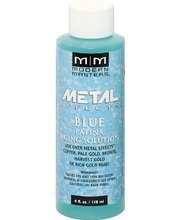
There is an oxidizing bronze paint for the blue

4 oz Modern Masters PA902 Blue Metal Effects Aging SolutionMM Blue.jpg
Brand: Modern Masters
$13.65 with 27 percent savings -27%

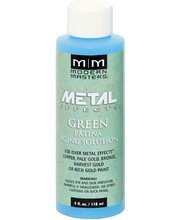
And an oxidizing copper paint for the green

4 oz Modern Masters PA901 Green Metal Effects Aging SolutionMM Green.jpg
Brand: Modern Masters
$23.92

They should react with real copper as well as the faux copper paint -
The paint could coat a Bamboo dowel if you want to use that instead of a copper wire.
 
One of these may fill the bill if green or blue - I wonder what a mixture would produce?
https://www.modernmasters.com/landing/homeowners/brands/me

The prices are from Amazon

There is an oxidizing bronze paint for the blue

4 oz Modern Masters PA902 Blue Metal Effects Aging SolutionView attachment 609713
Brand: Modern Masters
$13.65 with 27 percent savings -27%

And an oxidizing copper paint for the green

4 oz Modern Masters PA901 Green Metal Effects Aging SolutionView attachment 609715
Brand: Modern Masters
$23.92

They should react with real copper as well as the faux copper paint -
The paint could coat a Bamboo dowel if you want to use that instead of a copper wire.

I'm not sure about bamboo dowel as it seems to me that the vascular system/pores would be too visible to simulate iron, unless the end was fully sealed and smoothed.
 
Thanks Richard. I had hoped to post pics of the keel by now but I am on the third go around making the individual pieces to get them right. I will try to post a sequence of the keel build from the individual pieces to the tapering fore and aft once assembled.

I have never done this before but want to do some experimenting to age copper wire which will be used as bolts in the keel. I have read about everything from vinegar, ammonia, and salt mixtures to paint. I am looking for suggestions of what has worked for others and stays on, I see a problem when hammering home the bolts into the scarfs and knocking off the patina. I would rather green them in situ like using liver of sulfur which works perfectly and easily for blackening.

Allan
Given how small they are what if you just used a monofilament line of a bluish green colour. I googled and there are lots available that might be a good colour. You wouldn't be using actual copper but you could probably get it to look pretty convincing.
 
Back
Top