




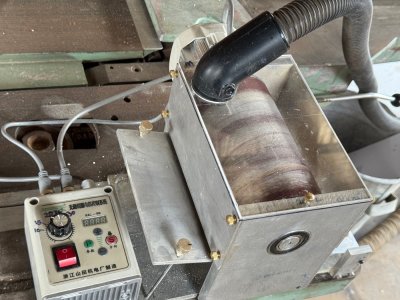
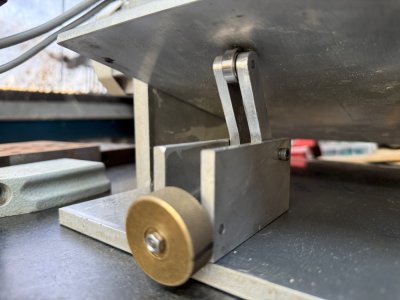
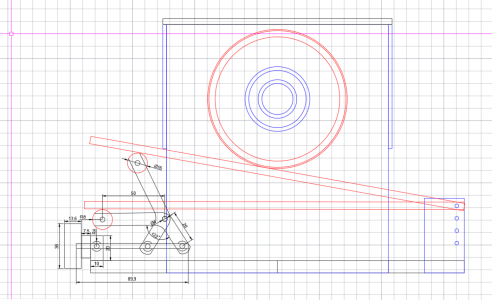
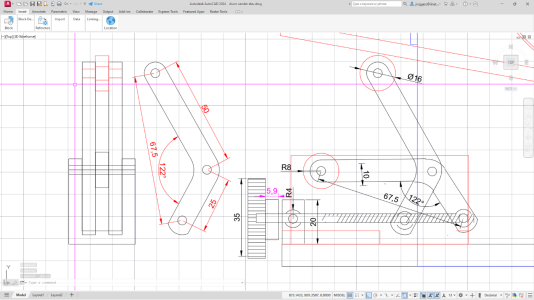
This is the current state of my thickness sander..well actually I have changed the height adjustment mechanism.. see photo 2
The design is pretty self explanatory, based on examining multiple pictures of other people's machines and choosing the features which appealed.
The materials are what I had available in my shed. The drum is approx 200mm long and 110mm diameter, 6mm wall thickness, pneumatic cylinder material I think. The box ends are 16mm alu plate, the feed plate is 6mm thick. The ends of the drum are 3D printed PLA. The main shaft is 24mm dia. The bearings are whatever I had available. Can't remember the specs. Can check if anyone needs to know.
The motor is 750w/1hp, and came with a control box, all wired from AliExpress, $aud160 inc shipping. Soft start, electronic brake, speeds 0-4000rpm. Very quiet. The vacuum extractor makes more noise. The vacuum hose clips off/on the perspex cover quickly. 1hp might seem excessive but it never slows with heavy cuts, and works effortlessly.
I originally planned to add power feed rollers, but tried it without them, and now I am perfectly happy to push -pull the material. Power feed rollers were going to add a lot of complexity/time/cost, and I decided to KISS it. (Keep It Simple Stupid!)
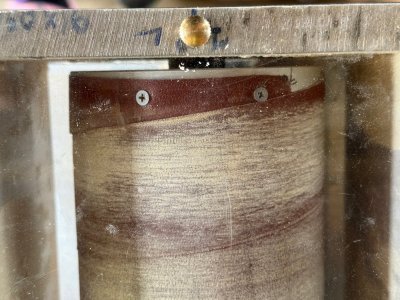
I looked at various sandpaper fixation options, and ended up with countersunk machine screws, 2 at each end, and that seems to work surprisingly well. See photo 3. I drilled and tapped 16 holes around each end of the drum circumference. I use an awl to poke a small hole through the sandpaper, then insert the screw without tearing the paper. One of the countersinks needs to be deepened a little coz the screw hits the feed plate at material thicknesses less than 0.5mm.
The brass thumbscrews are to quickly remove any panels for sandpaper changes, but in practice only the top clear panel needs swinging aside.
Paper changes take about 5", mainly to cut the paper from the 2"/50mm wide rolls with the end tapered sections. When I determined the exact length and angled cuts I made a simple wood jig to facilitate the cutting.
Trial and error with paper grits and speeds has me using 120 grit paper for thicknessing, at approx 2000rpm. Light cuts and steady feed rates avoid dig-ins. I have been very happy with the consistency of flatness, thickness, and smoothness. I have taken the thicknesses down to 0.5mm, and with some practice expect that can go thinner. Max thickness with this setup is 25mm, but if I remove the height adjuster and use a simple screw, it would fit 50mm material.
The multiple holes in the feed plate hinge are for experimenting with different feed angles. Still testing those.
One more refinement was to add an adjustable outfeed cover on the outfeed side of the box cover, to stop me from accidentally touching the sandpaper when pulling the workpiece. I imagine that would be a painful experience. Not needed on the infeed side (so far).
When working, the unit is virtually vibration free, and does not even require clamping to the workbench, unless I push pull too forcefully.
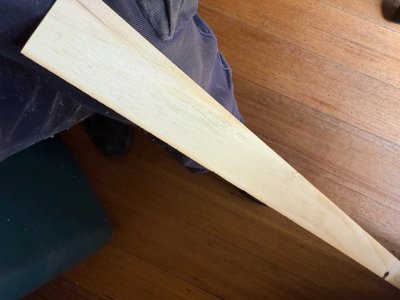
The piece of thicknessed wood pictured is Tasmanian Huon pine, 45mm wide, 1mm thick, about 900mm long. It was a practice piece but I intend to use it for deck planking on my current ship build.
The design is pretty self explanatory, based on examining multiple pictures of other people's machines and choosing the features which appealed.
The materials are what I had available in my shed. The drum is approx 200mm long and 110mm diameter, 6mm wall thickness, pneumatic cylinder material I think. The box ends are 16mm alu plate, the feed plate is 6mm thick. The ends of the drum are 3D printed PLA. The main shaft is 24mm dia. The bearings are whatever I had available. Can't remember the specs. Can check if anyone needs to know.
The motor is 750w/1hp, and came with a control box, all wired from AliExpress, $aud160 inc shipping. Soft start, electronic brake, speeds 0-4000rpm. Very quiet. The vacuum extractor makes more noise. The vacuum hose clips off/on the perspex cover quickly. 1hp might seem excessive but it never slows with heavy cuts, and works effortlessly.
I originally planned to add power feed rollers, but tried it without them, and now I am perfectly happy to push -pull the material. Power feed rollers were going to add a lot of complexity/time/cost, and I decided to KISS it. (Keep It Simple Stupid!)
I looked at various sandpaper fixation options, and ended up with countersunk machine screws, 2 at each end, and that seems to work surprisingly well. See photo 3. I drilled and tapped 16 holes around each end of the drum circumference. I use an awl to poke a small hole through the sandpaper, then insert the screw without tearing the paper. One of the countersinks needs to be deepened a little coz the screw hits the feed plate at material thicknesses less than 0.5mm.
The brass thumbscrews are to quickly remove any panels for sandpaper changes, but in practice only the top clear panel needs swinging aside.
Paper changes take about 5", mainly to cut the paper from the 2"/50mm wide rolls with the end tapered sections. When I determined the exact length and angled cuts I made a simple wood jig to facilitate the cutting.
Trial and error with paper grits and speeds has me using 120 grit paper for thicknessing, at approx 2000rpm. Light cuts and steady feed rates avoid dig-ins. I have been very happy with the consistency of flatness, thickness, and smoothness. I have taken the thicknesses down to 0.5mm, and with some practice expect that can go thinner. Max thickness with this setup is 25mm, but if I remove the height adjuster and use a simple screw, it would fit 50mm material.
The multiple holes in the feed plate hinge are for experimenting with different feed angles. Still testing those.
One more refinement was to add an adjustable outfeed cover on the outfeed side of the box cover, to stop me from accidentally touching the sandpaper when pulling the workpiece. I imagine that would be a painful experience. Not needed on the infeed side (so far).
When working, the unit is virtually vibration free, and does not even require clamping to the workbench, unless I push pull too forcefully.
The piece of thicknessed wood pictured is Tasmanian Huon pine, 45mm wide, 1mm thick, about 900mm long. It was a practice piece but I intend to use it for deck planking on my current ship build.