
• SUBSCRIBE TO SHIPS IN SCALE TODAY!

    The beloved Ships in Scale Magazine is back and charting a new course for 2026!
    Discover new skills, new techniques, and new inspirations in every issue.

    NOTE THAT OUR NEXT ISSUE WILL BE MARCH/APRIL 2026
  • Win a Free Custom Engraved Brass Coin!!!
    As a way to introduce our brass coins to the community, we will raffle off a free coin during the month of August. Follow link ABOVE for instructions for entering.

HM Armed Cutter Sherbourne 1763 – Vanguard Models What would you like to see in this beginner's log?

Joined
May 9, 2026
Messages
6
Points
53

Location
Thornton-Cleveleys
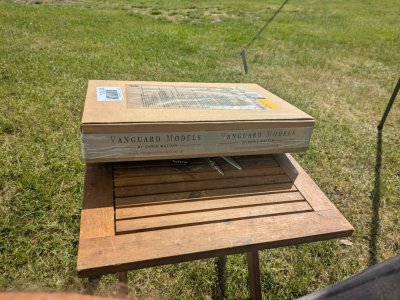
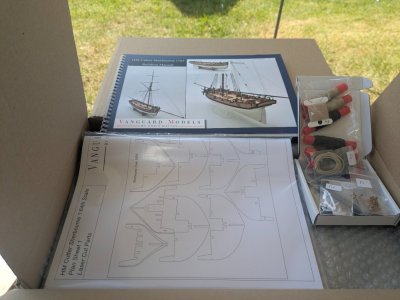
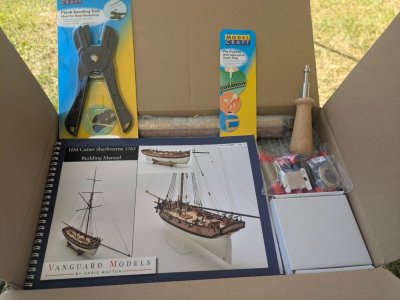
After a long wait for stock to return, I was lucky enough to receive the Vanguard Models HM Cutter Sherbourne 1763 kit as a birthday gift today. As this will be my very first wooden ship model, I’m both excited and slightly apprihensive in equal measure!

This is my very first wooden ship build. While I am completely new to the hobby, I have a deep interest in the technical side of building, a preference for self-reliance when it comes to troubleshooting, and a massive fascination with maritime history.

I’ve spent quite a bit of time researching the Sherbourne, following build logs on both Ships of Scale and other forums, and I’ve been genuinely inspired by the incredible standard of work produced by many members here. Some of the builds are absolutely stunning.

Rather than simply producing another standard build log, I’d like to try and make mine genuinely useful — especially from the perspective of a complete beginner who wants to approach the build carefully, thoughtfully, and with as much research as possible.

Before I begin the log properly, I wanted to ask the community:

What would YOU like to see from a first-time builder’s "Sherbourne log" that might make it worthwhile, interesting, or a little different from others already out there?

Some ideas I’ve been considering include:

- honest beginner mistakes and how I corrected them
- planking process and tapering decisions
- paint and colour scheme research (including historically inspired choices)
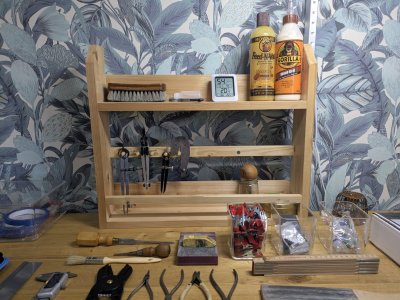
- tool setup and workspace organisation
- rigging organisation methods for newcomers
- dry fitting and alignment checks before committing to glue
- explanations of things that experienced builders may take for granted
- lessons learned at each stage
- documenting areas where the manual may confuse a beginner
- historical side notes about the real cutter and Royal Navy practices

I’m under no illusion, and this will NOT be a master-class build — but I’d like it to become an honest and well-documented learning journey that may help other newcomers considering their first wooden ship model.

I want to make sure I'm contributing something engaging to the forum rather than just adding noise. What elements do you feel are often missing or glossed over in standard build logs that a new builder could highlight? I’d love to hear your thoughts and suggestions before I lay down the keel!

Any suggestions, ideas, pitfalls to watch for, or things you wish more build logs showed would be greatly appreciated before I get started.

Looking forward to learning from you all.
file_000000000e8471f48b1b259fc7ea0781.jpg

file_00000000a1fc71f481ea03ceb03d51b3.jpg

file_000000005db071f4b8101977aa5433e9.jpg
 
Rather than simply producing another standard build log, I’d like to try and make mine genuinely useful — especially from the perspective of a complete beginner....

Some ideas I’ve been considering include:
- honest beginner mistakes and how I corrected them
- rigging organisation methods for newcomers
- explanations of things that experienced builders may take for granted
- lessons learned at each stage
- documenting areas where the manual may confuse a beginner
Welcome! As a fellow beginner, I'd appreciate your insight in the selected areas above. In my current (and first) build log, I'm also trying to capture thoughtful lessons learned, decisions and certainly my experience with established best practices as well as my own. And rigging!

As for the kit and manufacturer, I am admiring Vanguard and can see me acquiring one of their beauties in the near future. You insights on quality of materials, fit, instruction, etc. would be wonderful.

Best of luck!
 
What would YOU like to see from a first-time builder’s "Sherbourne log" that might make it worthwhile, interesting, or a little different
It sounds like you like the research so I would love to see posts describing the details you search for such as the contemporary drawings, contracts, scantling lists etc. I would really be interested to know how the kit plans compare to the contemporary plans.
Allan
 
After a long wait for stock to return, I was lucky enough to receive the Vanguard Models HM Cutter Sherbourne 1763 kit as a birthday gift today. As this will be my very first wooden ship model, I’m both excited and slightly apprihensive in equal measure!

This is my very first wooden ship build. While I am completely new to the hobby, I have a deep interest in the technical side of building, a preference for self-reliance when it comes to troubleshooting, and a massive fascination with maritime history.

I’ve spent quite a bit of time researching the Sherbourne, following build logs on both Ships of Scale and other forums, and I’ve been genuinely inspired by the incredible standard of work produced by many members here. Some of the builds are absolutely stunning.

Rather than simply producing another standard build log, I’d like to try and make mine genuinely useful — especially from the perspective of a complete beginner who wants to approach the build carefully, thoughtfully, and with as much research as possible.

Before I begin the log properly, I wanted to ask the community:

What would YOU like to see from a first-time builder’s "Sherbourne log" that might make it worthwhile, interesting, or a little different from others already out there?

Some ideas I’ve been considering include:

- honest beginner mistakes and how I corrected them
- planking process and tapering decisions
- paint and colour scheme research (including historically inspired choices)
- tool setup and workspace organisation
- rigging organisation methods for newcomers
- dry fitting and alignment checks before committing to glue
- explanations of things that experienced builders may take for granted
- lessons learned at each stage
- documenting areas where the manual may confuse a beginner
- historical side notes about the real cutter and Royal Navy practices

I’m under no illusion, and this will NOT be a master-class build — but I’d like it to become an honest and well-documented learning journey that may help other newcomers considering their first wooden ship model.

I want to make sure I'm contributing something engaging to the forum rather than just adding noise. What elements do you feel are often missing or glossed over in standard build logs that a new builder could highlight? I’d love to hear your thoughts and suggestions before I lay down the keel!

Any suggestions, ideas, pitfalls to watch for, or things you wish more build logs showed would be greatly appreciated before I get started.

Looking forward to learning from you all.
View attachment 607711

View attachment 607712

View attachment 607713
Hello Dave,
I see a few similarities… I am also new here and received my very first model kit last week for my birthday (the Santisima Trinidad). Because my gift sat in the closet for two months (waiting for my birthday), I had plenty of time to gather all kinds of information.

I got straight to work last Tuesday and immediately started a build log as well. My intention is to document as many small steps as possible, hoping to get some advice along the way. My very first lesson was to actually follow the manual and not immediately think I already know it all… That already cost me quite a bit of time to fix.

In principle, I keep the log for myself, but if others can learn something from it, I think that’s great.
So as far as I'm concerned, you should update your log in whatever way you think is best. In any case, I am curious about your progress and how you solve certain challenges.
Greetz, Peter
 
I am also new here and received my very first model kit last week for my birthday (the Santisima Trinidad).
It sounds like this is a first build. If that is the case, this is a huge project for a first build nd you may get really frustrated. Maybe consider a high quality kit that is smaller and suited to beginners first. I would bet we lose a lot of potentially great model builders because they started with a build that can frustrate and discourage some people. I get it that it was a gift, but there is nothing wrong with letting it rest for a few months while learning how to do things on a smaller scale. I wish I had been given this advice.
Allan
 
It sounds like this is a first build. If that is the case, this is a huge project for a first build nd you may get really frustrated. Maybe consider a high quality kit that is smaller and suited to beginners first. I would bet we lose a lot of potentially great model builders because they started with a build that can frustrate and discourage some people. I get it that it was a gift, but there is nothing wrong with letting it rest for a few months while learning how to do things on a smaller scale. I wish I had been given this advice.
Allan
Thank you, Allen.
I truly appreciate your advice, and you are not the first to mention it. I can be rather stubborn and have full confidence that I can make it work. If I do get completely stuck, I will definitely follow your advice.
In any case, you would do me a great favor by actively following my build log and providing me with feedback.
 
It sounds like this is a first build. If that is the case, this is a huge project for a first build nd you may get really frustrated. Maybe consider a high quality kit that is smaller and suited to beginners first. I would bet we lose a lot of potentially great model builders because they started with a build that can frustrate and discourage some people. I get it that it was a gift, but there is nothing wrong with letting it rest for a few months while learning how to do things on a smaller scale. I wish I had been given this advice.
Allan

The sherbourne by VM meant to be beginner's kit as first build kit,No need to start with the more simple starter kits concept.
Strange,right ?

Cheers
Guy
 
The sherbourne by VM meant to be beginner's kit as first build kit,No need to start with the more simple starter kits concept.
Strange,right ?
Yes, we got off topic and I was commenting on starting with something less complex than Peter's Santisima Trinidad. :) Sherbourne by Vanguard is a higher quality kit as well as less complex so maybe a better choice for a start for Peter.
 
From the Society of Model Shipwrights UK. We publish a monthly mini magazine to our members and are interested in build logs. If you want to make use of us contact modelshipwrights.org.
 
Welcome! As a fellow beginner, I'd appreciate your insight in the selected areas above. In my current (and first) build log, I'm also trying to capture thoughtful lessons learned, decisions and certainly my experience with established best practices as well as my own. And rigging!

As for the kit and manufacturer, I am admiring Vanguard and can see me acquiring one of their beauties in the near future. You insights on quality of materials, fit, instruction, etc. would be wonderful.

Best of luck!
After a long wait for stock to return, I was lucky enough to receive the Vanguard Models HM Cutter Sherbourne 1763 kit as a birthday gift today. As this will be my very first wooden ship model, I’m both excited and slightly apprihensive in equal measure!

This is my very first wooden ship build. While I am completely new to the hobby, I have a deep interest in the technical side of building, a preference for self-reliance when it comes to troubleshooting, and a massive fascination with maritime history.

I’ve spent quite a bit of time researching the Sherbourne, following build logs on both Ships of Scale and other forums, and I’ve been genuinely inspired by the incredible standard of work produced by many members here. Some of the builds are absolutely stunning.

Rather than simply producing another standard build log, I’d like to try and make mine genuinely useful — especially from the perspective of a complete beginner who wants to approach the build carefully, thoughtfully, and with as much research as possible.

Before I begin the log properly, I wanted to ask the community:

What would YOU like to see from a first-time builder’s "Sherbourne log" that might make it worthwhile, interesting, or a little different from others already out there?

Some ideas I’ve been considering include:

- honest beginner mistakes and how I corrected them
- planking process and tapering decisions
- paint and colour scheme research (including historically inspired choices)
- tool setup and workspace organisation
- rigging organisation methods for newcomers
- dry fitting and alignment checks before committing to glue
- explanations of things that experienced builders may take for granted
- lessons learned at each stage
- documenting areas where the manual may confuse a beginner
- historical side notes about the real cutter and Royal Navy practices

I’m under no illusion, and this will NOT be a master-class build — but I’d like it to become an honest and well-documented learning journey that may help other newcomers considering their first wooden ship model.

I want to make sure I'm contributing something engaging to the forum rather than just adding noise. What elements do you feel are often missing or glossed over in standard build logs that a new builder could highlight? I’d love to hear your thoughts and suggestions before I lay down the keel!

Any suggestions, ideas, pitfalls to watch for, or things you wish more build logs showed would be greatly appreciated before I get started.

Looking forward to learning from you all.
View attachment 607711

View attachment 607712

View attachment 607713
Hi Dave,
Vanguard’s Sherbourne was my first wood build as well. Many trying times but it came out better than I expected. Jason at Modelkit Stuff on YouTube does this build as a beginner video series. It is very useful. I think you’ll have a great time. I look forward to watching your progress.

John C
 
After a long wait for stock to return, I was lucky enough to receive the Vanguard Models HM Cutter Sherbourne 1763 kit as a birthday gift today. As this will be my very first wooden ship model, I’m both excited and slightly apprihensive in equal measure!

This is my very first wooden ship build. While I am completely new to the hobby, I have a deep interest in the technical side of building, a preference for self-reliance when it comes to troubleshooting, and a massive fascination with maritime history.

I’ve spent quite a bit of time researching the Sherbourne, following build logs on both Ships of Scale and other forums, and I’ve been genuinely inspired by the incredible standard of work produced by many members here. Some of the builds are absolutely stunning.

Rather than simply producing another standard build log, I’d like to try and make mine genuinely useful — especially from the perspective of a complete beginner who wants to approach the build carefully, thoughtfully, and with as much research as possible.

Before I begin the log properly, I wanted to ask the community:

What would YOU like to see from a first-time builder’s "Sherbourne log" that might make it worthwhile, interesting, or a little different from others already out there?

Some ideas I’ve been considering include:

- honest beginner mistakes and how I corrected them
- planking process and tapering decisions
- paint and colour scheme research (including historically inspired choices)
- tool setup and workspace organisation
- rigging organisation methods for newcomers
- dry fitting and alignment checks before committing to glue
- explanations of things that experienced builders may take for granted
- lessons learned at each stage
- documenting areas where the manual may confuse a beginner
- historical side notes about the real cutter and Royal Navy practices

I’m under no illusion, and this will NOT be a master-class build — but I’d like it to become an honest and well-documented learning journey that may help other newcomers considering their first wooden ship model.

I want to make sure I'm contributing something engaging to the forum rather than just adding noise. What elements do you feel are often missing or glossed over in standard build logs that a new builder could highlight? I’d love to hear your thoughts and suggestions before I lay down the keel!

Any suggestions, ideas, pitfalls to watch for, or things you wish more build logs showed would be greatly appreciated before I get started.

Looking forward to learning from you all.

View attachment 607711

View attachment 607712

View attachment 607713
Welcome Dave to the forums and greetings from Texas! Magic Mike
 

HM Armed Cutter Sherbourne (1763)​

Before beginning the construction of this model, it is worth taking a brief look at the vessel that inspired it.

HM Armed Cutter Sherbourne was one of the Royal Navy's early purpose-built cutters, designed during a period when Britain was facing a growing problem with smuggling along its coastline. Small, fast, and economical to operate, cutters became the ideal vessels for coastal patrol, customs enforcement, dispatch carrying, and anti-smuggling duties.

Sherbourne was designed by Sir Thomas Slade, one of Britain's most influential naval architects and the man later responsible for the design of HMS Victory. Construction took place at Woolwich Dockyard on the River Thames under the supervision of Master Shipwright Joseph Harris.

Construction Timeline​

  • Ordered: 30 April 1763
  • Design approved: Spring 1763
  • Keel laid: 27 June 1763
  • Built at: Woolwich Dockyard, London
  • Master Shipwright: Joseph Harris
  • Designer: Sir Thomas Slade
  • Launched: 3 December 1763
  • Completed and commissioned: March 1764
  • Active service: 1764–1784
  • Sold out of service: 1 July 1784

Vessel Statistics​

  • Type: Armed Cutter
  • Rig: Single-masted cutter
  • Length overall: 54 ft 6 in (16.6 m)
  • Beam: 19 ft (5.8 m)
  • Burthen: 85 tons
  • Crew: Approximately 30 officers and men
  • Armament: Six 3-pounder guns and eight swivel guns
Although small by Royal Navy standards, Sherbourne spent her entire career operating in the English Channel, supporting customs enforcement and pursuing smugglers along the south coast of England. Her speed and manoeuvrability made her ideally suited to this role.

The model on my workbench represents a vessel launched more than 260 years ago, at a time when Britain relied on small armed cutters like Sherbourne to patrol its coastline and protect government revenue. As construction begins, it is fascinating to consider that the framework on my bench now taking shape. mirrors the first stages of a real vessel whose keel was laid at Woolwich Dockyard in the summer of 1763 and launched just over five months later in December of the same year.

A nice additional fact is that Sherbourne's keel was laid on 27 June 1763 and she was launched on 3 December 1763—a construction period of only about 159 days, remarkably quick even by 18th-century standards.

The connection to Sir Thomas Slade is also likely to interest readers, as he later designed the famous first-rate warship HMS Victory. Sherbourne may have been tiny in comparison, but she came from the drawing board of the same naval architect.

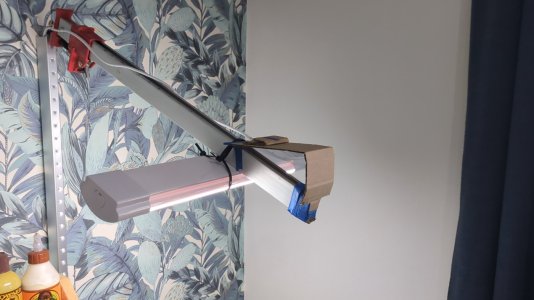
My primitive, "Heath Robinson" lighting and mobile phone rig.
My camera a lighting rig is a little Heath Robinson construction

Rather than producing another step-by-step build guide, my intention is simply to document the experience of building my first plank-on-bulkhead model.

The Sherbourne has already been built and documented extensively by many highly skilled modellers, so there is little value in me repeating information that already exists elsewhere. Instead, I hope to capture the perspective of a complete beginner tackling what is widely regarded as one of the best introductory ship model kits available.

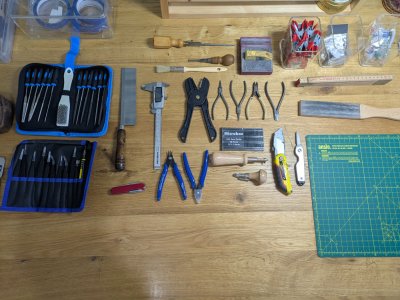
Tools new and old
1000018375.jpg

PXL_20260608_170522817.jpg

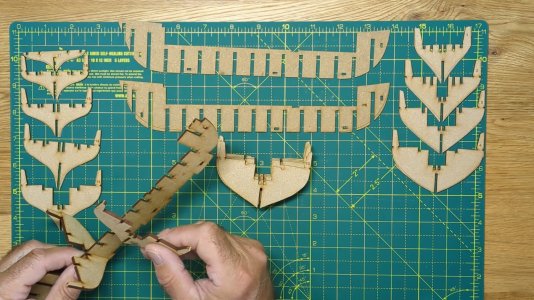
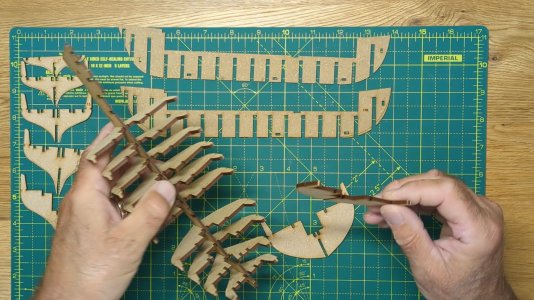
As I start assembling the framework of the model, it's interesting to remember that these laser-cut pieces represent the backbone of a vessel designed for speed and pursuit.

video_capture_1781297605408.jpeg

Almost 263 years ago THIS MONTH... Sherbourne's keel was being laid down. 27th June 1763.
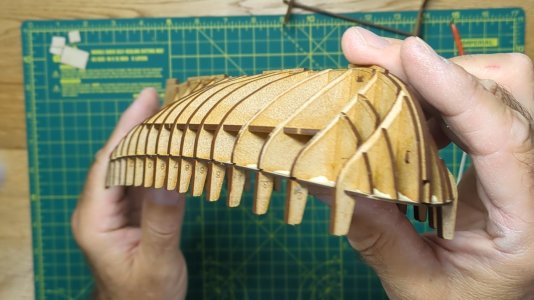
The Sherbourne bulkheads fit easily and snug

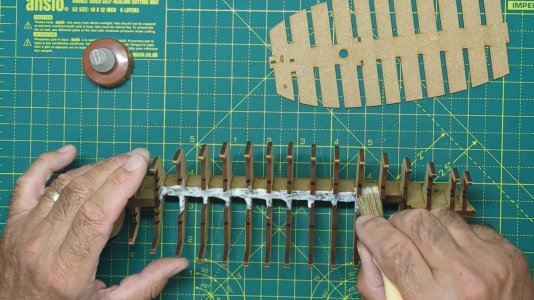
Gluing up for the lower deck
video_capture_1781365199114.jpeg

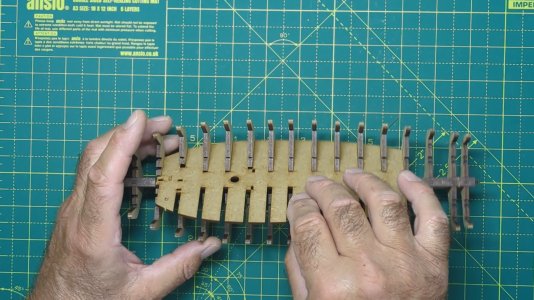
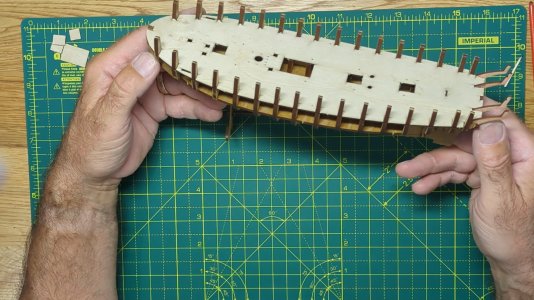
Lower deck fitted
video_capture_1781365394049.jpeg

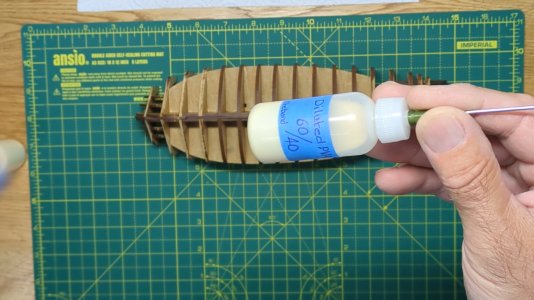
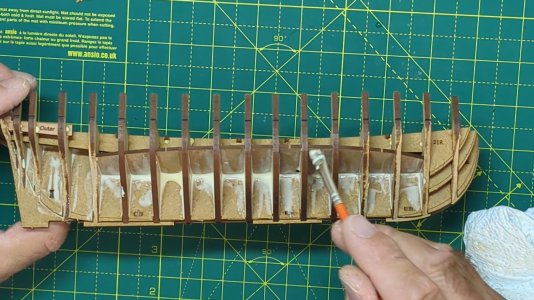
60/40 Titebond used to strengthen the hull assembly
video_capture_1781365464628.jpeg

video_capture_1781365305888.jpeg

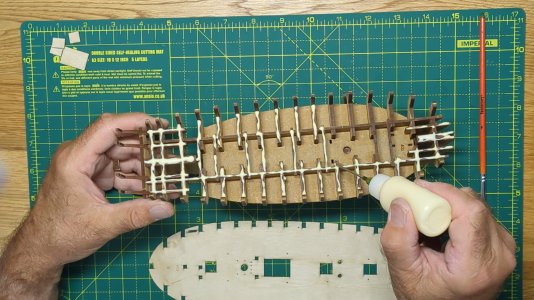
Applying full strength (Titebond Original) glue for the fitting of the false deck
video_capture_1781365603410.jpegvideo_capture_1781365738224.jpegvideo_capture_1781365743083.jpeg

Long before she became a model kit on my workbench, the real Sherbourne was part of a network of small government vessels tasked with protecting Britain's coastline and intercepting smugglers during the mid-18th century.

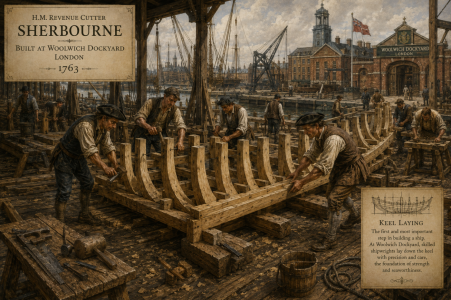
How where ships of this era able to be built at such a great speed
One of the most surprising things about 18th-century shipbuilding.

When we hear that Sherbourne went from keel laying to launch in about five months, it sounds astonishingly fast. However, several factors worked in their favour.

Sherbourne_Keel_Laying_1763.png

1. Sherbourne Was a Small Vessel​

Although important, Sherbourne was tiny compared to the great warships of the period.
  • Length: about 54½ feet (16.6 m)
  • Burthen: about 85 tons
  • Crew: around 30 men
For comparison, HMS Victory was over 2,000 tons and carried more than 800 men. Building a cutter like Sherbourne was a much smaller undertaking.

2. The Timber Was Prepared in Advance​

Royal dockyards maintained large stocks of timber. Oak trees might have been felled years before they were needed. Shipwrights often knew what classes of vessel were likely to be ordered, so suitable timber could be selected and partially prepared long before construction officially began. In many cases, the "clock" started when the keel was laid, not when the first tree was cut.

3. They Had a Large Skilled Workforce​

Dockyards such as Woolwich Dockyard employed hundreds of specialists:
  • Shipwrights
  • Sawyers
  • Caulkers
  • Joiners
  • Blacksmiths
  • Ropemakers
  • Sailmakers
Many tasks happened simultaneously. While one team worked on framing, another prepared planking, another forged fittings, and another produced rigging.

4. Launching Was Not the Same as Completion​

This is an important point.
A vessel could be launched while still incomplete.
Once afloat, work continued:
  • Internal fitting out
  • Armament installation
  • Rigging
  • Spars and masts
  • Sails
  • Stores and equipment
For Sherbourne, launch day marked the point at which the hull was sufficiently complete to enter the water. Additional work continued before she entered service.

Lets continue....
5. No Modern Bureaucracy
Eighteenth-century shipbuilding had advantages that would be impossible today.

There were:
  • No computer models
  • No health and safety inspections
  • No environmental assessments
  • No electrical systems
  • No engines
  • No plumbing systems
  • No certification process comparable to modern vessels
A cutter's construction was essentially timber, iron, hemp rope, canvas, and skilled labour.

6. Shipbuilding Was a National Priority​

Britain depended on maritime power. The Royal Navy and its dockyards operated almost continuously because national security and trade depended upon them. Experienced craftsmen built ships year after year, often using proven designs with only minor modifications. Sherbourne was not a prototype. She was built by men who had already constructed numerous vessels and knew exactly what they were doing.

This 4 minute time-lapse video covers the initial construction of the hull framework, steps 1 - 18 of the Sherbourne build manual, checking the fit of the laser-cut parts, and ensuring everything is correctly aligned before moving on to the next stages of the build.

Whether you're building the Sherbourne yourself, considering starting a wooden ship model, or simply enjoy watching traditional ship models take shape, I hope you'll enjoy following the journey.

This brings this weeks build log to a conclusion. Total time spent this week on steps 1-18 is 3.5 Hours
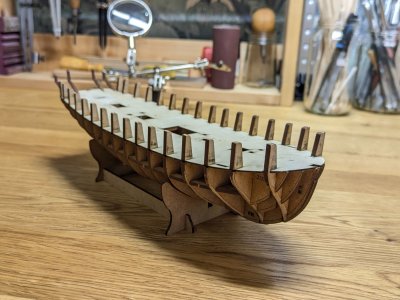
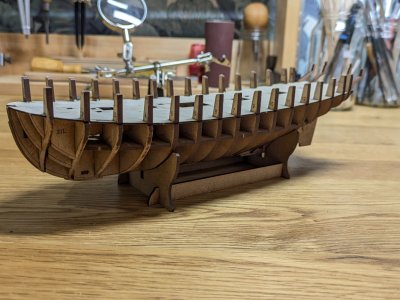
.... and here she is.

HM_Sherbourbe_Keel_and_Bulkheads.jpg

PXL_20260611_185759217.jpg
 
Last edited:
Back
Top