
-

SUBSCRIBE TO SHIPS IN SCALE TODAY!
The beloved Ships in Scale Magazine is back and charting a new course for 2026!
Discover new skills, new techniques, and new inspirations in every issue.
NOTE THAT OUR NEXT ISSUE WILL BE July/August 2026 -

Win a Free Custom Engraved Brass Coin!!!
As a way to introduce our brass coins to the community, we will raffle off a free coin during the month of August. Follow link ABOVE for instructions for entering.


You are using an out of date browser. It may not display this or other websites correctly.
You should upgrade or use an alternative browser.
You should upgrade or use an alternative browser.
Liberty Ship
- Thread starter Skipper1952
- Start date
- Watchers 11

- Joined
- Apr 19, 2020
- Messages
- 190
- Points
- 213

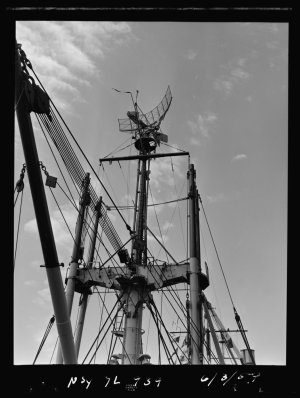
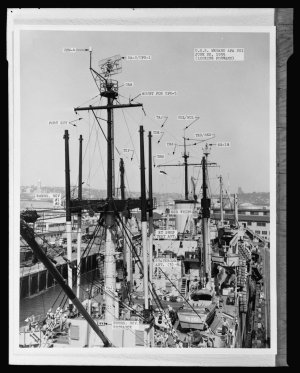
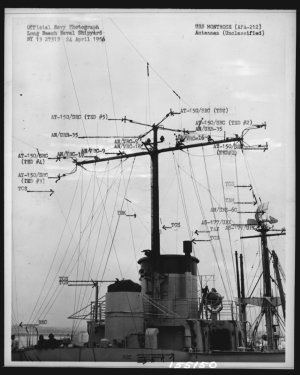
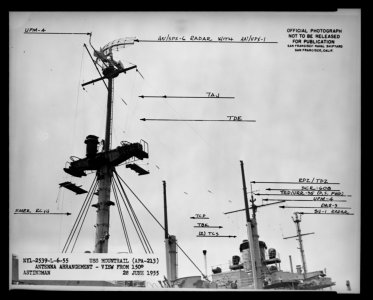
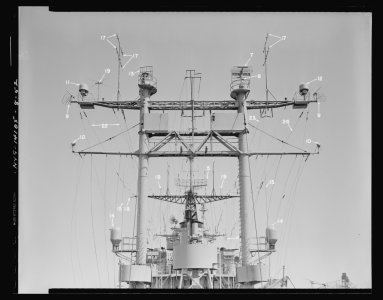
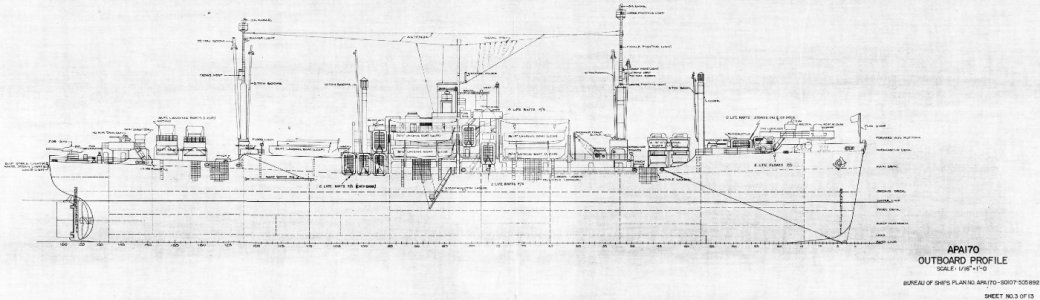
How should "radar mast" be interpreted? Something of the sort appeared on the VC2 type after WWII. I haven't come across it in available blueprints. However, if you look at *Haskell*-class APA ships, radars were installed on the cargo masts. (the first 4 photos)Does anyone have a plan or image of a radar mast for a victory ship or c2.
As for the C2-type ships, there are even more variants. One need only consider the uniqueness of Admiral Kinkaid’s flagship, the USS *Wasatch* (AGC-9) (of the *Mount McKinley* class).
(last foto)
Last edited:


I just saw that someone is selling unpainted, 3D printed, waterline Liberty Ships at HO scale for $450. It takes about a month to get them. That seems to be a ridiculously low price. It’s taken me almost a year to build my C-2, and it’s cost two to three times as much.


Interesting info Roger. Hope we still have the plans. We may need them.The Liberty Ship was NOT an adaptation of the C-2 cargo ship. It ‘s evolution is more interesting.
Between World War I and World War II British shipbuilder Joseph L. Thompson developed a design for a tramp steamship. Design work progressed during the worldwide depression in the shipping industry in the hopes that it could be used when the economy improved. Known as Economy Ships, design was conservative; riveted construction, coal fired, triple expansion engines, although using superheated steam. A few vessels were built to this design prior to WWII.
Meanwhile, Americans followed a different path. The US Government’s Maritime Commission (MARAD) designed a family of state-of-the art cargo ships, resulting in the “C class”. The C-2 was one of these MARAD designed classes.
Also between the Wars, Great Britain “rationalized” it’s shipbuilding industry by closing many yards. As a result, by late 1940 Great Britain did not have unused shipyard capacity to build cargo ship tonnage to replace severe losses from German U boats.
Britain, therefore, turned to the USA to build cargo ships for its depleted Merchant Marine. A commission sent to the US found the “high end” C type cargo vessels being built in American yards to be unsuited to British needs and American shipyards full. In a remarkably short time the British Shipbuilding Commission contracted with a consortium of American companies to not only build 60 cargo ships, but the new shipyards to build them. Known as the Ocean Class these were based on the British Economy Ship Design. The Canadians also built a number to the same design known as the “Fort class ships”. The first of these American built Ocean Class vessels would be launched from the new shipyard built at Richmond, California in August 1941.
With it becoming obvious that the United States would enter the war, debate began within the US government to determine how to build cargo ships to support the war effort. MARAD officials promoted their C Class designs but a major concern was the ability of the US industrial base to mass produce the required number of geared steam turbine sets to power these ships. Finally President Roosevelt issued an executive order requiring that a design be adopted that could allow large quantities of ships to be mass produced.
The design that met these requirements was the British Ocean Class/ Economy Ship, not the MARAD C-2 Class. To better adapt it to American shipyard practices Naval Architecture firm Gibbs & Cox redrew the British plans. Major changes included, welded construction, water tube boilers, oil fuel, and a redesigned superstructure. The hull lines, (hull shape) of the liberties is the same as that of the Oceans.
MARAD designed C Class cargo ships also continued to be built throughout the war but not in the same numbers as the standardized Liberty desi
- Joined
- Jun 29, 2024
- Messages
- 2,152
- Points
- 488

I was a book reviewer for the present but soon to be retiring editor of the Nautical Research Guild. Somehow I became his reviewer for books about merchant steamships. Books varied from awful to very good. I called them as I saw (or more properly read) them. One of the best was a book about the 60 Ocean class steamships, the predecessor to the Liberties. The information that I posted is based on that book.
The book: The Ocean Class of the Second World War
by Malcom Cooper
Another: Liberty’s Provenance, The Evolution of the Liberty
from its Sunderland Origins by John Henshaw
Roger
The book: The Ocean Class of the Second World War
by Malcom Cooper
Another: Liberty’s Provenance, The Evolution of the Liberty
from its Sunderland Origins by John Henshaw
Roger
- Joined
- Mar 24, 2026
- Messages
- 40
- Points
- 48

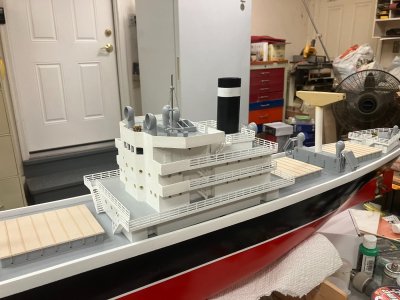
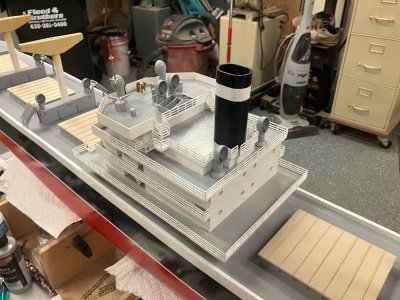
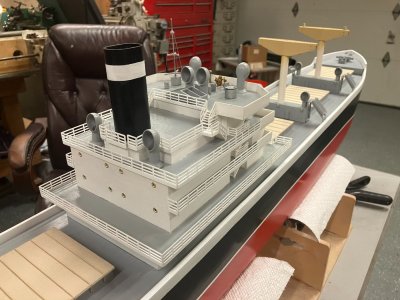
A lot of great photos. Thank you. A few progress photos.
- Joined
- Mar 24, 2026
- Messages
- 40
- Points
- 48
I was under the impression that these ships didn't have radar because it hadn't been invented yet. Your images say otherwise.
- Joined
- Jun 29, 2024
- Messages
- 2,152
- Points
- 488
C-2 Cargo ships were built throughout World War II. Some US Navy warships fighting at Guadalcanal in late 1942 were outfitted with Radar and its use appears to have been universal by 1945. Furthermore, your color scheme would indicate a post war vessel, so she would have had Radar.
Roger
Roger

- Joined
- Jan 21, 2023
- Messages
- 447
- Points
- 138

also that there are no gun mounts on the model means it is post ww2.
Skipper, radar was originally developed by the British in the mid to late 1930's. https://www.google.com/search?q=who...0j0i751l4.14090j0j15&sourceid=chrome&ie=UTF-8
Skipper, radar was originally developed by the British in the mid to late 1930's. https://www.google.com/search?q=who...0j0i751l4.14090j0j15&sourceid=chrome&ie=UTF-8
Last edited:
A little off topic but following your log keeps bringing me back to the story of John O'Hara, a US Merchant Marine Academy cadet during WWII. The painting below is at the academy at Kings Point.
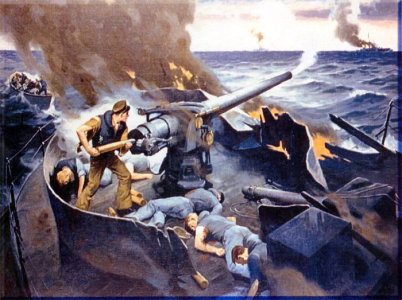
O'Hara was serving on the Liberty ship SS Hopkins when it was sunk by the German raider Stier during World War II. He displayed remarkable bravery in defending the ship before it succumbed to enemy fire.
O'Hara was serving on the Liberty ship SS Hopkins when it was sunk by the German raider Stier during World War II. He displayed remarkable bravery in defending the ship before it succumbed to enemy fire.
Details of the SS Hopkins Incident
The sinking of the SS Hopkins is a notable event in maritime history.- Ship Name — The Liberty ship was named SS Hopkins, built during World War II.
- Sinking Date — The SS Hopkins was sunk on March 1, 1943, by the German raider Stier.
- O'Hara's Role — John O'Hara, an engine cadet, fought valiantly, firing the last shells at the enemy before the ship sank.
- Casualties — The attack resulted in significant casualties, with O'Hara being one of the last to defend the ship.
- Recognition — O'Hara was posthumously awarded the Distinguished Service Medal for his bravery during the attack.
- Joined
- Jan 21, 2023
- Messages
- 447
- Points
- 138
ship was sunk Sept 1942 according to these links,

 en.wikipedia.org
Sinking of the SS Stephen Hopkins - Wikipedia
- Joined
- Mar 24, 2026
- Messages
- 40
- Points
- 48
I knew the British had developed radar but their arrays were massive and land based and yes, no gun mounts so postwar. I guess you could call this model somewhere between 'static' and bare bones. Most of the structures have to be removeable for accesss to RC hardware. The modeling I've seen here for the static models is exceptional but I cannot 3d print that small of a scale.also that there are no gun mounts on the model means it is post ww2.
Skipper, radar was originally developed by the British in the mid to late 1930's. https://www.google.com/search?q=who...0j0i751l4.14090j0j15&sourceid=chrome&ie=UTF-8
I contracted a parasite about 30 years ago that ate the center of my left optic nerve so I have no center vision in my left eye. I struggle to see the detailing I was once capable of but just step back about 4 ft and admire it from a distance.
Yep. Typo on the link I saw. The gymnasium at school is named after him, Ohara Hall.Sept 1942 according to these links,