• Ships of Scale has incorportated an extra level of security when you log In. Please follow on-screen prompts to acknowledge that you are not a robot via a "Check Box" or a "Pictorial Check Box Puzzle". This is needed due to higher level of AI Activity Security.
  • SUBSCRIBE TO SHIPS IN SCALE TODAY!

    The beloved Ships in Scale Magazine is back and charting a new course for 2026!
    Discover new skills, new techniques, and new inspirations in every issue.

    NOTE THAT OUR NEXT ISSUE WILL BE July/August 2026
  • Win a Free Custom Engraved Brass Coin!!!
    As a way to introduce our brass coins to the community, we will raffle off a free coin during the month of August. Follow link ABOVE for instructions for entering.

I finally managed to build my vertical rope maker.

My expience is that the yarn quicker breaks under tension. I always use a lot of weight. And when that doesn't happen and I look to the yarn under the magnifier there are wrong parts in the rope. So if you make rope and you experience that too, turn it LH.
Steph that is exactly what happened to me when I first started using Gutermann E 121: I put too much weight on it and had to change it because it couldn't handle the load, the first two attempts to wind three yarns failed.
 
you’ll never get the holes in the two plates to align perfectly using a handheld drill

View attachment 637821
Okay, simple hack for those who don’t have a handy drill press. Clamp two plates together, drill a couple of holes outside your usage area, apply bolts. Or pins. This keeps it from shifting at all.
Then all you have to do is make sure your drill is vertical!
Of course, a drill press is handier. So is a cnc machine. Or, and this is what I will probably do, 3d printing them. If my new printer ever arrives (it’s stuck in customs, seems they don’t like my address. I’m rural, not everyone is in the usps database!), I will be doing it that way. Hence the CAD files.

 
Okay, simple hack for those who don’t have a handy drill press. Clamp two plates together, drill a couple of holes outside your usage area, apply bolts. Or pins. This keeps it from shifting at all.
Then all you have to do is make sure your drill is vertical!
Of course, a drill press is handier. So is a cnc machine. Or, and this is what I will probably do, 3d printing them. If my new printer ever arrives (it’s stuck in customs, seems they don’t like my address. I’m rural, not everyone is in the usps database!), I will be doing it that way. Hence the CAD files.

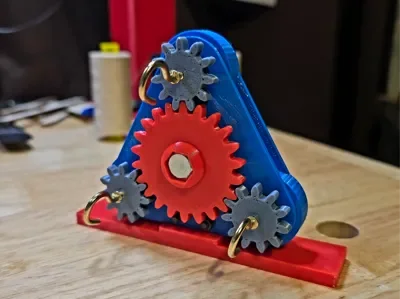
KeDennis one of our colleagues has designed a 3D printed rope walk. He has kindly offered the plans for free. While he uses it horizontally, I see no reason it could not be adopted to vertical use.

aa2c519f674ac2c0.webp


Rob
 
Steph that is exactly what happened to me when I first started using Gutermann E 121: I put too much weight on it and had to change it because it couldn't handle the load, the first two attempts to wind three yarns failed.
Must admit. This has never happened to me. You must have had a lot of weight.

I reckon I use more weight than most from what I’ve read.
 
Back
Top