

- Joined
- Nov 13, 2025
- Messages
- 78
- Points
- 88

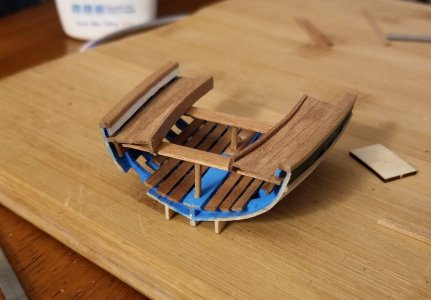
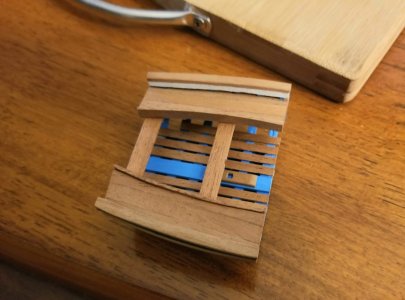
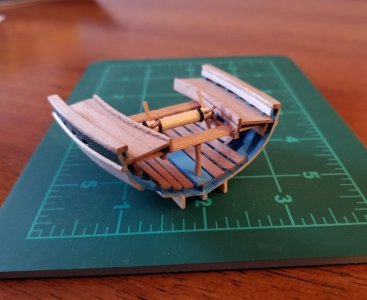
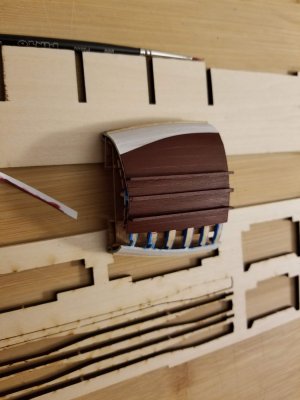
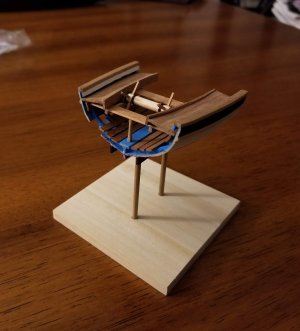
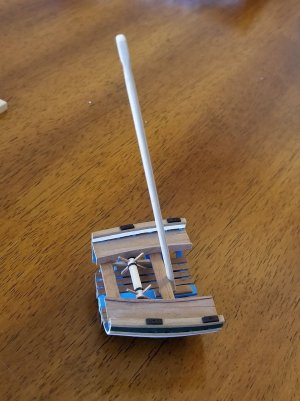
This is a repost of the original build log, which was sadly lost along with the rest of ModelShipWorld. Although I do have a complete pdf of the original, it's not in a format that really facilitates copy-pasting, so this will necessarily be an abbreviated version. I am starting my repostings with this because it's the shortest of my lost build logs.
Although I've long had an interest in sailing ships and maritime history, I started modeling after visiting the Barcelona Maritime Museum (Museu Marítim de Barcelona), which has a fantastic collection of models, actual ships, and replicas. I was particularly struck by their small craft collection, and by the looks of the lateen-rigged fishing boats of the Spanish Mediterranean. One of my modeling goals was, and still remains (although I've been very sidetracked), to build a Plank-on-Frame (POF) model of a Catalonian palangrera. Looking for information, I found that a Spanish modeler, Alfonso del Valle, had drafted a full set of plans (including frame drawings) for a similar vessel from Málaga, the Juana y José, and had made them freely available. Although there are no build logs on this site, there were several build logs at the Spanish modeling forum Foro Modelismo Naval, and Javier Baron, who has posted a number of models on MSW and SOS, made a beautiful tiny model in 1:74 scale, viewable here.
Below, a detail from the plans for the Juana y José:
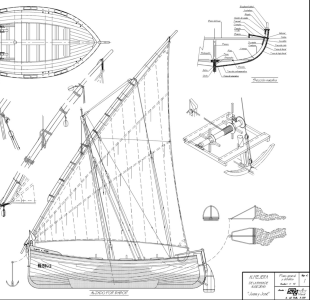
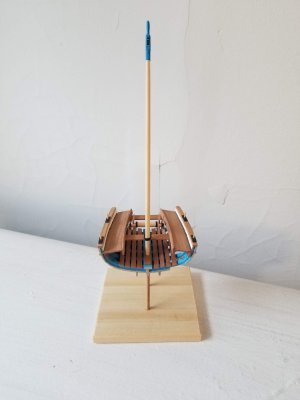
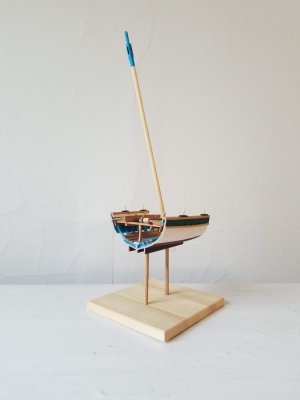
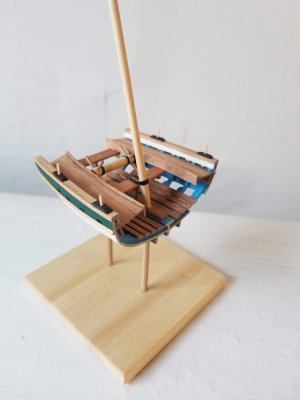
At the time, I was midway through my third build (a Canoa de Rancho from Lake Chapala, after having previously completed the Model Shipways Dory kit and a Trajinera from Xochimilco). Everything I had previously built had flat bottoms and sides. I thought that a cross-section of the Juana y José in 1:32 scale (the same as my other scratch builds) would allow me to gain experience with POF techniques, without being overly complicated, while also producing a very small and easily portable model, which was important as I was moving quite frequently then.
The Juana y José
There are a few particularities about the boat and the plans. As del Valle discussed on his website (now sadly defunct but still visible through the Internet Archive, see here), and also on Fore Modelismo Naval, the Juana y José was a real fishing boat that he came across on the beach in Algeciras, Spain. The owner allowed him to take its lines and photograph it, and told him about its history. The Juana y José was built in Málaga sometime in the early 1900s, later being sold to an Algeciras fisherman. It was broken up in a poor state of conservation in 2003. It was 15.6 feet / 4.75 meters long.
Below, a photo from del Valle's site linked to previously:
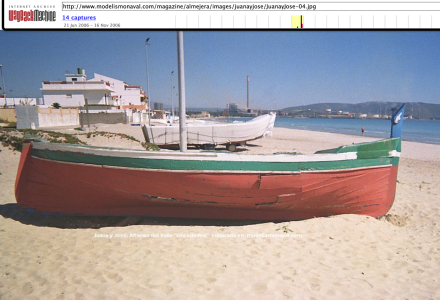
Interestingly, there are some differences between the plans and the actual boat. The owner told del Valle that it used to have a sail, but del Valle found no indications of a mast step or other provisions for a mast. They may have been removed at some point in the boat's long life, but del Valle was unsure. The real Juana y José was also an entirely open boat. Nonetheless, while del Valle accurately copied its lines and construction details, in his plans he decided to depict it as a traditional clam dragger (almejera) of the sort he remembered from his youth, which in any case were certainly quite similar vessels. So, he added a lateen sail, a partial deck, and a prominent windlass as was used for clam dragging.
I considered building the Juana y José as it really was, but ultimately decided to follow del Valle's plans because they produced the most visually interesting option, especially in a cross-section. If I were to redo the model today (particularly as a full build rather than a cross section), I would probably either build it as a pure rowboat, or would follow the owner's claims and only add the sail (although I would probably use a vertical mast stepped toward the bow instead of the fore-raked central mast, it's a pretty small boat and the foreward-stepped mast was often used on such vessels to increase the useable working space).
The Build
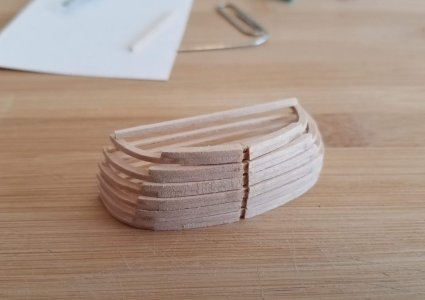
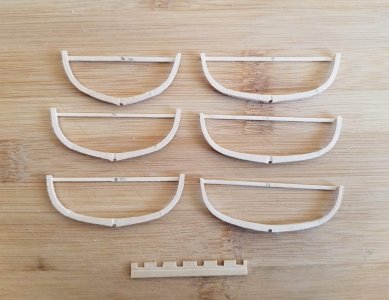
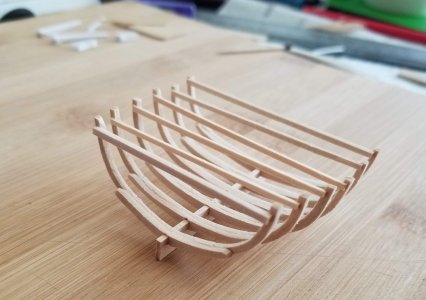
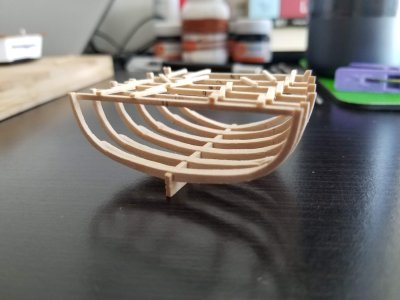
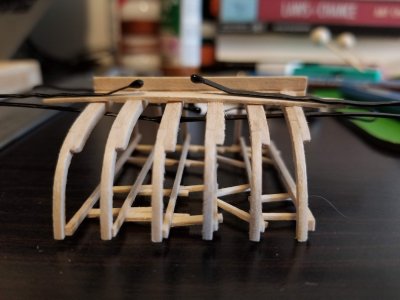
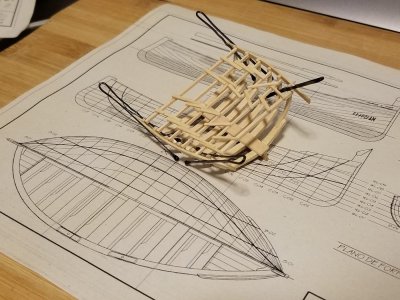
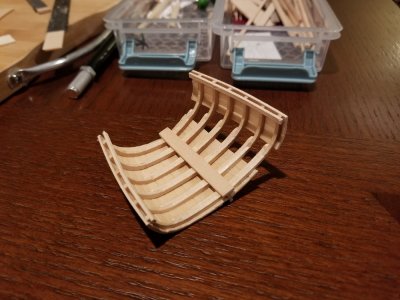
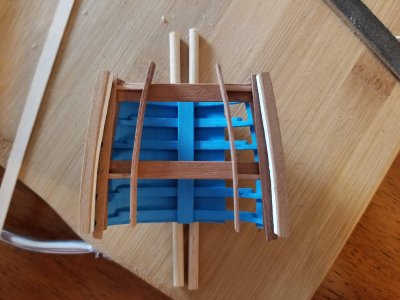
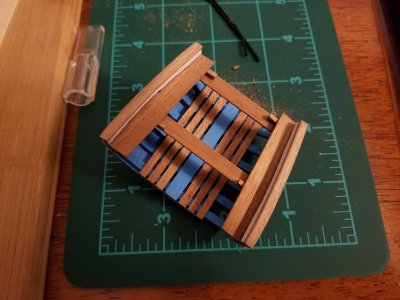
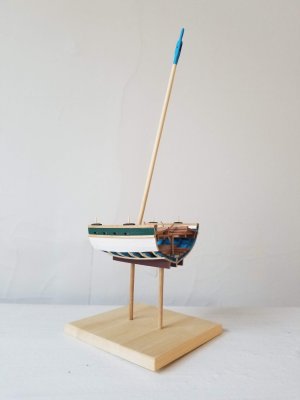
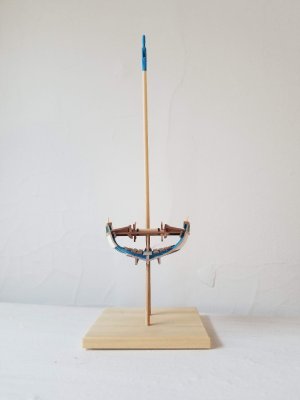
I decided to make the cross-section long enough to include two thwarts, thus hoping to provide some structural rigidity. I chose a six-frame section running from around amidships forward, including the mast step and windlass, producing a hull section just under two inches long at 1:32 scale. I started with the keel, which at scale was about 1/16-inch thick, making it from basswood. The rabbet was tricky to carve in such thin wood, and did not end up being very useful for building. If I were to build the full model at the same scale, I probably use a harder wood like cherry (which I did not have any access to at the time) and may consider using 3:32-inch thick wood as a tolerable divergence from the plans in the name of improved workability.
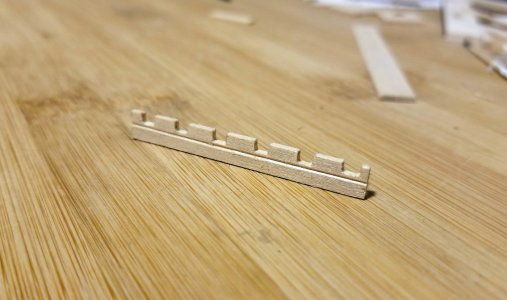
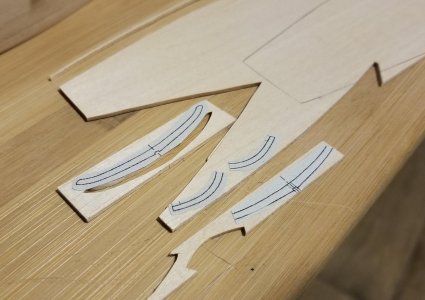
One challenge with the plans is that the frames are shown as single pieces, when the actual frames would have been made of separate floors and futtocks. I guessed at where they would be divided and began cutting the frames from 1/16-inch basswood.
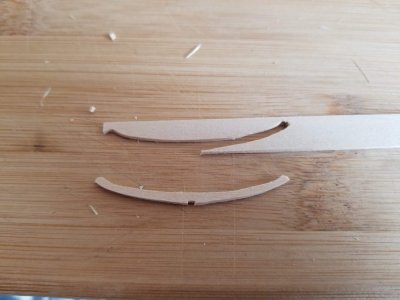
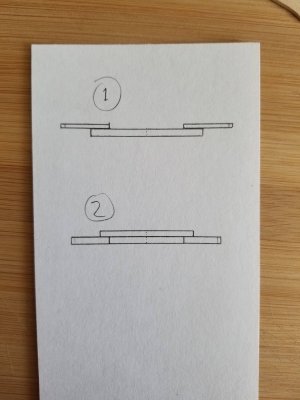
One thing that I found interesting is that small workboat frames further north, such as in Catalonia, often were made of just three parts: a single floor that overlapped the futtocks. While for this vessel from the south, the frames seem to have been made of four parts: two floors and two futtocks, with one floor longer and overlapping the joint. I drew a simplified, not-to-scale image of the top-down view of these different frame designs, below. (In hindsight, it's possible that it's actually the same design, but the Juana y José's futtocks extend all the way down to the keel, but it's not very clear from the plans, and I feel like doing it that way would result in some weak cross-grain).
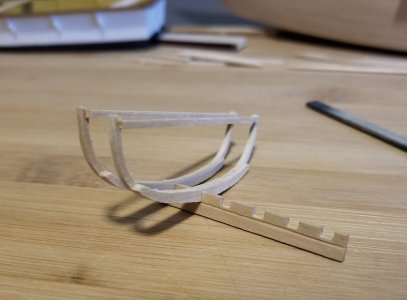
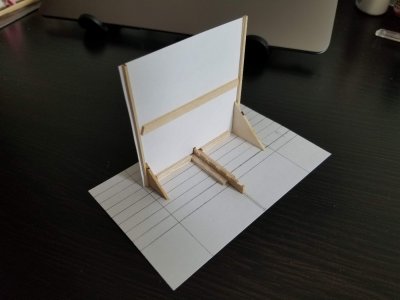
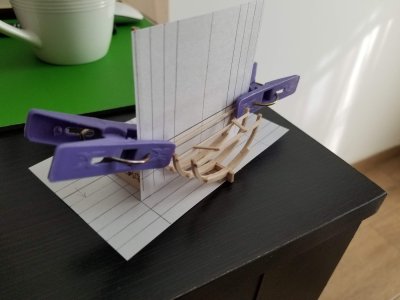
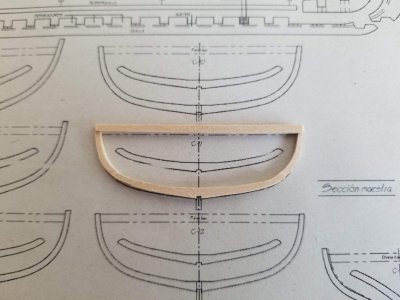
Pretty soon, I had my first frame ready! I used a printout of the frames to make sure it was glued in the right shape. (The plans' lack of division between futtocks and floors is clear). I also added a crossbeam to make sure it would withstand the rigors of fairing.
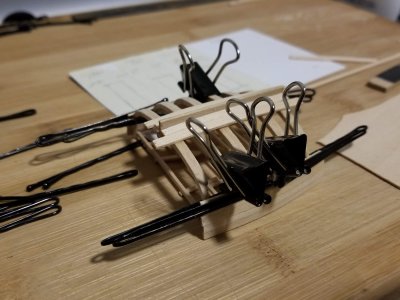
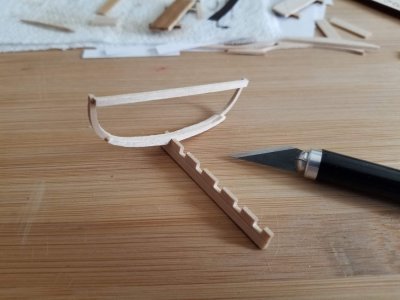
And on the keel:
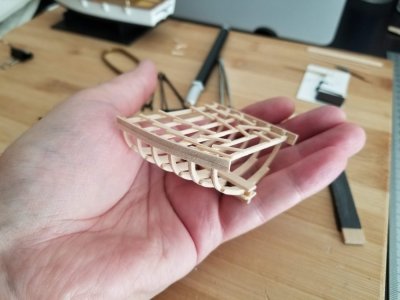
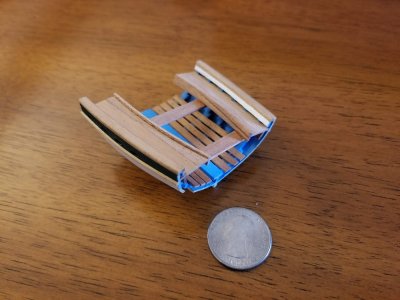
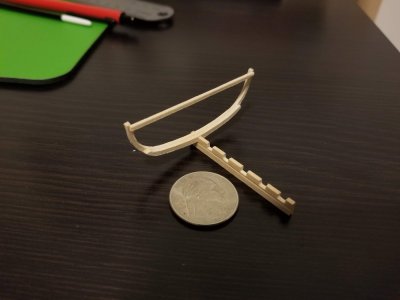
The model is pretty tiny. With a quarter for scale:
Although I've long had an interest in sailing ships and maritime history, I started modeling after visiting the Barcelona Maritime Museum (Museu Marítim de Barcelona), which has a fantastic collection of models, actual ships, and replicas. I was particularly struck by their small craft collection, and by the looks of the lateen-rigged fishing boats of the Spanish Mediterranean. One of my modeling goals was, and still remains (although I've been very sidetracked), to build a Plank-on-Frame (POF) model of a Catalonian palangrera. Looking for information, I found that a Spanish modeler, Alfonso del Valle, had drafted a full set of plans (including frame drawings) for a similar vessel from Málaga, the Juana y José, and had made them freely available. Although there are no build logs on this site, there were several build logs at the Spanish modeling forum Foro Modelismo Naval, and Javier Baron, who has posted a number of models on MSW and SOS, made a beautiful tiny model in 1:74 scale, viewable here.
Below, a detail from the plans for the Juana y José:
At the time, I was midway through my third build (a Canoa de Rancho from Lake Chapala, after having previously completed the Model Shipways Dory kit and a Trajinera from Xochimilco). Everything I had previously built had flat bottoms and sides. I thought that a cross-section of the Juana y José in 1:32 scale (the same as my other scratch builds) would allow me to gain experience with POF techniques, without being overly complicated, while also producing a very small and easily portable model, which was important as I was moving quite frequently then.
The Juana y José
There are a few particularities about the boat and the plans. As del Valle discussed on his website (now sadly defunct but still visible through the Internet Archive, see here), and also on Fore Modelismo Naval, the Juana y José was a real fishing boat that he came across on the beach in Algeciras, Spain. The owner allowed him to take its lines and photograph it, and told him about its history. The Juana y José was built in Málaga sometime in the early 1900s, later being sold to an Algeciras fisherman. It was broken up in a poor state of conservation in 2003. It was 15.6 feet / 4.75 meters long.
Below, a photo from del Valle's site linked to previously:
Interestingly, there are some differences between the plans and the actual boat. The owner told del Valle that it used to have a sail, but del Valle found no indications of a mast step or other provisions for a mast. They may have been removed at some point in the boat's long life, but del Valle was unsure. The real Juana y José was also an entirely open boat. Nonetheless, while del Valle accurately copied its lines and construction details, in his plans he decided to depict it as a traditional clam dragger (almejera) of the sort he remembered from his youth, which in any case were certainly quite similar vessels. So, he added a lateen sail, a partial deck, and a prominent windlass as was used for clam dragging.
I considered building the Juana y José as it really was, but ultimately decided to follow del Valle's plans because they produced the most visually interesting option, especially in a cross-section. If I were to redo the model today (particularly as a full build rather than a cross section), I would probably either build it as a pure rowboat, or would follow the owner's claims and only add the sail (although I would probably use a vertical mast stepped toward the bow instead of the fore-raked central mast, it's a pretty small boat and the foreward-stepped mast was often used on such vessels to increase the useable working space).
The Build
I decided to make the cross-section long enough to include two thwarts, thus hoping to provide some structural rigidity. I chose a six-frame section running from around amidships forward, including the mast step and windlass, producing a hull section just under two inches long at 1:32 scale. I started with the keel, which at scale was about 1/16-inch thick, making it from basswood. The rabbet was tricky to carve in such thin wood, and did not end up being very useful for building. If I were to build the full model at the same scale, I probably use a harder wood like cherry (which I did not have any access to at the time) and may consider using 3:32-inch thick wood as a tolerable divergence from the plans in the name of improved workability.
One challenge with the plans is that the frames are shown as single pieces, when the actual frames would have been made of separate floors and futtocks. I guessed at where they would be divided and began cutting the frames from 1/16-inch basswood.
One thing that I found interesting is that small workboat frames further north, such as in Catalonia, often were made of just three parts: a single floor that overlapped the futtocks. While for this vessel from the south, the frames seem to have been made of four parts: two floors and two futtocks, with one floor longer and overlapping the joint. I drew a simplified, not-to-scale image of the top-down view of these different frame designs, below. (In hindsight, it's possible that it's actually the same design, but the Juana y José's futtocks extend all the way down to the keel, but it's not very clear from the plans, and I feel like doing it that way would result in some weak cross-grain).
Pretty soon, I had my first frame ready! I used a printout of the frames to make sure it was glued in the right shape. (The plans' lack of division between futtocks and floors is clear). I also added a crossbeam to make sure it would withstand the rigors of fairing.
And on the keel:
The model is pretty tiny. With a quarter for scale: