
• Win a Free Custom Engraved Brass Coin!!!
    As a way to introduce our brass coins to the community, we will raffle off a free coin during the month of August. Follow link ABOVE for instructions for entering.
  • PRE-ORDER SHIPS IN SCALE TODAY!

    The beloved Ships in Scale Magazine is back and charting a new course for 2026!
    Discover new skills, new techniques, and new inspirations in every issue.

    NOTE THAT OUR FIRST ISSUE WILL BE JAN/FEB 2026

Oseberg 1/32nd from Pavel Nikitin - With hopefully also many added details.

Joined
Jun 8, 2020
Messages
780
Points
403

Location
West Coast
Hi mates,

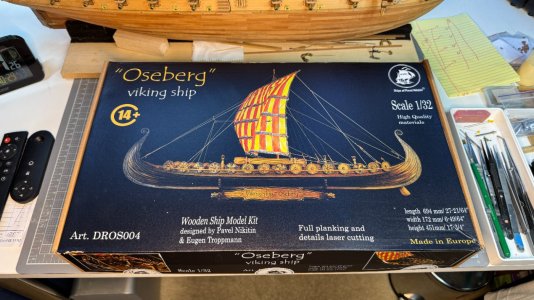
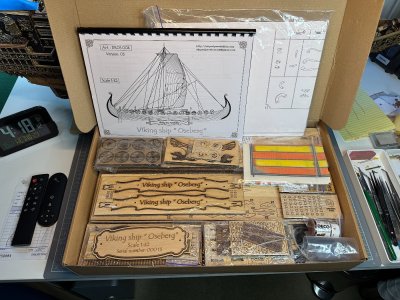
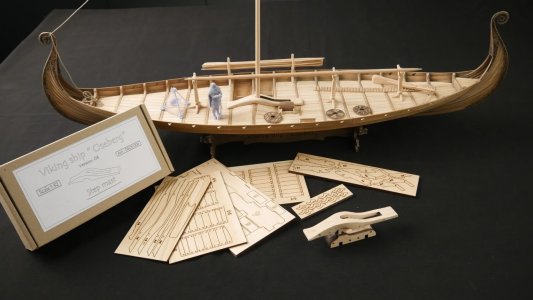
Now, I will start Pavel Nitiken’s 1/32nd Oseberg log. I finally received it. I chose the smaller of the two kits as the 1/32nd is about 7” (18cm) shorter than the 1/25th.

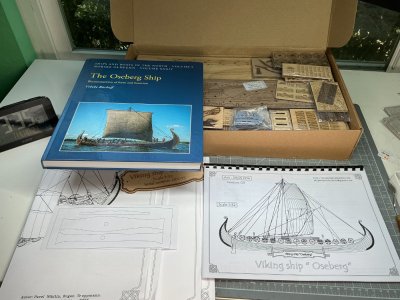
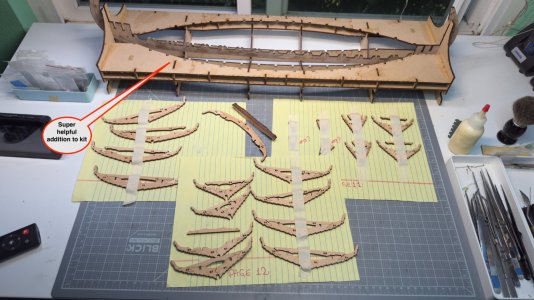
This/these kits are so detailed right out of the box!! - I will try to add extra details as well to this current build, but they will be harder to incorporate as they were for the Sovereign given the excellent products that Pavel and his team provide with all of their kits. The Oseberg is so excellent. The 1/32nd is just as detailed - out-of-the-box as its larger 1/25th.

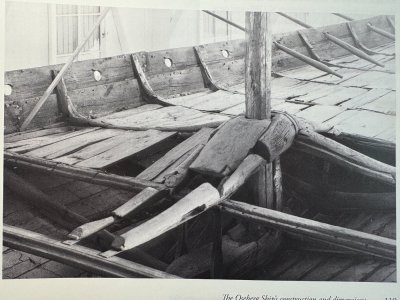
My reference book will also be of great value. The Oseberg Ship by V. Bischoff was written for her PHD thesis specifically about every detail of this amazing 1,200-year-old ship. My understanding is that Pavel’s team also used this book - especially for the rigging and sail details.

As an aside; the Oseberg Museum in Norway is closed until 2027 - a MAJOR upgrade is in full construction. IMO, it will be as impressive as the Vasa Museum. Link if you are interested.


=========

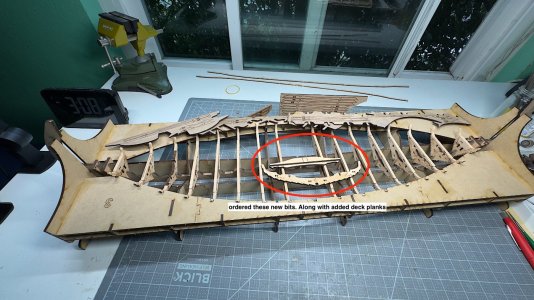
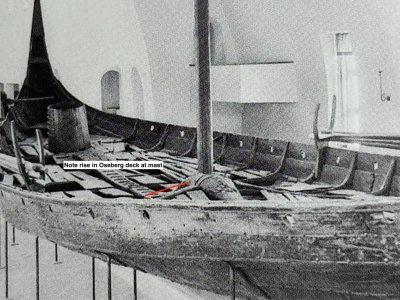
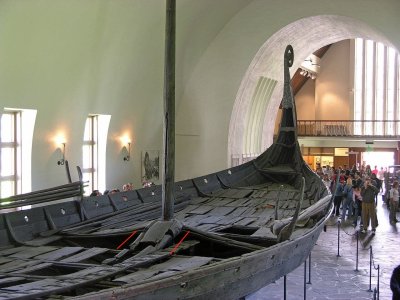
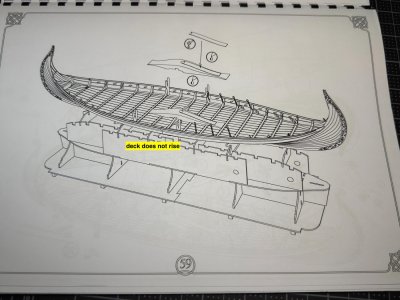
I won’t beginning by following this build in its proper order as I am waiting on the new mast step kit to be sent from Ukraine. There were some concerns in regard to both of Pavel’s Oseberg kits regarding the missing mast step “bump” on the Oseberg's deck.

So, he made upgrades available for both size kits. Conditions are so difficult in Ukraine that this pre-ordered and paid for part will ship as soon as they can. Patiently waiting.

So, I will work around the missing mast framing for now.

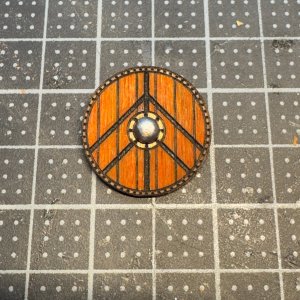
Will start with the shields - the first area where I hope to add as many extra details as possible. - will post added images, and references as I move along.

Thanks for dropping by for an initial look - glad to be back posting again.

PS: upcoming second post should be much more interesting - I hope Redface

Regards to all….1.JPG2.JPG3.jpeg4.jpeg5.jpeg6.jpeg7.jpg8.jpeg9.jpeg10.jpg11.jpg12.jpeg13.jpeg14.jpeg
 
Last edited:
OH - forgot to mention in this log’s first post Pavel’s step by step youtube build log videos are SO helpful!!!


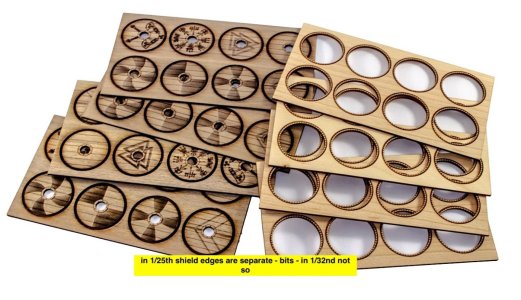
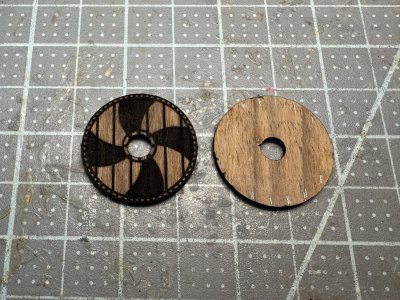
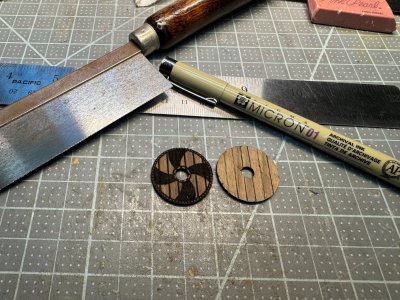
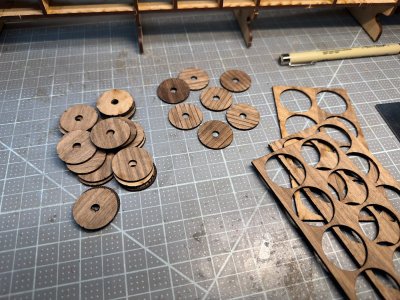
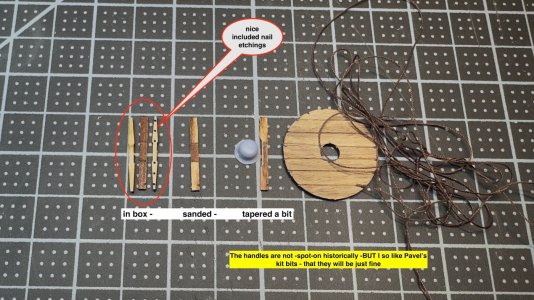
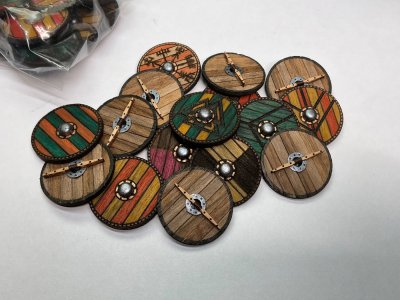
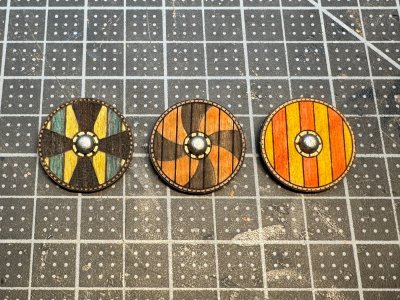
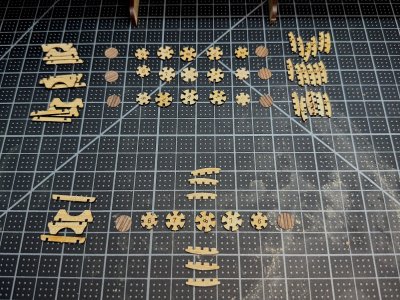
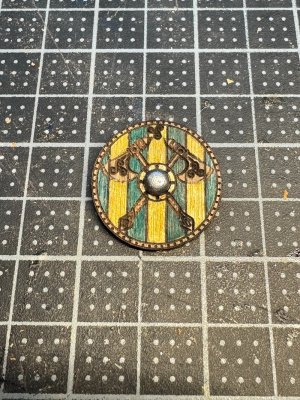
Continuing with the shields - 32 are included - the Lazer face etchings - and cut-out bits are all perfect. Lots of work went into producing such great out-of-the-box bits - Kudos to Pavel and his team.

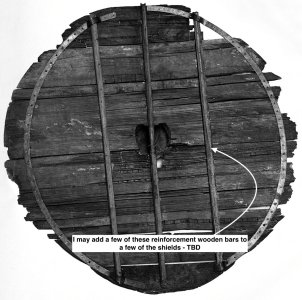
15 shields will attach to outer hull per side, and only half of each back of shield will be visible once mounted (this will save me LOTS of extra detail work time that’s coming up)

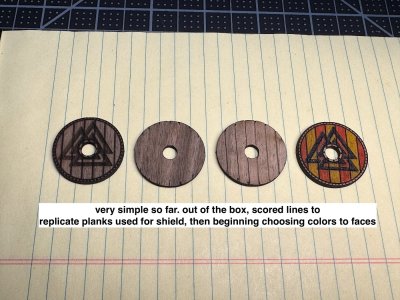
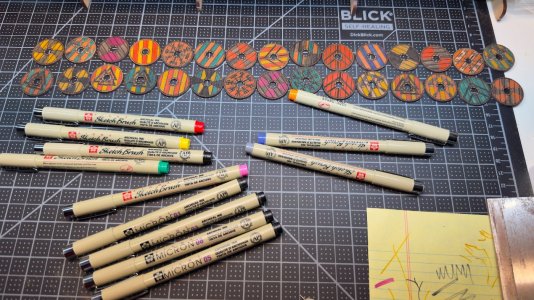
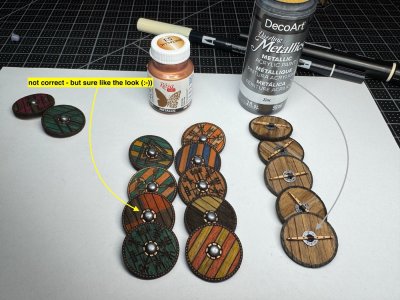
Wanted to add colors to the faces. According to some historical information that I found - shield colors did have specific meanings;

Most Common Colors & Combinations:
  • Red & Black: A very common, striking combination symbolizing courage and protection.
  • Yellow & Black: Also popular, seen in the significant Gokstad burial.
  • Red & White: Another frequent pairing, possibly representing purity alongside strength.
  • Blue: Less common but found on high-status or royal shields, sometimes with white or red.
Symbolism & Status:
  • Red: Courage, strength, warrior valor.
  • Black: Protection, defense.
  • White: Purity, peace, divine favor.
  • Blue: High status, nobility (associated with Odin).
  • Evidence:
    Archaeological finds, like the 64 shields from the Gokstad ship burial, show solid yellow and blue shields.

  • archaeological digs confirm the use of red, white, black, and blue, often in simple geometric patterns or solid fields.
7.jpeg8.jpeg


Good morning John. I have pulled up my chair here. This is such a cool looking kit. I have seen some beautifully crafted Osbergs from Pavel and they make for a model worthy to display. Undoubtedly yours will be right up there. Enjoy. Cheers Grant
 
Good morning John. I have pulled up my chair here. This is such a cool looking kit. I have seen some beautifully crafted Osbergs from Pavel and they make for a model worthy to display. Undoubtedly yours will be right up there. Enjoy. Cheers Grant
Grant - so glad that you're aboard! - by comparison to the majority of ship kits this is a simple ship - so general interest may not be as interesting to many - more of a nitch interest following?.

That said, having built four ships all of which were in the same time neighborhoods, I needed an absolutely new challenge. So going back 1,200 years
results in all new learning for me. And I plan, as best as my skill sets allow, to replicate as accurately as possible extra details within this build -

Glad about that = fun for my brain. Having the Oseberg ship as a visual guide along with the excellent book The Oseberg Ship by Dr. Bischoff will be so helpful for learning about its history, how it was built, and for adding extra details to this, already astonishing out-of-the-box kit.

========================

Shields moving forward - looked for some historical images - very few, and sketchy information at best.

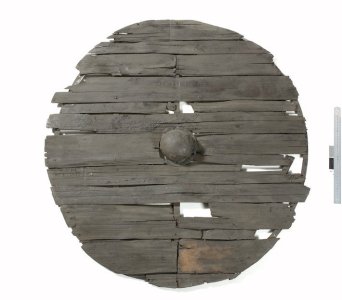
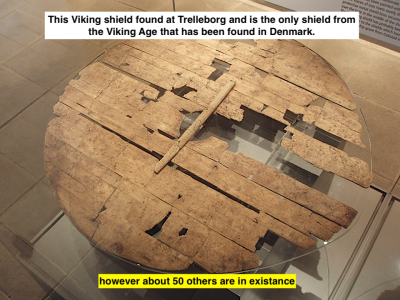
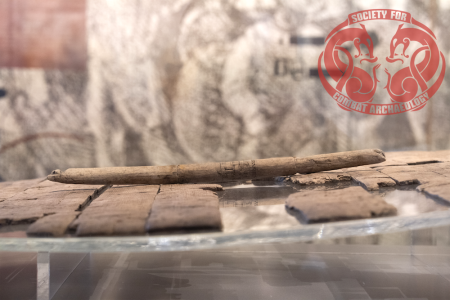
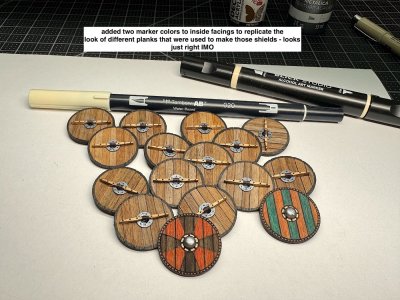
Shield were made from thin planks of wood (linden, pine, fir) butted together, sometimes with support braces on the back

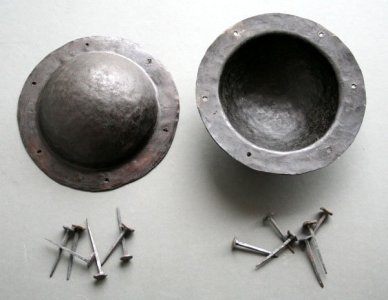
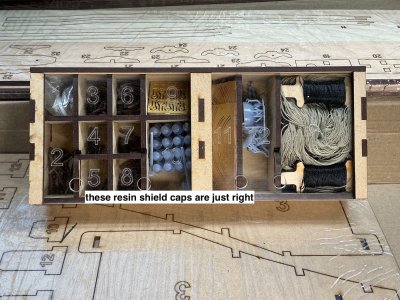
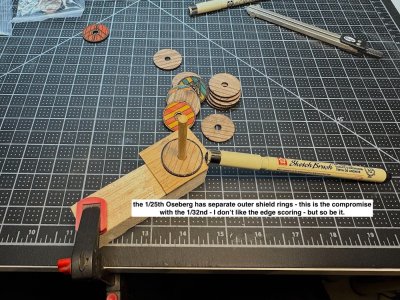
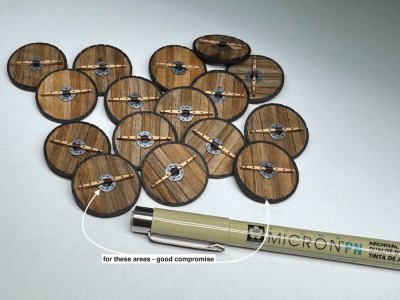
Probably the only advantage with the 1/25th Oseberg kit is in regards to the shields having two bits - their faces and separate outer rims - that would have been a nice way of adding further detail, especially to the back of the shield's outer rims.

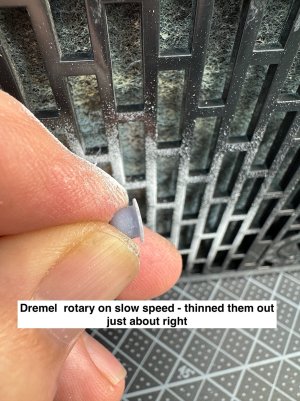
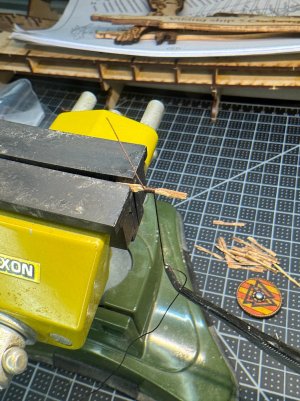
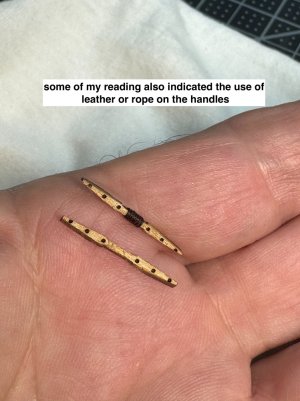
But since the 1/32nd does not have separate outer bands - needed to add some detail that would help the look of the back of the outer edges. Black marker was indeed helpful as well. But I will also add further details to the backside of each shield - still on my list....


1.jpg2.jpg3.jpeg3b.jpeg4.jpeg6.png8.png9.png10.jpeg11.jpeg12.jpeg13.jpeg14.jpeg15.jpeg16.jpeg18.jpeg19.jpg


Thanks for looking and your likes
 
Last edited:
Big shout out (American slang; to publicly acknowledge, praise,- context for overseas members and visitors) to Pavel Nikitin and his team - As I was coloring the shields I became interested in the etchings that he also included onto their fronts.

These added symbols SO add to the superlative quality of these two kits. (Hopefully Ukraine’s uncertainties will soon be resolved. This has sadly affected Pavel’s business as well).

=================

This is what I found; mostly copied and pasted from sources that I found - you might find some of this interesting as well so posting……

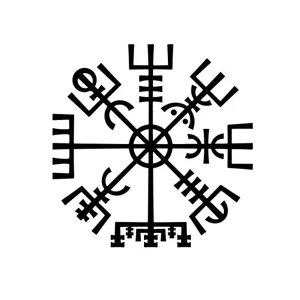
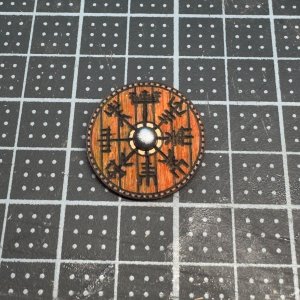
Vegvisir, comes from the words "vegur" (meaning path) and "visir" (meaning pointer), It was the Viking compass. At the heart of Icelandic tradition, and although it is not fully a symbol created by the Vikings, their culture had adopted it, passing through Icelandic lands.

Its lines and symbols had a special meaning; we will never loose our way, in storms or bad weather, even if the path is not known.

A bit more -
-- Its wheel shape with 8 branches each of which features a unique symbol at each point. It appears in the Huld manuscript of the Galdrabók, an Icelandic spellbook from circa 1600 AD.

il_1588xN.2572382803_tnfm.webpIMG_8064.jpeg


Viking axe; symbol of strength and bravery ii simple :)

IMG_8057.jpeg


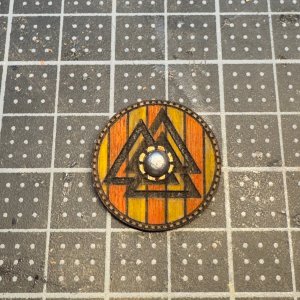
The Triquetra, the Celtic knot. A very particular symbol composed of three intersecting triangles; the meanings have become nebulous… Some see it a a Christian representation of the Holy Trinity, others as the eternal cycle of life-death-rebirth

IMG_8059.jpeg


Inverted Algiz / "Two Upside V's" this particular symbol is questionable


Meaning:
While the upright Algiz rune represents life, protection, and the elk, the inverted version (pointing down, appearing as two upside-down V's) is often interpreted in modern, post-Viking, or neo-pagan traditions as a symbol of vulnerability, the breaking of a protective shield, or a connection to the realm of the dead.

Viking Age Context: Historically, there is limited evidence for "reversed" runes changing meaning in this way during the Viking Age; meaning generally stayed the same regardless of orientation. The usage of this specific symbol is often considered modern or influenced by 19th/20th-century occultism.

IMG_8060.jpeg


These other generic shield fronts designs and markings were up to individual Vikings who owned the shield.

IMG_8061.jpeg

Thank you Pavel for making this kit so excellent rightout-of-the-box!!

Regards,

.
 
Last edited:
Minor update,
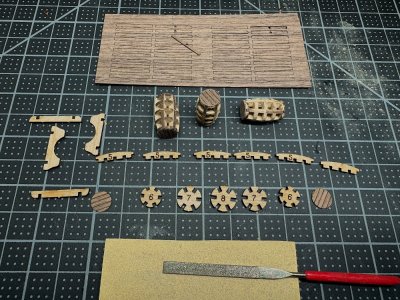
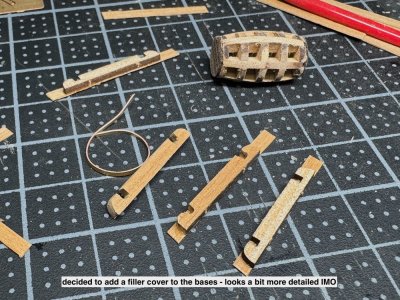
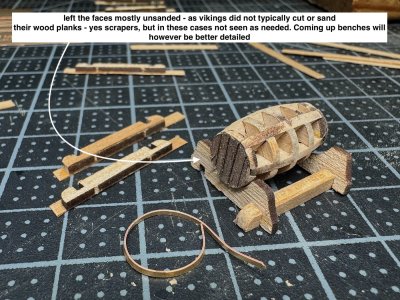
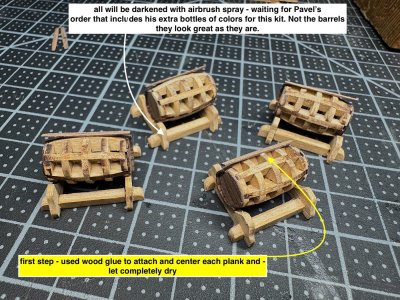
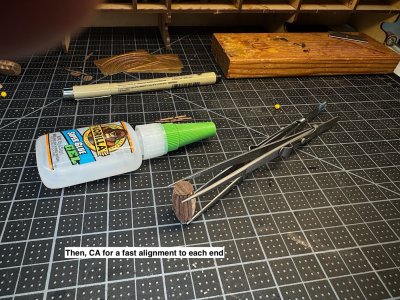
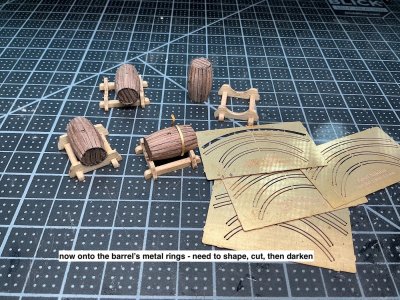
Working on the four kit included barrels. Again, excellent kit included extras.

PS: We have been So accustomed to kit, and after-market barrels that so often miss the mark in regards to accuracy. This kit includes plank by plank examples.
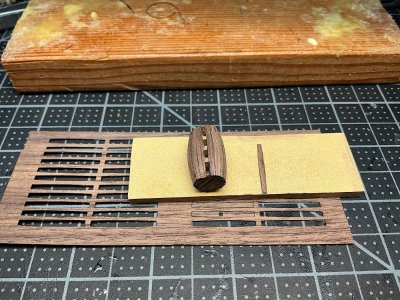
Yes, 3D printed examples will certainly (maybe) become the standard with kits, but in the meantime, these get the trophy. Noted that the scale is much larger than what is needed in the majority of ship models

Regards,

1.jpeg2.jpeg3.jpeg5.jpeg6.jpeg7.jpeg8.jpeg9.jpeg
 
Big shout out (American slang; to publicly acknowledge, praise,- context for overseas members and visitors) to Pavel Nikitin and his team - As I was coloring the shields I became interested in the etchings that he also included onto their fronts.

These added symbols SO add to the superlative quality of these two kits. (Hopefully Ukraine’s uncertainties will soon be resolved. This has sadly affected Pavel’s business as well).

=================

This is what I found; mostly copied and pasted from sources that I found - you might find some of this interesting as well so posting……

Vegvisir, comes from the words "vegur" (meaning path) and "visir" (meaning pointer), It was the Viking compass. At the heart of Icelandic tradition, and although it is not fully a symbol created by the Vikings, their culture had adopted it, passing through Icelandic lands.

Its lines and symbols had a special meaning; we will never loose our way, in storms or bad weather, even if the path is not known.

A bit more -
-- Its wheel shape with 8 branches each of which features a unique symbol at each point. It appears in the Huld manuscript of the Galdrabók, an Icelandic spellbook from circa 1600 AD.

View attachment 573157View attachment 573159


Viking axe; symbol of strength and bravery ii simple :)

View attachment 573160


The Triquetra, the Celtic knot. A very particular symbol composed of three intersecting triangles; the meanings have become nebulous… Some see it a a Christian representation of the Holy Trinity, others as the eternal cycle of life-death-rebirth

View attachment 573161


Inverted Algiz / "Two Upside V's" this particular symbol is questionable


Meaning:
While the upright Algiz rune represents life, protection, and the elk, the inverted version (pointing down, appearing as two upside-down V's) is often interpreted in modern, post-Viking, or neo-pagan traditions as a symbol of vulnerability, the breaking of a protective shield, or a connection to the realm of the dead.

Viking Age Context: Historically, there is limited evidence for "reversed" runes changing meaning in this way during the Viking Age; meaning generally stayed the same regardless of orientation. The usage of this specific symbol is often considered modern or influenced by 19th/20th-century occultism.

View attachment 573162


These other generic shield fronts designs and markings were up to individual Vikings who owned the shield.

View attachment 573163

Thank you Pavel for making this kit so excellent rightout-of-the-box!!

Regards,

.
As always, John, it is your added details which make your ships stand out. Magnificent shields and thanks for some history. Cheers Grant
 
Big shout out (American slang; to publicly acknowledge, praise,- context for overseas members and visitors) to Pavel Nikitin and his team - As I was coloring the shields I became interested in the etchings that he also included onto their fronts.

These added symbols SO add to the superlative quality of these two kits. (Hopefully Ukraine’s uncertainties will soon be resolved. This has sadly affected Pavel’s business as well).

=================

This is what I found; mostly copied and pasted from sources that I found - you might find some of this interesting as well so posting……

Vegvisir, comes from the words "vegur" (meaning path) and "visir" (meaning pointer), It was the Viking compass. At the heart of Icelandic tradition, and although it is not fully a symbol created by the Vikings, their culture had adopted it, passing through Icelandic lands.

Its lines and symbols had a special meaning; we will never loose our way, in storms or bad weather, even if the path is not known.

A bit more -
-- Its wheel shape with 8 branches each of which features a unique symbol at each point. It appears in the Huld manuscript of the Galdrabók, an Icelandic spellbook from circa 1600 AD.

View attachment 573157View attachment 573159


Viking axe; symbol of strength and bravery ii simple :)

View attachment 573160


The Triquetra, the Celtic knot. A very particular symbol composed of three intersecting triangles; the meanings have become nebulous… Some see it a a Christian representation of the Holy Trinity, others as the eternal cycle of life-death-rebirth

View attachment 573161


Inverted Algiz / "Two Upside V's" this particular symbol is questionable


Meaning:
While the upright Algiz rune represents life, protection, and the elk, the inverted version (pointing down, appearing as two upside-down V's) is often interpreted in modern, post-Viking, or neo-pagan traditions as a symbol of vulnerability, the breaking of a protective shield, or a connection to the realm of the dead.

Viking Age Context: Historically, there is limited evidence for "reversed" runes changing meaning in this way during the Viking Age; meaning generally stayed the same regardless of orientation. The usage of this specific symbol is often considered modern or influenced by 19th/20th-century occultism.

View attachment 573162


These other generic shield fronts designs and markings were up to individual Vikings who owned the shield.

View attachment 573163

Thank you Pavel for making this kit so excellent rightout-of-the-box!!

Regards,

.
It’s interesting that the Vikings used different widths of wood for their shields. The planks were obviously the same thickness so they had the technology to make them the same width. I wonder if there were a reason for different widths structurally.
 
Minor update,
Working on the four kit included barrels. Again, excellent kit included extras.

PS: We have been So accustomed to kit, and after-market barrels that so often miss the mark in regards to accuracy. This kit includes plank by plank examples.

Yes, 3D printed examples will certainly (maybe) become the standard with kits, but in the meantime, these get the trophy. Noted that the scale is much larger than what is needed in the majority of ship models

Regards,

View attachment 573965View attachment 573966View attachment 573967View attachment 573968View attachment 573969View attachment 573970View attachment 573971View attachment 573972
Barrels of fun, John. Man, those are tiny!
 
Having just built a full size 32" Viking shield, I can offer that the backside 'reinforcing' pieces are what hold the shield planks together and are fully necessary as it's all butt joints on the face.

As for different shield plank widths, I think there is no purposeful reason to make them the same, and saving extra work as a warrior or craftsman on an expendable piece of gear is a plus. Also, depending on your handle configuration, shield boss size and placement on the laid out planks, having same width planks may cause some small pieces to be impractically small, like at an edge or by the boss where the cut out is. I'd be wary of authoritative or definitive statements on Viking shields as these undoubtedly had an element of practical necessity in such a widespread culture, meaning the practices would vary with the wood, time and skill available.

Regarding model sized shield rims, I laboriously hand cut a thin wall copper pipe into slices to use as shield rims, then painted them, with a nice result. Although if i was going to do it again, i'd array my shields in a column, roll that tightly clamped stack/column in adhesive so all the edges get glue on them, then roll the stack in thick AL foil and let it dry. At that point, you just slice off each shield. if you wanted a specific color or patina, you would just treat the face of the foil before this process.

All that said, I love this particular ship and I can see you're doing it more than justice, bravo!
 
Where did you get your copy of The Oseberg Ship by V. Bischoff? I've looked everywhere I can think of, and it's out of stock.

I think the only place you can get it is Pen and Sword Books in the UK. Those of us who ordered a copy last year when Pavel's 1:25 kit first came out, had to wait about 4 months to get it - with many emails to the store as well as directly to Dr. Bischoff to try and light a fire under them. Apparently, the Viking Museum (with whom Dr. Bischoff is affiliated) sells them, but stopped doing direct sales to the public and only sells them through P&S. Well, last year we devolved into a blame game with P&S blaming the museum for not shipping on time and the museum blaming P&S for never having placed an order. It did eventually arrive, however. Fortunately, I live about an hour away from Cornell University who had one in their library and I was able to borrow it on a guest card for the four months while I waited for mine. Be aware that if P&S does not have it in stock, they will place the order in backorder status, but they will immediately charge your credit card - it is their policy.

During that period of waiting, Dr. Bischoff granted me and the members of SoS access directly to the online copy of her dissertation from which the book originated. It is written in Danish, but nearly all the drawings and illustrations from the book are there. The link is here in my build log. I highly recommend getting the book, however, it is a great read!
 
Back
Top