

• Ships of Scale has incorportated an extra level of security when you log In. Please follow on-screen prompts to acknowledge that you are not a robot via a "Check Box" or a "Pictorial Check Box Puzzle". This is needed due to higher level of AI Activity Security.
  • SUBSCRIBE TO SHIPS IN SCALE TODAY!

    The beloved Ships in Scale Magazine is back and charting a new course for 2026!
    Discover new skills, new techniques, and new inspirations in every issue.

    NOTE THAT OUR NEXT ISSUE WILL BE July/August 2026
  • Win a Free Custom Engraved Brass Coin!!!
    As a way to introduce our brass coins to the community, we will raffle off a free coin during the month of August. Follow link ABOVE for instructions for entering.

Solid Hulls? Anybody?

Model Shipways

Vendor
Vendor
Joined
Jan 20, 2022
Messages
172
Points
133

How do you feel about solid-hull kits?

They used to be very popular, but you don't see nearly as many these days.

Even at Model Shipways, we've converted most of our kits to plank-on-bulkhead.

Do you enjoy building solid-hull models, or you prefer planking?
 
How do you feel about solid-hull kits?

They used to be very popular, but you don't see nearly as many these days.

Even at Model Shipways, we've converted most of our kits to plank-on-bulkhead.

Do you enjoy building solid-hull models, or you prefer planking?

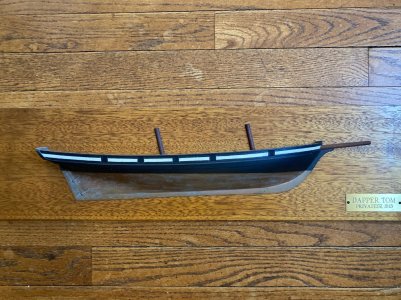
I personally think that on smaller scale they work. I bought a Old Model Shipways Kit of the Dapper Tom when they were in Bogota, NY. It was my second ship model and I found that carving the hull was the most difficult aspect of the build. I consider myself a decent kit basher and was able to turn it into a nice piece. The kit was purchased from a old hobby shop in Milwaukee and was "as is", I probably should have checked it out better because there wasn't much left other than the hull and some of the metal parts. Fortunately I was able to find another kit of the same and between the two completed the model.
Back to my original point I don't think I would want to do the carving on any larger scale versions, I find planking much easier and if you make a mistake it can be ripped out and redone, once you start cutting and grinding on a solid hull, it is more difficult to put wood back on.
Kruser.. I agree...I built Bluejacket's OLYMPIA a few years ago..solid hull was alot of wprk as was MS Flying Fish years ago.. Now POB or POF only.. solid great for smaller scales though..buy cheap and can be improved to make great models.
 
Mass production of solid hulls requires a machine that can carve multiple hulls at the same time.
Those machines are not cheap.
Plank on frame hulls camps be produced with a table saw and a bandsaw/scroll saw.
Much more readily available tools.
 
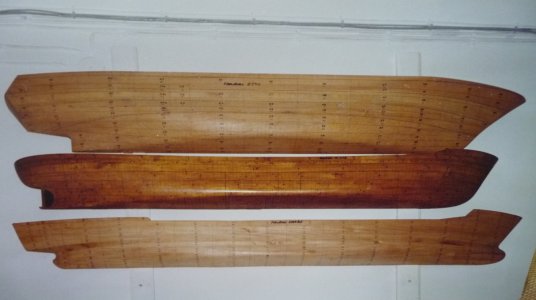
In my youth solid hull models were the most common. There were lots of kits, including the original Model Shipways kits, which were among the best. When in high school I lived near Bogota and was able to visit the Model Shipways shop. There were a number of books about solid hull models including American Ship Models and How to Build Them by V.R. Grimwood. As evidenced by old articles from Popular Mechanics, even sailing models (pre-radio control racing yachts) were built by the bread-and-butter method. Solid models were historically used for designing vessels (see 1st pic of half hulls below). A description of that process is presented in a book about one of the most famous American designers, written by his son (Capt. Nat Herreshoff: the Wizard of Bristol by L Francis Herreshoff).

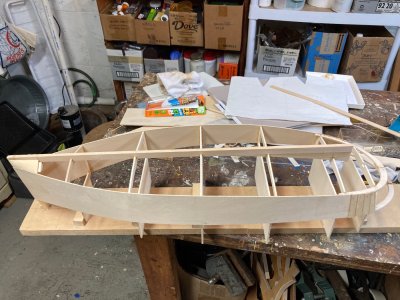
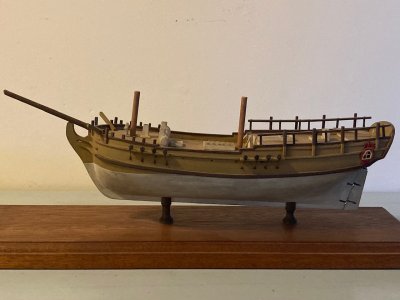
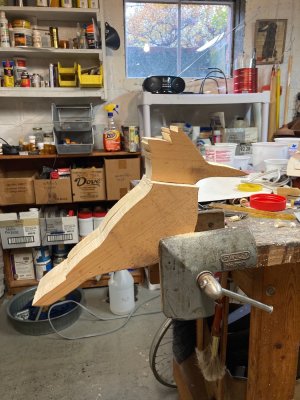
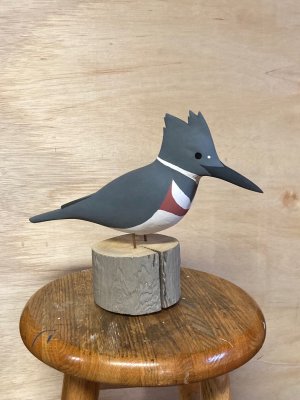
As a sculpture technique, building a plank-on-frame model is an additive process where the shape is built up. Building a solid hull is a subtractive process. There's an old story about a decoy duck carver who, when asked how he makes decoys, explains "I cut away everything that doesn't look like a duck." It all depends on what techniques you enjoy. I enjoy both (see pics below). Fair winds!

half hulls.jpegskipjack tug 2.jpgsultana 1.jpgdapper tom 1.jpgkingfisher 1.jpgkingfisher 2.jpg
 
Back
Top