- Joined
- Aug 14, 2018
- Messages
- 808
- Points
- 403
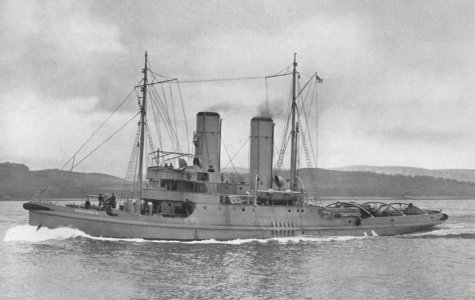
This is the photo that sold me on this build. I think it has a sort of 'Orwellian' cold charm about it that I hope to capture.
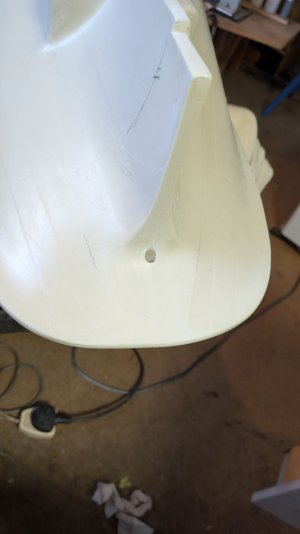
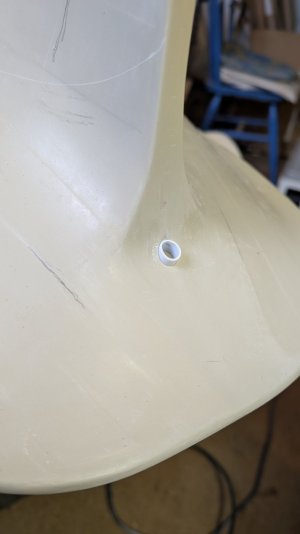
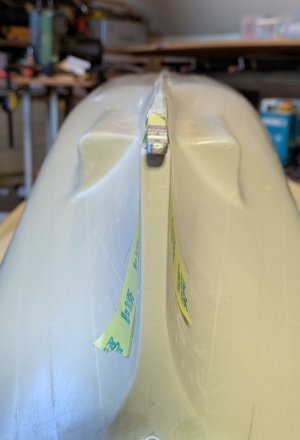
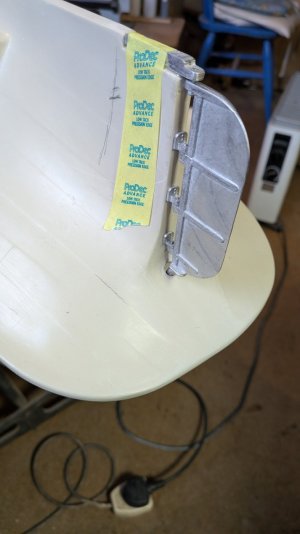
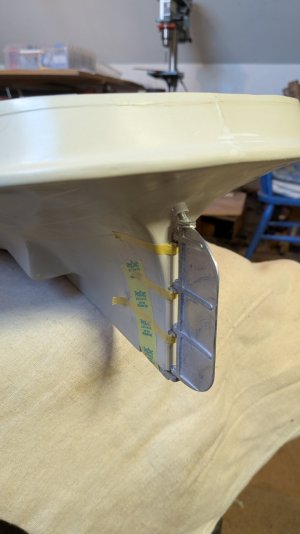
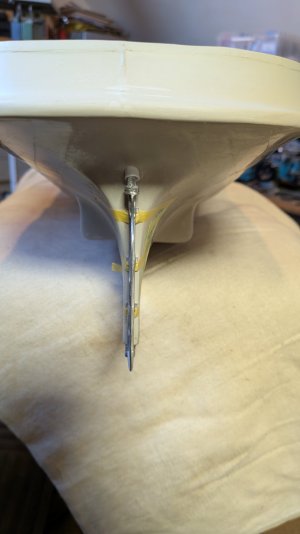
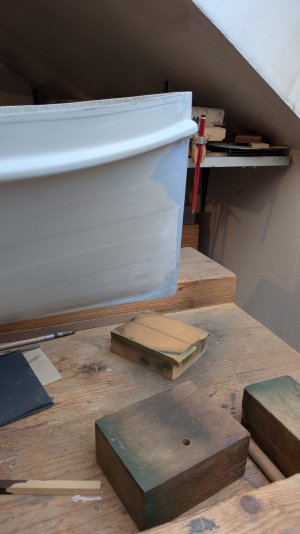
So far all I have done is build a strong work stand and check that all is there and correct. But or course all is not correct. More of that later, but first a bit about HMT Rollcall.
In my idleness I have been having some fun with AI and after much coaxing I managed to get this out of our friendly,(so far),non-human brains.
From Warship to Tender:
The Life of His Majesty’s Tug Rollcall
A Resolve-Class Admiralty Salvage Tug (1918–1958)
The Life of His Majesty’s Tug Rollcall
A Resolve-Class Admiralty Salvage Tug (1918–1958)
Introduction
Among the unsung workhorses of the Royal Navy, few vessels embody resilience and adaptability like His Majesty’s Tug Rollcall. Built in 1918 as part of the Resolve-class salvage tugs, Rollcall’s story spans four decades—from its origins in wartime Britain to its final years as a passenger tender.Construction and Specifications
Rollcall was constructed by Ferguson Brothers Ltd., Port Glasgow, as Yard No. 238. Launched on 2 August 1918 and completed on 27 December 1918, it was one of six Resolve-class Admiralty salvage tugs. These vessels were designed for heavy towing and salvage operations, featuring reinforced hulls and powerful steam engines.Technical Specifications
• Builder: Ferguson Brothers Ltd., Port Glasgow• Yard Number: 238
• Launched: 2 August 1918
• Completed: 27 December 1918
• Class: Resolve-class Admiralty salvage tug
• Length: 175 ft (53.3 m)
• Beam: 34.2 ft (10.4 m)
• Depth: 16.4 ft (5.0 m)
• Displacement: ~1,400 tons
• Gross Register Tonnage: 739 GRT
• Propulsion: Twin-screw, steam reciprocating engines (2 x triple-expansion)
• Power: 2,400 IHP
• Speed: 13.75 knots
• Fuel: Coal-fired boilers
Wartime Service
Completed too late for active service in the First World War, Rollcall was intended for heavy salvage and rescue work. As part of the Resolve-class, it was equipped to recover damaged warships and assist in harbour operations.Post-War Career
In 1922, Rollcall was sold to Alexandra Towing Co., Southampton, and renamed Romsey. Converted into a passenger tender with lounge and enclosed bridge, one funnel was removed. In 1929, it was acquired by Compagnie Générale Transatlantique (French Line), renamed Minotaure, and based at Le Havre as a tender for ocean liners like Normandie. Throughout the 1930s, Minotaure assisted major liners and participated in rescue operations for L’Atlantique (1933) and Paris (1939).Second World War
In 1940, Minotaure was requisitioned by the French Navy and helped evacuate battleship Jean Bart from Saint-Nazaire. Later seized by German forces at Bordeaux, renamed S142, and used as a Channel Islands ferry. In 1944 she was torpedoed by a Royal Navy MTB near St. Malo. Suffering heavy damage and with the loss of over a hundred lives she was beached at Dinard.Despite the extensive damage, she was refloated and towed back to Le Havre, there, remarkably, she was repaired, including a new fore end, and returned to service for the French Line as Minotaure in February 1948.
Final Years
Minotaure continued as a tender until 1958, when it was broken up at Burcht, Belgium by Jos. de Smeldt.Significance
Rollcall’s life illustrates the adaptability of naval auxiliaries: from Admiralty salvage tug to luxury liner tender, then wartime troop carrier and post-war ferry. It was part of the Resolve-class—a group of robust steam tugs that bridged naval and commercial worlds for four decades.Resolve-Class Overview
The Resolve-class comprised six Admiralty salvage tugs built during WWI: Resolve, Respond, Retort, Rollicker, Roysterer, and Rollcall.( I guess all the good and hard sounding names starting with 'R' like Renown Repulse Resolution and Revenge where being kept for battleships. Resolve sounds like a cure for wind! JJ..). Designed for strength and endurance, they played key roles in salvage operations and later adapted to civilian service.Major Events Timeline
1918 – Launched as Rollcall1922 – Sold to Alexandra Towing Co., renamed Romsey
1929 – Sold to French Line, renamed Minotaure
1940 – Evacuation of Jean Bart
1944 – Torpedoed near St. Malo
1948 – Returned to service after repairs
1958 – Broken up at Burcht, Belgium
References
• Brown, D.K. Nelson to Vanguard: Warship Design and Development 1923–1945. Chatham Publishing, 2000.• Jane’s Fighting Ships, 1944 Edition.
• Royal Navy Dockyard Records, ADM 140 Series, The National Archives (UK).
• Roskill, S.W. The War at Sea 1939–1945. HMSO, 1960.
• Lambert, A. The British Navy and the Post-War World. Naval Institute Press, 2012.
• Clydeships.co.uk – Rollcall entry.
• Naval-history.net – Admiralty tug records.
• Royal Navy Research Archive – Resolve-class overview.
Could not have said it better myself.
JJ.. Back in the saddle or something like that.