
• Win a Free Custom Engraved Brass Coin!!!
    As a way to introduce our brass coins to the community, we will raffle off a free coin during the month of August. Follow link ABOVE for instructions for entering.
  • SUBSCRIBE TO SHIPS IN SCALE TODAY!

    The beloved Ships in Scale Magazine is back and charting a new course for 2026!
    Discover new skills, new techniques, and new inspirations in every issue.

    NOTE THAT OUR NEXT ISSUE WILL BE MARCH/APRIL 2026

Why Measuring in Knots

Ships use knots because it's a direct way to measure speed using distances that make sense on the sea and charts. It’s tradition, it’s functional, and it sounds way cooler than "miles per hour.

Why Knots?
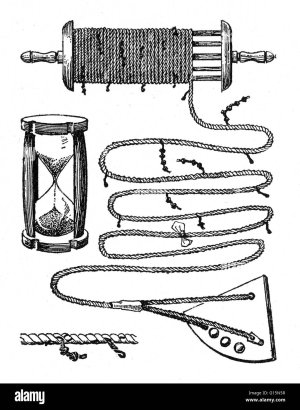
The term knot comes from an old method of measuring a ship's speed using a "log line":
  1. Sailors would throw a wooden board (called a chip log) over the ship's stern, which was attached to a long rope.
  2. This rope had knots tied at regular intervals—usually every 47 feet and 3 inches (based on nautical mile calculations).
  3. As the ship moved, the rope would pay out, and they’d count how many knots passed through their hands in a set time, often 28 seconds (using a sandglass).
  4. The number of knots let out = the speed of the ship in nautical miles per hour. Why Nautical Miles?
    Because nautical miles are based on the Earth’s geometry, 1 nautical mile equals one minute of latitude on the globe. Super handy for navigation at sea!
So, 1 knot = 1 nautical mile per hour (about 1.1508 mph or 1.852 km/h).
 
Woe to any underling who lets the spool slip from his hands while taking the speed.
 
Back
Top