
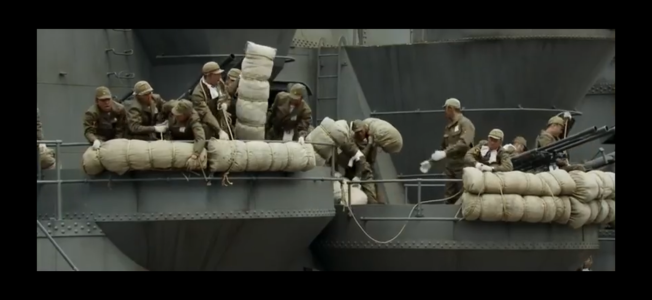
I am considering a build of the IJN ship Yamato in 1:350. It will be configured for the final mission, Ten Ichi Go. I am curious to know if the traditional “sandbag” anti-sharpnel padding was used on areas other than her main deck AA guns. I’ve read conflicting reports The areas of the bridge, weather bridge and upper gun areas were not padded, and yet, the Japanese produced movie, Battleship Yamato(2005) depicts areas of padded throughout. If anyone has an answer to this question and where this padding should be placed I would appreciate your input.

-

Win a Free Custom Engraved Brass Coin!!!
As a way to introduce our brass coins to the community, we will raffle off a free coin during the month of August. Follow link ABOVE for instructions for entering. -

SUBSCRIBE TO SHIPS IN SCALE TODAY!
The beloved Ships in Scale Magazine is back and charting a new course for 2026!
Discover new skills, new techniques, and new inspirations in every issue.
NOTE THAT OUR NEXT ISSUE WILL BE MARCH/APRIL 2026
You are using an out of date browser. It may not display this or other websites correctly.
You should upgrade or use an alternative browser.
You should upgrade or use an alternative browser.


Greetings, AER3393.
Yes, there is evidence that Yamato carried sandbag-type splinter protection and similar padding during her final mission (Operation Ten Ichi-Go). Still, it wasn’t limited strictly to the main deck 25 mm AA guns. The historical record isn’t as detailed as we’d like, and no comprehensive official IJN diagram survives showing every placement, but what is reasonably supported by wartime practice, photographs, and later model research includes the following points.
Primary locations:
Hope this might help ...
Yes, there is evidence that Yamato carried sandbag-type splinter protection and similar padding during her final mission (Operation Ten Ichi-Go). Still, it wasn’t limited strictly to the main deck 25 mm AA guns. The historical record isn’t as detailed as we’d like, and no comprehensive official IJN diagram survives showing every placement, but what is reasonably supported by wartime practice, photographs, and later model research includes the following points.
Primary locations:
- All 25mm AA gun positions throughout the ship (not just main deck)
- The bridge wings and exposed areas of the bridge structure
- Around the 127mm secondary battery positions
- Key fire control and rangefinder positions
- Ammunition handling rooms and ready-use lockers near AA positions
- Exposed walkways and passages crew would use to reach battle stations
- Some exposed communications equipment
Hope this might help ...
Greetings, AER3393.
Yes, there is evidence that Yamato carried sandbag-type splinter protection and similar padding during her final mission (Operation Ten Ichi-Go). Still, it wasn’t limited strictly to the main deck 25 mm AA guns. The historical record isn’t as detailed as we’d like, and no comprehensive official IJN diagram survives showing every placement, but what is reasonably supported by wartime practice, photographs, and later model research includes the following points.
Primary locations:
Additional protected areas:
- All 25mm AA gun positions throughout the ship (not just main deck)
- The bridge wings and exposed areas of the bridge structure
- Around the 127mm secondary battery positions
- Key fire control and rangefinder positions
The protection typically consisted of sandbags stacked around gun positions, supplemented by woven straw/bamboo mats (known as "tatami" style splinter mats) in some areas. By 1945, with Yamato configured essentially as a floating AA platform with greatly augmented light AA armament, these protections were quite extensive, given the expected air attack threat. For your 1:350 model, you might want to focus the sandbag details primarily around the numerous 25mm triple and single mounts that crowded her decks by April 1945, as well as the bridge areas. Aftermarket photo-etch sets often include textured mats you can use to represent this padding. Reference photos from the period show these were somewhat hastily applied, so they don't need to look perfectly uniform.
- Ammunition handling rooms and ready-use lockers near AA positions
- Exposed walkways and passages crew would use to reach battle stations
- Some exposed communications equipment
Hope this might help ...


Just to possibly help I have made much larger scale sandbags (like 1/45) using a 2 component epoxy called Apoxie Sculpt. It is easy to work with, cleans up and smooths with water and drys in a few hours. There are also cheaper knock offs available. I store mine in the refrigerator.
Rob
Rob
(Continued from last post) No tatami rolls are in the kit. The movie I mentioned shows the upper gun positions with these on the splinter shields but curiously, none on the bridge or even the weather bridge. I was quite surprised by this as it was a Japanese film, they created a large and impressive set of the ship to miss such detailPerhaps they know something we don’t, or the film director displaying the bravado of the officers ready to meet an honorable death? Aerial photos of Yamato at Okinawa clearly show sandbags on the bow area. I will take your advice and look into the additional rolls and bags. Thank you for your help.
Rob,Jimsky,
Thank you for your reply. The kit I have is the Veryfire:/Beaver Deluxe version, which has sand bags for the main deck AA guns only. No
Great idea. Thank you. I have apoxie clay. I will attempt to roll some as you suggest. The ones I see online are very straight, made to be mounted on flat or vertical surfaces. Not conducive to placing horizontally on a curved surface.
Glad you find the answers helpful, looking forward to your build log of Yamato.


You can purchase 3d printed sandbags in 1/350 scale for your model on eBay.
It may be awhile until I begin this project. I am in the process of clearing out a store room in my home, making it a clean space so I can move my modeling “work” shop out of the dusty, crowded garage. Kits I finish now always end up with contaminated paint jobs no matter how I try to keep the debris off my bench.


Yes. I saw an amazing Yamato at this year’s IPMS Nationals in Hampton, virtual . We discussed how he achieved the effect with heavily thinned oils. I neglected to ask how he adhered the veneer deck, as I’m sure oils might impede the 3M adhesive backing that my deck has. I am looking at that and other methods to test on scrap decking I kept from my Titanic build. As it was reported to be soot-based, it needs to look slightly worn away due to its base and hurried application. Perhaps post application, I could lightly sand off some of the “soot”.
here you go -
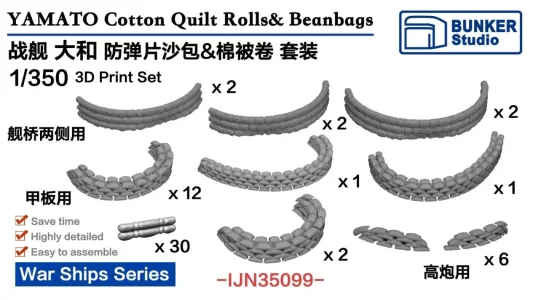
Thank you. There is also a set from Di Stefan. My concern is if the printed parts will fit the contours of the areas I choose to place them. I am leaning toward making the rolls with epoxy putty. However, I’m now unsure padding the areas would be accurate. So far I’m finding that every depiction of Yamato I've researched does not show any padding above the main deck. I have only seen additional padding of the gun tubs above the main deck depicted in one movie. Though it would make sense to do so, given her mission was to be defensive,… and her last, I would like a bit more proof before covering a nearly $400 kit with “foutons” LOL!

Kurt Konrath
Kurt Konrath
She is your ship, so build as you think it should look, we know that ships Captains often had things changed from what were "official standards"
Battleship Yamato(2005) Facinating movie, very powerful and extremely sad at how those young souls were sacrificed, ultimately for what? 'nothing' I would love to visit the Yamato Museum (Kure Maritime Museum) in Kure. Looking forward to your build.I am considering a build of the IJN ship Yamato in 1:350. It will be configured for the final mission, Ten Ichi Go. I am curious to know if the traditional “sandbag” anti-sharpnel padding was used on areas other than her main deck AA guns. I’ve read conflicting reports The areas of the bridge, weather bridge and upper gun areas were not padded, and yet, the Japanese produced movie, Battleship Yamato(2005) depicts areas of padded throughout. If anyone has an answer to this question and where this padding should be placed I would appreciate your input.

Thank you. There is also a set from Di Stefan. My concern is if the printed parts will fit the contours of the areas I choose to place them. I am leaning toward making the rolls with epoxy putty. However, I’m now unsure padding the areas would be accurate. So far I’m finding that every depiction of Yamato I've researched does not show any padding above the main deck. I have only seen additional padding of the gun tubs above the main deck depicted in one movie. Though it would make sense to do so, given her mission was to be defensive,… and her last, I would like a bit more proof before covering a nearly $400 kit with “foutons” LOL!
Yes, also, the war is seen in the film seen from the Japanese perspective. There is one part of the movie, where an officer speaks to the young men explaining that their sacrifice would bring about a positive change for the nation. Either way, such a terrible loss of so many young lives. And yet all wars tend to suffer similar loss.Battleship Yamato(2005) Facinating movie, very powerful and extremely sad at how those young souls were sacrificed, ultimately for what? 'nothing' I would love to visit the Yamato Museum (Kure Maritime Museum) in Kure. Looking forward to your build.


A very interesting question but if you are going to this level I would only trust the aerial photos taken during her final sorte.
There is one common picture which is good enough to show the heading markers on the deck. It shows the blast bags on the main guns that have been destroyed during the battle and clearly shows the sandbags around the forward aa guns on the main deck. The superstructure appears devoid of any protection other than possibly some added protection on the “ears” either side of upper bridge.
This isn’t definitive as the picture is rather grainy but I would take the path of omission without concrete evidence.
Yes makeshift aa protection was commonplace by the IJN during the war, however the difference is this was one mission where they had no intention of coming back from
There is one common picture which is good enough to show the heading markers on the deck. It shows the blast bags on the main guns that have been destroyed during the battle and clearly shows the sandbags around the forward aa guns on the main deck. The superstructure appears devoid of any protection other than possibly some added protection on the “ears” either side of upper bridge.
This isn’t definitive as the picture is rather grainy but I would take the path of omission without concrete evidence.
Yes makeshift aa protection was commonplace by the IJN during the war, however the difference is this was one mission where they had no intention of coming back from