• Win a Free Custom Engraved Brass Coin!!!
    As a way to introduce our brass coins to the community, we will raffle off a free coin during the month of August. Follow link ABOVE for instructions for entering.
  • SUBSCRIBE TO SHIPS IN SCALE TODAY!

    The beloved Ships in Scale Magazine is back and charting a new course for 2026!
    Discover new skills, new techniques, and new inspirations in every issue.

    NOTE THAT OUR NEXT ISSUE WILL BE MARCH/APRIL 2026

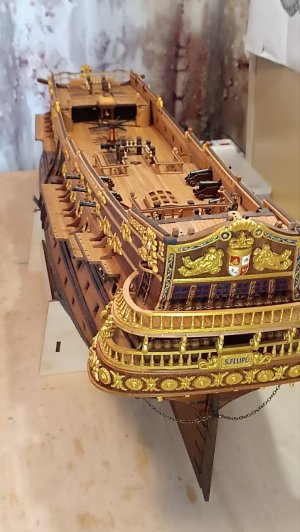
ZHL San Felipe 1690

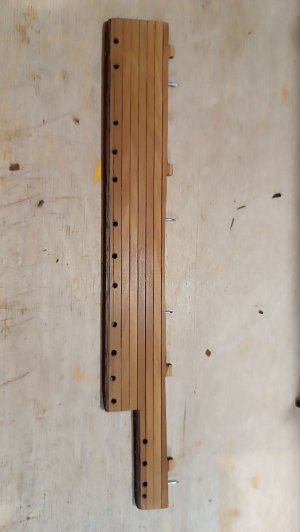
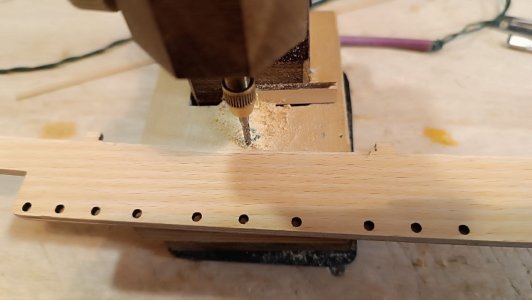
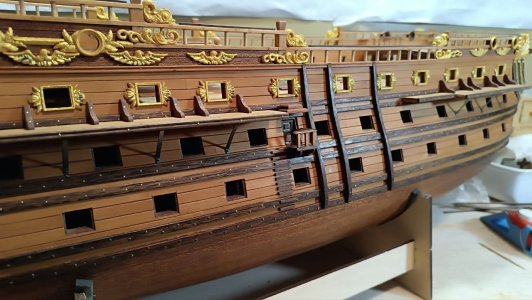
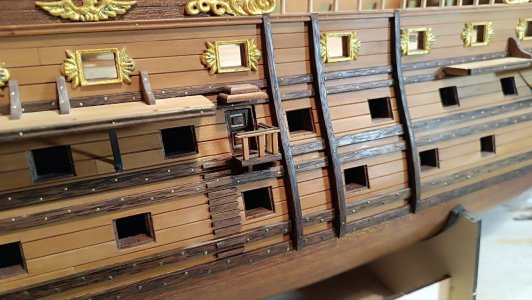
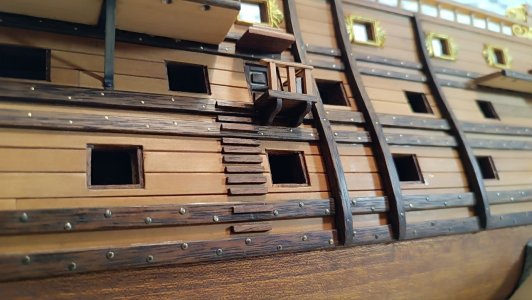
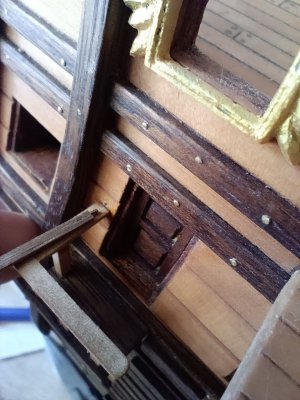
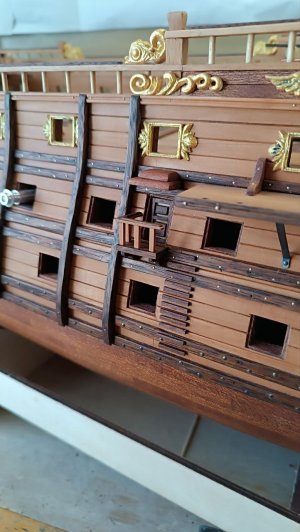
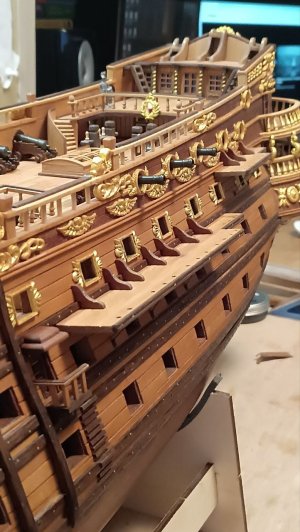
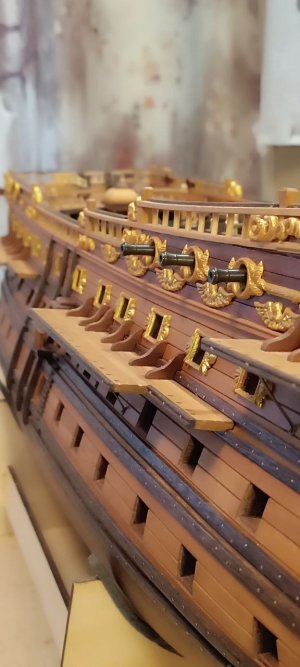
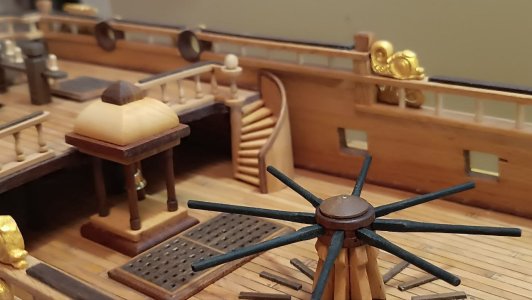
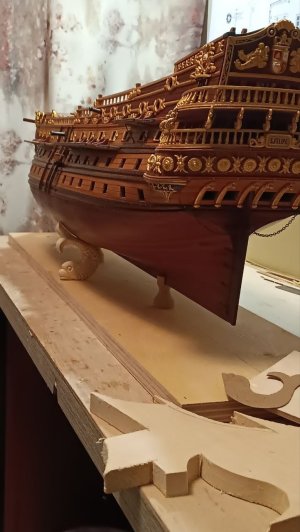
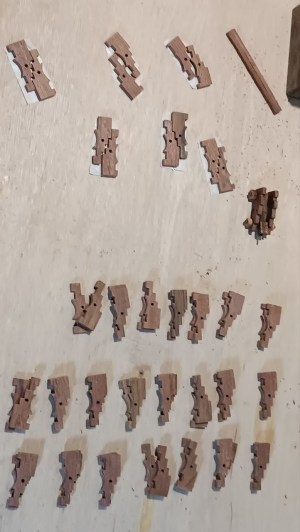
It's time to install the ruslen. This is an element of the standing rigging that is subjected to significant stress on the models. Therefore, I not only glued them in place but also reinforced the attachment with metal pins. Details of the ruslen in the beech set. I pasted them with pear slats, and that they entered the page between the barhout in thickness, I had to mill the thorn along the entire length.
photo_2026-04-13_11-15-36.jpgphoto_2026-04-13_11-15-36 (2).jpg

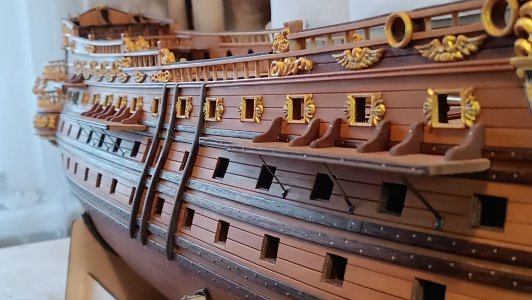
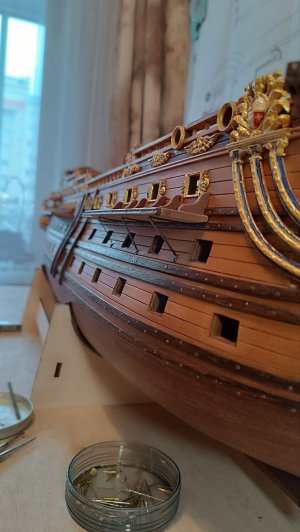
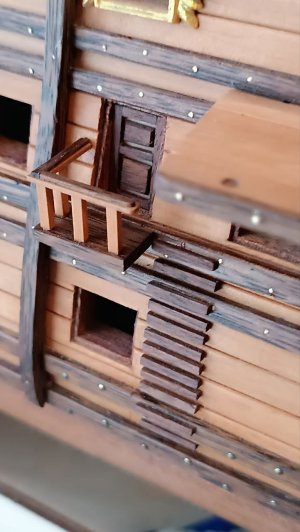
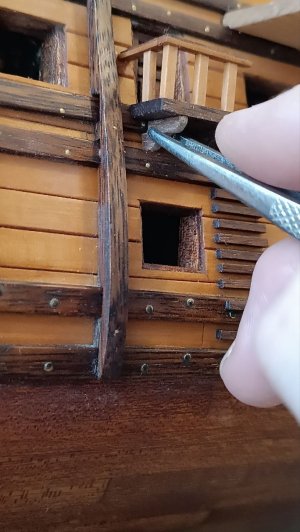
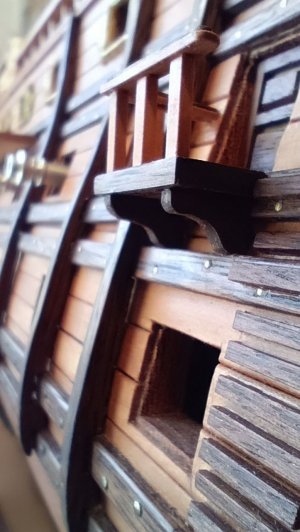
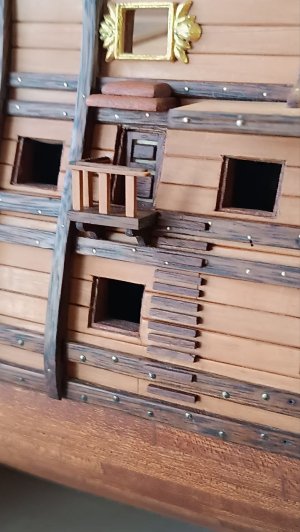
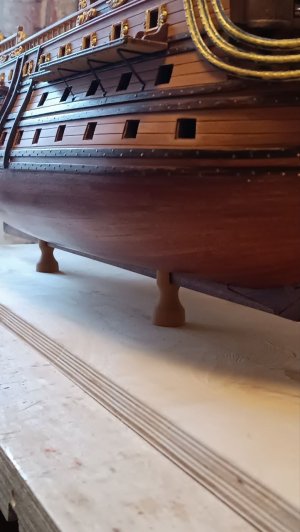
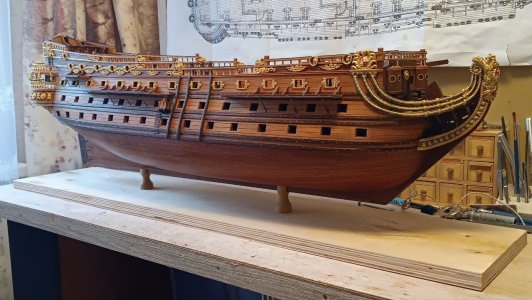
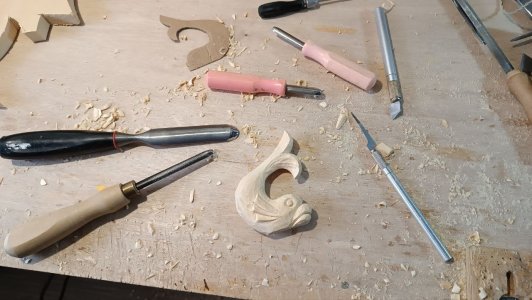
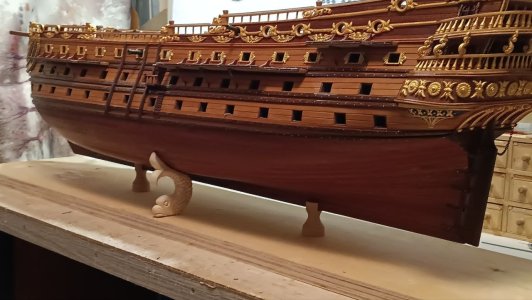
Instead of using the knee from the kit, I carved them from mahogany plates, giving them a smooth, curved shape. In the kit, as well as in the drawings, they have a simple triangular shape and appear rather crude.

photo_2026-04-13_11-15-35 (3).jpgphoto_2026-04-13_11-15-35 (2).jpg
ps: And yet, Google translates nautical terms from Russian to English terribly. You have to constantly monitor the translation of ship parts names, otherwise you get complete gibberish. It's terribly inconvenient.
 
Last edited:
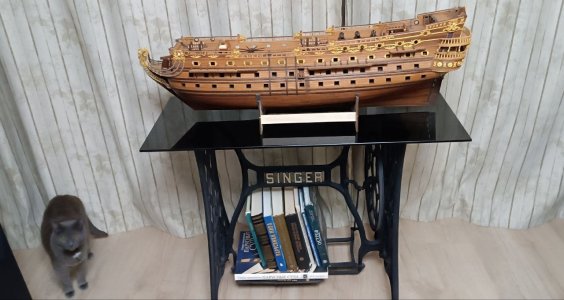
Hello. I'm new to this site. I'm from Russia, so I apologize in advance for my English, but Google Translate is helping me. If anything, I apologize for the mistakes, but this post on this site is a bit unusual for me, especially for the first time.I want to share my build of this rather popular kit from China. I turned 62 in August, and this set was a kind of birthday present from my wife and daughter. In my youth, I was interested in ship modeling, but as I got older, I had less and less time for it. I haven't done this in twenty years, so I decided to try again. I came across this website when I was looking for information about this model. I'm putting it together now, and this is what it looks like. But first things first.
View attachment 555477

I ordered a kit from China through a Russian marketplace. It cost 185 dollars with delivery at the current exchange rate. They were delivered to our Upper Volga region quite quickly, in a little less than a month. Immediately, I purchased pink pear and sapele boards for the exterior cladding, as well as a white pear for the deck, which cost me another $70.
View attachment 555440
For the barkhouts, I sawed dark walnut planks from my reserves.
View attachment 555455
I have experience building models from scratch, not from kits. Such instructions turned out to be of little use to me, especially since they were very schematic and in Chinese. The drawing served as a kind of "bible for assembly.And, of course, I had to prepare a new workbench first; I had never built sailboat models of this scale before. The frame was assembled with almost no hitches, but we had to raise the beam line at the stern a little; the Chinese made a small mistake in some details, which greatly affects the design of the stern galleries.
View attachment 555451View attachment 555457
I also made linden bosses for the bow and filled the deck with linden slats for installing half-pillows, and painted everything black.
View attachment 555452

View attachment 555453
There were no problems with the roughing. However, I still haven't decided on the type of wood. It's a pity that it's not a lime tree, but unlike us, there doesn't seem to be much of it in China. The material that came in the kit is a bit fragile, but it's easy to work with — the main thing is not to sand it to holes.But before proceeding with the black plating, it is necessary to install the finishing trim and doors on both bulkheads. Otherwise, you won't be able to get to them later.
View attachment 555462View attachment 555463


View attachment 555459View attachment 555460
Then I started laying the deck deck, but before that I marked out a place in the hull for gun ports and slats. I took all the dimensions from the drawing; the template from the set was not used, as it slightly does not match the original.
View attachment 555461View attachment 555464
I also pre-installed the gun port racks on the upper deck.
View attachment 555468View attachment 555467


View attachment 555469View attachment 555470
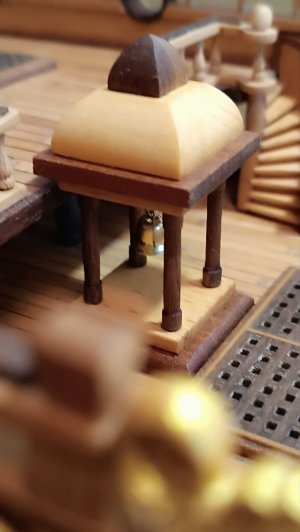
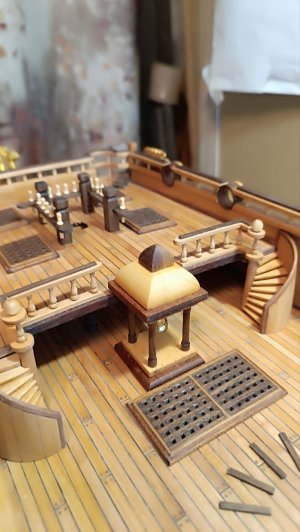
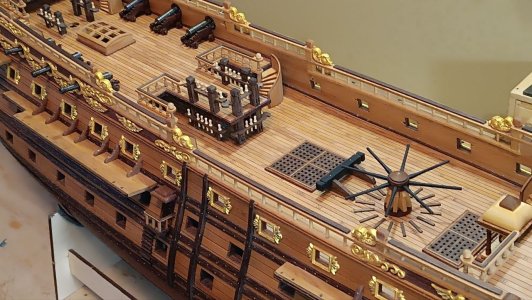
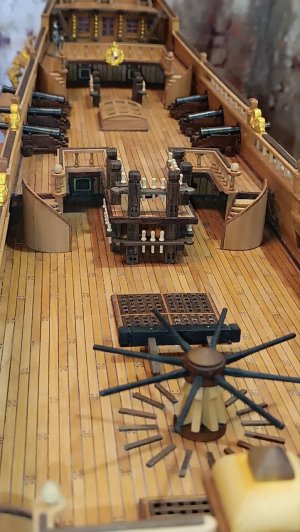
For the flooring, I used light pear planks with a thickness of 1 mm and a length of 4 mm. The length of the board was 100 mm, although 120 mm would be more accurate. I laid them in three boards with a pitch of 25 mm. I pre-modeled the sheets and unpacked the joints, and then laid them. Birch toothpicks were used as dowels, and thin black drawing paper was used for joints.
View attachment 555471

View attachment 555465View attachment 555472


View attachment 555473View attachment 555474View attachment 555475


I think that's enough for today. To be continued. If you have any questions, ask, and I'll try to answer them in as much detail as possible.


View attachment 555454

View attachment 555476

Hi Etwas_63 your ship looks very nice!!! clean job!!! Congratulations!!
I’ve always wanted to know: how do you rate the quality of that kit? Do you think it’s good—are the materials decent? I imagine you must be having some trouble reading the blueprints in Chinese, though ROTFROTFROTF.
Regards
 
Last edited:
I'll continue. (I'm sorry again if there are errors and unclear places in the text, English is not my native language). As I wrote above, I separately ordered slats of pink pear and mahogany (sapel) with a length of 500 mm, a width of 7 mm and a thickness of 1 mm. But I still haven't decided what to trim the quarterdeck with. There was an idea to use a dyed blue hornbeam and even asked for a sample to see how it would look on the ship. Soaked it in oil, which turned it dark blue. I liked it and I decided to order the slats anyway, but then the manufacturer had some minor problems-a defect with the unpainted hornbeam array. So for now, I postponed this issue for later, and took up the cladding below the quarterdeck. Up to the waterline is a pink pear tree, below it is a mahogany tree. I sawed walnut slats with a width of 4 mm, 6 mm and 7 mm on the barhouts.
View attachment 556094View attachment 556095View attachment 556096
At the rails of the pear tree, I made a small chamfer at the joints, imitating the stitching of the boards. The only difficulty at this stage of work is in the bow of the ship. In order to bend the same walnut slats, I first kept them in boiling water for a few minutes, and then bent the profile with a powerful soldering iron.
View attachment 556098View attachment 556099
I also made a small spike for installation on the barkhout, and a groove for it on the stem.
View attachment 556100View attachment 556101View attachment 556102
View attachment 556103

The greatest difficulties and the largest amount of work are, of course, when the hull is below the waterline. There I tried to sheathe using the planking method-calculating the width of the slats in the middle, stern and bow of the ship by the length of the hull. I narrowed them to the required size and inserted them in separate places, I don't know how it is in English, but we call them "losses".
View attachment 556104View attachment 556105View attachment 556106

I also had to bend the nose bars or make them from several parts in very problematic places.The profile was taken directly from the hull along the line of the finished skin.

View attachment 556111View attachment 556108View attachment 556107
View attachment 556112
With the work in the stern, of course, the work is simpler.

View attachment 556120View attachment 556121
Finally, all the slats are glued, the hull below the waterline is sanded and also brought almost to perfection by cycles. Subsequently, it will be coated with tung oil in three layers.
And yes, I highly recommend the glue in the last photo, I use only it for covering the deck and hull slats, one of the best adhesives for ship modelers in my humble opinion-it is reliable and seizes quickly enough, the excess can be immediately removed with a damp cloth, does not leave traces of fringe when pouring wood.
View attachment 556123View attachment 556124
View attachment 556122View attachment 556125

That's all for now. I am currently working on the other side of the building. I'll continue the review later, if nothing prevents.
How beautiful it's turning out! I really love the contrast of the natural colors.
Regards
 
Last edited:
Hi Etwas_63 your ship looks very nice!!! clean job!!! Congratulations!!
I’ve always wanted to know: how do you rate the quality of that kit? Do you think it’s good—are the materials decent? I imagine you must be having some trouble reading the blueprints in Chinese, though ROTFROTFROTF.
Regards
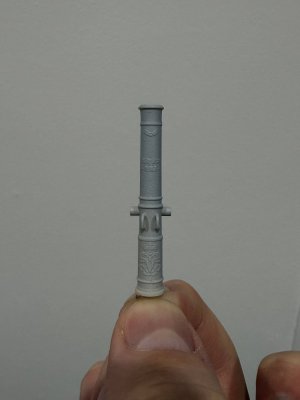
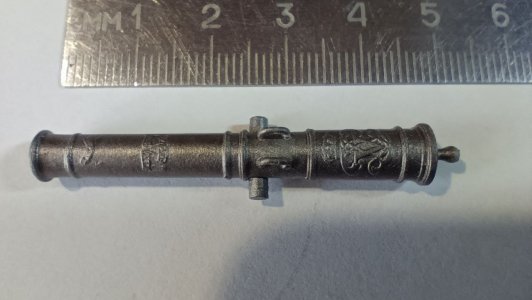
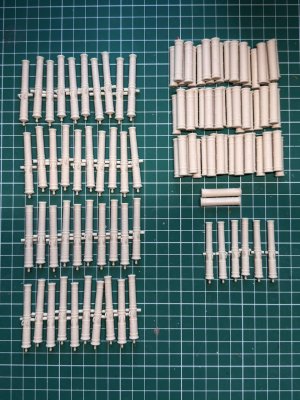
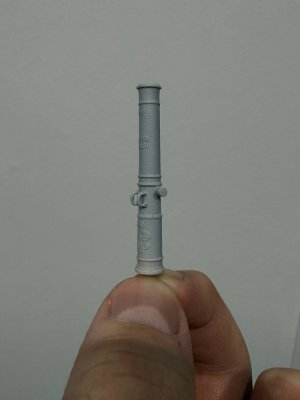
By and large, I only used the plywood frame from the set. It's of good quality, except for the stern. I had to redo it because the Chinese made a mistake with the dimensions. The resin casting is not of very good quality, so I had to refine it using a Dremel and chisels. The aluminum cannons were disappointing. They are slightly off scale, and it's more challenging to blacken them compared to the brass cannons. I ordered materials separately for the side and deck panels. Regarding the blueprints...they are not, they are just drawings, not drawings designed to build a model sailboat. The only thing that helps me out is the previous experience of models not from kits. But to tell the truth, on such a scale, I have never had to build a battleship before, so no matter what, I get great pleasure from building it. "A samurai has no goal, there is only a way"))). But I would not recommend this set to novice ship modelers in any case
 
Back
Top