




Hello everyone!
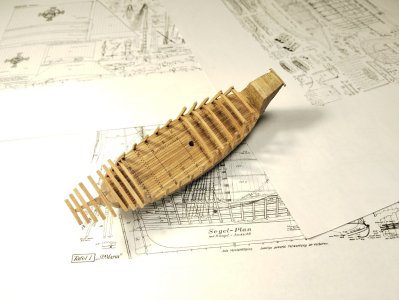
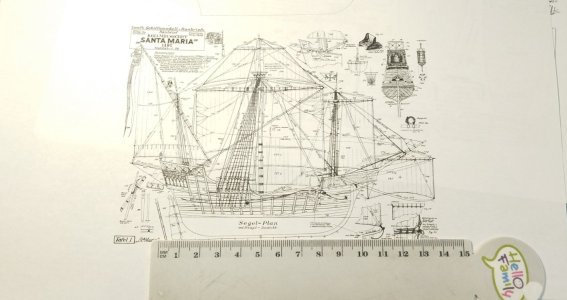
So, after a short break following my first model, I’ve started building a new one – the Santa Maria, based on Adamec's plans. One of the members of this forum kindly helped me by adjusting the plans to the correct scale (thank you, Erlo!). Initially, I planned to use the Mondfeld plans, but later decided to reserve them for a larger scale.
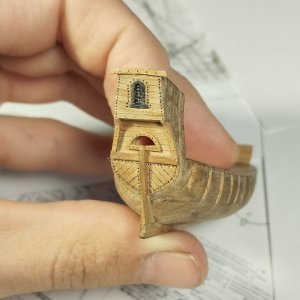
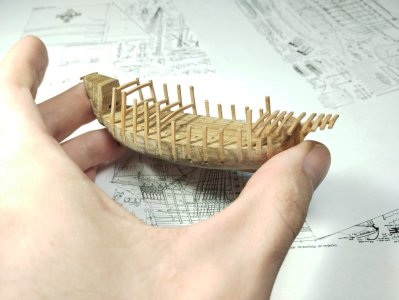
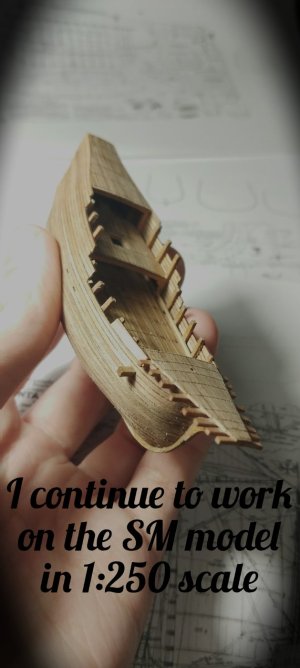
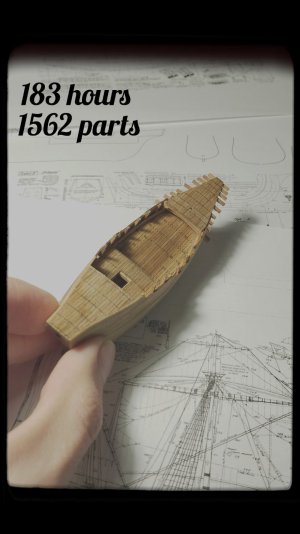
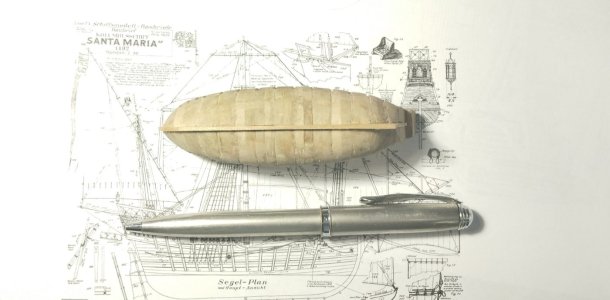
At this point, I’ve completed the hull, the keel frame, and the deck. For the deck, I decided to go the extra mile and depict the plank joints and a nails with a diameter of 0.2 millimeters. There are 604 of them in total.
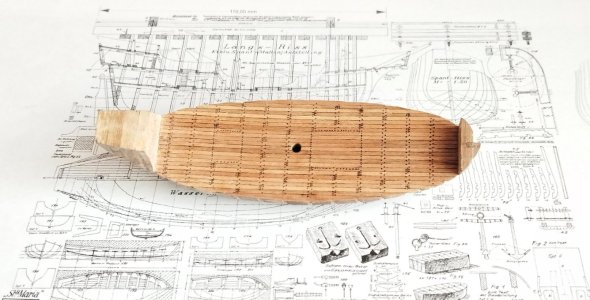
To give a sense of scale, I placed a pen next to the model (this idea was borrowed from Robert Wilson)
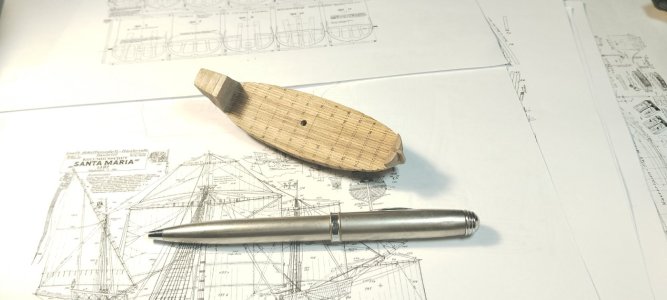
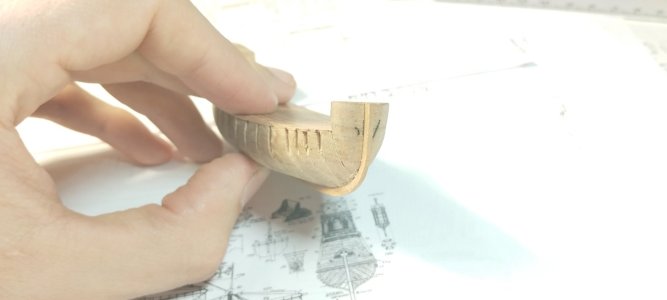
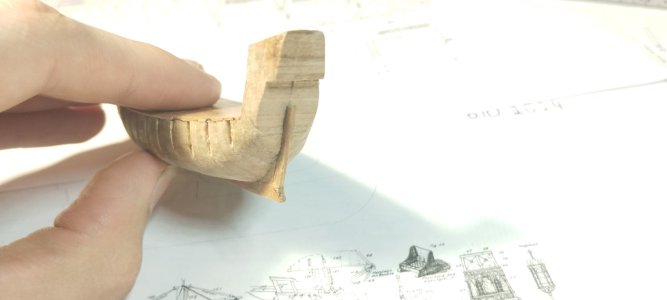
I’ve also made sure to address the camber and the bends – important features that many modelers tend to overlook.
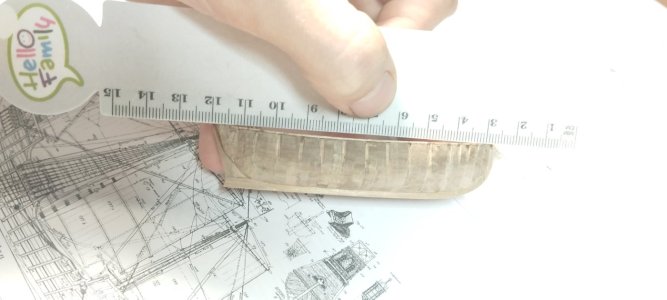
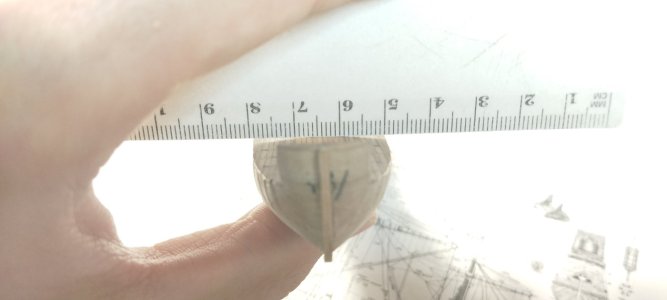
Time spent on the work: 59.5 hours; number of parts: 664.
Well, that's it. If I make any mistakes while building the model, please let me know. I would appreciate it.
Thank you to everyone who found the time to check out this log.
All the best!
By the way, while working on the model, I listen to audiobooks. I recently started exploring the works of George Orwell this way. It’s a heavy book...
Before that, I listened to Erich Maria Remarque’s All Quiet on the Western Front.
So, after a short break following my first model, I’ve started building a new one – the Santa Maria, based on Adamec's plans. One of the members of this forum kindly helped me by adjusting the plans to the correct scale (thank you, Erlo!). Initially, I planned to use the Mondfeld plans, but later decided to reserve them for a larger scale.
At this point, I’ve completed the hull, the keel frame, and the deck. For the deck, I decided to go the extra mile and depict the plank joints and a nails with a diameter of 0.2 millimeters. There are 604 of them in total.
To give a sense of scale, I placed a pen next to the model (this idea was borrowed from Robert Wilson)
I’ve also made sure to address the camber and the bends – important features that many modelers tend to overlook.
Time spent on the work: 59.5 hours; number of parts: 664.
Well, that's it. If I make any mistakes while building the model, please let me know. I would appreciate it.
Thank you to everyone who found the time to check out this log.
All the best!
By the way, while working on the model, I listen to audiobooks. I recently started exploring the works of George Orwell this way. It’s a heavy book...
Before that, I listened to Erich Maria Remarque’s All Quiet on the Western Front.




 . Awesome project, I'll be following with great admiration
 . But seriously, this construction is a kind of experiment, a test of my abilities. Despite their complexity, miniature models have several advantages — low material consumption and, as a result, low cost; assembly takes relatively less time; most parts can be made with basic tools, without the need for expensive equipment or machines; the small size itself is an advantage in some ways — small models are easy to store and transport, for example, to model ship competitions (by the way, I chose the 1:250 scale because it's the largest scale allowed in the C-4 class); small models take up little space, and in the future, it will be possible to collect entire collections of sailing ships...