

• Win a Free Custom Engraved Brass Coin!!!
    As a way to introduce our brass coins to the community, we will raffle off a free coin during the month of August. Follow link ABOVE for instructions for entering.

Proper way to make rope hanks

Joined
Mar 17, 2021
Messages
429
Points
278

Location
San Diego, CA
I'm going to start my first complicated rigging job soon. Does anyone have an illustration of the proper way to make rope hanks?

I've seen a lot of figure eights wrapped a few times in the middle, but I think there's another step that makes them much more realistic. I remember seeing a set of pictures where the figure eight was pushed through a loop at the end and cinched and it looked great. Unfortunately, i didn't capture that image and stash it in my collection of ship making tips.

Any ideas are heartily welcome!
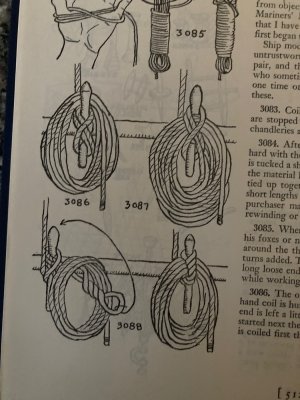
 
Ok, now I have a follow on question. Now that I see how to make coils at full scale, how do I make good ones for ships of scale? I often just see an hourglass shape with a couple of wraps around the middle, hung over a peg, and doused with glue water. I am pretty sure on this forum I saw a neat way to do it that still looked like a coil but was manageable enough to mass produce. Maybe the drawing above are manageable, but I'm sure I say an alternative as well.
 
There was a thread on here using the tines of a fork to wraps the lines when creating a coil. I’ll see if I can find it.

Here it is. A great idea in my estimation.


Here is another method

 
Last edited:
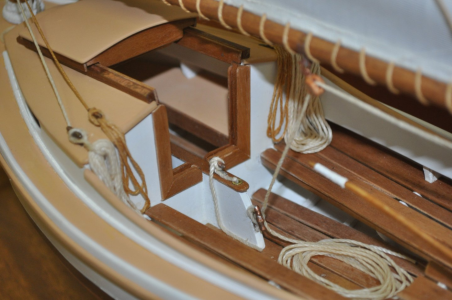
I coil running rigging as I would in full-size practice, but I belay the fall and apply a drop of thinned shellac to set the knot. A proper length of line is coiled separately and hung and secured on the belaying pin separately. The coil conceals the belaying knot on the fall such that it appears as if the coil is a continuous length without having been cut. I apply thinned clear shellac to the coil. As the alcohol solvent evaporates, the shellac will thicken gradually (in minutes... alcohol evaporates quickly.) The thickening shellac will stiffen the coil, permitting it to be shaped as needed to appear as if it were hanging like a full-size coil. When the shellac saturating the coil solidifies in the shape formed, it will hold the coil in that shape permanently. It is not possible without the shellac to form and hold the line in a realistic shape. Watered down PVA will not work because it takes too long to solidify and cannot be shaped as shellac-saturated line can as it hardens.

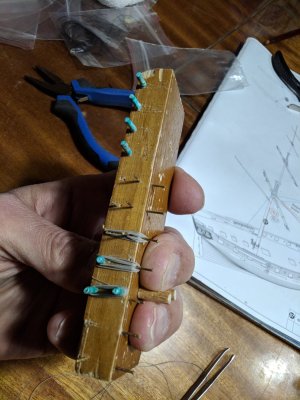
Results example below. Coils made on a form consisting of map pins placed into a wooden base around which the coils were wound. Coils were installed on the model, softened with alcohol, and formed in place to depict normal hanging behavior of full-size line.

1765166537231.png
 
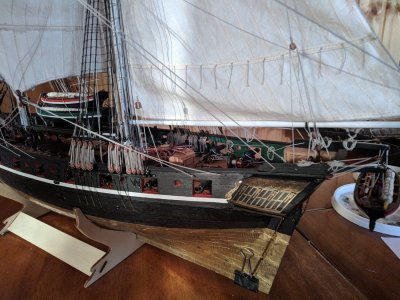
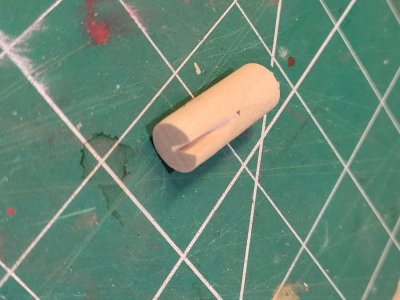
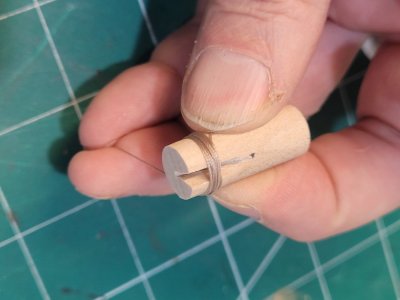
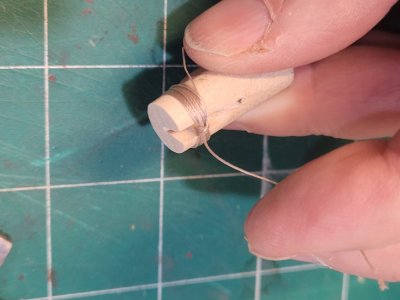
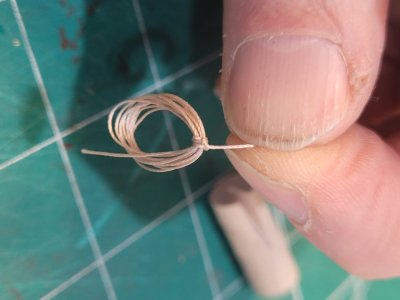
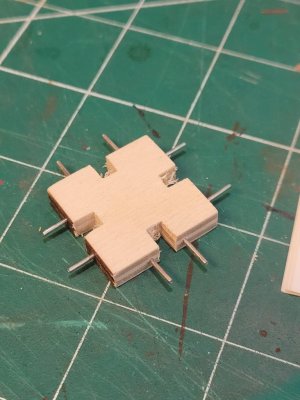
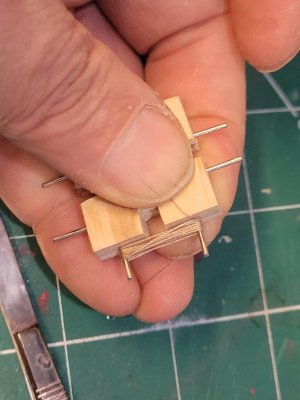
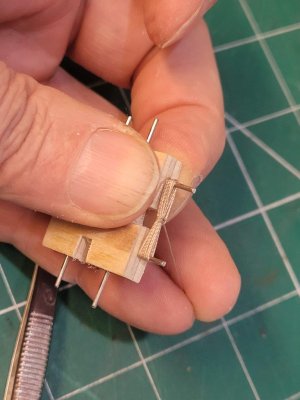
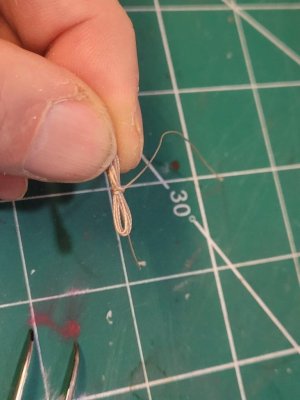
Not sure if it is a "proper" way, but this is the way I do it and I like the results. I have used a couple of different jigs over the years to make these. Photos are self-explanatory, but vary the size of the coils for best appearance by using different size dowels or spacing for the forks in the second method. And of course, dab with thinned white glue or something like that to fix the knots.

20251213_101219.jpg

20251213_101248.jpg

20251213_101405.jpg

20251213_101514.jpg

HSM_Constitution_2.jpg

20251213_102439.jpg

20251213_102712.jpg

20251213_102749.jpg

20251213_102946.jpg

IMG_0306.jpg
 
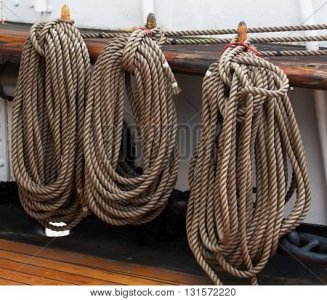
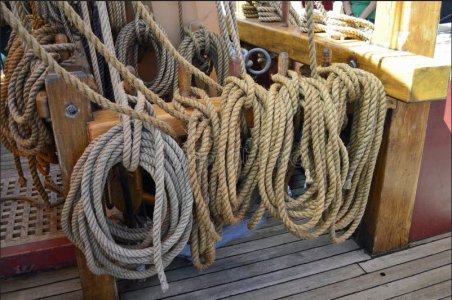
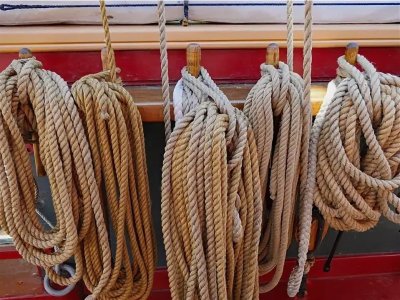
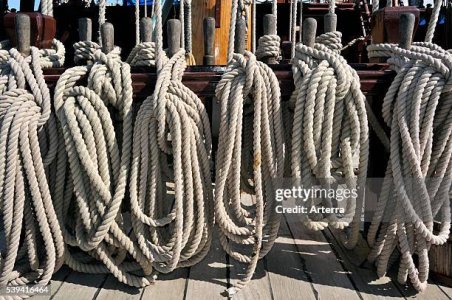
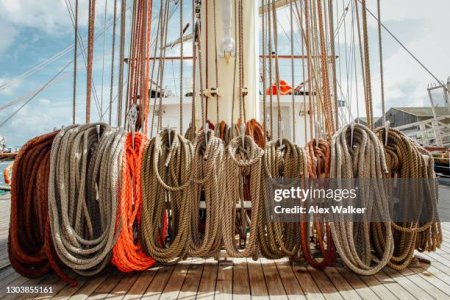
Who knew there were so many photos online showing the correct way to hang a coil from a belaying pin or cleat. I don't know about that orange stuff in the last picture, though. Perhaps it's one of the new synthetic "super" ropes. Looking at the pictures of all that Dacron line, it becomes apparent why we keep seeing white running rigging and deadeye lanyards on period ship models these days! :rolleyes:
 
Quick questions on using shellac and thinner. Roughly how much do you dilute the shellac with thinner? Do you really saturate the coils or is it more sparing? Does it wick in nicely? Do you use the shellac for a line, like an anchor line, as it runs over the deck? Thanks for any input.

I need to prepare some below deck coils of anchor line and then run the line out of through the hatch, around a couple of obstacles on the deck, around a windlass twice, through the hawse pipe, make a drooping section, and then tie off to the anchor. I'd like a compliant coil and realistic droop to the anchor line from hawse to anchor ring.

I've tried PVA multiple times in the past. I know it's a go-to for so many modellers, but, in my hands, I found it to be a mess. It is difficult to soak even cotton line. In the end, I also had problems with it being malleable after application. And if you accidentally put too much on, it forms a crusty glue film. I'm ready to experiment with something else.
 
Quick questions on using shellac and thinner. Roughly how much do you dilute the shellac with thinner? Do you really saturate the coils or is it more sparing? Does it wick in nicely? Do you use the shellac for a line, like an anchor line, as it runs over the deck? Thanks for any input.

I need to prepare some below deck coils of anchor line and then run the line out of through the hatch, around a couple of obstacles on the deck, around a windlass twice, through the hawse pipe, make a drooping section, and then tie off to the anchor. I'd like a compliant coil and realistic droop to the anchor line from hawse to anchor ring.

I've tried PVA multiple times in the past. I know it's a go-to for so many modellers, but, in my hands, I found it to be a mess. It is difficult to soak even cotton line. In the end, I also had problems with it being malleable after application. And if you accidentally put too much on, it forms a crusty glue film. I'm ready to experiment with something else.
I find a light coat of dilute PVA works well. It soaks in and does not form a glue film. I also think it depends on the material your ropes are made of. I would not saturate the ropes.

Rob
 
Last edited:
Quick questions on using shellac and thinner. Roughly how much do you dilute the shellac with thinner? Do you really saturate the coils or is it more sparing? Does it wick in nicely? Do you use the shellac for a line, like an anchor line, as it runs over the deck? Thanks for any input.

Quick answers ( :) )

Shellac is thinned with denatured alcohol. (Not isopropyl alcohol. Just plain old alcohol. Buy it at a paint or hardware store. Sometimes sold as stove fuel, but make sure you get clear stuff. Sometimes it's got blue dye in it to mark it as not for human consumption.) Of course, be sure to buy "clear" (AKA: "white") shellac, not "amber" or "brown."

When premixed thinly diluted, as with Zinsser's Bulls Eye brand, which is three-pound cut ("3 pounds of shellac to one gallon of alcohol,") there is no need to thin it at all. (Stir it in the can before use, though.) Out of the can, it will have the viscosity of water. The shellac will readily "wick" into thread or scale cordage and bare wood surfaces when a drop touches the surface. If you wish to thin it, you can add more alcohol. A thinner mixture will apply less shellac to the matrix and the line won't be as strongly stiff as it would be if a heavier "cut" were applied. If you leave the premixed shellac open in the can, the alcohol will evaporate, and the shellac will thicken. To reconstitute it, just add alcohol and stir. Very thick ("heavy cut") shellac can be used as an adhesive as well. (There, again, shellac's "reversibility" by simply dissolving it with alcohol can be of great value.)

The thread or scale line to be saturated with shellac should be "flamed" before saturating, if necessary. If not flamed, the fine "fuzz" may be enhanced by the shellac coating them.

On the first coat, there is no cause for concern as to how much is applied within reason. It will get soaked up like water by a sponge. If there is an over application, simply blot with a paper towel. The shellac flakes dissolve in the alcohol. The alcohol evaporates very rapidly. When the alcohol evaporates, it's gone and only the hardened shellac flakes remain, holding the shape of the line. When dry, the shellac will be invisible. As the alcohol evaporates, the line will become progressively stiffer. This permits you to form it as you want it to stay when entirely dry. As it becomes more rigid, it will be more inclined to stay where you put it when forming it. Experiment with some scrap line and you'll see how easy it is.

The shellac will become sticky as the alcohol evaporates. Coils placed on deck will stick to the deck. This permits creating very realistic laying cordage on deck and realistic catenaries aloft.

Touching a drop of shellac to a rigging knot or lashing, will secure the knot or lashing very well. If it ever needs to be undone, The knot can be untied by flooding it with a drop of alcohol or three and blotting up the excess. The shellac holding the knot will dissolve easily on contact with the alcohol.

Be careful about adding more shellac on top of dried shellac because later coats will not be wicked into the bare surface, but rather lay on top of the prior shellac coat(s), thereby building up a glossy coat finish. This can be remedied by flooding the area with alcohol and blotting it up with a paper towel until the excess shellac is removed.

Compared with diluted PVA adhesives, alcohol is far, far easier to form because of the alcohol's quick evaporation rate and far easier to reverse, if necessary.

I'll mention in passing that shellac can also be used to seal and stiffen the ends of rigging thread so it can be threaded through small holes in blocks, etc. Depending upon the weight of the cut, it can be somewhat less stiff than if cyanoacrylate adhesive is used for the same purpose and the CA may "dry" a bit faster, but not by much. On the other hand, the alcohol in the shellac does not produce disagreeable toxic fumes as does CA and it far, far less expensive.

The shellac techniques mentioned above can also be used in similar fashion with styrene dissolved in an acetone solution to a desired strength. (Add styrofoam "peanuts" or pieces to acetone.) A thick cut will yield an acetone/styrene adhesive similar to tubed Duco cement. That said, the acetone fumes are highly volatile and somewhat toxic if inhaled in sufficient amounts and styrene does not offer the archival qualities of shellac, which can remain stable for millennia as evidenced by archaeologically recovered ancient artifacts.
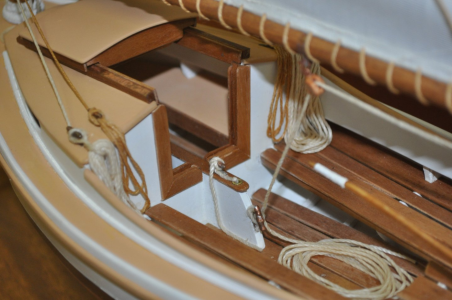
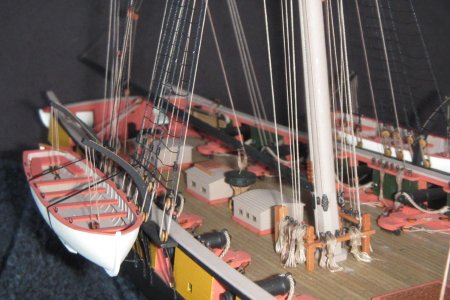
The coils and hanks in the picture below have been saturated with clear shellac and were formed to lie naturally as seen. They are now rigid to the touch and lightly adhered to the surfaces upon which they rest.
1766185525690.png
 
Last edited:
Quick answers ( :) )

Shellac is thinned with denatured alcohol. (Not isopropyl alcohol. Just plain old alcohol. Buy it at a paint or hardware store. Sometimes sold as stove fuel, but make sure you get clear stuff. Sometimes it's got blue dye in it to mark it as not for human consumption.) Of course, be sure to buy "clear" (AKA: "white") shellac, not "amber" or "brown."

When premixed thinly diluted, as with Zinsser's Bulls Eye brand, which is three-pound cut ("3 pounds of shellac to one gallon of alcohol,") there is no need to thin it at all. (Stir it in the can before use, though.) Out of the can, it will have the viscosity of water. The shellac will readily "wick" into thread or scale cordage and bare wood surfaces when a drop touches the surface. If you wish to thin it, you can add more alcohol. A thinner mixture will apply less shellac to the matrix and the line won't be as strongly stiff as it would be if a heavier "cut" were applied. If you leave the premixed shellac open in the can, the alcohol will evaporate, and the shellac will thicken. To reconstitute it, just add alcohol and stir. Very thick ("heavy cut") shellac can be used as an adhesive as well. (There, again, shellac's "reversibility" by simply dissolving it with alcohol can be of great value.)

The thread or scale line to be saturated with shellac should be "flamed" before saturating, if necessary. If not flamed, the fine "fuzz" may be enhanced by the shellac coating them.

On the first coat, there is no cause for concern as to how much is applied within reason. It will get soaked up like water by a sponge. If there is an over application, simply blot with a paper towel. The shellac flakes dissolve in the alcohol. The alcohol evaporates very rapidly. When the alcohol evaporates, it's gone and only the hardened shellac flakes remain, holding the shape of the line. When dry, the shellac will be invisible. As the alcohol evaporates, the line will become progressively stiffer. This permits you to form it as you want it to stay when entirely dry. As it becomes more rigid, it will be more inclined to stay where you put it when forming it. Experiment with some scrap line and you'll see how easy it is.

The shellac will become sticky as the alcohol evaporates. Coils placed on deck will stick to the deck. This permits creating very realistic laying cordage on deck and realistic catenaries aloft.

Touching a drop of shellac to a rigging knot or lashing, will secure the knot or lashing very well. If it ever needs to be undone, The knot can be untied by flooding it with a drop of alcohol or three and blotting up the excess. The shellac holding the knot will dissolve easily on contact with the alcohol.

Be careful about adding more shellac on top of dried shellac because later coats will not be wicked into the bare surface, but rather lay on top of the prior shellac coat(s), thereby building up a glossy coat finish. This can be remedied by flooding the area with alcohol and blotting it up with a paper towel until the excess shellac is removed.

Compared with diluted PVA adhesives, alcohol is far, far easier to form because of the alcohol's quick evaporation rate and far easier to reverse, if necessary.

I'll mention in passing that shellac can also be used to seal and stiffen the ends of rigging thread so it can be threaded through small holes in blocks, etc. Depending upon the weight of the cut, it can be somewhat less stiff than if cyanoacrylate adhesive is used for the same purpose and the CA may "dry" a bit faster, but not by much. On the other hand, the alcohol in the shellac does not produce disagreeable toxic fumes as does CA and it far, far less expensive.

The shellac techniques mentioned above can also be used in similar fashion with styrene dissolved in an acetone solution to a desired strength. (Add styrofoam "peanuts" or pieces to acetone.) A thick cut will yield an acetone/styrene adhesive similar to tubed Duco cement. That said, the acetone fumes are highly volatile and somewhat toxic if inhaled in sufficient amounts and styrene does not offer the archival qualities of shellac, which can remain stable for millennia as evidenced by archaeologically recovered ancient artifacts.
The coils and hanks in the picture below have been saturated with clear shellac and were formed to lie naturally as seen. They are now rigid to the touch and lightly adhered to the surfaces upon which they rest.
View attachment 564889
I'll find something to experiment with.
I bought the smallest thing they had but it's still too large for ship modelling. It seems to be prediluted but there are solvents other than ethanol. I bought thinner as well but it might be more of the same. Thanks for the tip, this could be a better match for my workflow. A lot of guys here do a great job with PVA, but I need a little help getting things to tack up and droop properly. A little adhesion to the deck post coiling won't kill me either.
Thanks for the tip.
 
Back
Top