
-

SUBSCRIBE TO SHIPS IN SCALE TODAY!
The beloved Ships in Scale Magazine is back and charting a new course for 2026!
Discover new skills, new techniques, and new inspirations in every issue.
NOTE THAT OUR NEXT ISSUE WILL BE MARCH/APRIL 2026 -

Win a Free Custom Engraved Brass Coin!!!
As a way to introduce our brass coins to the community, we will raffle off a free coin during the month of August. Follow link ABOVE for instructions for entering.
You are using an out of date browser. It may not display this or other websites correctly.
You should upgrade or use an alternative browser.
You should upgrade or use an alternative browser.

- Joined
- Aug 8, 2019
- Messages
- 5,723
- Points
- 738

iDili Ship Model Making Brass Nails - 0.7mm x 10mm Fine Pointed Pins for Wooden Model Boats, Ships, Hull Planking (1000 PCS) - Brass Craft Nails for Model Building - Amazon.com
iDili Ship Model Making Brass Nails - 0.7mm x 10mm Fine Pointed Pins for Wooden Model Boats, Ships, Hull Planking (1000 PCS) - Brass Craft Nails for Model Building - Amazon.com
www.amazon.com

- Joined
- Dec 1, 2016
- Messages
- 6,670
- Points
- 728
go here

 drydockmodelsandparts.com
Search: 5 results found for "nails"
Dry - Dock Models & Parts is providing high quality ship model fittings and parts
drydockmodelsandparts.com
Thanks to all who responded to my question. I actually found just what I think I need at Lowe's. I looked at the Dry Dock offerings as well as Cornwall and a Micro Mark and a couple others. None had the type of head I need. What I was hoping to find are nails just like the ones included in my Mamoli HMS VICTORY. They were easy to use and, because it had a pretty substantial head, easy to extract. I'm going to give the Lowe's nails a try and if they don't work out, I'll try something else. I may reach out to Model Expo to ask if they can get nails from the "new" Mamoli.
For a full length size hull If you taper to the proper breadth of the planks beforehand then pre-bend in both axes, nails are unnecessary. Finger pressure for a few seconds with CA or a minute or less with PVA eliminates the need for nails of any kind. If the model gets double planking the marks from the nails will be covered but it is a problem for the outer layer. Just a suggestion, but maybe study some planking tutorials that have been listed here at SoS a number of times and you will find planking is not that hard to accomplish without nails.Planking nails.
If this is for your cross section, nails are totally unnecessary.
Allan
Last edited:
Thanks for the response and the suggestions. I agree with you somewhat. I don't use CA for planking or gluing up wood pieces as I have found it to be too brittle in the long run. Its good for securing rigging, blocks, various knots, etc. I have "historically" used Titebond II and recently started using Gorilla glue. Both set up pretty quick and make very strong bonds, occasionally to my dismay. The VASA will be my 6th PoP ship. I use nails for the base planking. For the second, I have found food success in using straight pins which I bend at about a 75 deg. angle and use as a clamp by inserting the point into the bulkhead/frame over the walnut or mahogany strips. Its a bit of a slow process but has produced good results for me. I have reviewed the planking efforts posted by several members and have learned quite a bit.For a full length size hull If you taper to the proper breadth of the planks beforehand then pre-bend in both axes, nails are unnecessary. Finger pressure for a few seconds with CA or a minute or less with PVA eliminates the need for nails of any kind. If the model gets double planking the marks from the nails will be covered but it is a problem for the out layer. Just a suggestion, but maybe study some planking tutorials that have been listed here at SoS a number of times and you will find planking is not that hard to accomplish without nails.
If this is for your cross section, nails are totally unnecessary.
Allan
Me too! A lot of builders use CA but as you point out it can be limited in usefulness as it does not give much time to play with getting a part in exactly the right place.I have "historically" used Titebond II
Allan
Well, the nails (brads) I got from Lowe's wont do as the shaft is to wide. Length is good but the diameter isn't. I did find a large number of "Mamoli" nails I had forgotten about. These should serve me well for the completion of the first planking.

- Joined
- Feb 15, 2019
- Messages
- 430
- Points
- 168

I'm firmly in the 'no nail' camp.Where can I purchase some good planking nails?
You can combine CA and wood glue at the fore end of the plank, you should have sufficient fixing area either provided in the kit design or an additional bow filler made from scrap. A spot of CA at the hood end will give the hold as the PVA hardens. I'll use any method to avoid those nasty little nails. Provided by the same Eurotrash manufacturers whose idea of premium timber is walnut!

Copper wire works well. At 1/48, I believe #24 wire works for a nail head of 1inch. You can buy wire in one-half pound rolls or 1 pound rolls. You can get about 50,000 fasteners per 1 pound.Where can I purchase some good planking nails?
The procedure is simple. Drill a pilot hole equal to the wire diameter, dip the end of the wire in some CYA, push the wire into the hole and cut it off. Use a needle file to file the wire stub down to the surface of the planking. Done. To test the holding power of the CYA, grab the stub and pull. Usually the wire will break before it can be pulled out. Don't cut the wire into short lengths before you use it; use it direct from the roll. Cutting the wire into short lengths increases the
working time by about 100 times.
- Joined
- Feb 15, 2019
- Messages
- 430
- Points
- 168
Olha B. has devised a nifty little tool made from perspex for the wire 'nails'. I didn't try it, she was cutting thousands of nails for one hull! On one of her videos from about 4 years ago?Copper wire works well. At 1/48, I believe #24 wire works for a nail head of 1inch. You can buy wire in one-half pound rolls or 1 pound rolls. You can get about 50,000 fasteners per 1 pound.
The procedure is simple. Drill a pilot hole equal to the wire diameter, dip the end of the wire in some CYA, push the wire into the hole and cut it off. Use a needle file to file the wire stub down to the surface of the planking. Done. To test the holding power of the CYA, grab the stub and pull. Usually the wire will break before it can be pulled out. Don't cut the wire into short lengths before you use it; use it direct from the roll. Cutting the wire into short lengths increases the
working time by about 100 times.

Copper wire works well. At 1/48, I believe #24 wire works for a nail head of 1inch. You can buy wire in one-half pound rolls or 1 pound rolls. You can get about 50,000 fasteners per 1 pound.
The procedure is simple. Drill a pilot hole equal to the wire diameter, dip the end of the wire in some CYA, push the wire into the hole and cut it off. Use a needle file to file the wire stub down to the surface of the planking. Done. To test the holding power of the CYA, grab the stub and pull. Usually the wire will break before it can be pulled out. Don't cut the wire into short lengths before you use it; use it direct from the roll. Cutting the wire into short lengths increases the
working time by about 100 times.
I understand the process you are describing, but given that metal fasteners were near-invariably countersunk and the countersinks plugged in wooden boat and ship construction (save some Scandanavian lapstrake planked vessels), what possible application would anyone have for the process you've described? What detail of ship construction does the process depict?
- Joined
- Feb 15, 2019
- Messages
- 430
- Points
- 168
Just decorative.I understand the process you are describing, but given that metal fasteners were near-invariably countersunk and the countersinks plugged in wooden boat and ship construction (save some Scandanavian lapstrake planked vessels), what possible application would anyone have for the process you've described? What detail of ship construction does the process depict?
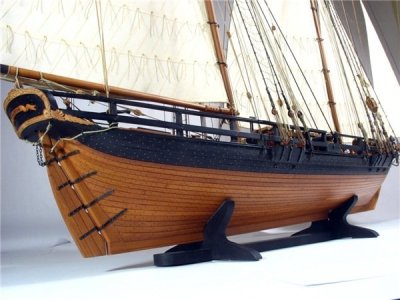
I have seen photos of finished VASAs that appear to have what look like visible bolt heads securing the hull planking. I'm going to have to do more research on this but I'm tending to agree with you.Just decorative.
View attachment 565084
I have seen photos of finished VASAs that appear to have what look like visible bolt heads securing the hull planking. I'm going to have to do more research on this but I'm tending to agree with you.
At that time, nails and spikes were made of wrought iron. Good wrought iron is more resistant to rust than cast iron, but like all ferrous metals, it rusts. Where nails were used to fasten exposed wood, they were countersunk and the countersinks plugged with wood. Before driving the nail, a strand of marline or oakum, depending upon the size of the nail (or spike) would be wrapped around the nail shank beneath the head and the nail dipped in thick pine tar. This treatment minimized exposure to moisture and thus prevented rusting to some extent. (When done modernly with cut boat nails, this practice is colloquially called "Chinese galvanizing.") Nevertheless, the iron would rust and the nails fail and when tension forces would be applied, a plank would "spring" away from the frame and such "sprung planks" occasioned leaks. For this reason, ships' planking was fastened with "tree nails" ("trunnels") which were wooden pegs tightly driven into bored holes and often wedged at one or both ends. Trunnels were of select wood species and well-dried, so that they would swell even more tightly in place when the vessel was launched and the planking wetted.
Vasa's planking was fastened with trunnels, not iron nails. Her planking was not studded with nails as "decoration."
Of course, this isn't to say that a modeler isn't free to decorate his model however he wishes, but looking at finished kit models is certainly no indication of historic accuracy!

- Joined
- Apr 12, 2025
- Messages
- 304
- Points
- 158
I don't paint, nor double plank 'any' of my models. I use natural woods that 'simulate' the desired colors with only one layer of planking. I've never 'ever' used nails to hold planks in place while glue dries. It's totally unnecessary! I pre-fit/form my planks to where they lay easily along the frames and/or bulkheads. If something doesn't fit properly, I don't force it. I put my 'patience' hat on and keep working the plank until it is truly correct and fits nicely with no unsightly gaps to fill. You don't have to be the most talented wood worker to do this sort of thing without using nails or creating unsightly gaps. You just need to exercise 'patience' and take your time! When my planks fit well and the edges are properly beveled to eliminate gaps, I paint on a small amount/thin layer of thinned out/diluted with water Titebond II (Dark to simulate caulking) with a small brush, put the plank in place and use rubber bands and clamps to hold it for about 30 minutes. That's all it takes! Patience, proper preparation and some diluted Titebond II!
As for the nail/trunnel thing... realism is not nearly so interesting as 'decoration' is. If you want historical accuracy... show no metal, only wooden plugs/trunnels. If you are looking towards offering an artistic license, well... "You are the 'Klee' of your Sea!" Do what ye will!
Merry Christmas to all!
As for the nail/trunnel thing... realism is not nearly so interesting as 'decoration' is. If you want historical accuracy... show no metal, only wooden plugs/trunnels. If you are looking towards offering an artistic license, well... "You are the 'Klee' of your Sea!" Do what ye will!
Merry Christmas to all!
Last edited:
If you want historical accuracy... show no metal, only wooden plugs/trunnels.
True, if wooden plugs and/or trunnels show on the model at scale viewing distance.
If the posts on ship modeling forums are any indication, ignorance of scale viewing distance, or outright refusal to abide by its limitations because of one's ego, is one of the most frequently apparent errors seen. At most all scales below 1:12, wooden plugs and trunnels, copper sheathing "rivets" (they are tacks,) and the like, are invisible at scale viewing distance. Many modelers mistakenly show out of scale plugs, trunnels, and other fasteners thinking they are "adding detail." Out of scale detail is distraction that destroys the compelling impression of reality that defines a high-quality ship model. (And some ship model kit manufacturers have no hesitation including out of scale parts in their kits and claiming their model is "more detailed" than their competitors'!)
Scale viewing distance is another way of saying "what you see when looking at something from a distance. It's easy to calculate: the distance from the model viewer's eyes multiplied by the denominator of the model's scale. For example, if the model will be viewed by three feet away and the model's scale is 1:48, the scale viewing distance is 144 feet (3 x 48 = 144). The detail on the model should be you see on the full-size ship when viewed from 148 feet away. If you're a modeler who expects your 1:48 model to be scrutinized from a foot away, then scale viewing distance is 48 feet.
Scale viewing distance applies not only to details, but also to color and gloss. As the viewing distance increases, glossy reflections decrease. Glossy finishes on models are out of scale. Also, colors tend to darken, or take on a greyish cast, as viewing distance increases. No competent landscape painter will ever paint the hills in the distance the same color green as the meadow in the foreground. Modelers need to learn and apply these principles to the finishes of their models to avoid their looking like "toys."
Modelers who haven't acquired the ability to intuitively recognize the scale viewing distance from their own experience of full-size ships, should experiment. Create a full-size mock-up of the detail in question and view it from a distance. If you can see it, then portray exactly what you can see on your model. If you can't see it, don't model it! Out of scale details just scream at the viewer, "It's a not a real ship!" which by any definition is the antithesis of what scale ship modeling is all about.
Last edited: