



• Win a Free Custom Engraved Brass Coin!!!
    As a way to introduce our brass coins to the community, we will raffle off a free coin during the month of August. Follow link ABOVE for instructions for entering.
  • PRE-ORDER SHIPS IN SCALE TODAY!

    The beloved Ships in Scale Magazine is back and charting a new course for 2026!
    Discover new skills, new techniques, and new inspirations in every issue.

    NOTE THAT OUR FIRST ISSUE WILL BE JAN/FEB 2026

Airfix Golden Hind 1/72 with added rigging and details

Good day John,
Spainish state traditional colors - straigt combination of red/yellow,
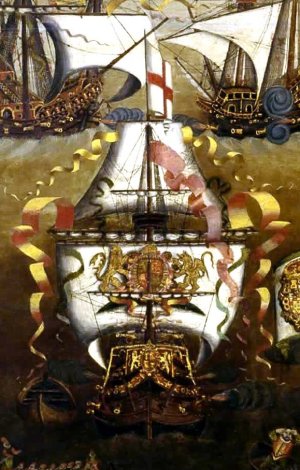
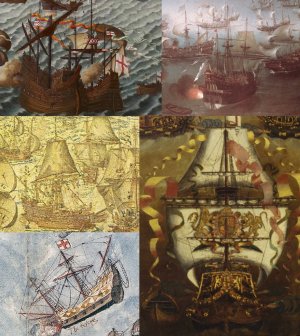
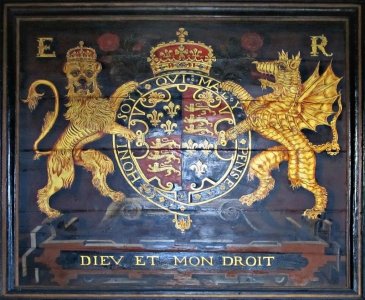
but on english elizabethian galleon most likely they were not used for hull decoration in such combination as red-yellow, for english galleon varios combination of - white, green, red , blue color, yellow ochre ... royal blue in that period most likely used in Royal coat of arm colors ? Lion and Dragon in Elizabeth I royal coat of arms - both golden.
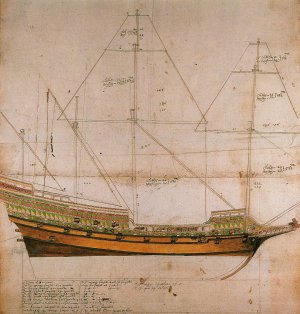
Мэтью Бейкер Ревендж.jpg

royal-coat-of-arms-of-elizabeth-i-in-the-church-of-st-thomas-and-st-edmund-at-salisbury.jpg

2.jpg

стр168.jpg

Ревенджи.jpg
 
Last edited:
Kirill you are a champion!
I am not a fan of the historic colours so I will modify slightly... I acknowledge my deviation from historical accuracy.

I guess also the pigments available were quite limited at the time, which probably had a significant affect on the colours used.
 
Of course , it matter only from historical accuracy point of view ,when necessary to follow colors schemes - Spanish Kings as a rule - Red- Yellow, Tudor's colors - Elizabeth I - Green-White-red( note , Lion and Dragon of Her Coat of Arms, both of them , must be painted in gold ).... but from point of view of "artistic license" , it doesn't matter at all which colors to use to paint galleon model... but it could be looks interesting, this combination red-yellow of Spanish Crown colors in ornament and if You will decide to use banners in Tudor's colors later on... ?
As I rememmber , GH could be painted in Spanish Crown colors due to her special mission during that famous Drake voyage, but than, don't forget to use spanish banners as well...
 
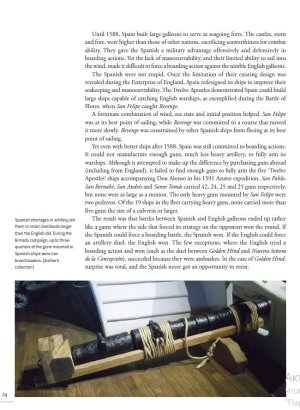
My extra cannons for the gun decks arrived today! They are brass. I guess I should paint them matt black? Is it true that sometimes they were left in the raw metal? I thought I read that somewhere. What is most appropriate for 1580s? I notice that Kirill's (spectacular!) galleon has black cannons.
 
Good day John,
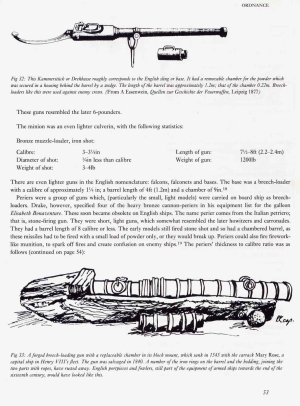
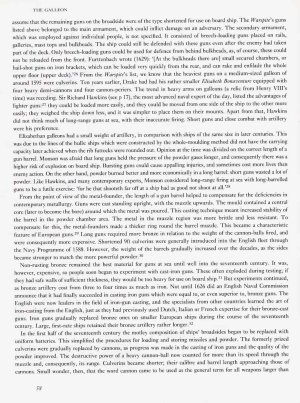
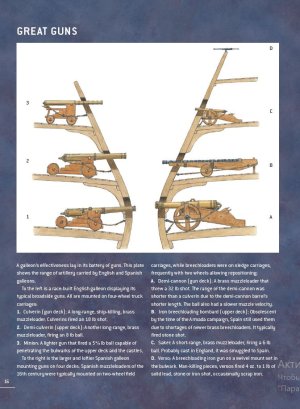
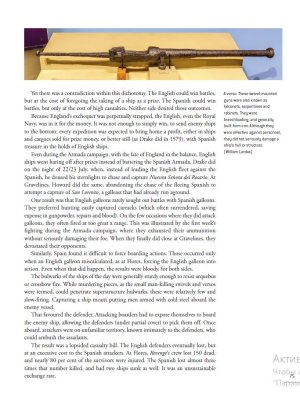
On my model on open deck ,guns - they are iron wrought breechloading bombardas, that why I painted them wrought iron color, on english galleons of that period bronze muzzle loading type guns were widely used, and You could left them bronze color with patina but not matt black.
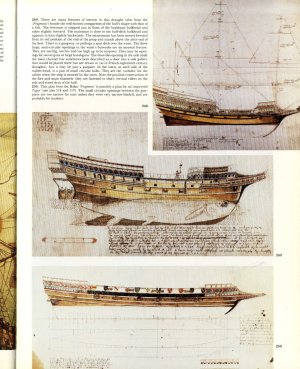
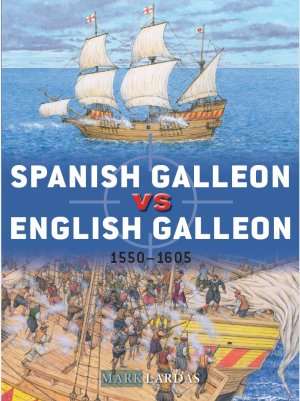
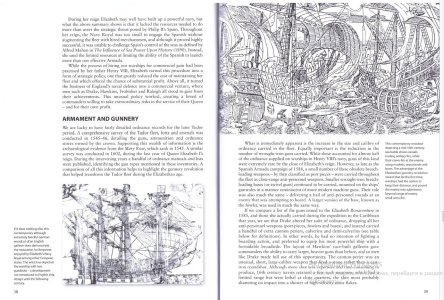
There is much more information in these books on subject You could find / they are free for download in net...

0.jpg

053.jpg

058.jpg

spain-english gall 01.JPG

Engl -Spain guns.JPG

Sp bombarda.JPG

Sp verso.JPG

Tudor Warships.JPG

Tudor Warships 02.JPG
 
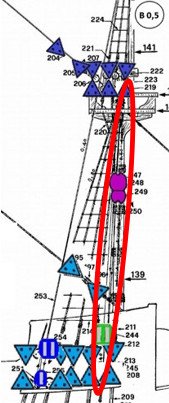
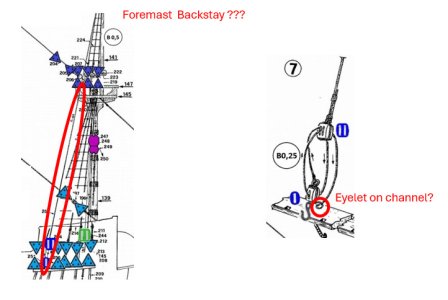
I have some questions about the standing rigging on the GH. I am looking at this so I can ensure I have enough belaying points on the deck. Sp the first question concerns the line circled in red. This is the foremast but there is an identical one on the main mast. It has a violin block (purple) and a double block (green). But what is the line called? It is a tackle I guess. I woudl have thought it was a backstay but there is a separate backstay (with the blue blocks, a little to the left this line).

Pic-0809.jpg

What is this line called?
 
A related question, concerning what I think is the "foremast back stay" - the one going through the two blue blocks in the figure above, and also highlighted in red in the figure below (same figure basically).
Pic-0807.jpg

According to the supplementary diagram the single block ends in a hook which no doubt connects to an eyelet on the channel. But the other end of the line...does it go to an eyelet on the channel also?

Thanks!
 
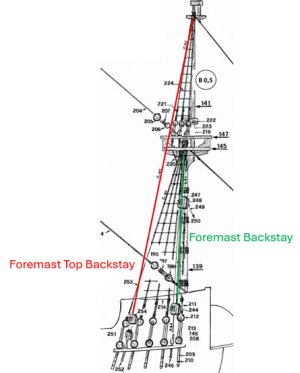
Well I sorted the naming of the lines. The original diagram (without my annotations!) clearly shows the rear stay going all the way to the top yard so it is the foremast top backstay; the forward one is the foremast backstay, I believe.

Pic-0814.jpg
 
Good day John,
As I remember for this period, running back stays were in use, they have a little bit different arrangement , yours 67 question - I quess it is mast tackles ...running end of the rope could be secured on itself or on the rail nearby lower block...
For best and 100% understanding what ,how and where all rigging lines must be arranged - You need to read and permanently keep under hand as valueable source of information - this is RC Anderson book "The Rigging of Ships in the days of ..." this book will cover 100% questions of galleon rigging...when read You be need to choose information conserning english style of rigging...
Ps
I would like to reccomend to You to use Eugen Troppmann's Golden Hind rigging plan - He made it very carefully and historicaly correctly ....
 
Another excellent book of galleon rigging which I reccomend tobYou - this is famous book of Wiliam A. Baker "The Mayflower and other colonial vessels" if I didnt mistake in name...in this book He gives full and complete set of Mayflower replica rigging with name of each ropes,their lengts, sizes and list of used blocks and gives rigging diargrams... rigging plan of Mayflower and GH replica are identical and even the size of these galleons very similar...
As seems to me it would be much better to use those plans ( Kirsch, Beker, E.Troppman and RC Anderson book )to rigg your GH model than that plans with rough mistakes which You use now /I mean that fragments of rigging plans which You posted above , beside wrong back stays arrangements ,they have round deadeyes which is nonsense for galleon rigging... what else mistakes they have?
 
Last edited:
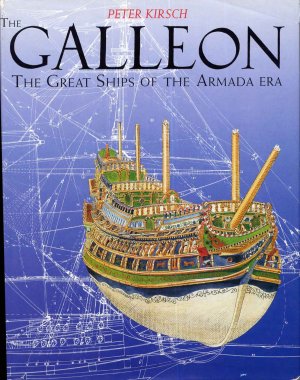
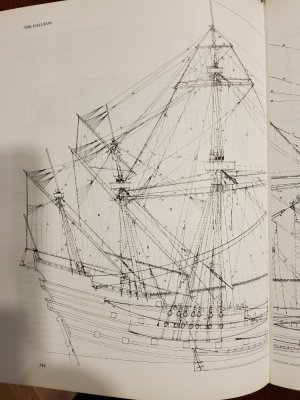
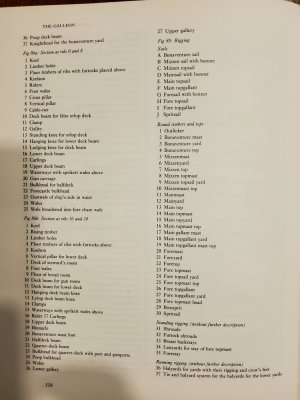
Peter Kirsch book " The Galleon" -
He also gives very detailed rigging plan of 4 masted galleon and brief information of this galleon rigging + provided list of all rigging lines with names, all these 3 galleon rigging reconstractions by Eugen T., P.Kirsch, W.A.Baker directly based on information given in R.C.Anderson book...
 
Last edited:
Good day John,
As I remember for this period, running back stays were in use, they have a little bit different arrangement , yours 67 question - I quess it is mast tackles ...running end of the rope could be secured on itself or on the rail nearby lower block...
For best and 100% understanding what ,how and where all rigging lines must be arranged - You need to read and permanently keep under hand as valueable source of information - this is RC Anderson book "The Rigging of Ships in the days of ..." this book will cover 100% questions of galleon rigging...when read You be need to choose information conserning english style of rigging...
Ps
I would like to reccomend to You to use Eugen Troppmann's Golden Hind rigging plan - He made it very carefully and historicaly correctly ....
Hi Kirill
Many thanks., I do have Anderson's book. It is next to me bed and has been for quite a while. I read a bit each night but it is vey dense and I do not remember much. I have taken some notes - but above all, I have noted to myself that it is an excellent reference when I am doing the rigging! I will look later at what it says about these backstays.

I have seen Eugen's plans and I have asked him how I can buy them. He has not replied yet. I asked a German friend to translate the figure on the belaying locations...I now have most of them but not all :-)
 
Peter Kirsch book " The Galleon" -
He also gives very detailed rigging plan of 4 masted galleon and brief information of this galleon rigging + provided list of all rigging lines with names, all these 3 galleon rigging reconstractions by Eugen T., P.Kirsch, W.A.Baker directly based on information given in R.C.Anderson book...
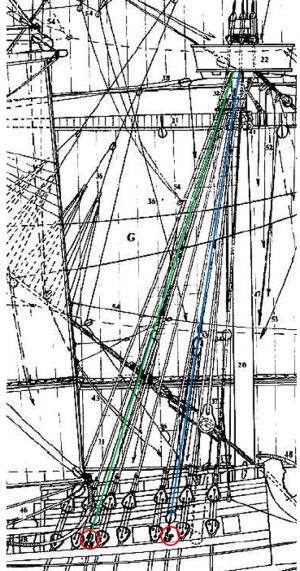
Ah yes..and thanks to you I have a copy of this. I just loked it up and it shows the eyelets on the channel, for attaching the blocks. BUt they both seem to go to the main yard (well the top) and not to the top yard. So it looks like two back stays for the foremast which go to the main yard and none that go higher?
Pic-0818.jpg
 
Good day John,
As I remember for this period, running back stays were in use, they have a little bit different arrangement , yours 67 question - I quess it is mast tackles ...running end of the rope could be secured on itself or on the rail nearby lower block...
For best and 100% understanding what ,how and where all rigging lines must be arranged - You need to read and permanently keep under hand as valueable source of information - this is RC Anderson book "The Rigging of Ships in the days of ..." this book will cover 100% questions of galleon rigging...when read You be need to choose information conserning english style of rigging...
Ps
I would like to reccomend to You to use Eugen Troppmann's Golden Hind rigging plan - He made it very carefully and historicaly correctly ....
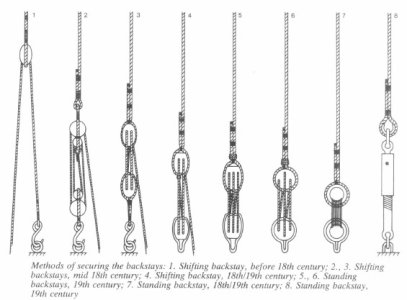
Mondfeld also says that running stays (he calls them shifting stays) were in use then and shows how they changed over the years. The one onthe far left matches what I have in my rigging diagram (from HiSmodel)
:)

Pic-0820.jpg
 
Good day!
John,
Me personal, on my model, Ive used No1 for back stay for the 16tn ... Don't hurry up... I would reccomend ...jist slowly going down trough Anderson book, each article relevant to your actual stage of your model rigging, to understand what he is talking about , and just follow what he says
You will be surprised how simple are the rigging are, that You could see on the models and pictures ...:)))
That riging lines #33 You marked blue and green on Peter Kirsch galleon model - they are botn should be mast tackles, mast tackles..but He says they are breath backstays which is strange for me....
As I could see, He didn't show back stays in his reconstruction of his galleon riggings... the initial source of all rigging reconstruction - see Anderson book

144.jpg

156.jpg
 
Last edited:
His Model used no3 variant by Mondfeld ...and question why... for the galleon ...?
but not No1 as it should be ,as shifting back stay...according to the Anderson/Mondfeld ... again, better to follow what RC Anderson says than any others ...
Mondfeld is Great! He gives universal answers, but You need to choose right one between many... :)))
 
Back
Top