• Win a Free Custom Engraved Brass Coin!!!
    As a way to introduce our brass coins to the community, we will raffle off a free coin during the month of August. Follow link ABOVE for instructions for entering.
  • SUBSCRIBE TO SHIPS IN SCALE TODAY!

    The beloved Ships in Scale Magazine is back and charting a new course for 2026!
    Discover new skills, new techniques, and new inspirations in every issue.

    NOTE THAT OUR NEXT ISSUE WILL BE MARCH/APRIL 2026

La Renommee 1744 1:48. (CAF) by Salty

I found it quite difficult to get a result I was happy with. It’s quite tricky with all those curved surfaces to get a nice thin glue line. Not perfect, but I’ll take it.
Good morning Salty. Yep I agree, definitely you can more than live with it - looks mighty fine. I don’t know if it applies to all CAF kits, but on mine I found that it gave very little leeway to remove the chaff. The frames were very cool with the bevel lines however on the beakhead and keel it fitted perfectly and to the correct measurements with the chaff. Any tiny extra removal meant a tiny gap and change of length- I made it work but like your it was “not perfect, but I took it” :D. So far you are owning this- kudos. Cheers Grant
 
Grant, I agree about removing the laser charring. I think the parts are very much cut to size and you should only remove it, but nothing more. As you say, sometimes doing that will leave parts a fraction small. The difficulty is compounded with thicker parts as the laser cut isn’t completely vertical. I think it is thicker at the top than at the bottom, so you have to remove the charring, plus some extra wood to make it square. But in my experience, if you mess too much with the parts trying to make them fit perfectly, there’s a good chance you could make it worse. I’m not trying to make excuses, but as the saying goes, sometimes a bird in the hand…

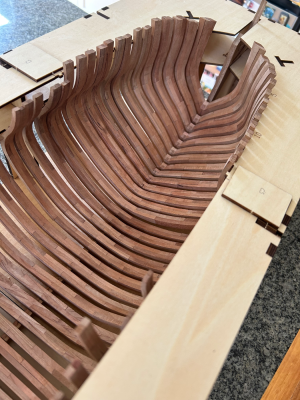
Today, I started on Part 2 of La Renommee. It consists of frames 1 to 14, plus the hawse timbers. Here are frames 8 to 14:

IMG_3957.jpeg

IMG_3958.jpeg

The instructions say that there may be “redundancies” on some of the frame parts. I take that to mean the parts may be oversized. I came across the first instance when building frame 4 - the floor timbers were fractionally longer at the ends than the plans and needed some adjustment.

Kind regards

Salty
 
Bonjour, félicitations pour la construction de votre Renommée. J'ai deux questions concernant les cadres :
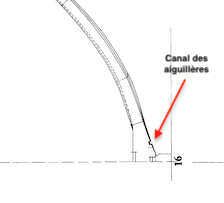
– Jean Boudriot mentionne le « canal des aiguillères » dans sa monographie, à l'intérieur de ces cadres. La reproduction sur votre modèle ?
– Représentez-vous les clous dans les cadres ?
 
Cathber, merci pour vos aimables paroles. Je n'avais pas compris les détails concernant les canal des aiguillères dans les cadres. Maintenant que vous les mentionnez, je pourrais couper les chaînes lorsque je sortirai La Renommee de son gabarit. Je prévois de plancher le côté bâbord, mais de laisser le côté tribord non planté avec quelques cadres coupés pour montrer l'intérieur. Ce serait un joli détail à montrer sur les cadres exposés. Je ne clouerai pas les cadres car j'ai peur que le détail ne se perde dans le modèle fini.

Cathber, thanks for your kind words. I hadn’t picked up the details regarding eel channels in the frames. Now that you mention them, I might cut channels when I take La Renommee out of her jig. I plan to plank the port side, but leave the starboard side unplanked with some frames cut away to show the interior. It would be a nice detail to show on the exposed frames. I won’t nail the frames as I fear the detail will just be lost in the finished model.

Here are frames 1 to 7:
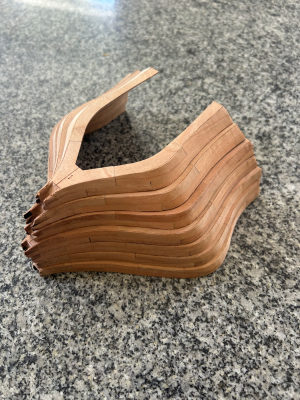
IMG_3960.jpeg

The ragged bits at the bottom will eventually be trimmed so there is a lip of only a couple of millimetres. I am leaving them as is for the present as they will help line the frames up on the keel.

Some of the wood in these frames was a little difficult to work as it contained what I would call resin lines:
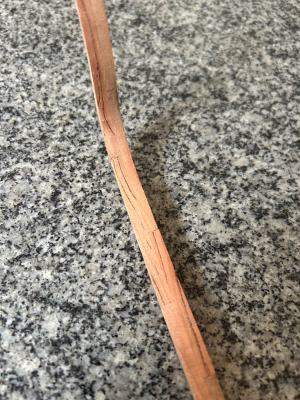
IMG_3956.jpeg

I am not complaining. Quite the opposite, as wood is a natural material and will inevitably have imperfections. If I wanted completely uniform modelling material, I’d been building plastic planes and cars…

Just below the top joint on the the right hand side of the frame, is a section where you can see some end grain. There is an area like this on every frame. It’s quite difficult to get a nice finish on this as well as the sections around it where you work more with the grain. The scraper certainly helps improve matters, but I still have to be careful nonetheless. It’s easy to dig it in and get chatter marks when passing over joints and around curves.

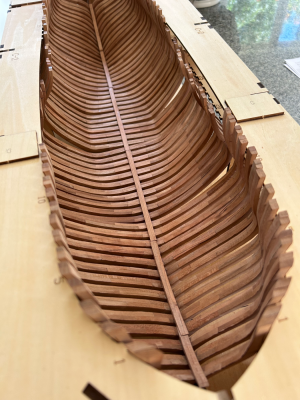
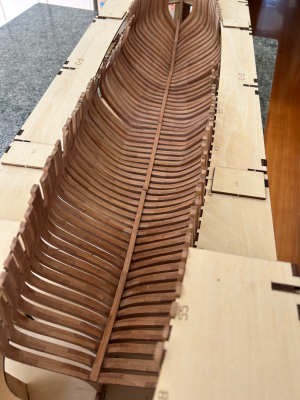
Here are frames 1 to 14 together:
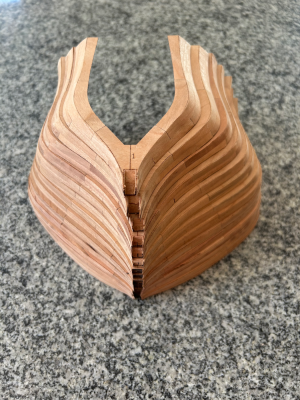
IMG_3973.jpeg

Kind regards

Salty
 
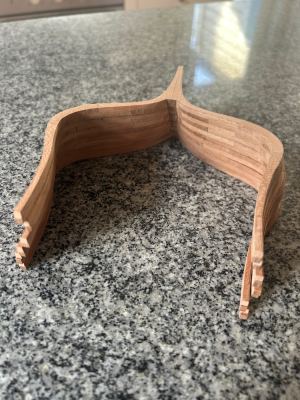
Part 2 of the kit also contains the hawse timbers.

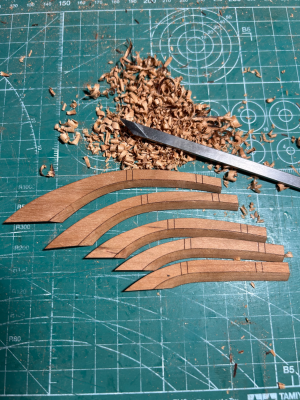
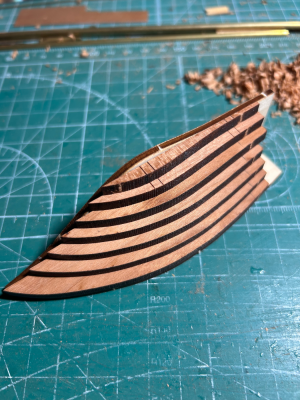
The first job is to bevel the inside face of the first five timbers

IMG_3995.jpeg

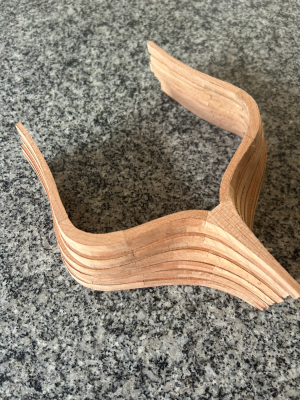
I used a knife to remove most of the material and a scraper to finish. After bevelling, the all seven pieces are stacked and glued in a jig:

IMG_3998.jpeg

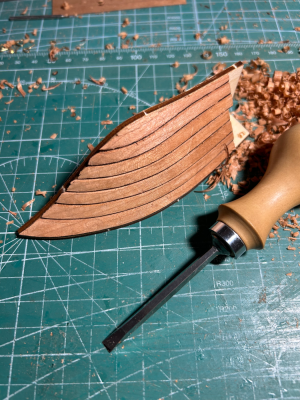
The outside is then roughly faired, mostly with a chisel:

IMG_4002.jpeg

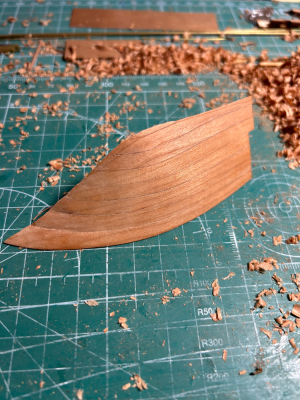
It’s reasonably straightforward. I work along each timber initially to shave right down to where the joins were only just visible. I finished off with a small scraper to give a nice clean finish. The only tricky area was the left hand lower corner which is actually slightly concave, but I have a gooseneck shaped scraper which worked well in that area. Here is the final:

IMG_4003.jpeg

Kind regards

Salty
 
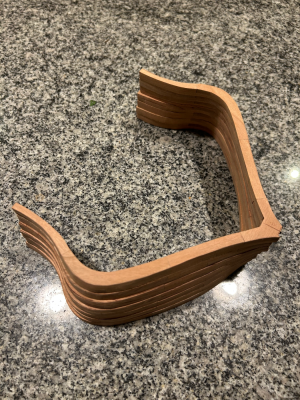
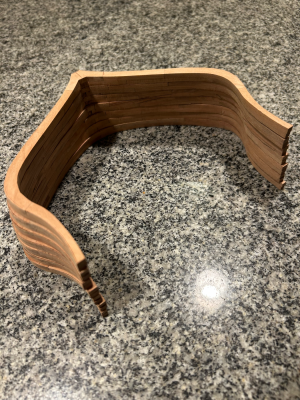
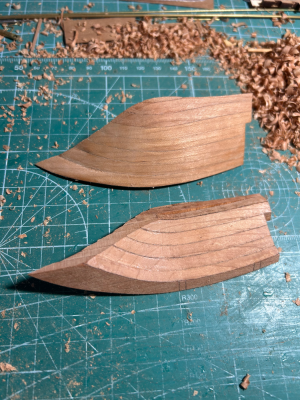
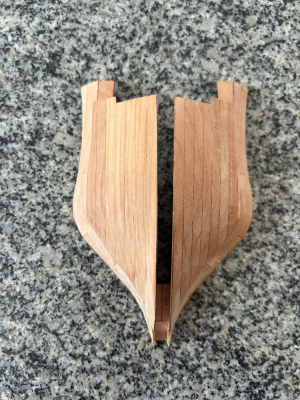
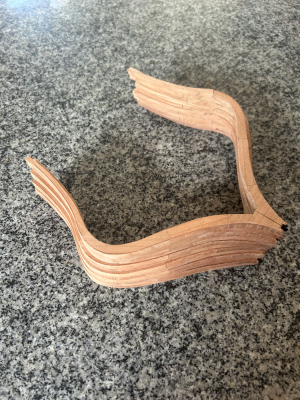
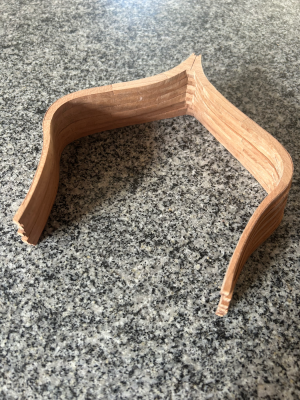
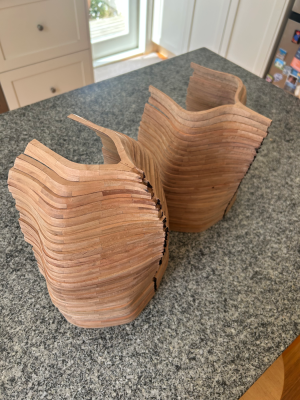
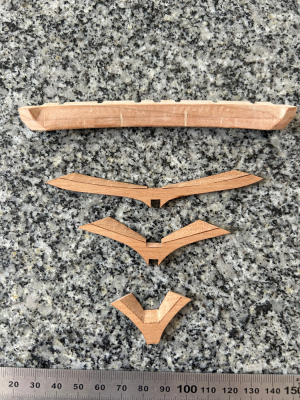
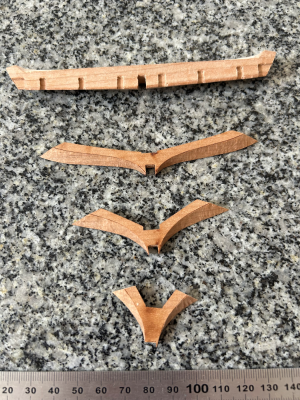
Here are both hawse pieces finished:

IMG_4005.jpeg

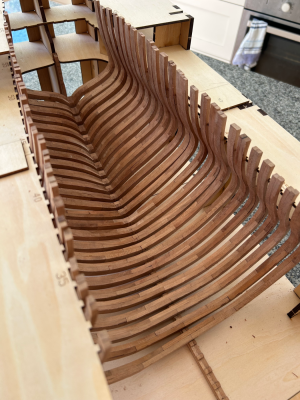
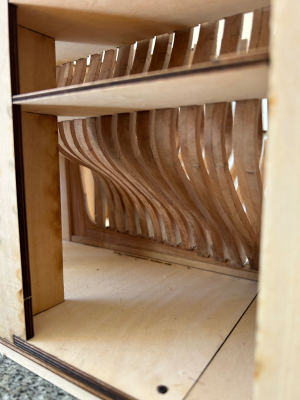
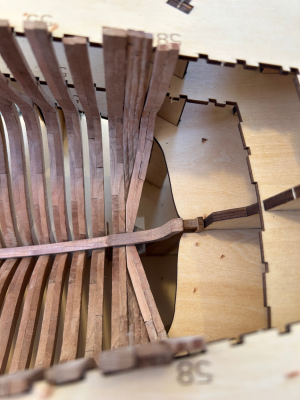
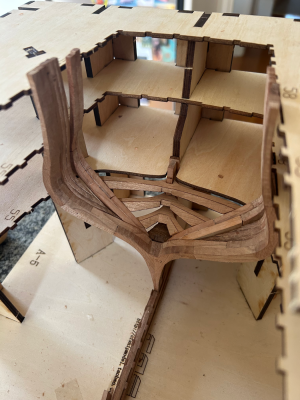
And this is how they look sitting on frame 1.

IMG_4007.jpeg

There probably some adjustments needed where they sit against the frame to get a nice transition, but I’ll do that after gluing in place. It gives you a real appreciation of how skilful shipwrights were to be able to cut, shape assemble timbers by hand with only axes and adzes.

Kind regards

Salty
 
Here are both hawse pieces finished:

View attachment 591376

And this is how they look sitting on frame 1.

View attachment 591375

There probably some adjustments needed where they sit against the frame to get a nice transition, but I’ll do that after gluing in place. It gives you a real appreciation of how skilful shipwrights were to be able to cut, shape assemble timbers by hand with only axes and adzes.

Kind regards

Salty
Well, I'm impressed...
 
Christian, thanks for your good wishes. I really enjoyed building Le Coureur and CAF seems to have produced another really nice kit with La Renommee, albeit about twice the size! What is not shown on the website are the full size plans for all stages of the kit. I don’t know what other manufacturers do, but it’s one of the reasons why I like CAF. They give a really clear picture of what you’re aiming for, so much so that I have built the frames and keel directly over them.

Paul, thank you for your encouragement. I just had a look at your Le Saint Philippe and the quarter deck looks absolutely phenomenal. I can’t match that, but I can at least try…

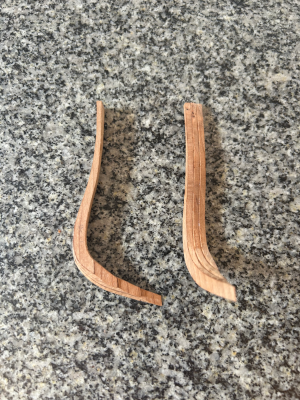
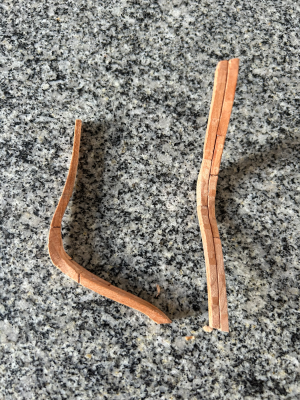
Onto part 3 of the kit which contains frames 46 to 59, plus the stern. Here are the frames 46 to 51:

IMG_3975.jpeg

IMG_3976.jpeg

I found frames 46 to 48 harder to get a nice finish using the scraper. I think this was because there is a lot of end grain in the area just below the top timbers where the frames have quite a curve. Some sections even needed to be scraped in different directions.

Kind regards

Salty
 
Back
Top