
-

SUBSCRIBE TO SHIPS IN SCALE TODAY!
The beloved Ships in Scale Magazine is back and charting a new course for 2026!
Discover new skills, new techniques, and new inspirations in every issue.
NOTE THAT OUR NEXT ISSUE WILL BE July/August 2026 -

Win a Free Custom Engraved Brass Coin!!!
As a way to introduce our brass coins to the community, we will raffle off a free coin during the month of August. Follow link ABOVE for instructions for entering.


You are using an out of date browser. It may not display this or other websites correctly.
You should upgrade or use an alternative browser.
You should upgrade or use an alternative browser.
HMS Sphinx - Vanguard Models 1:64 by Ronald-V
- Thread starter Ronald-V
- Start date
- Watchers 36
-
- Tags
- sphinx vanguard models


- Joined
- Feb 20, 2022
- Messages
- 145
- Points
- 143

Thanks AllenNow THAT is a man cave! And it is so well organized. I need to take a lesson from you guys when it comes to neatness and organization.
Allan



Calm, well-organised space. Mirrors your approach to modelling. Love it.

- Joined
- Oct 9, 2020
- Messages
- 2,689
- Points
- 538

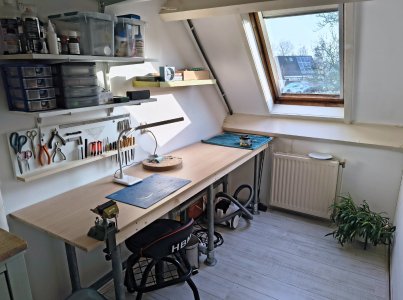
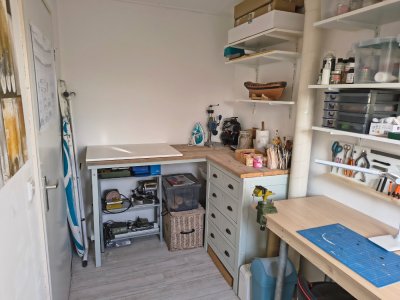
Great looking space. That window must bring in a lot of light, which is great. I always struggle with enough lighting.At this point in the build, I had reorganized my hobby room a bit. It is a fairly small space, so lots of shelves etc. So this is where i'm working now
View attachment 602642
View attachment 602643

I always like to see the space where the magic happens. It humanizes our odd devotion to small ships.
- Joined
- Feb 20, 2022
- Messages
- 145
- Points
- 143
It does! But the LED daylight lamp is almost always on too, you know. I notice that it just feels calmer on your eyes if you turn on some extra light.Great looking space. That window must bring in a lot of light, which is great. I always struggle with enough lighting.
- Joined
- Oct 9, 2020
- Messages
- 2,689
- Points
- 538
definitely.It does! But the LED daylight lamp is almost always on too, you know. I notice that it just feels calmer on your eyes if you turn on some extra light.



- Joined
- Feb 20, 2022
- Messages
- 145
- Points
- 143
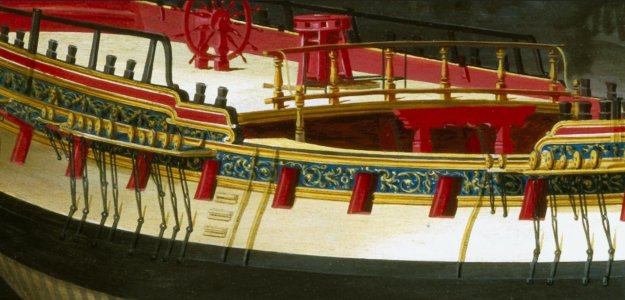
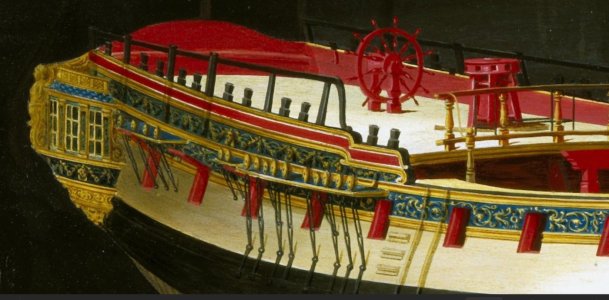
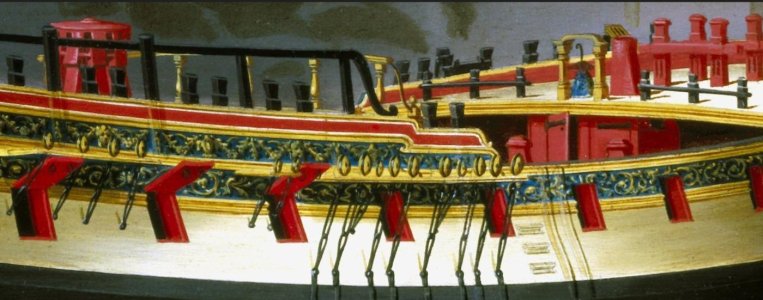
Dear Ronald! Since the SoS website doesn't allow high-quality images, I've taken a few screenshots of Marshall's famous paintings. I hope they'll help.
View attachment 602812 View attachment 602813 View attachment 602814 View attachment 602815 View attachment 602816 View attachment 602817
Thanks for posting these Igor. I'm aware of these and have them on my computer. They are handy as a reference. Although I am not copying everything from them, I did, for example, copy the paintwork from the Prow/stem—the blue and black lines. Although the kit comes with the necessary side decoration (and it looks really good), I will probably leave that out. I will make a post later explaining why.
- Joined
- Feb 20, 2022
- Messages
- 145
- Points
- 143
New day...so back to restoring the log. Not so far anymore from the point where I am now.
Painting the roof of the side gallery. Well... airbrushing in this case. I tried it with a brush first, but wasn't very satisfied with the result. So I sanded everything, then masked it off and airbrushed it. Lead shingles (in PE, of course) will go over this later, but I thought it would be useful to at least have the underside the same color. The rough edges will all be covered with decorative strips later.
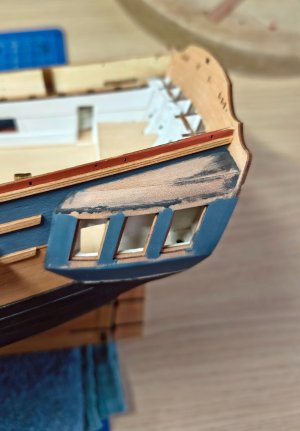
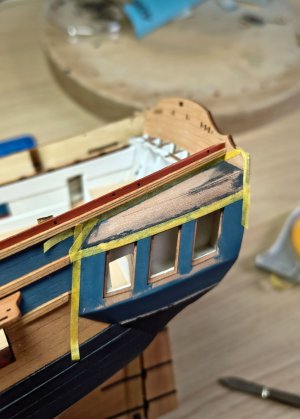
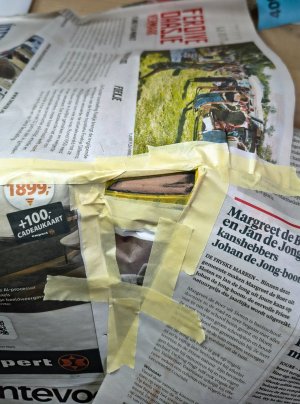
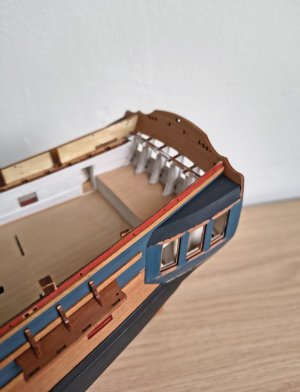
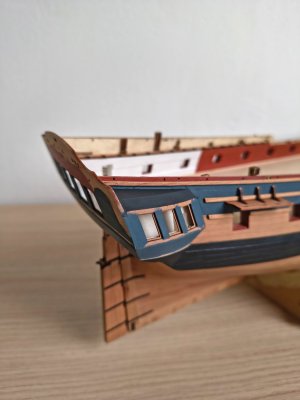
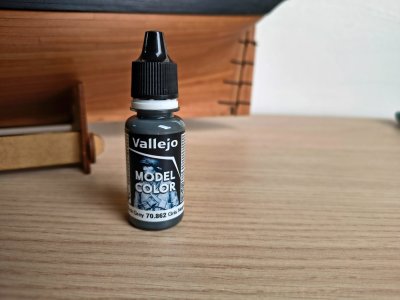
Color that I used was Vallejo Dark grey. Later, when I put on the shingles, I will probably dry-brush it with a slightly lighter color to simulate the color of lead a bit more. Otherwise, I'm afraid it will turn out very flat.
Painting the roof of the side gallery. Well... airbrushing in this case. I tried it with a brush first, but wasn't very satisfied with the result. So I sanded everything, then masked it off and airbrushed it. Lead shingles (in PE, of course) will go over this later, but I thought it would be useful to at least have the underside the same color. The rough edges will all be covered with decorative strips later.
Color that I used was Vallejo Dark grey. Later, when I put on the shingles, I will probably dry-brush it with a slightly lighter color to simulate the color of lead a bit more. Otherwise, I'm afraid it will turn out very flat.
- Joined
- Feb 20, 2022
- Messages
- 145
- Points
- 143
I made a few color samples regarding the color choice for the decoration on the Sphinx. Personally, I don't like things too flashy, but prefer to give the whole a calm, cohesive feel. This led me to the Vallejo "Gold brown" shown below. I think this pairs well with the somewhat dark tone of the pear wood and the matte blue.
It's the second from the left. Keep in mind that this is the base color. I add some depth and height with a dark wash and lighter-colored dry-brushing to prevent it from becoming too flat and dark.
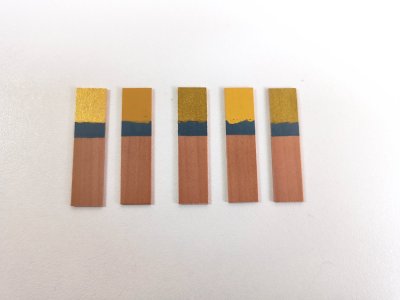

It's the second from the left. Keep in mind that this is the base color. I add some depth and height with a dark wash and lighter-colored dry-brushing to prevent it from becoming too flat and dark.
- Joined
- Feb 20, 2022
- Messages
- 145
- Points
- 143
Installing windows and some decoration
First of all, I had to fix a small problem. As you can see, a small crack had formed in the side gallery. This is not due to the sealant design, but to the modifications I made. Afterwards, the wood started to shift slightly, leaving this small crack behind. I filled this as much as possible with glue and paint within the limited space I had.
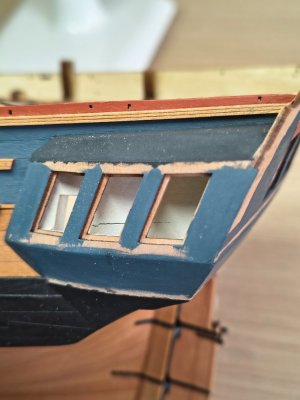
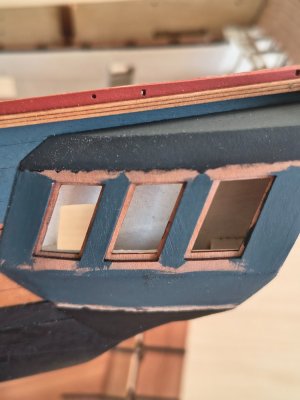
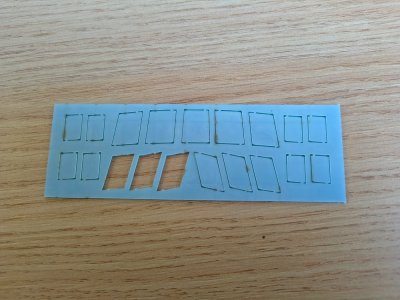
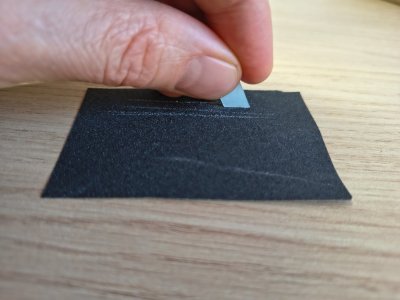
The kit comes with beautiful clear acetate windows that have been laser-cut to size. They do need to be sanded a little here and there to ensure a proper fit. Please be aware that the windows have been laser-cut in sequence. They do not all have the same shape.
After that, the PE was sprayed in the correct color. Here is the order of work.
1 First, degrease with white spirit
2 Laquer-based primer
3 "Gold Brown" base
4 Applied a rust-colored wash (the slightly reddish color corresponds nicely with the reddish-brown color of the pear wood)
5 A few highlights with a lighter color than the "Gold Brown"
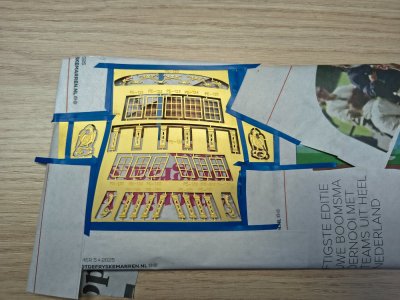
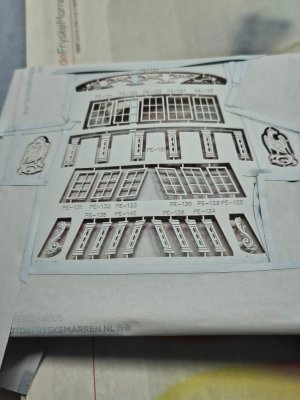
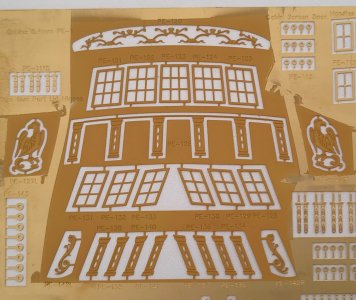
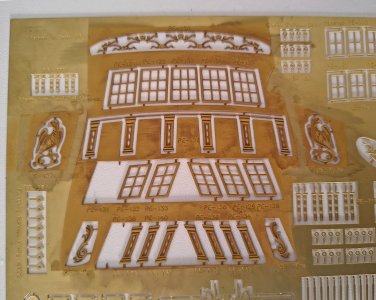
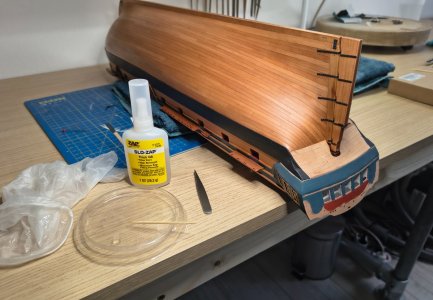
Tools for applying the PE with CA (I also used this to stick the windows down very carefully, without getting everything smeared underneath.)
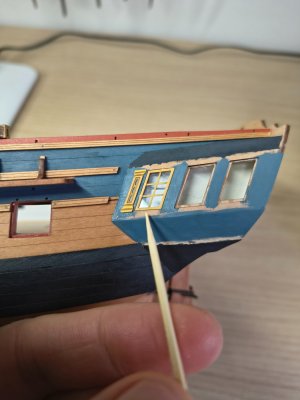
I realized later that I also needed to paint the small section under the windows here a bit blue, because you're going to see it later anyway. So I did that first, before I glued in the rest of the windows.
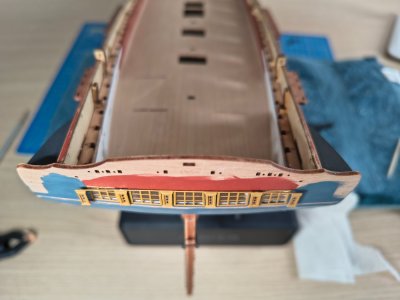
The pillars between the windows on the stern are one long, fragile piece of PE. To glue this in the right place without dying of stress... I first put a few small drops of thick CA glue on the two middle pillars and glued them in place. Because the whole thing flexes slightly, you can glue the rest of the pillars one by one using a skewer and some CA glue. This way, you don't have to glue everything all at once... which seemed impossible to me.
In the photo below, you can see the 2 middle pillars glued in place. Maybe Captain obvious here, but perhaps it is helpful for someone.
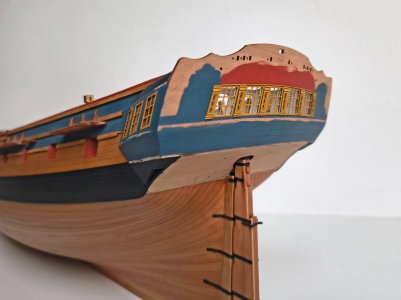
Windows
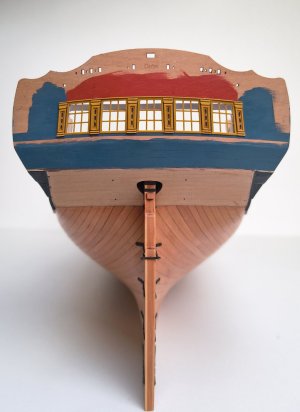
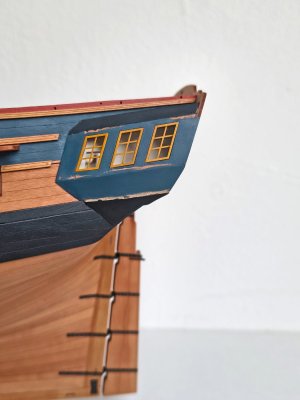
First of all, I had to fix a small problem. As you can see, a small crack had formed in the side gallery. This is not due to the sealant design, but to the modifications I made. Afterwards, the wood started to shift slightly, leaving this small crack behind. I filled this as much as possible with glue and paint within the limited space I had.
The kit comes with beautiful clear acetate windows that have been laser-cut to size. They do need to be sanded a little here and there to ensure a proper fit. Please be aware that the windows have been laser-cut in sequence. They do not all have the same shape.
After that, the PE was sprayed in the correct color. Here is the order of work.
1 First, degrease with white spirit
2 Laquer-based primer
3 "Gold Brown" base
4 Applied a rust-colored wash (the slightly reddish color corresponds nicely with the reddish-brown color of the pear wood)
5 A few highlights with a lighter color than the "Gold Brown"
Tools for applying the PE with CA (I also used this to stick the windows down very carefully, without getting everything smeared underneath.)
I realized later that I also needed to paint the small section under the windows here a bit blue, because you're going to see it later anyway. So I did that first, before I glued in the rest of the windows.
The pillars between the windows on the stern are one long, fragile piece of PE. To glue this in the right place without dying of stress... I first put a few small drops of thick CA glue on the two middle pillars and glued them in place. Because the whole thing flexes slightly, you can glue the rest of the pillars one by one using a skewer and some CA glue. This way, you don't have to glue everything all at once... which seemed impossible to me.
In the photo below, you can see the 2 middle pillars glued in place. Maybe Captain obvious here, but perhaps it is helpful for someone.
Windows
- Joined
- Feb 20, 2022
- Messages
- 145
- Points
- 143
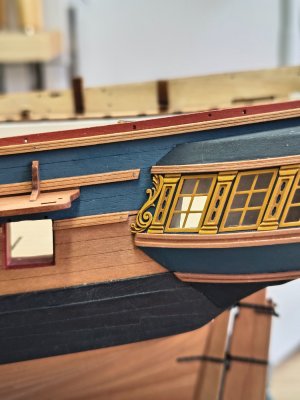
And now the final update, which brings me to the current situation as it stands. I completed this last week. This is about making the decorative pearwood strips that will go on the stern and side gallery.
The kit comes with fine laser-cut trim strips for this, but when I had installed them, I wasn't entirely satisfied with the head-to-tail joint used in the kit. So I decided to use a proper 45-degree angle joint here. That would mean I had to make my own strips.
After many failed attempts, during which I eventually burned out a bit with the project, I started working on the strips again after many weeks (and some other creative adventures) and concluded that this was a too difficult task for me. I went for the old-fashioned head-and-tail joint again. This time, however, with homemade strips that had a groove scraped into them. By running this groove into the head of the connecting strip, the joint is slightly less noticeable. I am satisfied with the final result. Was it all worth it? Who can say, but the fact that this ship is a bit more unique because I added something of myself to it is also a nice feeling.
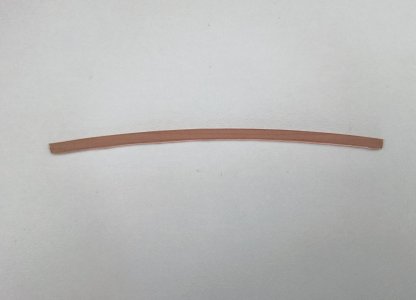
Process of making: First tracing the supplied strips on a piece of pear.
Roughly sanded with the discsander
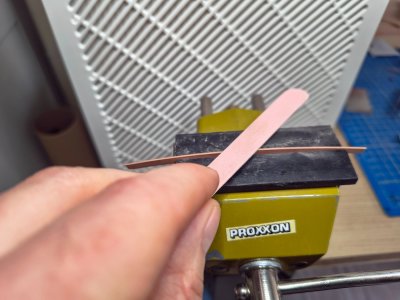
Finetuning with sandingsticks and files
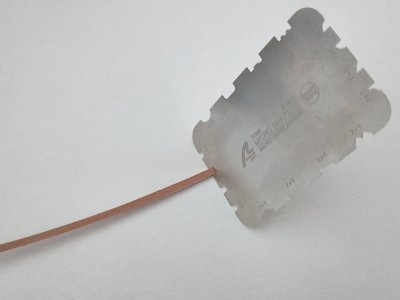
Scraping the groove with the Artsenania Latina scrapers
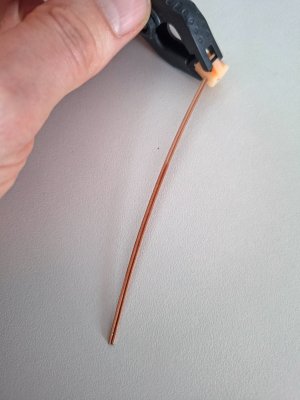
Ofcourse two coates of WOP (wipe on poly)
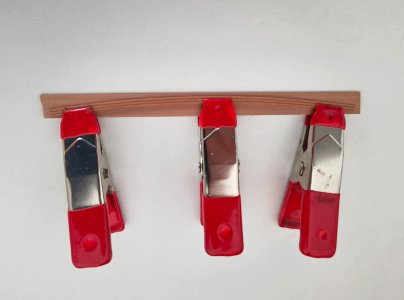
Clamping the strips with my fingers (and spacers to get a symetrical fit) until the PVA sets. Clamping would be a nightmare
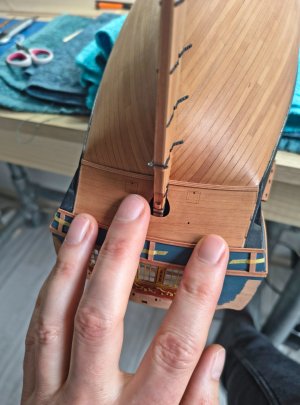
Endresult. I did use the lasered decorative strip that comes with the kit above the windows of the side gallery. Because visually, this appears to flow in with the rest of the decorative strips on the side of the hull. Therefore, it felt logical to keep it consistent.
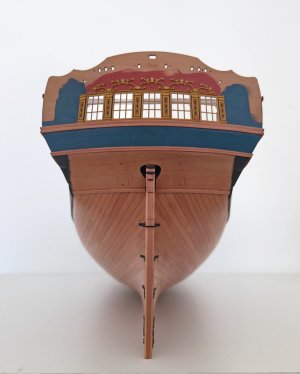
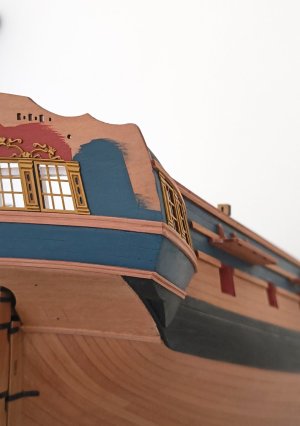
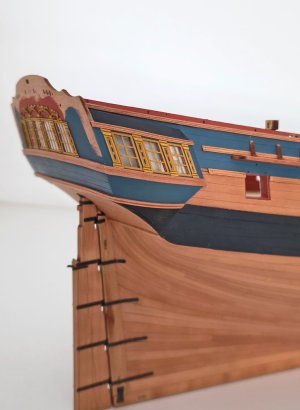
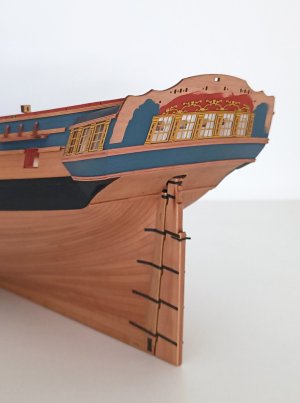
And I installed the pillars and the little curly thing between the windows on the side galleries. These pillars could now be installed because the strips work as a guide for them.
Glad the entire build log has been restored! Life can go back to normal. 

The kit comes with fine laser-cut trim strips for this, but when I had installed them, I wasn't entirely satisfied with the head-to-tail joint used in the kit. So I decided to use a proper 45-degree angle joint here. That would mean I had to make my own strips.
After many failed attempts, during which I eventually burned out a bit with the project, I started working on the strips again after many weeks (and some other creative adventures) and concluded that this was a too difficult task for me. I went for the old-fashioned head-and-tail joint again. This time, however, with homemade strips that had a groove scraped into them. By running this groove into the head of the connecting strip, the joint is slightly less noticeable. I am satisfied with the final result. Was it all worth it? Who can say, but the fact that this ship is a bit more unique because I added something of myself to it is also a nice feeling.
Process of making: First tracing the supplied strips on a piece of pear.
Roughly sanded with the discsander
Finetuning with sandingsticks and files
Scraping the groove with the Artsenania Latina scrapers
Ofcourse two coates of WOP (wipe on poly)
Clamping the strips with my fingers (and spacers to get a symetrical fit) until the PVA sets. Clamping would be a nightmare
Endresult. I did use the lasered decorative strip that comes with the kit above the windows of the side gallery. Because visually, this appears to flow in with the rest of the decorative strips on the side of the hull. Therefore, it felt logical to keep it consistent.
And I installed the pillars and the little curly thing between the windows on the side galleries. These pillars could now be installed because the strips work as a guide for them.
Glad the entire build log has been restored! Life can go back to normal.
Nicely done. I'm looking forward to following your work at the normal pace!
- Joined
- Feb 20, 2022
- Messages
- 145
- Points
- 143
Thanks!Nicely done. I'm looking forward to following your work at the normal pace!

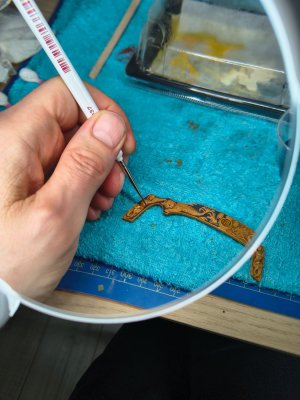
I see the problem immediately, Ron. You're using your left hand  .
.
.
- Joined
- Feb 20, 2022
- Messages
- 145
- Points
- 143
Now I know!I see the problem immediately, Ron. You're using your left hand
On the second date with my future wife, we went to a restaurant with booth seating. She slid in, and I slid in next to her, and for the next hour this young lady banged her arm into mine so often that I decided this was going to be our last date. And then I noticed she was left-handed, so I opted for the third date. Four children (and now four grandchildren) later it would seem we figured out how to coexist despite out fundamental differencesNow I know!
.