

• SUBSCRIBE TO SHIPS IN SCALE TODAY!

    The beloved Ships in Scale Magazine is back and charting a new course for 2026!
    Discover new skills, new techniques, and new inspirations in every issue.

    NOTE THAT OUR NEXT ISSUE WILL BE MARCH/APRIL 2026
  • Win a Free Custom Engraved Brass Coin!!!
    As a way to introduce our brass coins to the community, we will raffle off a free coin during the month of August. Follow link ABOVE for instructions for entering.

His Majesty's Ship Fowey (44) 1744 by AllanKP69

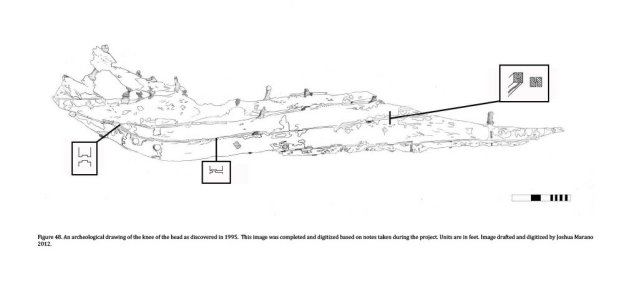
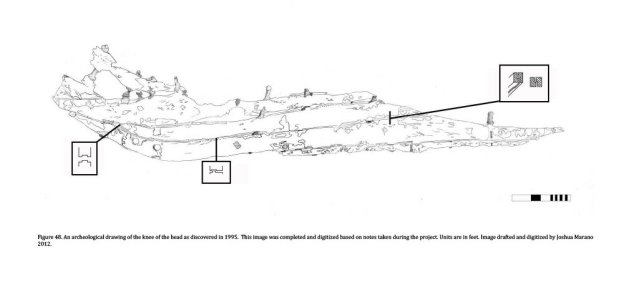
Some more information on the knee of the head was sent to me by the archeological team. I will be discussing it with them over the next day or two, but based on the joinery, it is totally different than anything I had found before. Sadly, it was lost/buried again in 2017 when hurricane Irma blew through so further studies are not possible. (unless we get another hurricane to uncover it :) )
Allan

1782212587782.jpeg
 

Attachments

Last edited:
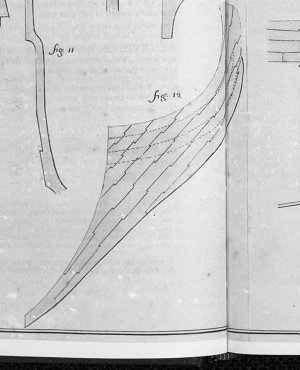
I will be remaking the knee of the head after more study by two accomplished ship modelers, the archeological team, and me. The drawing below by Blaise Ollivier from 1737 when he was "visiting" the English shipyards shows the assembly to use similar construction to the drawing from the wreck site.
Allan
Ollivier sketch from 1737
1782245111648.jpeg
 
I am pretty sure that I took my pattern for the knee of the head from Goodwin.
My view of it was and is: complicated and the why of it seems obscure at best. Then- whatever, if I gotta, I gotta.
I now wonder if the model that Goodwin used to derive his pattern was someone using leftover scraps?

Ollivier is logical. If I was limited by what the wood ghouls could find and the sawyers cut that would be my choice.
From the number of layers that Ollivier has - that had to be a first rate and even then probably an exaggeration.
For the sake of my sanity - I am going to ascribe the table mortising to Ollivier adding in French practice while he was drawing it.

I would not replicate the tabling. I would do a straight line. I see no evidence of tabling on the outside of Fowey. The tabling adds a lot more end grain exposure for water infiltration and rot. Much more fiddley to caulk.
Something more complex was probably hidden inside - but for a model: so what?
I would make no effort to highlight - or darken the seams - just what Titebond II sets as.
A slight difference in wood shade or grain will show that the knee of the head is built up on the model.
That is an easier fabrication job.
 
I will be remaking the knee of the head after more study by two accomplished ship modelers, the archeological team, and me. The drawing below by Blaise Ollivier from 1737 when he was "visiting" the English shipyards shows the assembly to use similar construction to the drawing from the wreck site.
Allan
Ollivier sketch from 1737
View attachment 614363


Thanks for this. I couldn't really interpret the previous picture but this one clarifies it.
 
Primary source and archeological findings. I would go with the drawing from the book. This remembers me that I have to check if I can find the book. I think it will be very helpful for my Granado.
 
I would not replicate the tabling. I would do a straight line. I see no evidence of tabling on the outside of Fowey. The tabling adds a lot more end grain exposure for water infiltration and rot. Much more fiddley to caulk.
This is up for debate ( at least in my mind) right now. My concern without the tabling is that the overall knee would be rather weak on the actual ship. Same would go for the rudder which was often done with even more complex tabling.
Primary source and archeological findings. I would go with the drawing from the book.

Sorry AP, I am not sure I understand. Do you mean you would use the drawing in the Ollivier book rather than the actual design of the part from the ship?
Allan
 
I am pretty sure that I took my pattern for the knee of the head from Goodwin.
My view of it was and is: complicated and the why of it seems obscure at best. Then- whatever, if I gotta, I gotta.
I now wonder if the model that Goodwin used to derive his pattern was someone using leftover scraps?

Ollivier is logical. If I was limited by what the wood ghouls could find and the sawyers cut that would be my choice.
From the number of layers that Ollivier has - that had to be a first rate and even then probably an exaggeration.
For the sake of my sanity - I am going to ascribe the table mortising to Ollivier adding in French practice while he was drawing it.

I would not replicate the tabling. I would do a straight line. I see no evidence of tabling on the outside of Fowey. The tabling adds a lot more end grain exposure for water infiltration and rot. Much more fiddley to caulk.
Something more complex was probably hidden inside - but for a model: so what?
I would make no effort to highlight - or darken the seams - just what Titebond II sets as.
A slight difference in wood shade or grain will show that the knee of the head is built up on the model.
That is an easier fabrication job.
Not 100% sure on the terminology. I have been calling scarphs what you have been referring to as tabeling. I am happy to be corrected if I have been using it wrong. I have never run into the term tabling before.

A few points on this:
1) Olivier explicitly says that the english practice he shows in that arrangement was not consistent with french practice and this method of using the scarphs was something he thought the french should consider as it was better than what they did. The Olivier example is of a 2nd rate. That being said even other examples that do exist of say 3rd rates or smaller often have a lot more pieces than most modern modelers show.
2) There is actually a contemporary model from 1790 at the NMM that shows as similar arrangement.
3) There is another french account from 1783 which also shows this, and it implies that the arrangement follows what would normally be english practice.

That all being said there are a also examples with no scarph joints so there is definitely a case to be made for just doing the pieces straight. In this particular case it is hard to say for sure, but there may be some scarphs on the Foley drawing.

Goodwin is a bit of a problem because though he is widely cited I have not been able to find any contemporary evidence to support an arrangement similar to Goodwin. Everything I find has more smaller pieces and the pieces tend to run in parallel.
 
Last edited:
I have been calling scarphs what you have been referring to as tabeling.
It is a scarph, You are correct. If it was a single plane meeting a single plane they would scarph. Anchor stock, top and butt are all scarphs. I am not sure where "table mortise" comes from or if it is an actual term. It seems to have been effective as a description of a type of scarph this time.
Olivier explicitly says that the english practice
[ imagine a finger snap} Rats!! Well I tried. That theory will not work for a way to avoid that detail with good conscience.
I just finished taking a shot at Lemineur for his Saint Philippe having tabling in his plan for the bends. A French ship. I guess that extrapolation did not hold.

The Olivier example is of a 2nd rate.
The size is a 90 is pert close to a 100 in the Establishments era so my guess is close.

It is not germane but in the middle of the 18thC. way more 90's were built than 100's and the 90's were actually used. But they do not get the attention that they have earned. I have eleven different classes between 1719 and 1776.
That all being said there are a also examples with no scarph joints so there is definitely a case to be made for just doing the pieces straight.
This is up for debate ( at least in my mind) right now.

I am trying to give Allan an excuse to avoid doing a huge amount of frustrating fiddlely work. To me, it does not pass a cost vs benefit test. It is an academic detail that I think even most scholars would let pass. (I am not sure that there are even enough who would know to rate the term "most".)
 
Sorry AP, I am not sure I understand. Do you mean you would use the drawing in the Ollivier book rather than the actual design of the part from the ship?
Allan
Hallo Allan,

yes, that's want I want to say.If you compare the archeological findings and the information in the book, you can clearly see, that this matches. The information in the book is from a bigger ship, but for the details you can use the findings. Your knee of the head, which you shared in #77 doesn't match with the findings and neither with the information in the primary source.
 
Thanks Christian,
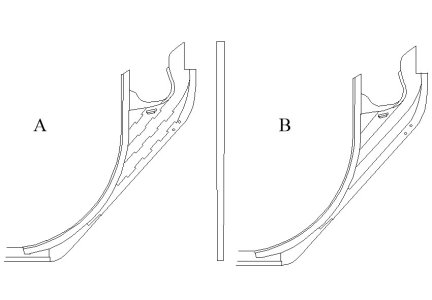
We are in agreement. The picture in post 77 was my original based on several books, but has since been dropped in the waste bin. At this moment the following is where I am. Unless there is a solid reason anyone can give to use B, I am probably going with A in the second picture. The only reason I hesitate is that the three insets of the actual knee has the rabbet construction shown in the first picture below. Using this construction it would have been a nightmare preparing the scarphs/tabling.

Thanks everyone for all your input and sharing your knowledge, it is truly appreciated.
Allan

1782314708194.jpeg
1782314571888.jpeg
 
I am new around here. I just wanted to say I like your project! I went to school with Josh Murano who I think may still be with NPS down there at Biscayne.
 
I am new around here. I just wanted to say I like your project! I went to school with Josh Murano who I think may still be with NPS down there at Biscayne
Small world North Carolina Boat builder. Josh is my main contact at the NPS office. His name is on the bottom of the wreck site drawing in post #90, above. He is a super person to work with. He has dived on the Fowey wreck many times and continues to every month or so. We met a couple months ago regarding the project and we plan a follow up visit in the next couple months depending on his upcoming travels. He has continued to get me answers to my many questions which is a huge help. If you wish, PM me your name if you want to keep on the down low here on the public site here and I will pass on your regards.
Allan
 
Back
Top