

• SUBSCRIBE TO SHIPS IN SCALE TODAY!

    The beloved Ships in Scale Magazine is back and charting a new course for 2026!
    Discover new skills, new techniques, and new inspirations in every issue.

    NOTE THAT OUR NEXT ISSUE WILL BE MARCH/APRIL 2026
  • Win a Free Custom Engraved Brass Coin!!!
    As a way to introduce our brass coins to the community, we will raffle off a free coin during the month of August. Follow link ABOVE for instructions for entering.

Pelican scale 1/45 a small English galleon 16th century

Joined
May 4, 2026
Messages
239
Points
133

Location
Oost Vlaanderen Belgie
The start of this model was sometime in 2016.

After building Billing's Vasa, I wanted to make a scratch model. The choice fell on the Golden Hind; the intention was to make a perfect copy. Little did I know then that this would turn out to be an impossible task. The name of the build log soon changed to "Pelican".
If I were to do it over, it would be without the cabin under the poop deck and without the balustrade at the stern.

These are many photos that need to be sorted through and resized. And given that the original text has disappeared in the MSW crash, it will take a while to rebuild everything.

The finished model in 2022
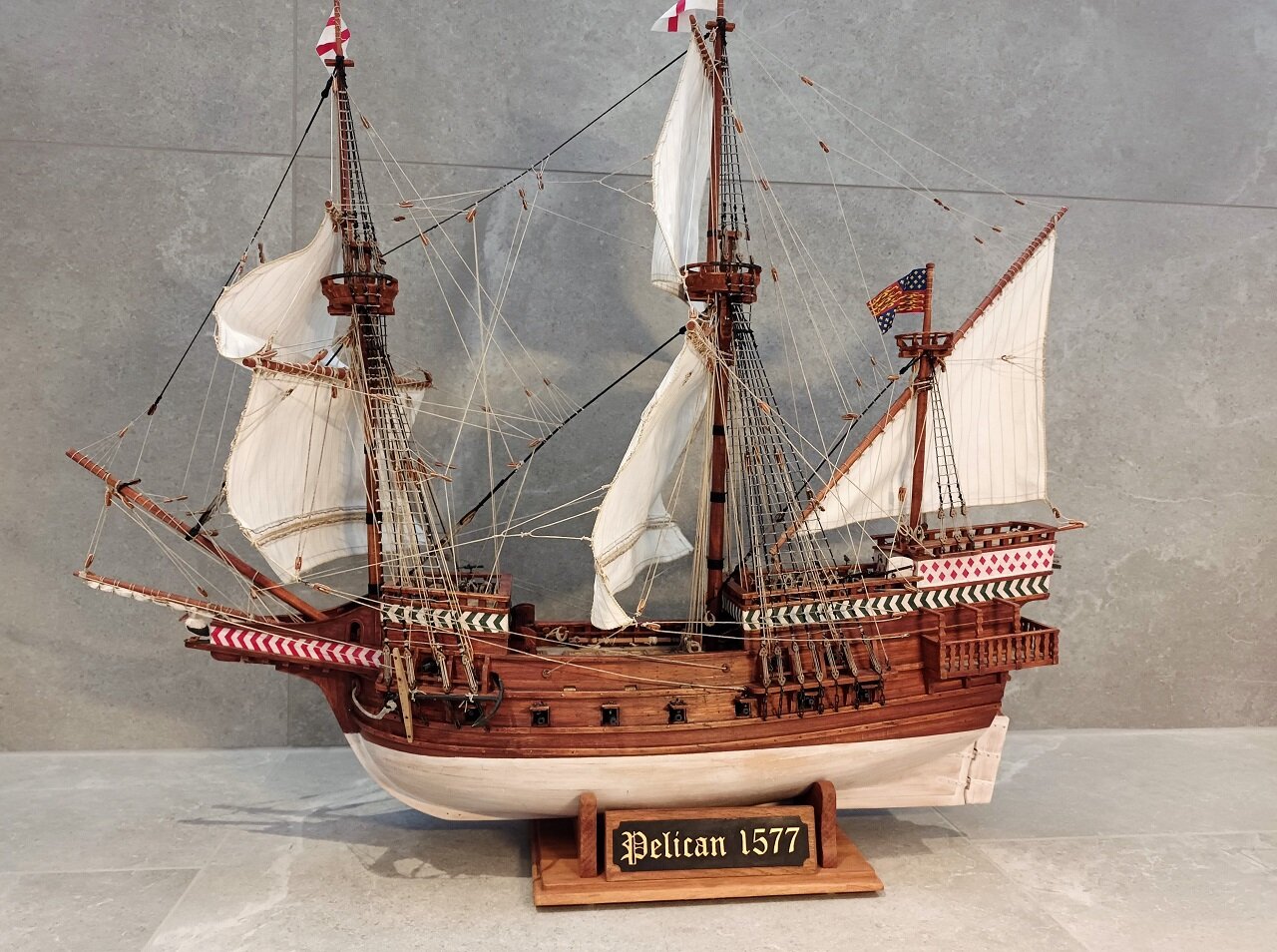
20230116_130237 - kopie.jpg


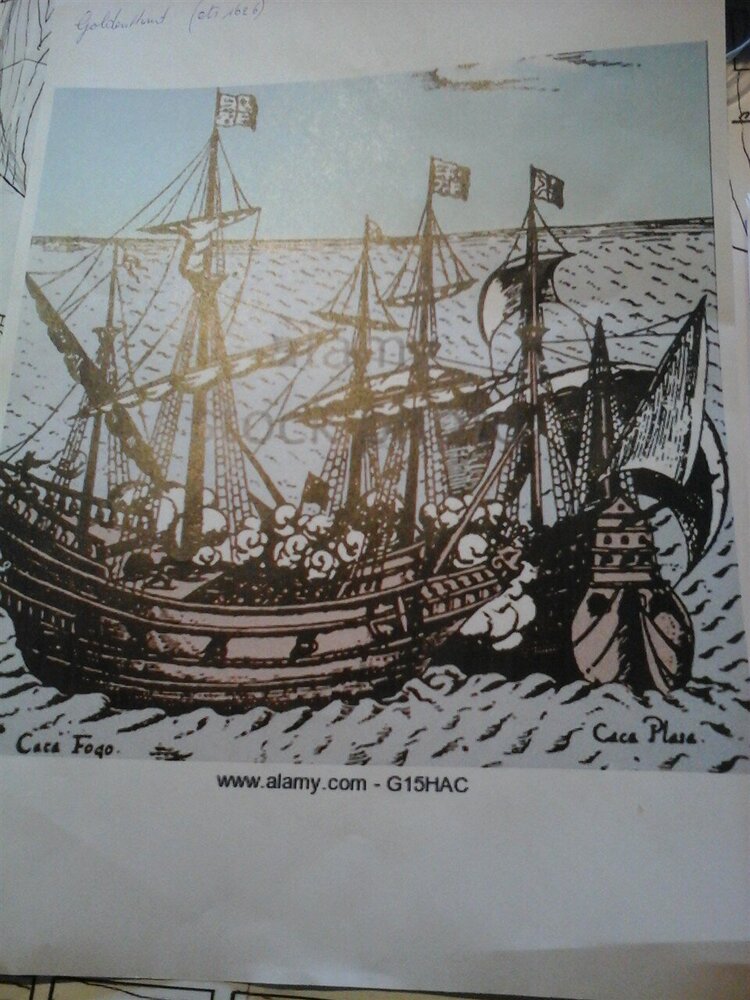
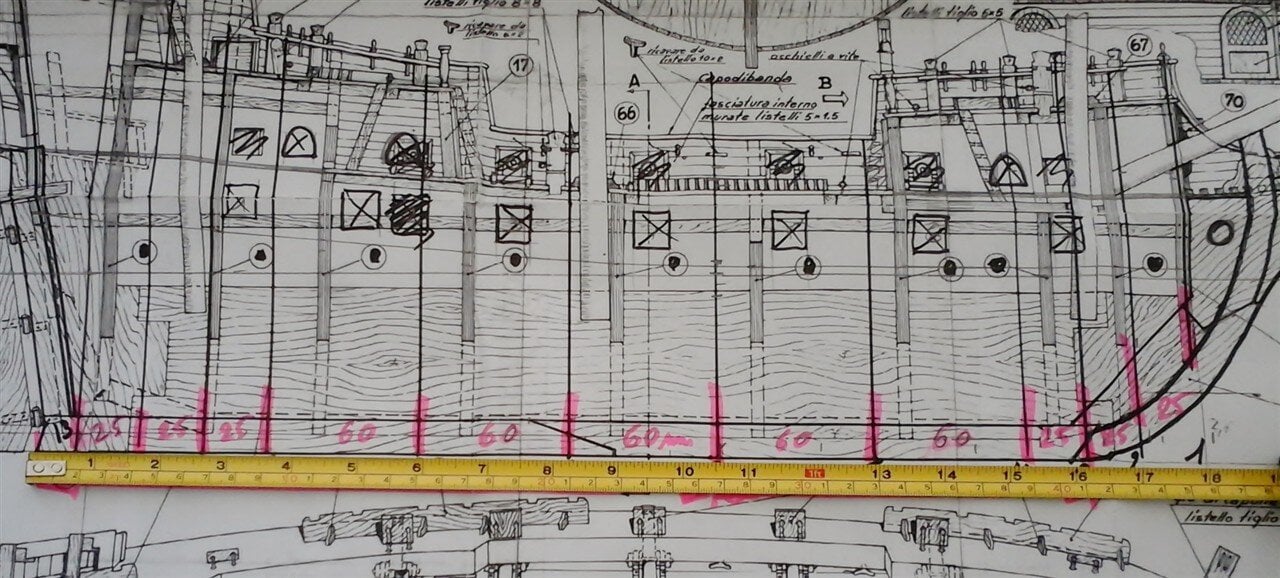
Some drawings of what the ship might have looked like.
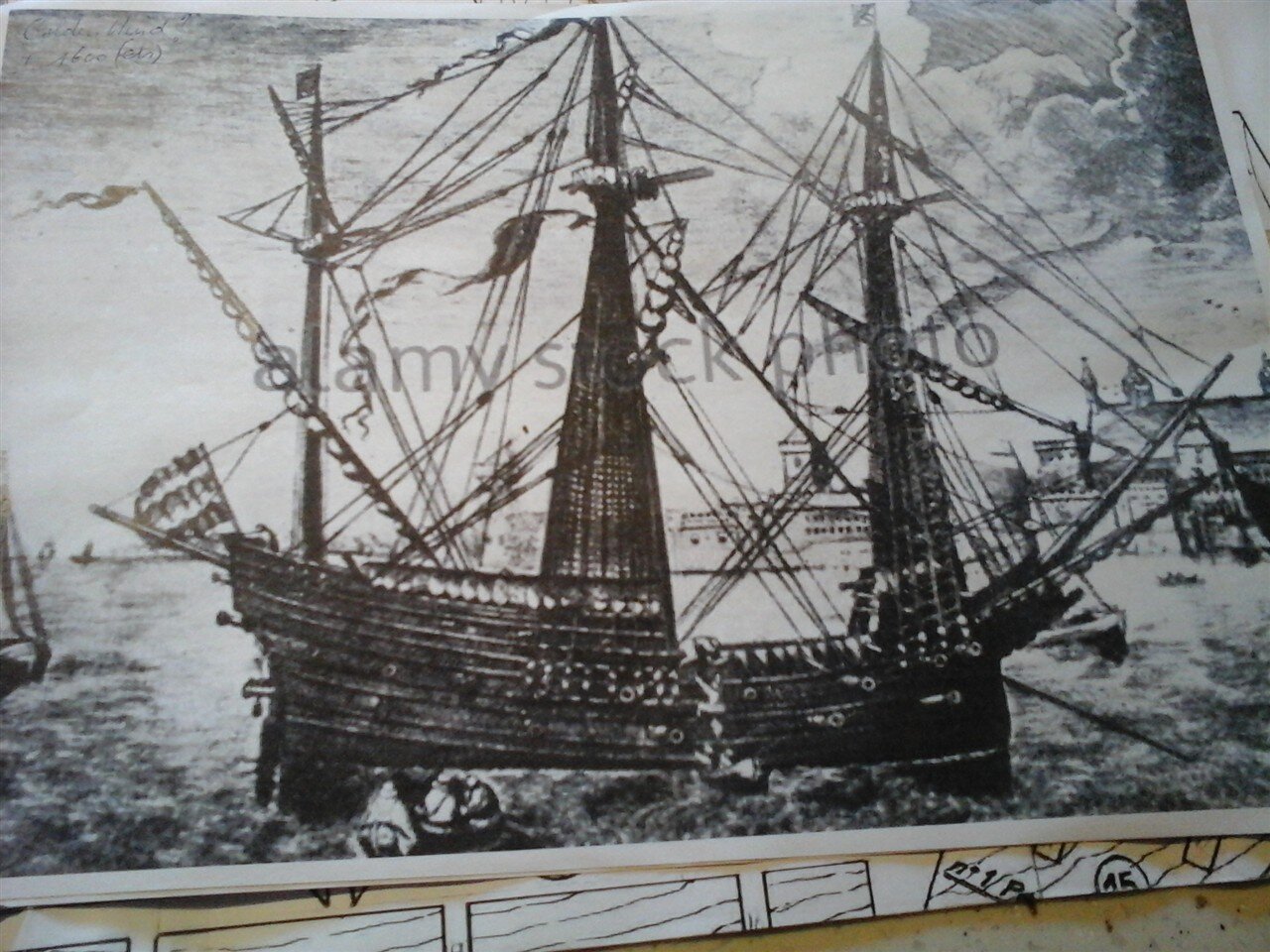
2016-09-07 18.40.11_1280.jpg


2016-09-07 18.40.20_1280.jpg


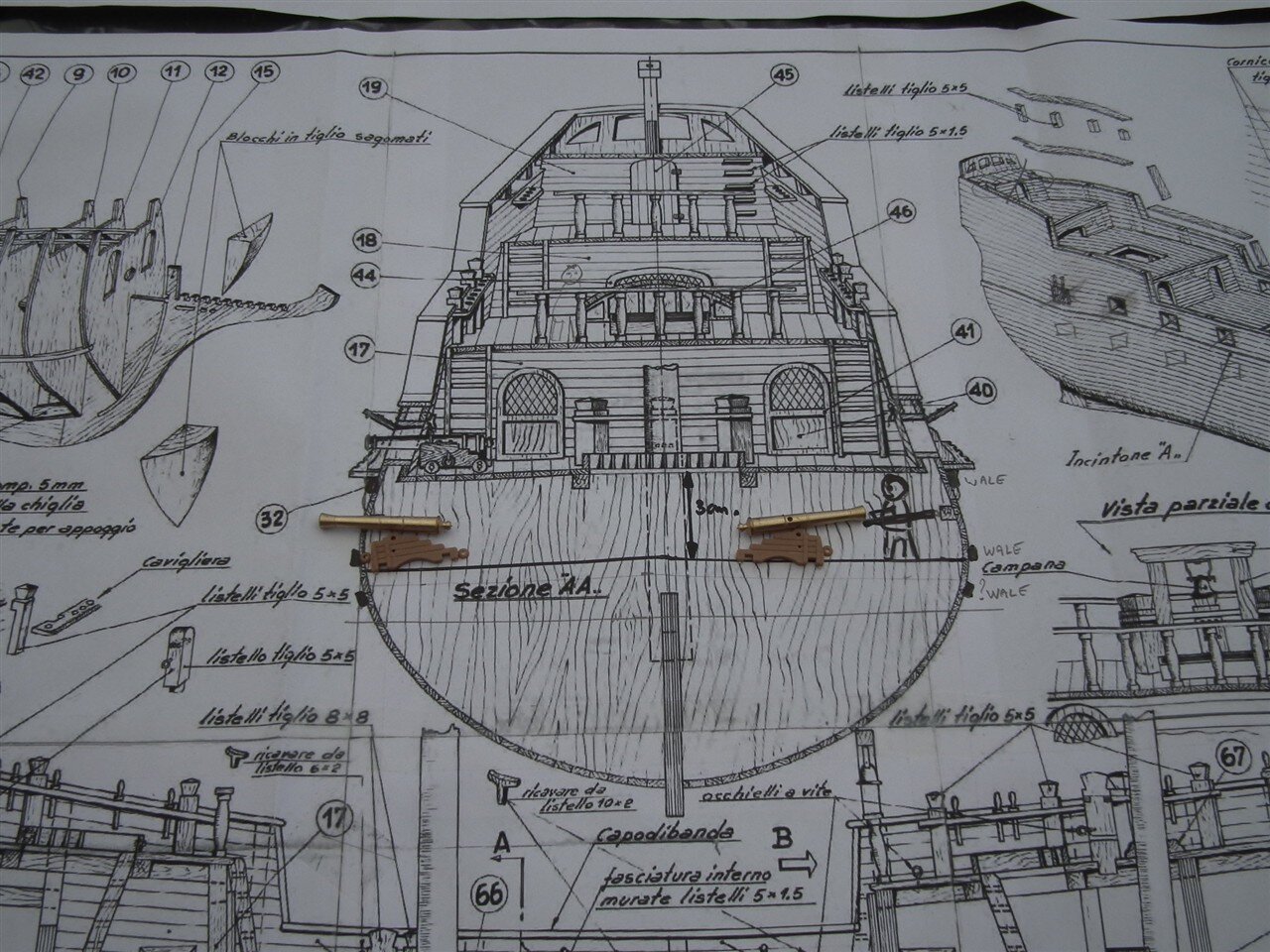
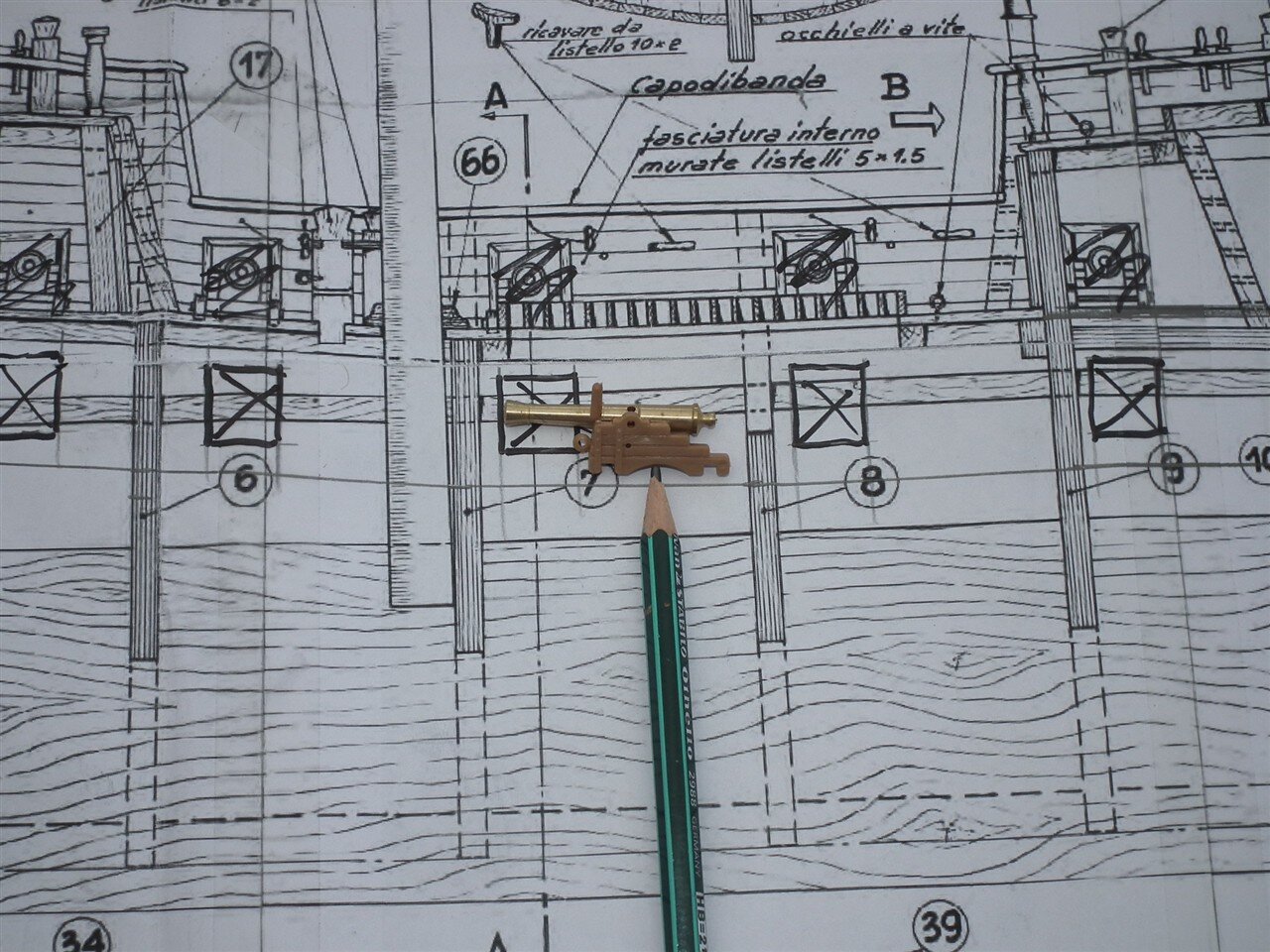
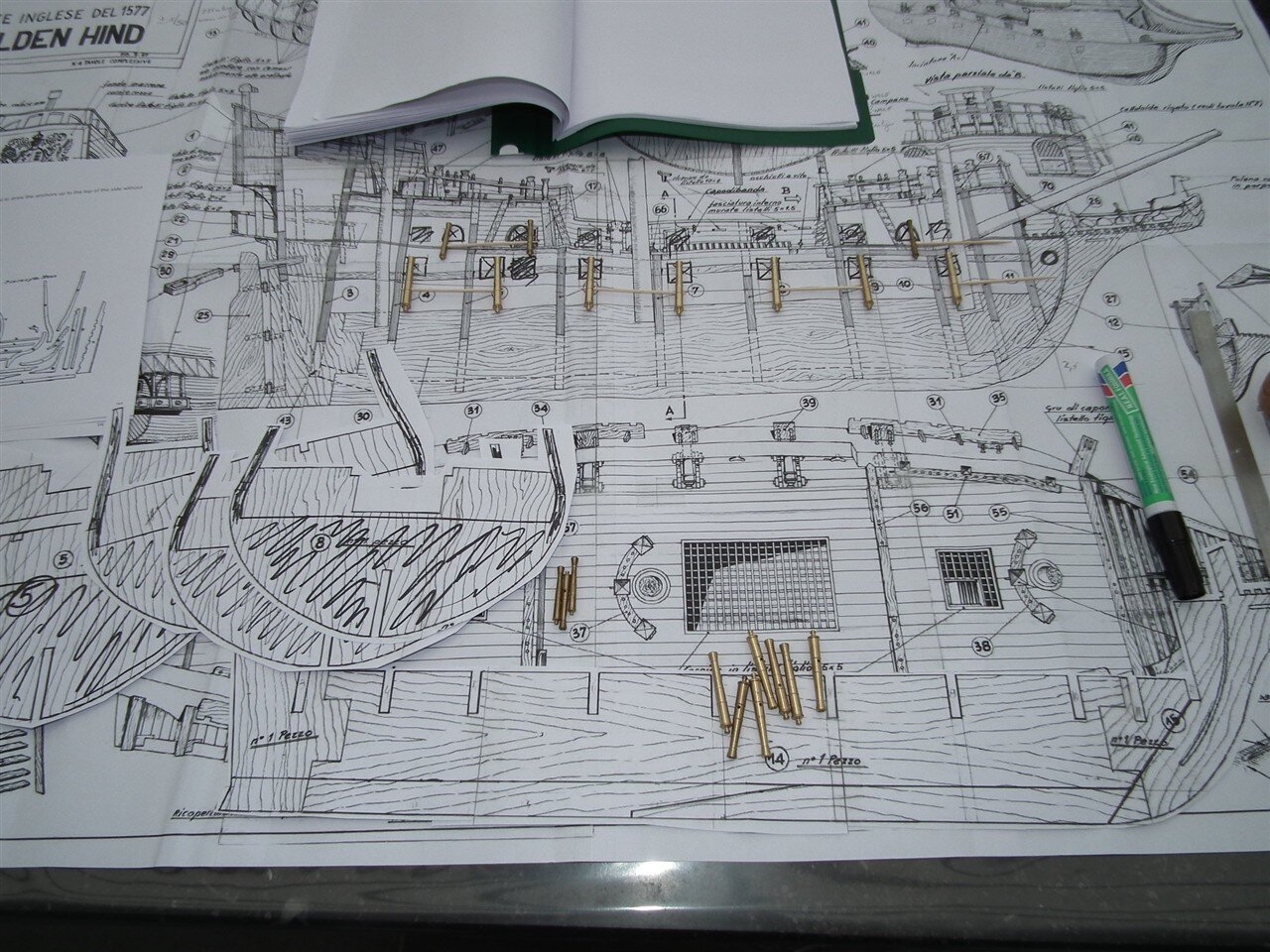
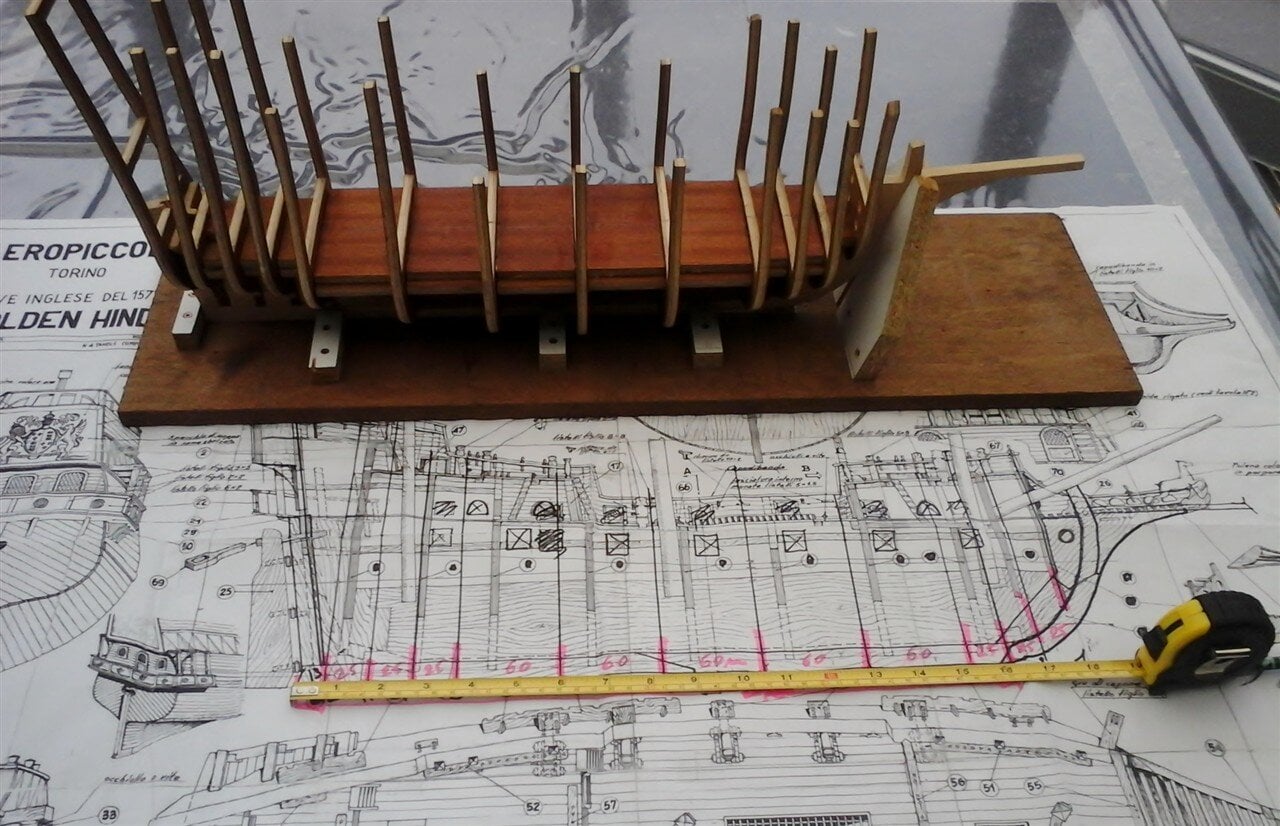
Initially, the idea was to use the Aeropiccolo plans.
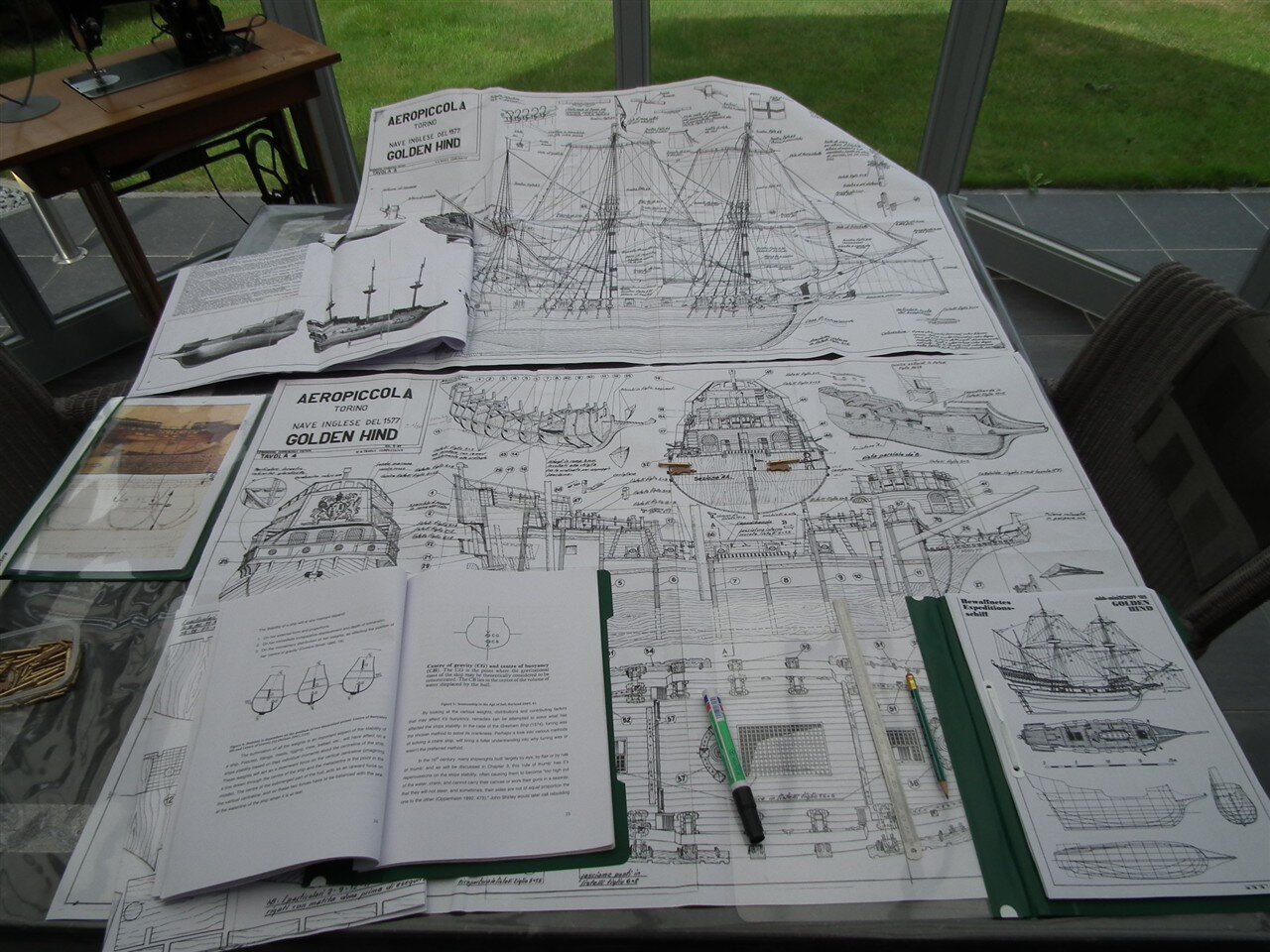
DSCF1095_1280.JPG


DSCF1096_1280.JPG


Which were later adapted to a narrower version, with the guns below deck.
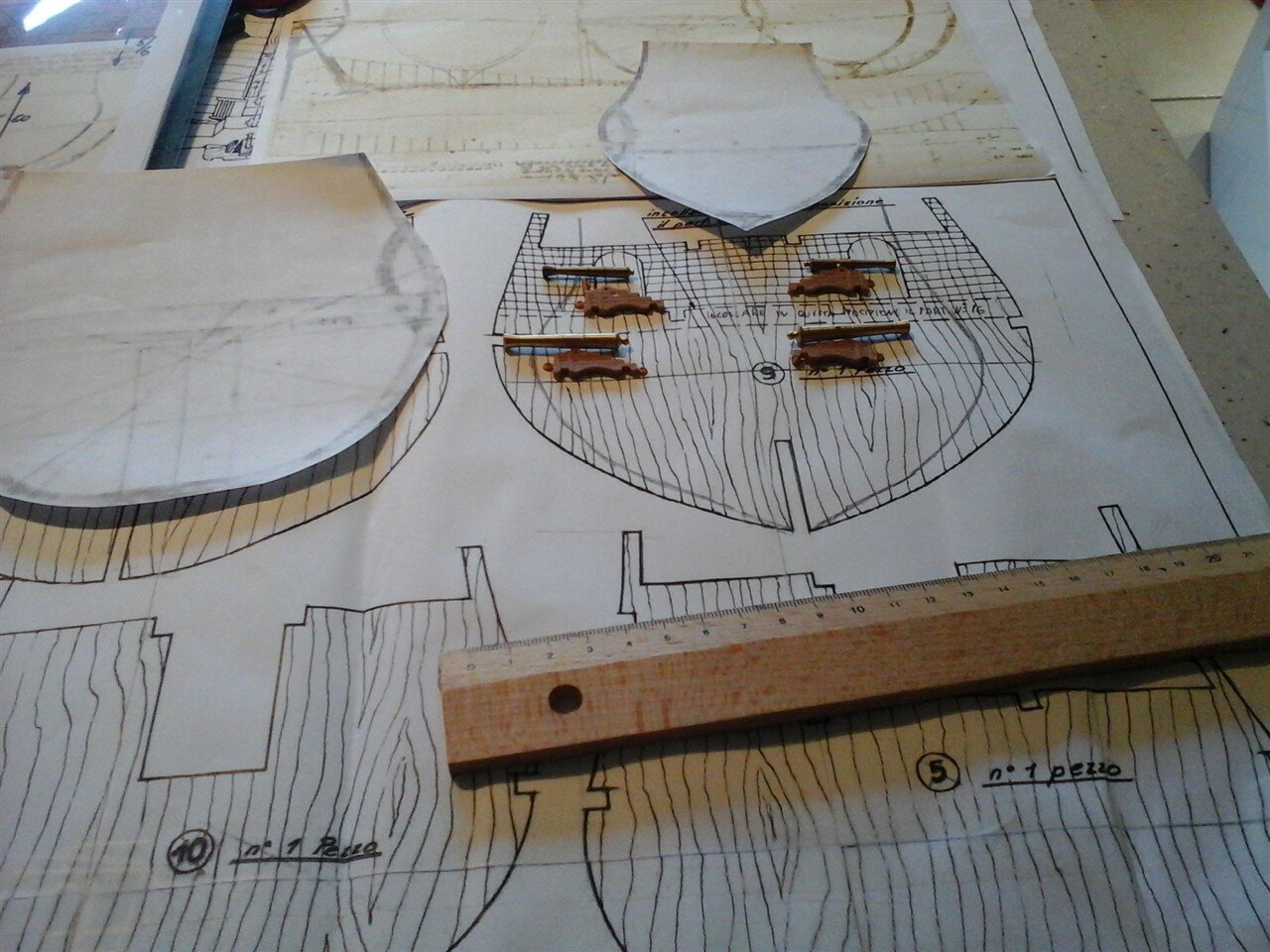
2016-09-07 18.39.02_1280.jpg


DSCF1102_1280.JPG


DSCF1103_1280.JPG
 
Start of the keel laying.
The wood used for the keel, planking, and decks is ramin. This has a fine grain, but as will become apparent later, it is sometimes difficult to bend.

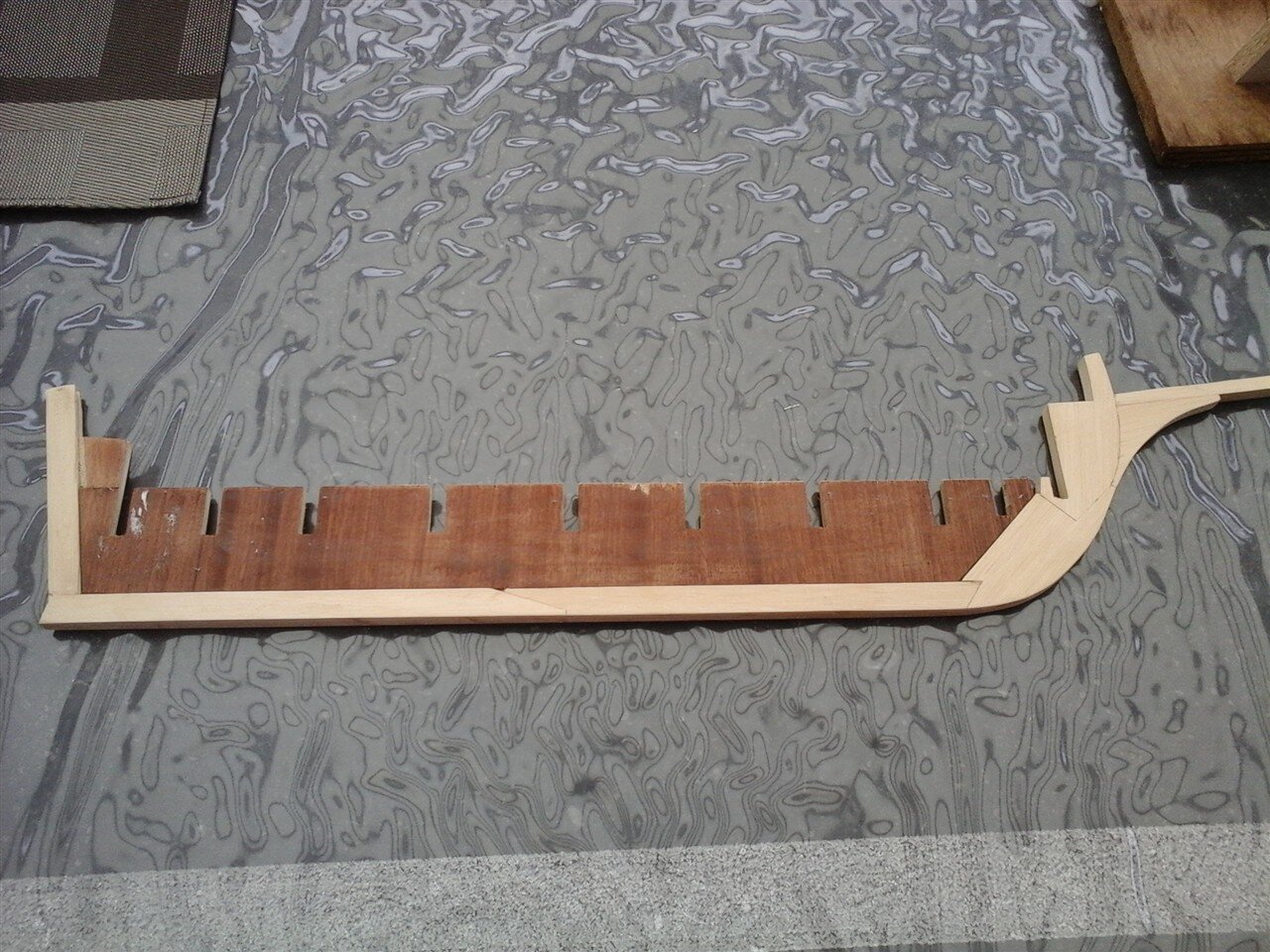
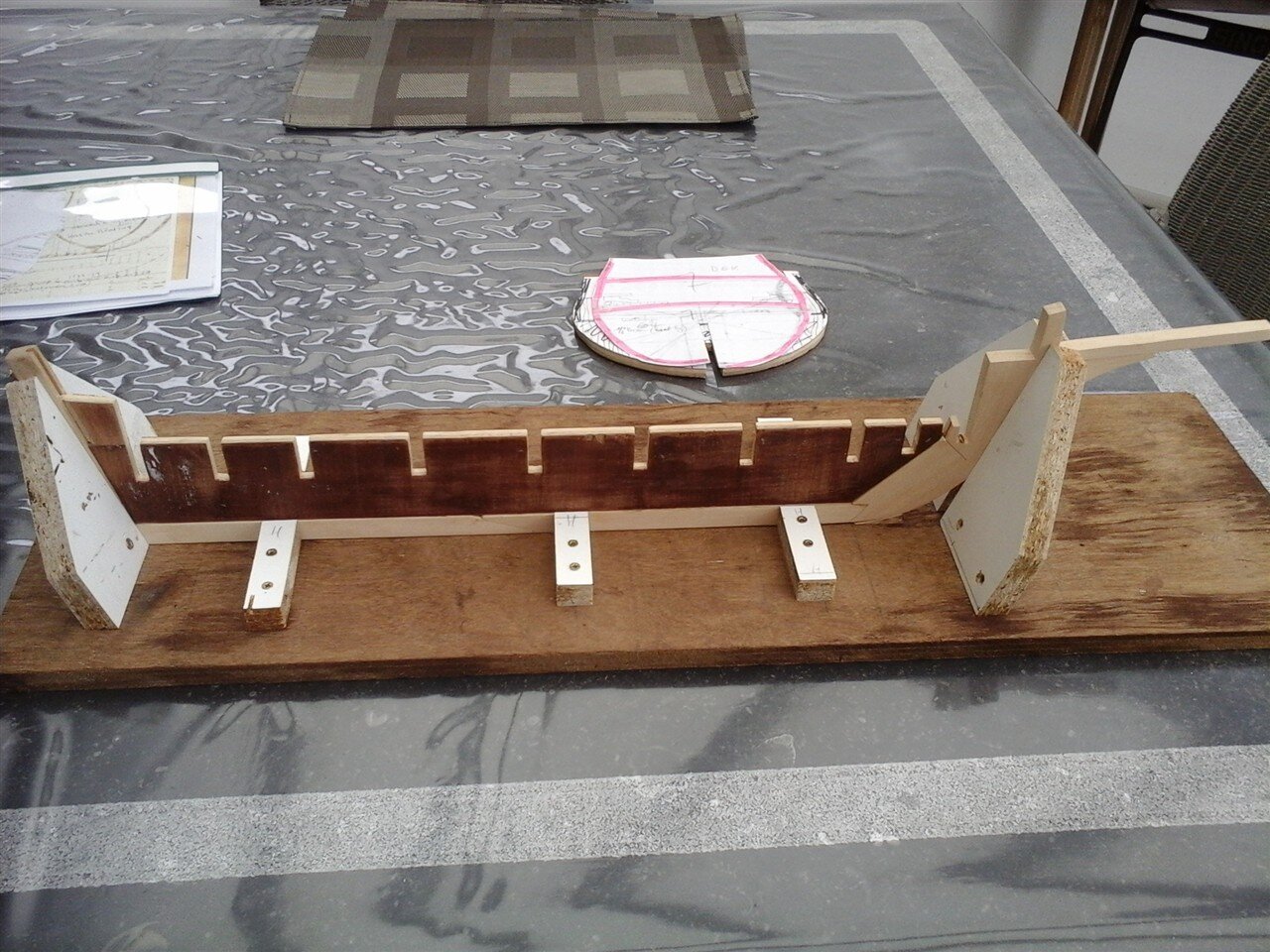
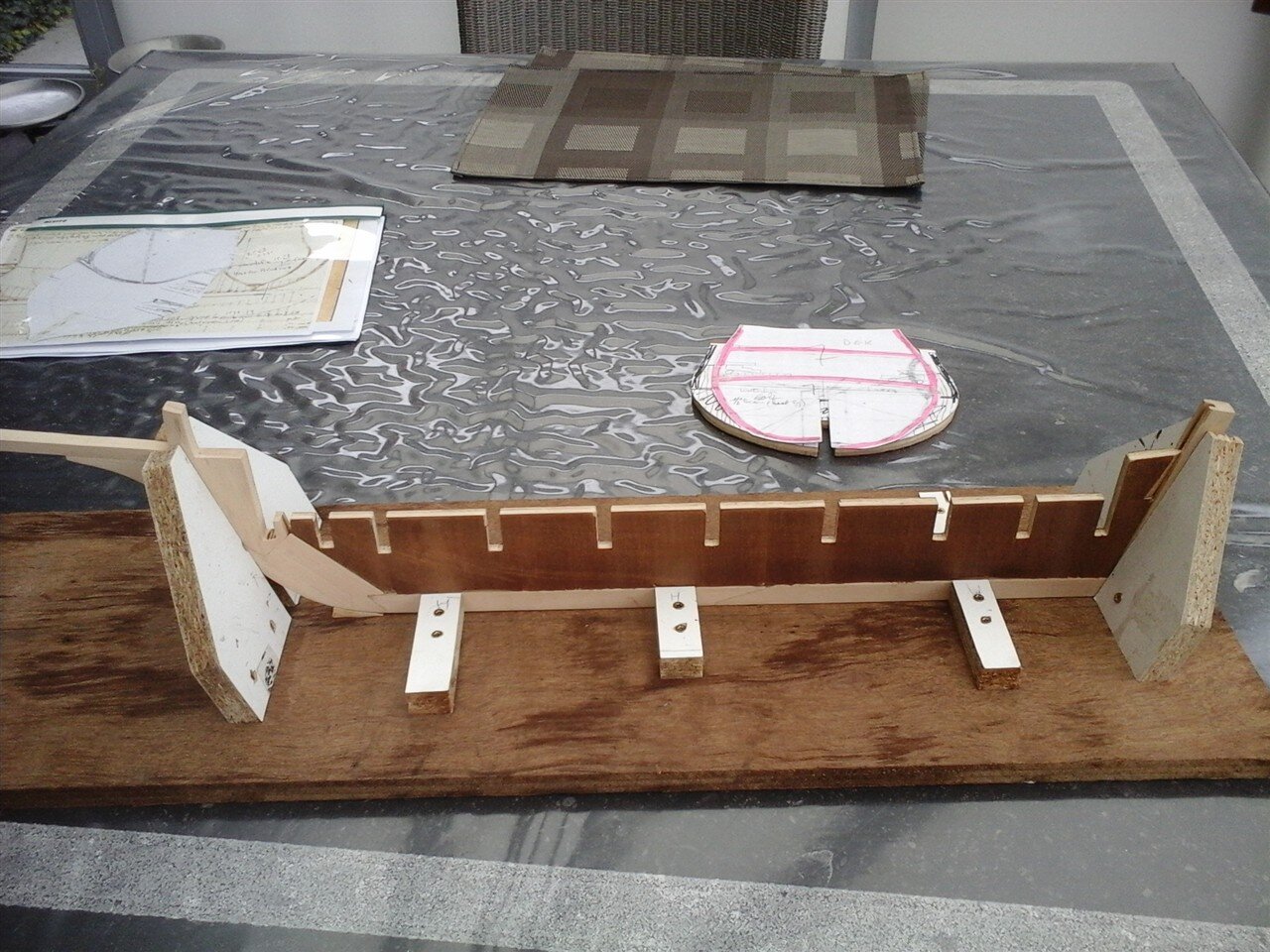
Construction of the keel, bow, and stern. Plywood holds the structure together.
2016-09-10 11.34.20_1280.jpg


2016-09-12 09.10.26_1280.jpg


2016-09-12 09.10.50_1280.jpg


2016-09-12 19.56.47_1280.jpg


2016-09-18 11.19.40_1280.jpg


And the whole assembly is mounted on the construction board.
2016-09-18 11.20.31_1280.jpg


2016-09-18 11.20.50_1280.jpg
 
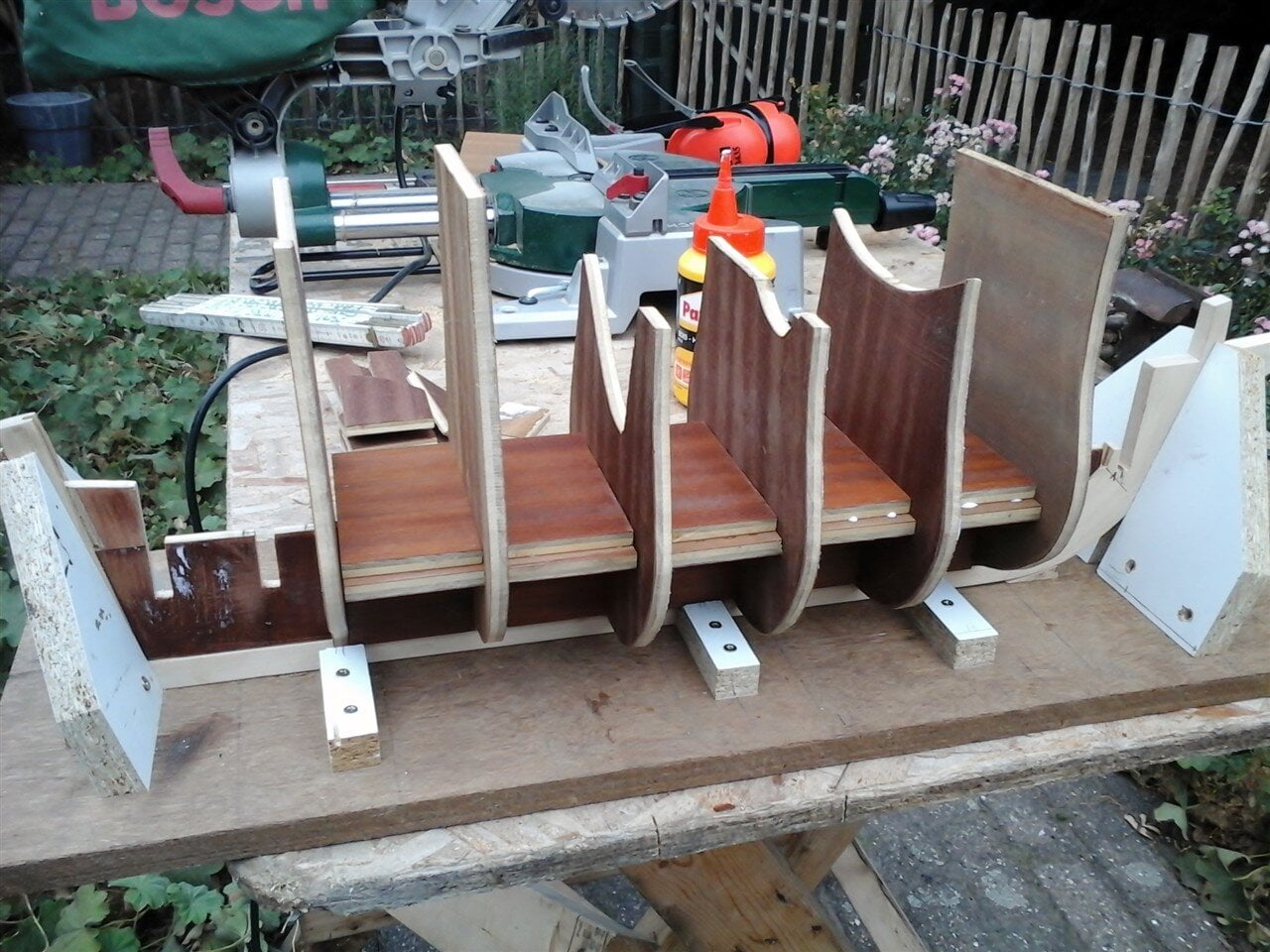
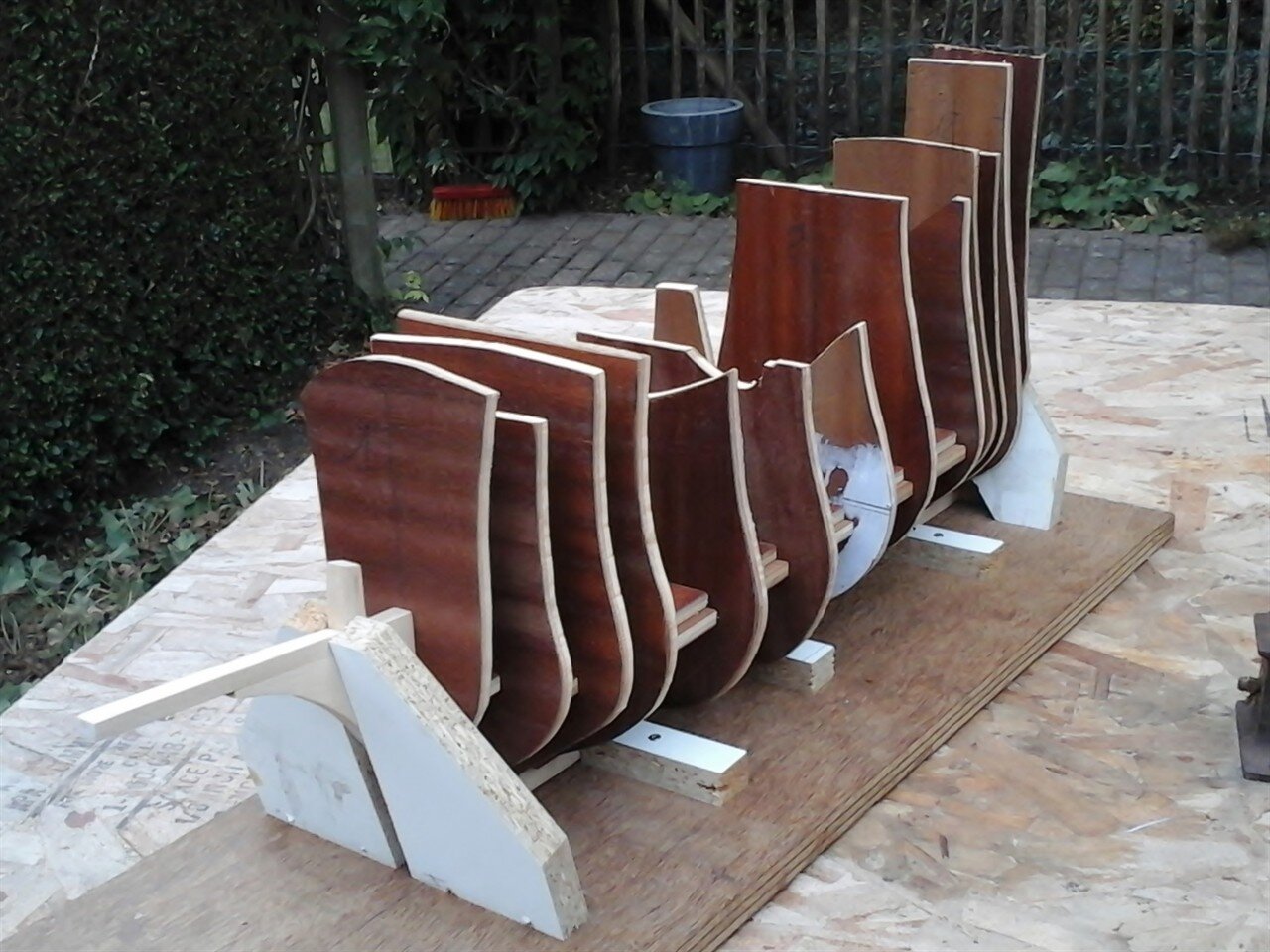
The frames.

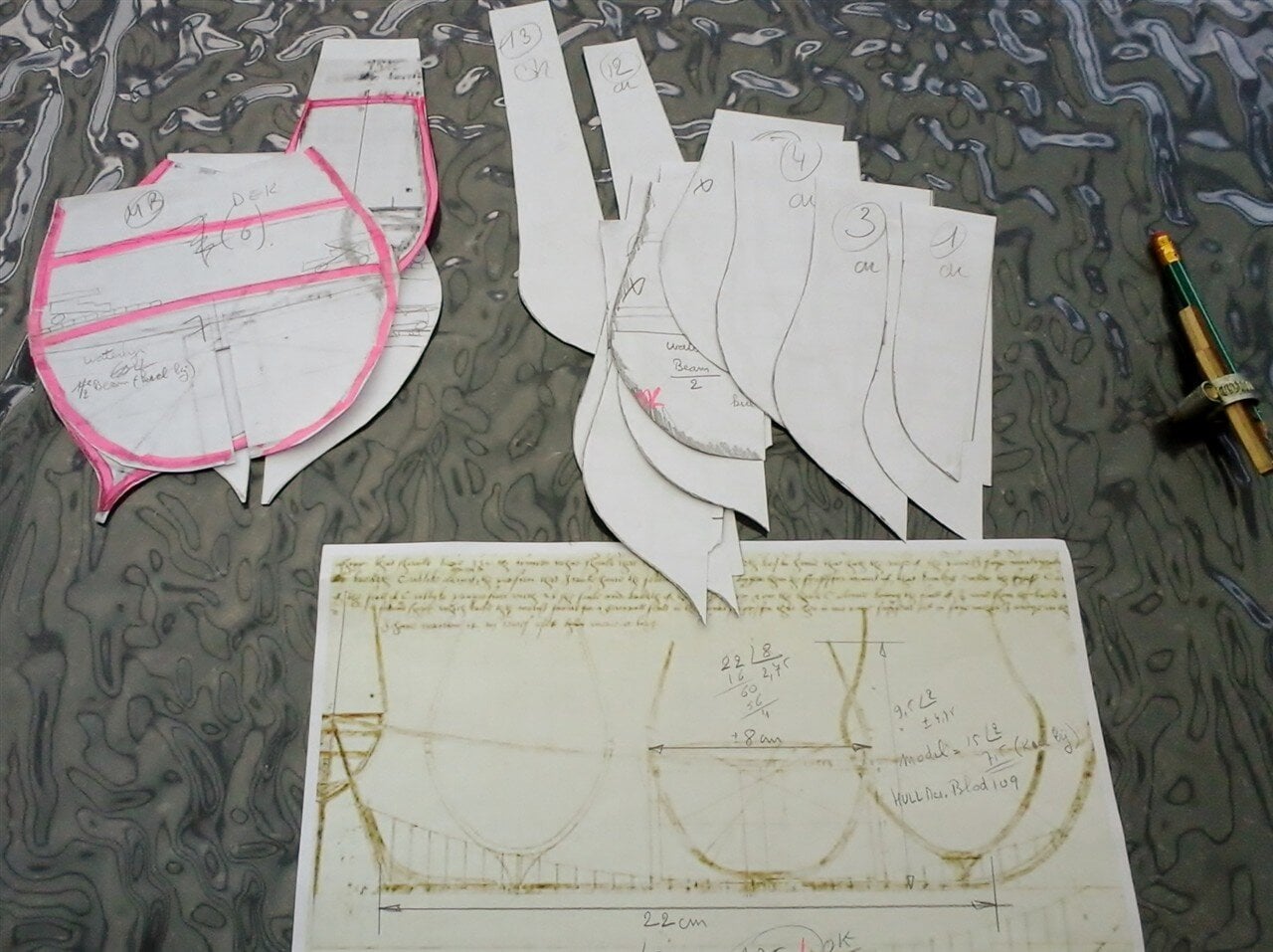
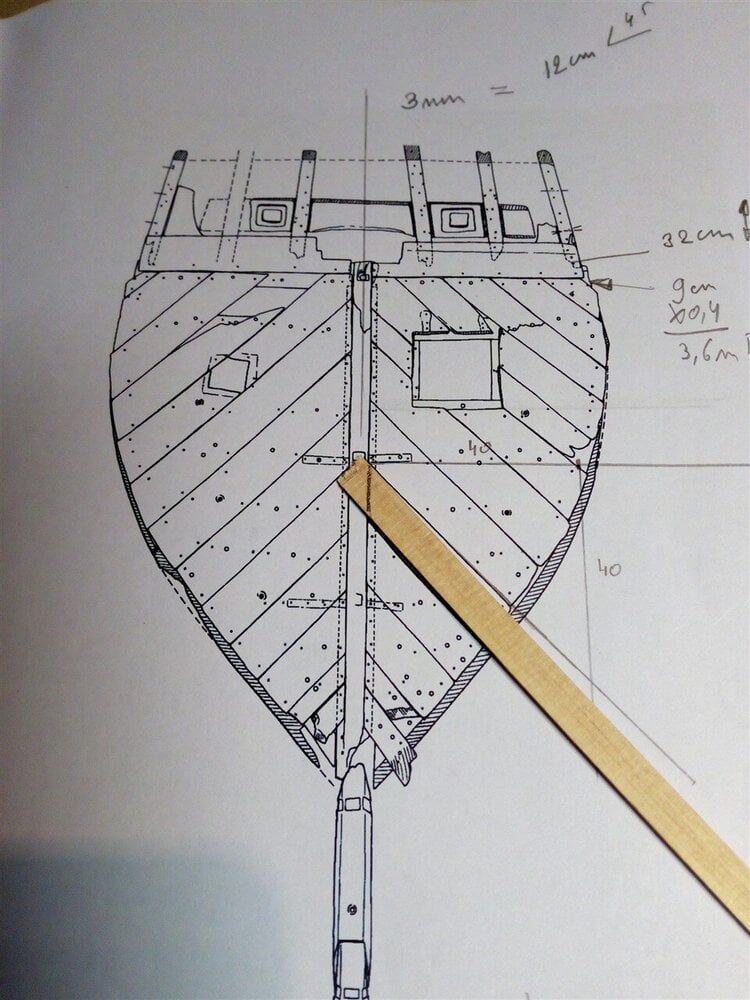
Mathew Baker's drawing served as the basis.
2016-10-02 11.44.44_1280.jpg


The spacing between the frames was also adjusted.
2016-10-04 17.33.44_1280.jpg


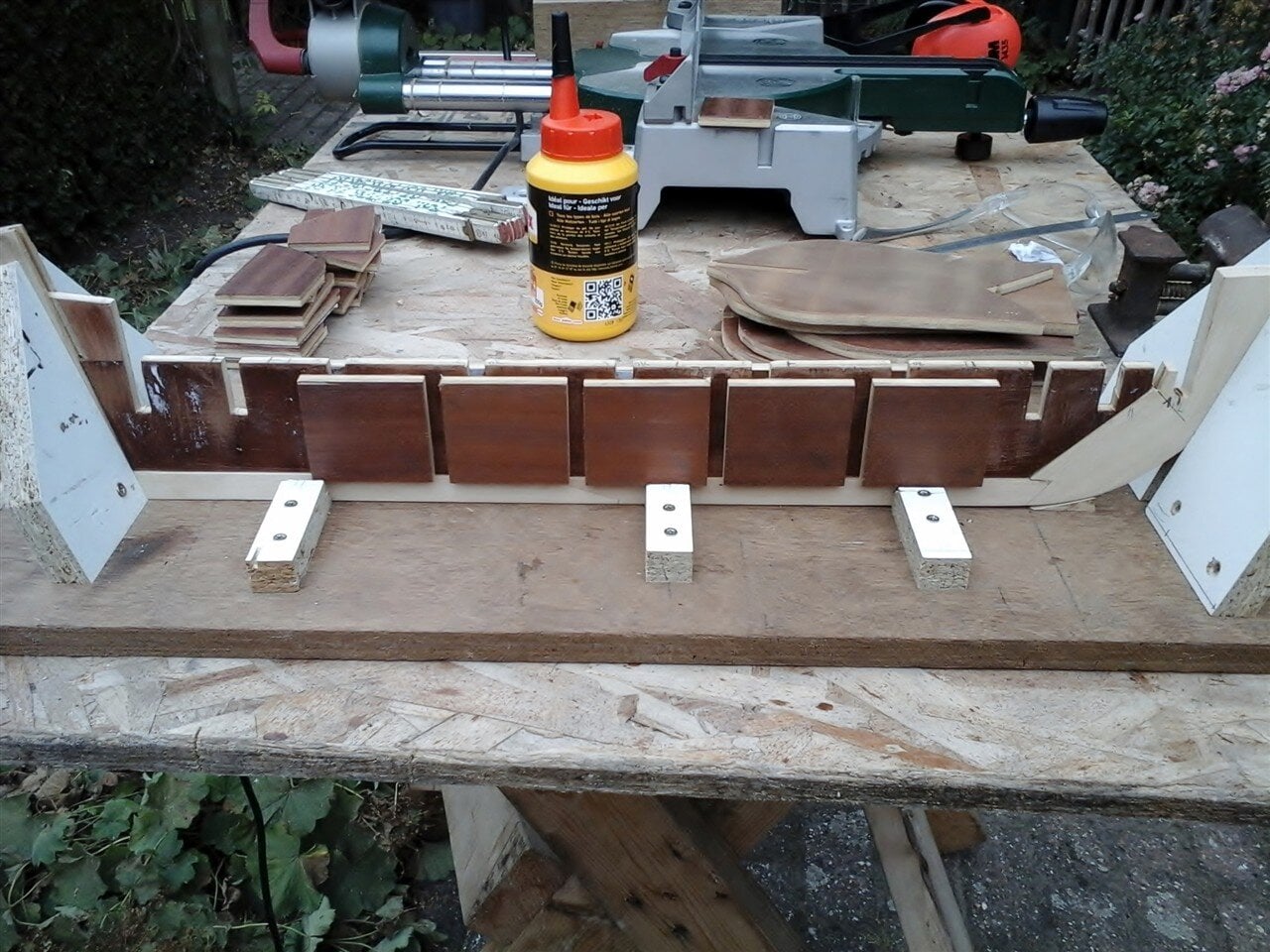
New spacers had to be sawn for this adjustment.
2016-09-29 12.54.46_1280.jpg


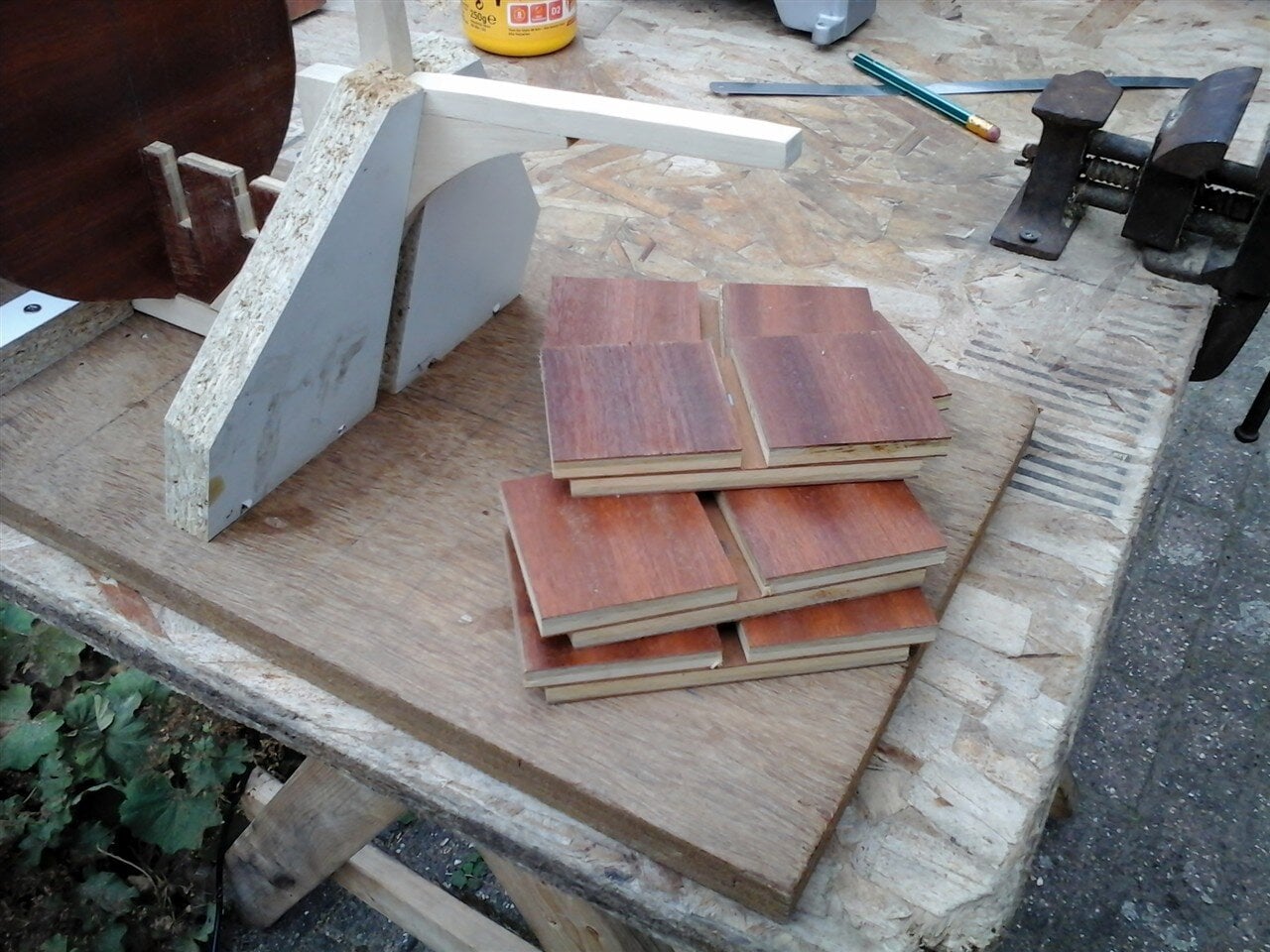
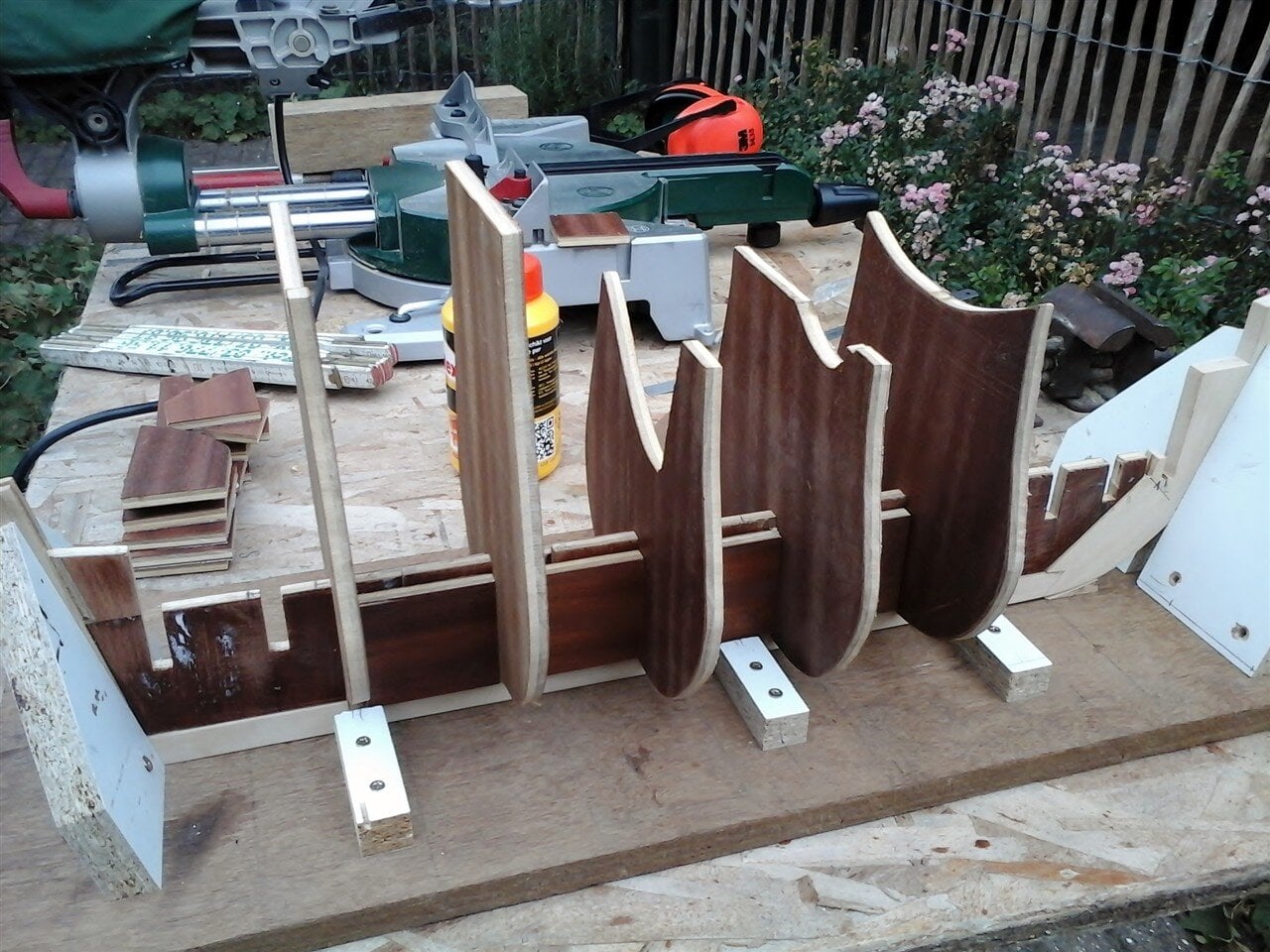
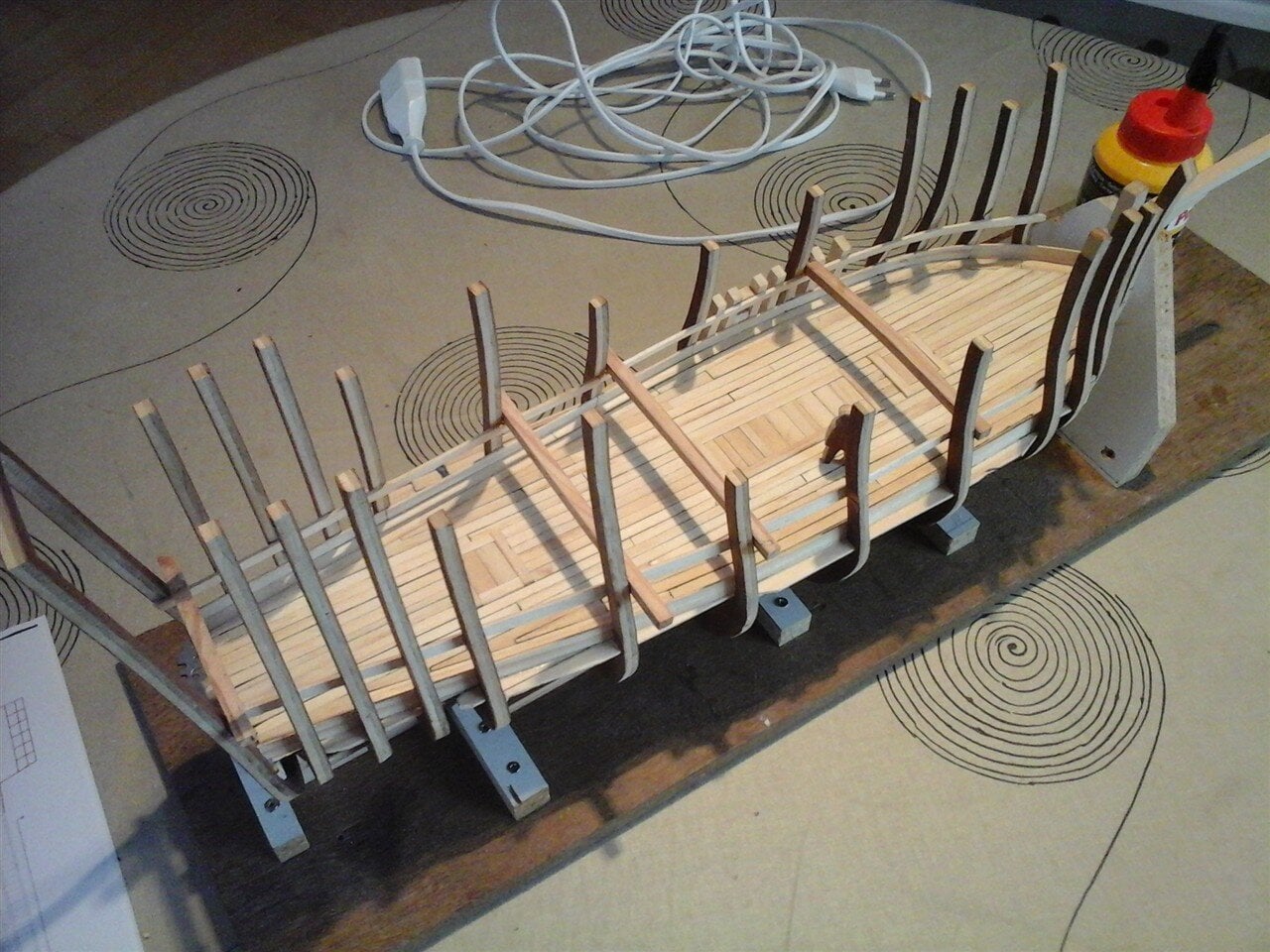
The spacers are glued to the keel piece, but the frames aredry fit.
2016-09-29 12.29.20_1280.jpg


2016-09-29 12.30.06_1280.jpg


2016-09-29 12.59.53_1280.jpg


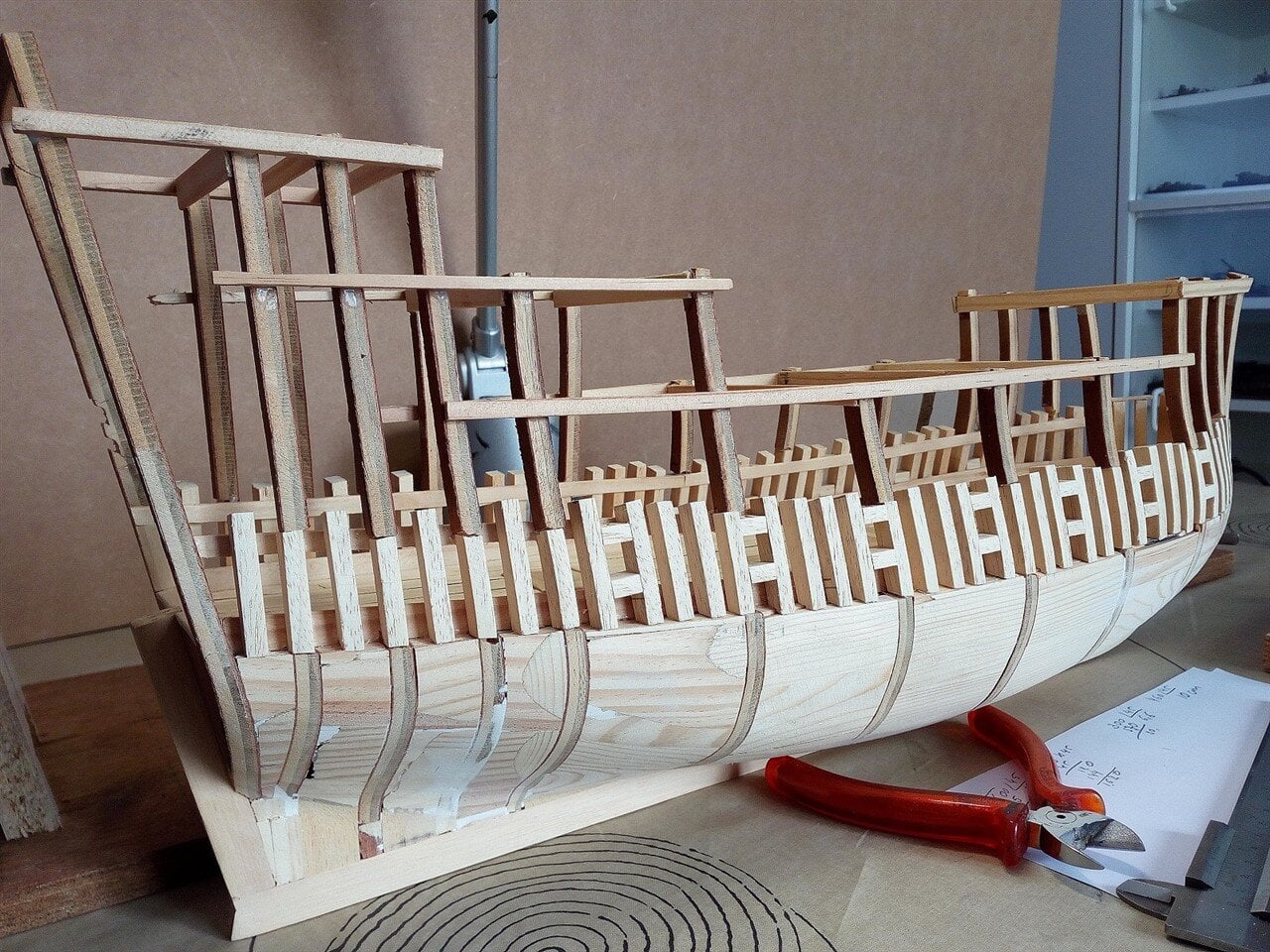
The "rough" shape is there.
2016-09-29 16.39.10_1280.jpg


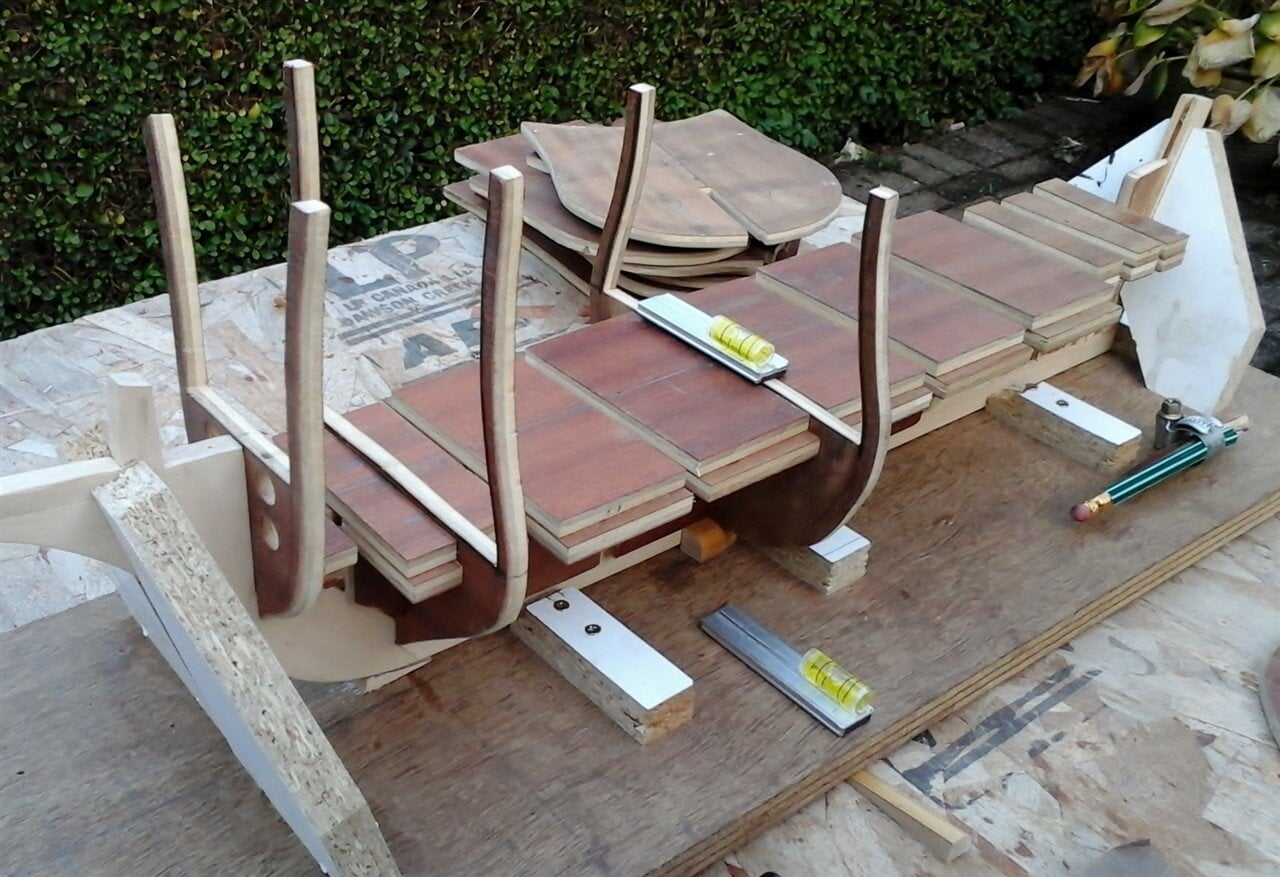
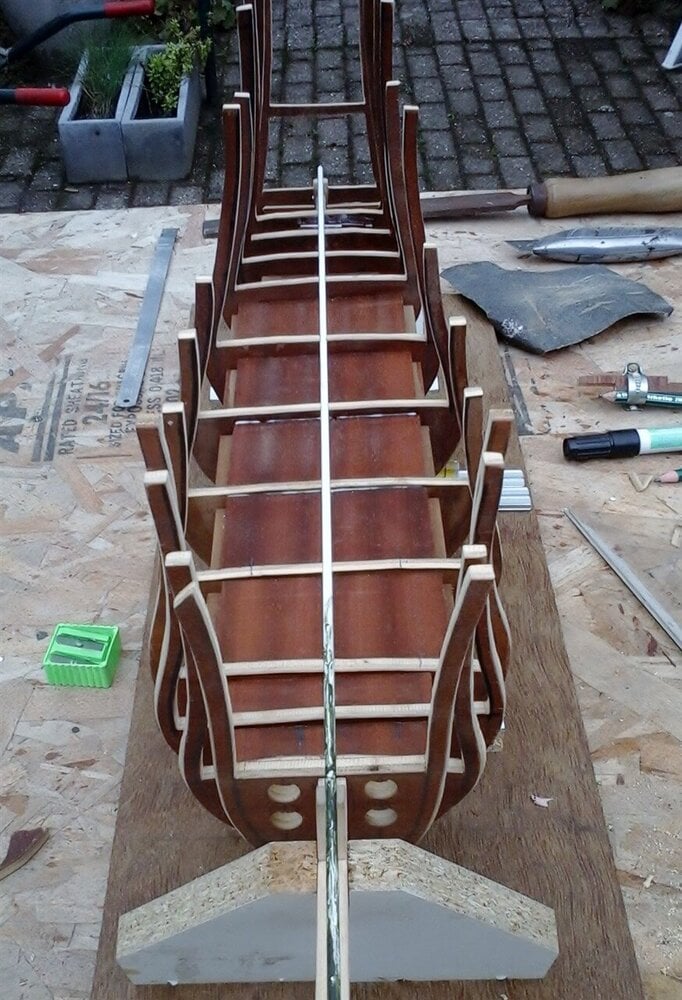
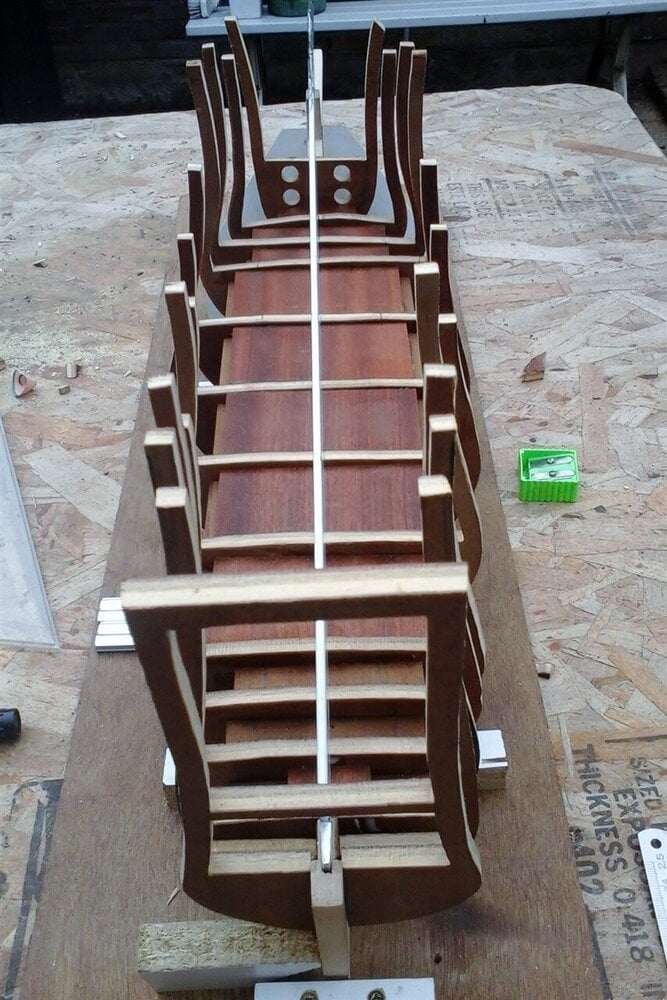
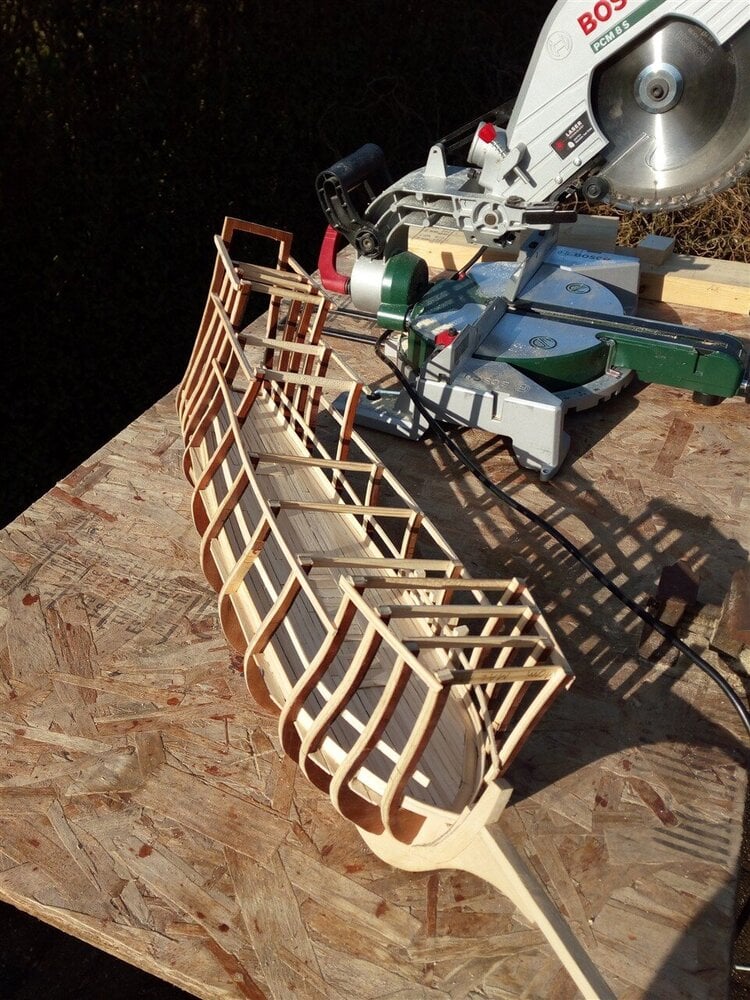
The frames have been sawn out internally and are being glued to the keel piece. At that time, I didn't have a laser yet, just a straight metal strip.
2016-10-04 08.25.29_1280.jpg


2016-10-04 15.55.07_1280.jpg


2016-10-04 15.55.24_1280.jpg


The keel piece with the glued frames.
2016-10-04 17.33.34_1280.jpg
 
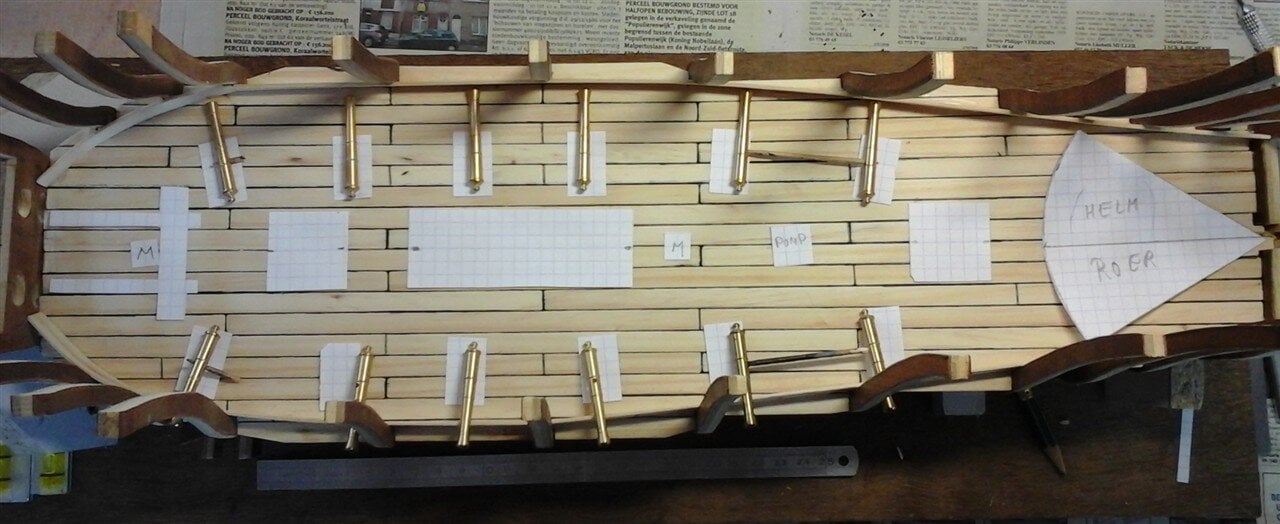
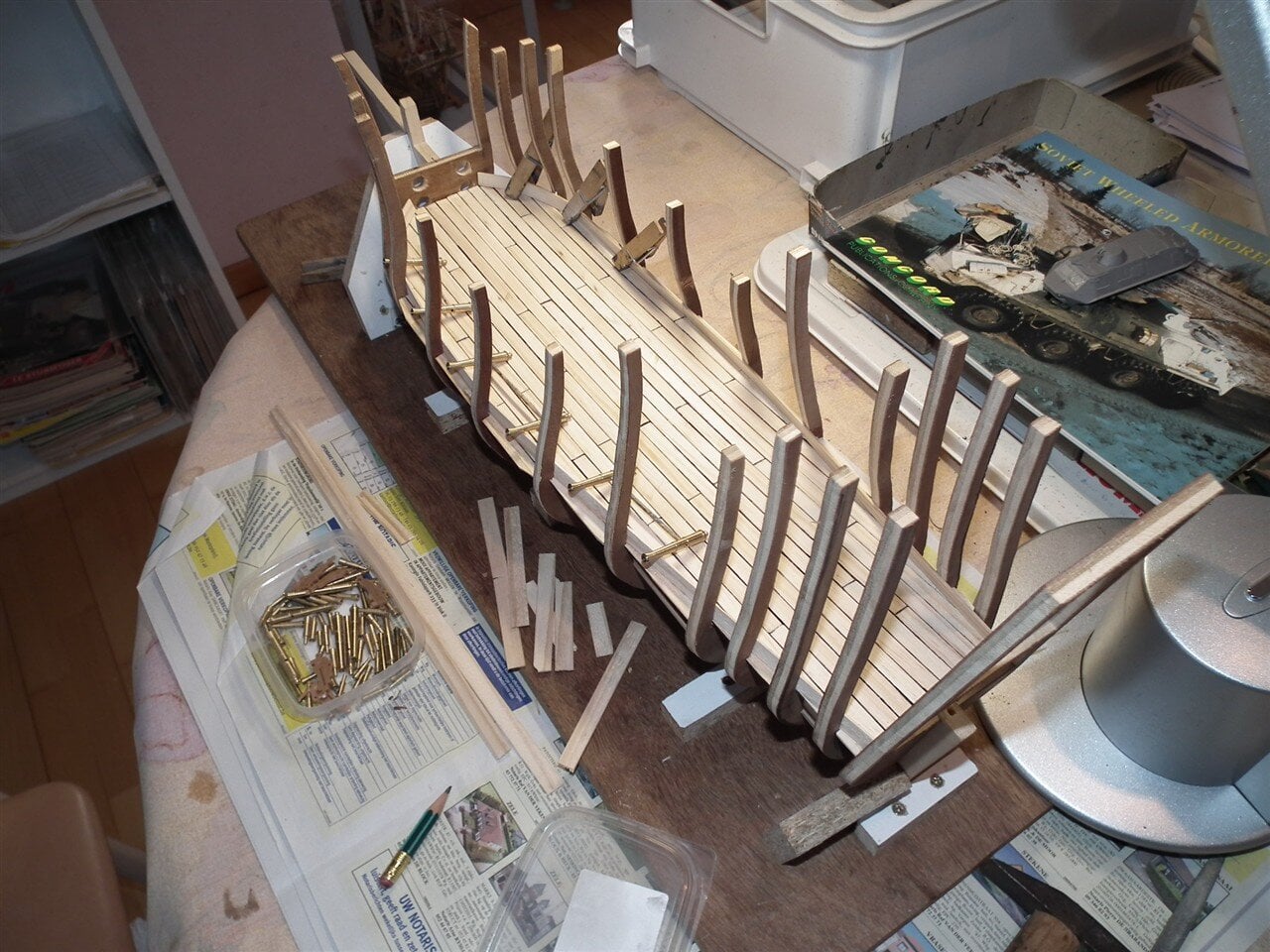
The cannon deck.
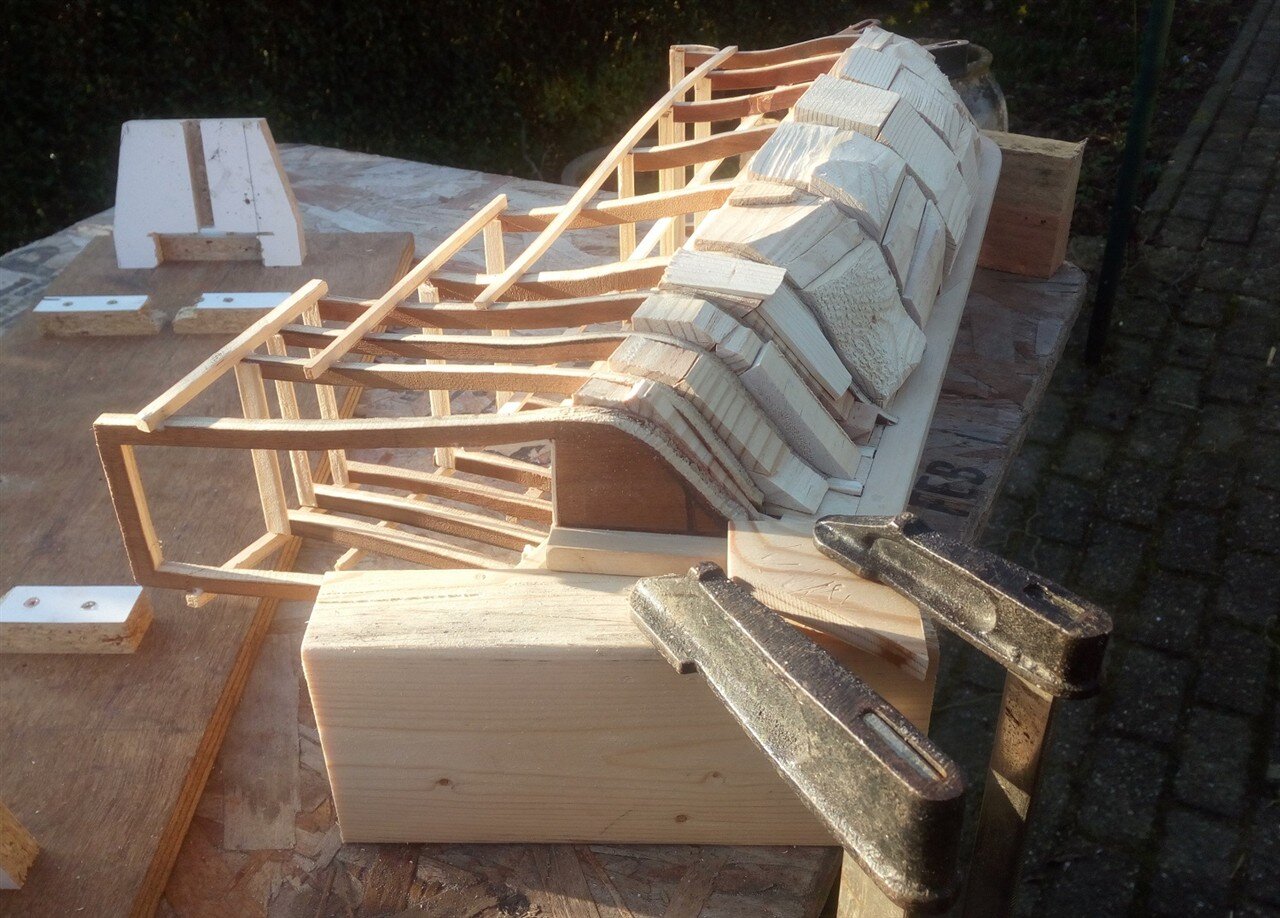
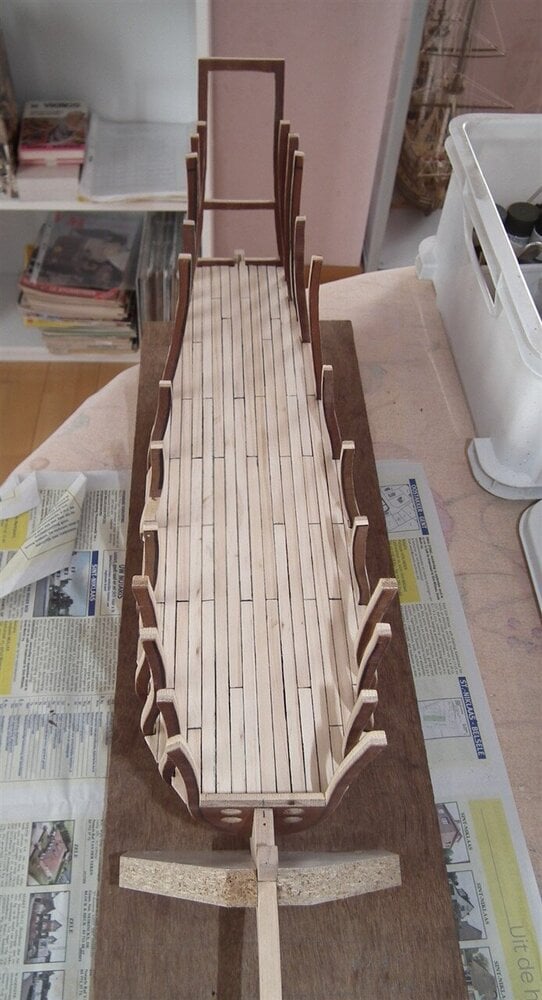
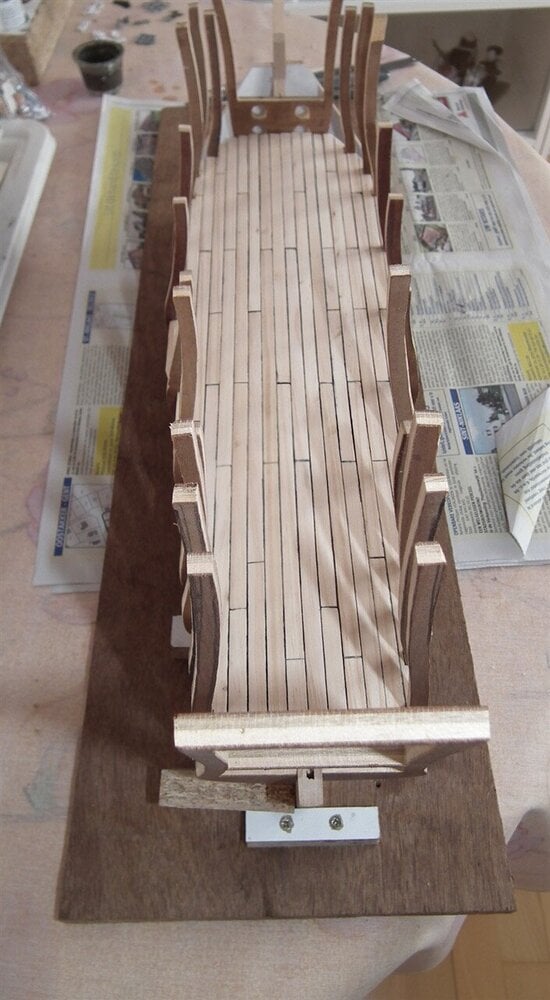
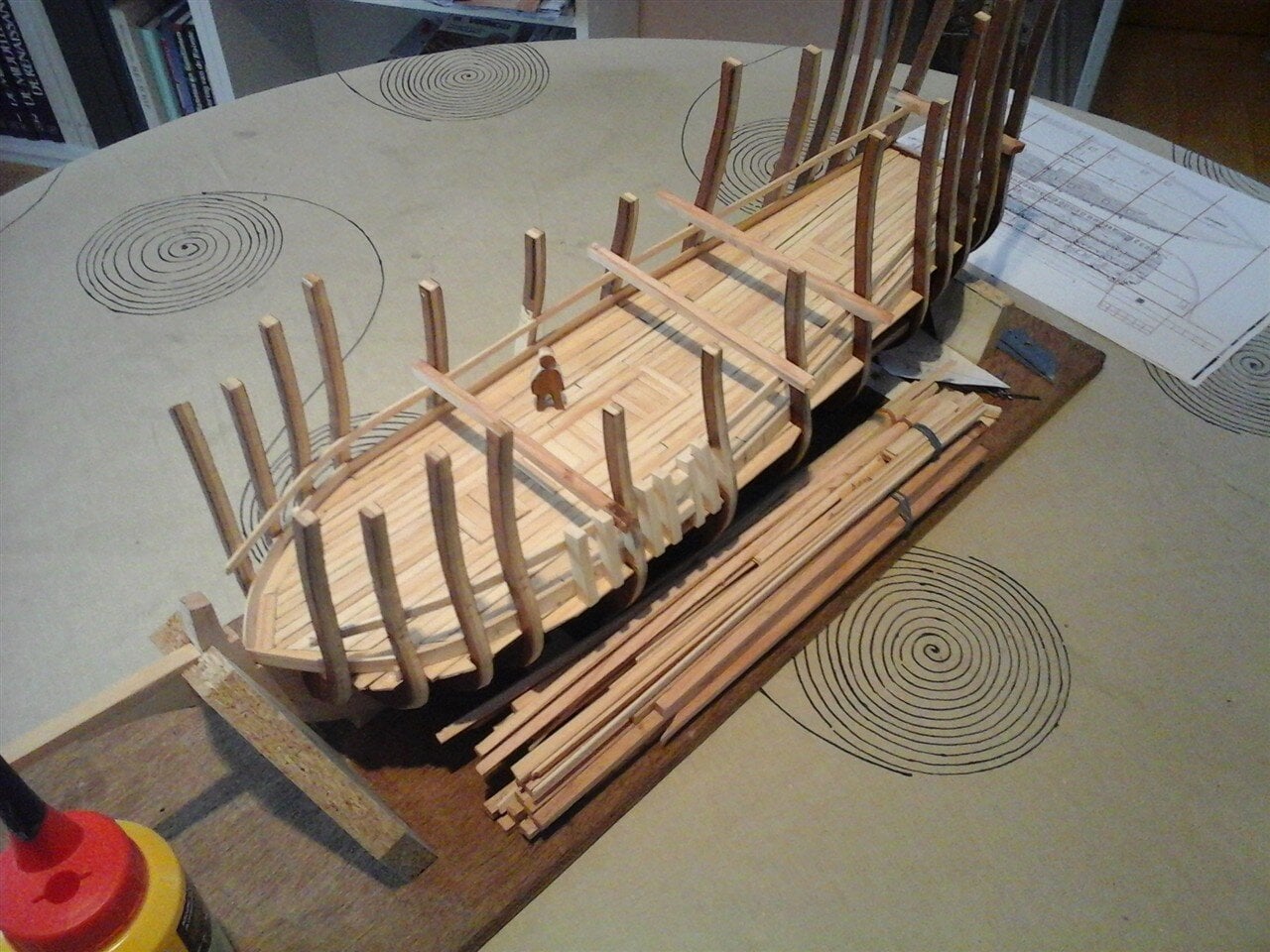
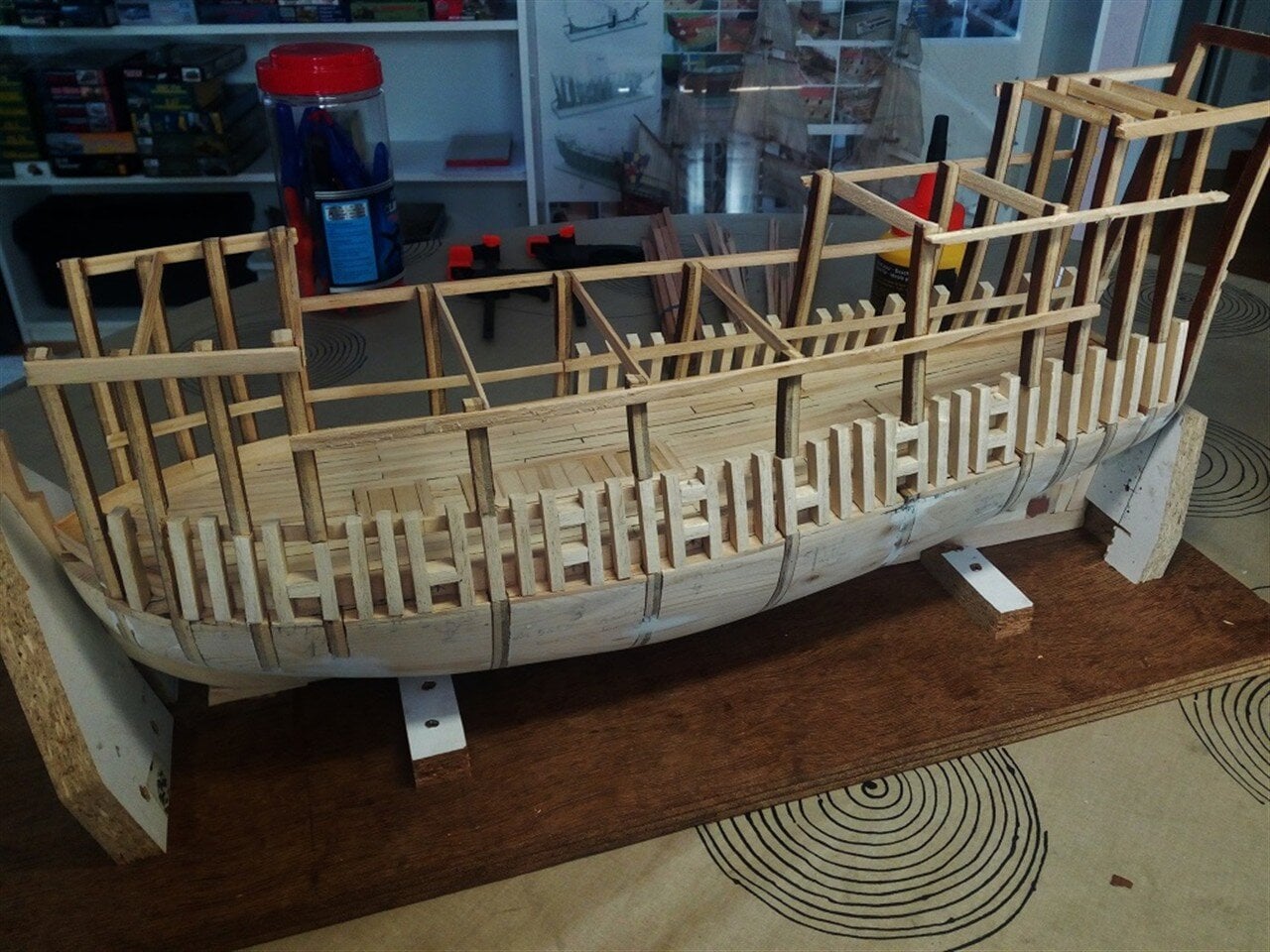
First, a deck was laid as a base using just long, thick planks. Partly as a base, partly as practice (this was my very first deck ever)
DSCF1114_1280.JPG


DSCF1115_1280.JPG
.

Then a layout of this deck was made.
2016-10-22 15.29.41_1280.jpg


DSCF1119_1280.JPG


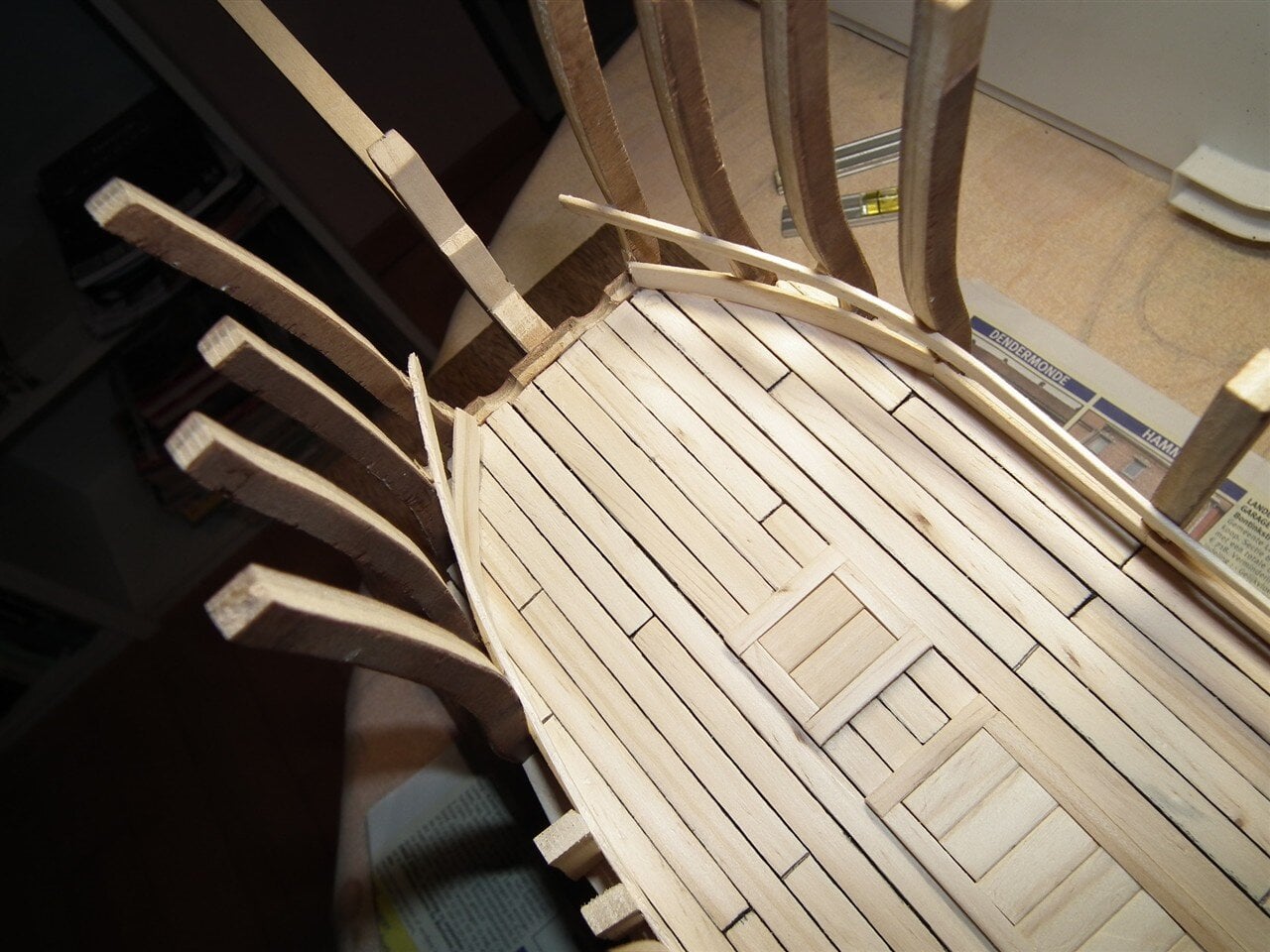
The forward frame was hollowed out so that the deck runs all the way through.
DSCF1149_1280.JPG


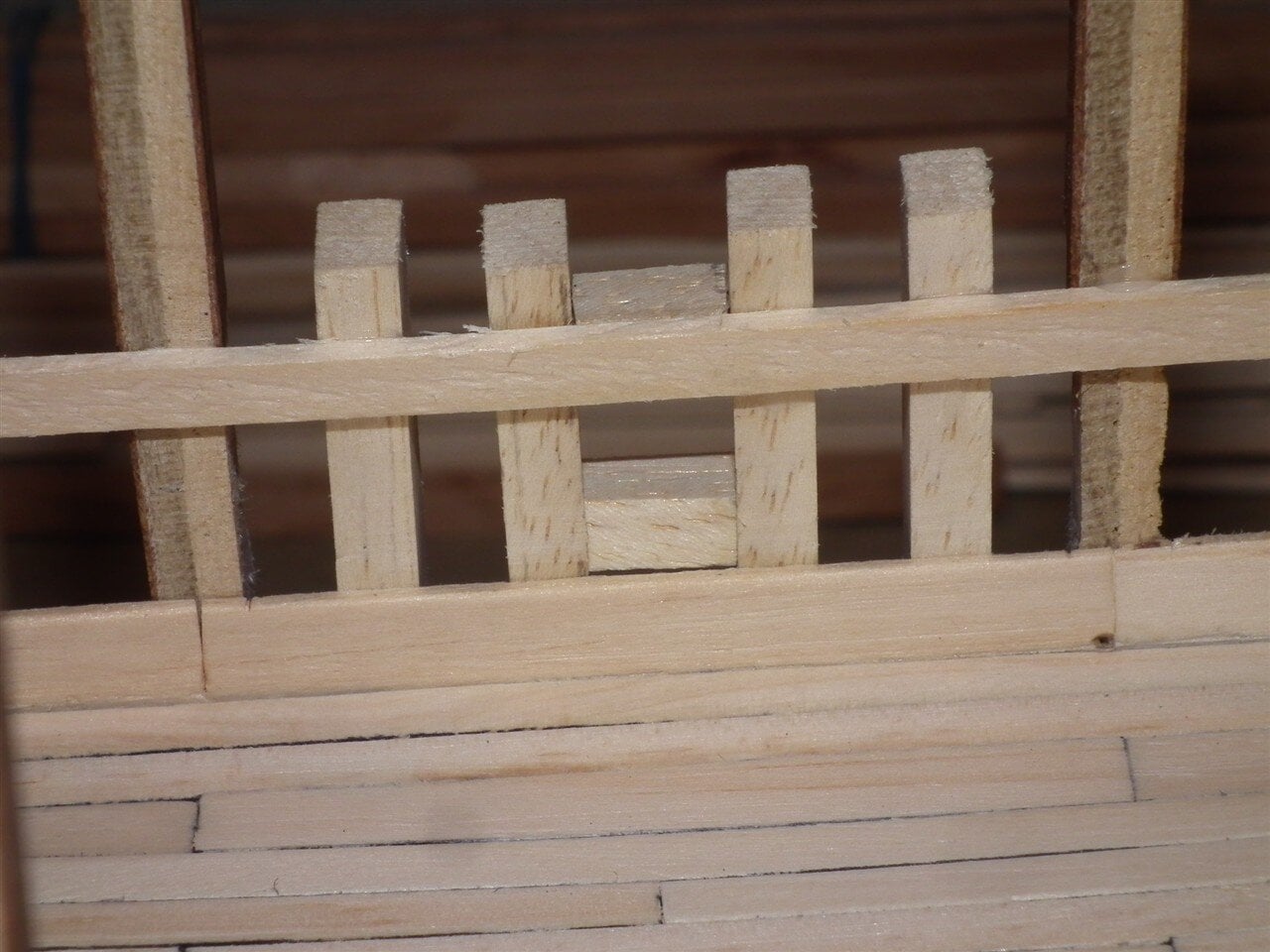
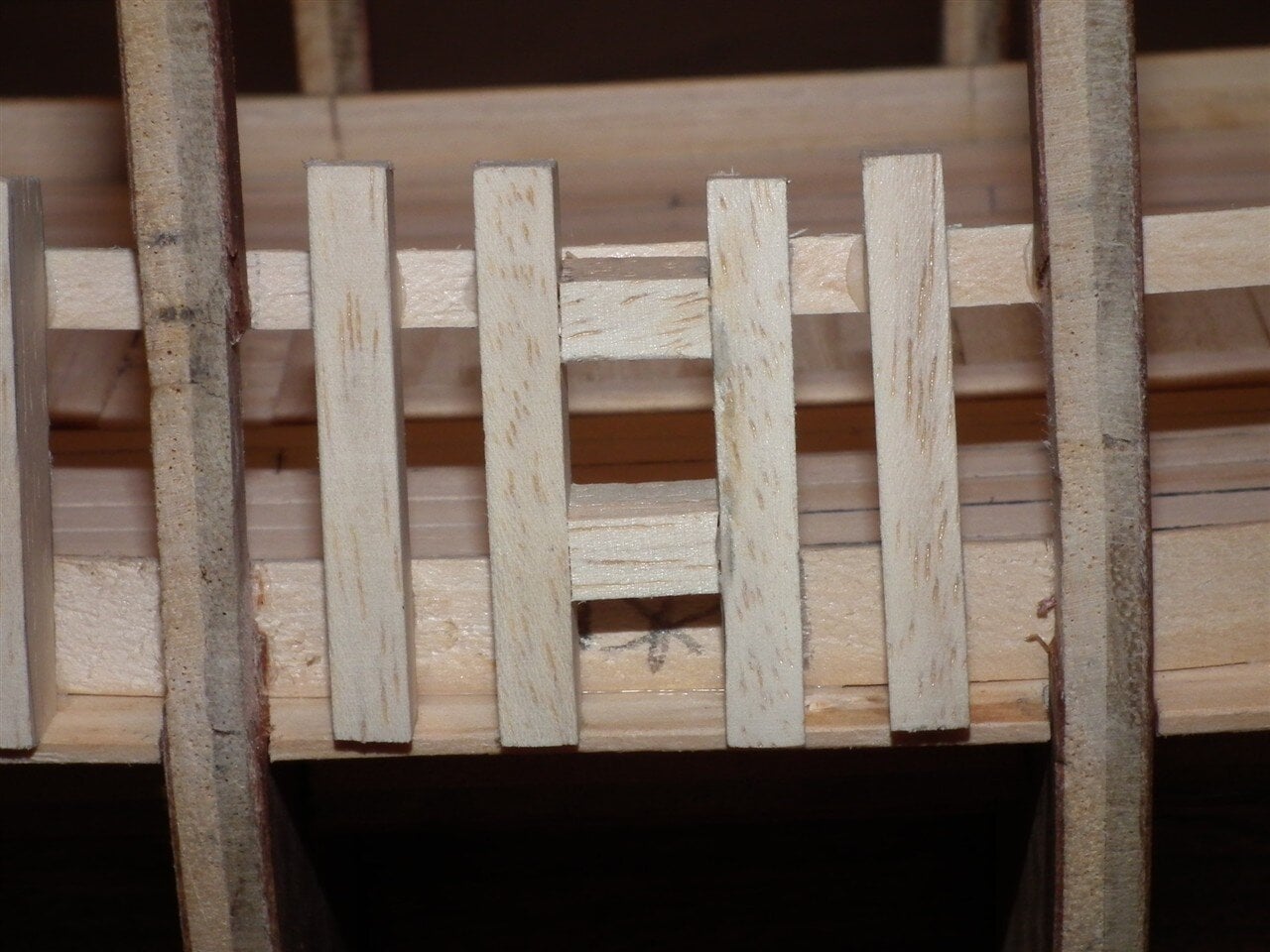
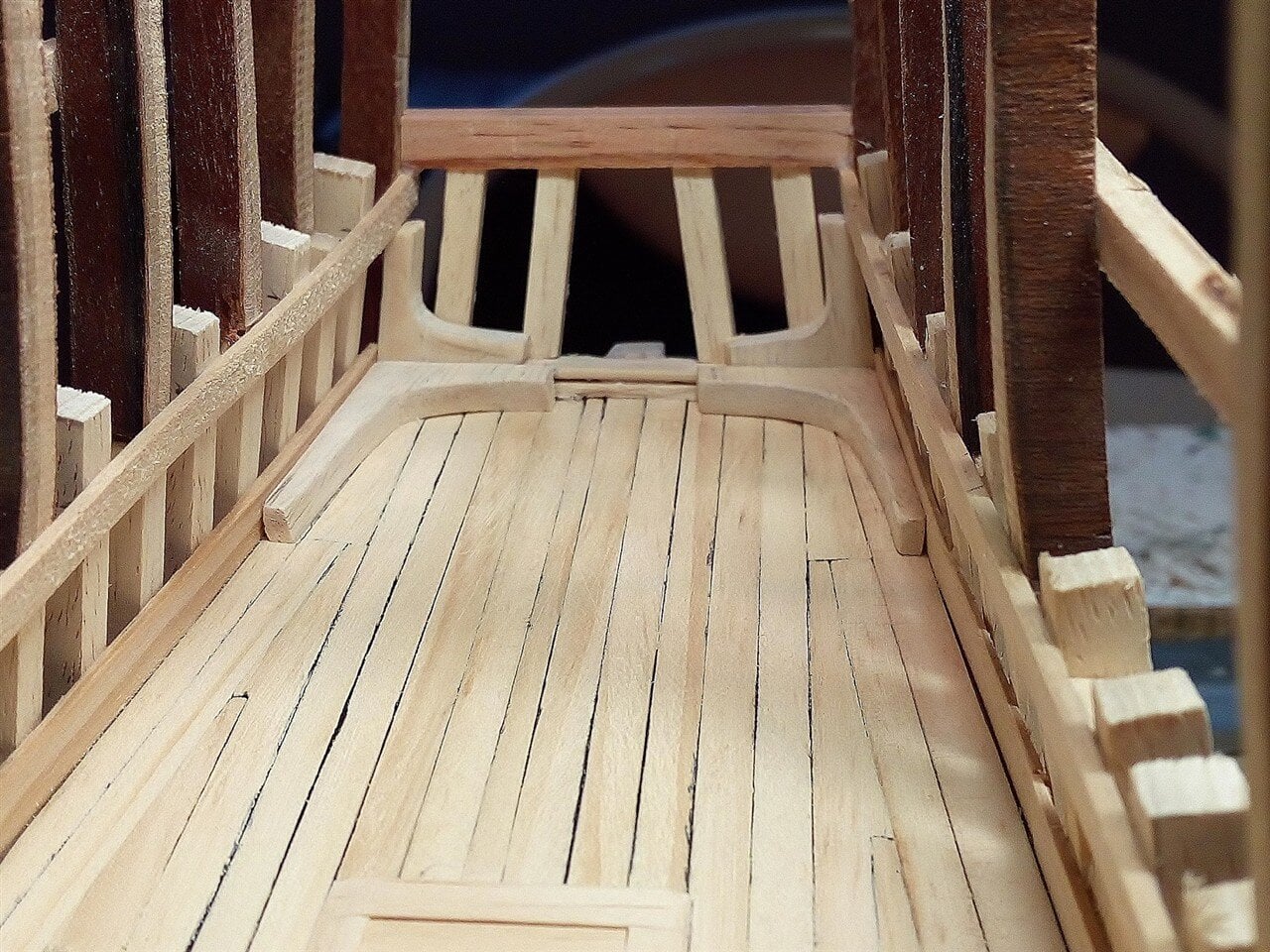
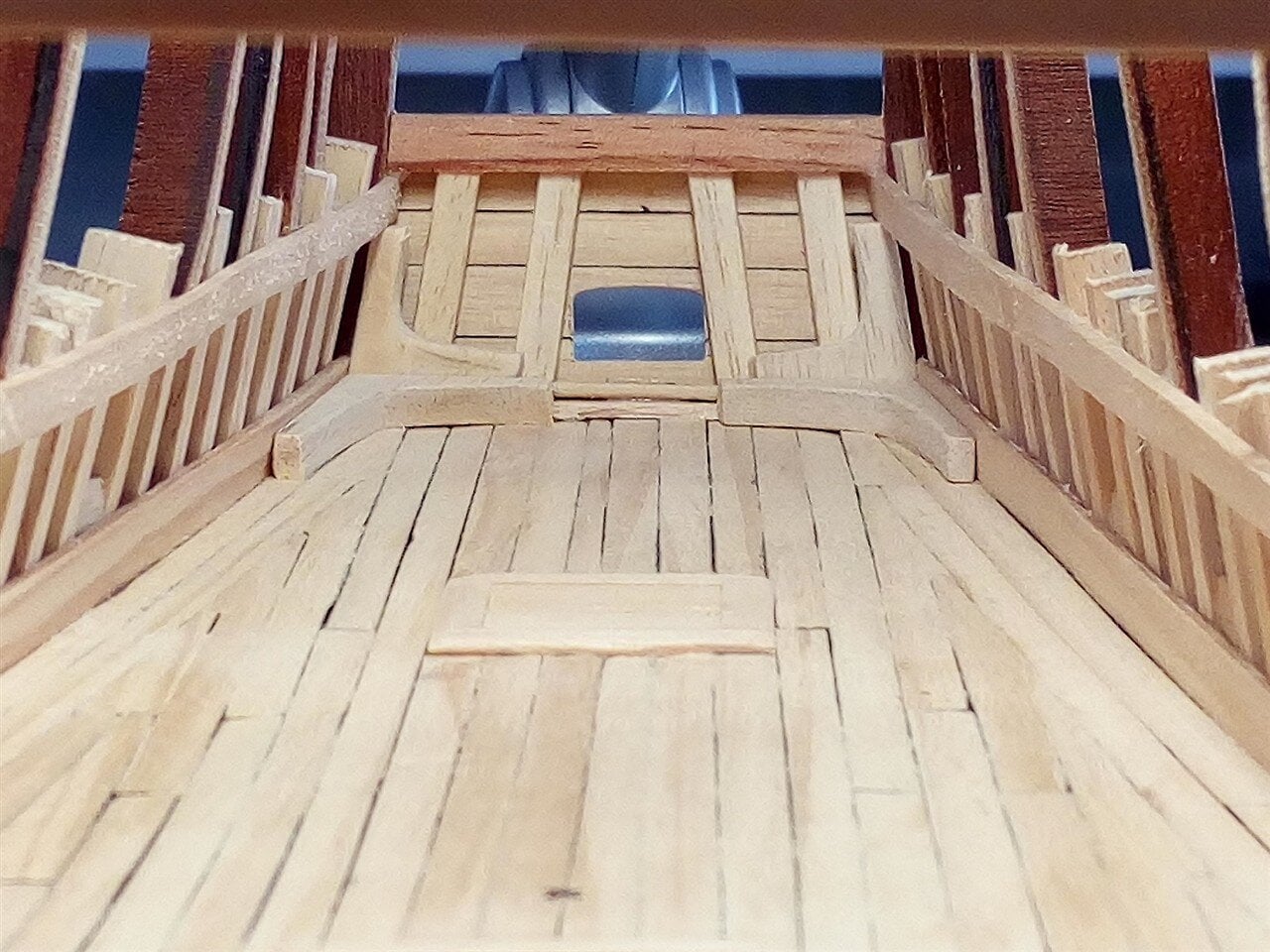
And the final deck with hatches
2016-11-11 08.49.49_1280.jpg


2016-11-11 08.50.01_1280.jpg


and a first cannon port exercise
DSCF1166_1280.JPG


DSCF1167_1280.JPG
 
Next steps

Reinforcing the tops of the plywood frames
IMG_20170213_131120_1280.jpg


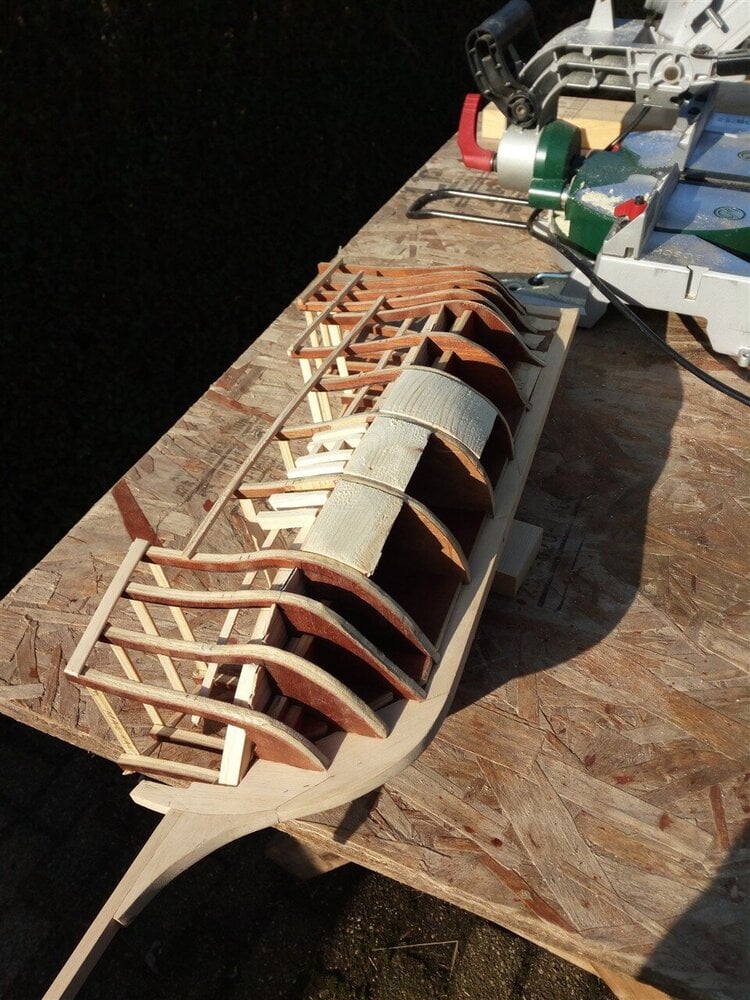
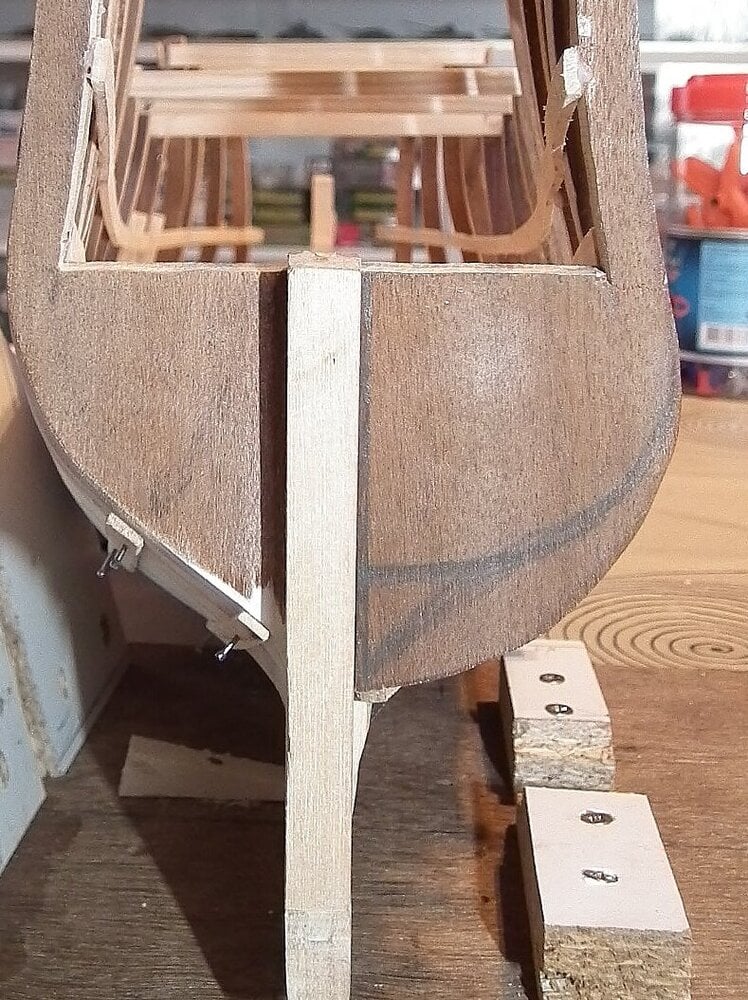
After that, filler blocks. If you are inexperienced and have no idea if your frames are correct, then this is a handy method.
Filled neatly on the port side and then sanded carefully. This is hours of work
IMG_20170213_131155_1280.jpg


IMG_20170218_131152_1280.jpg


IMG_20170221_152649_1280.jpg


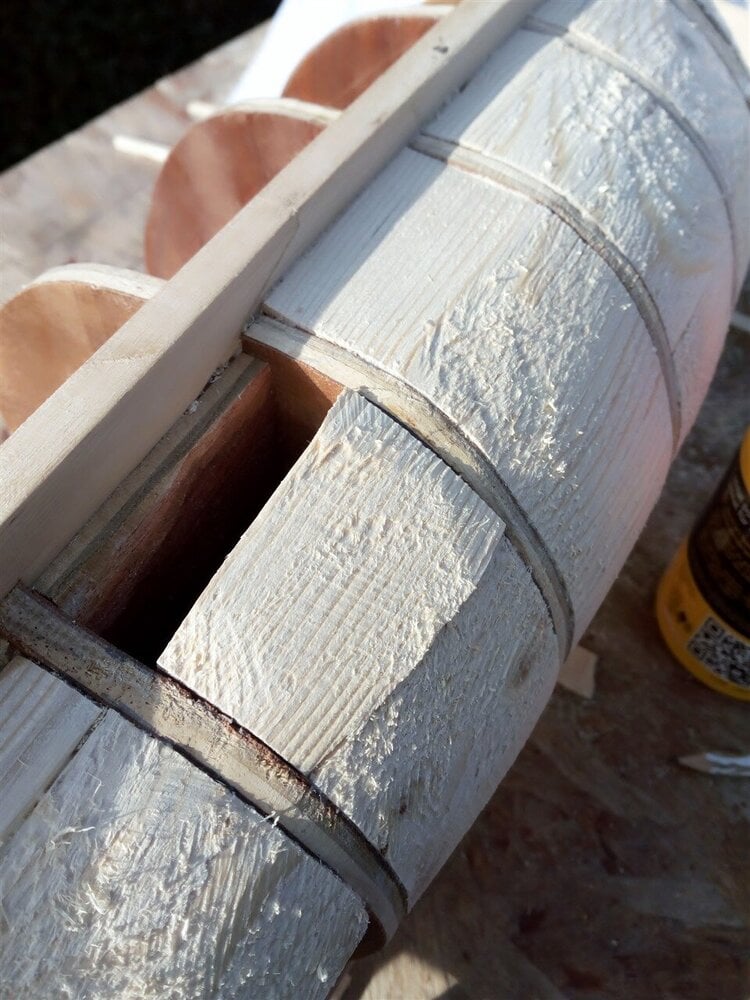
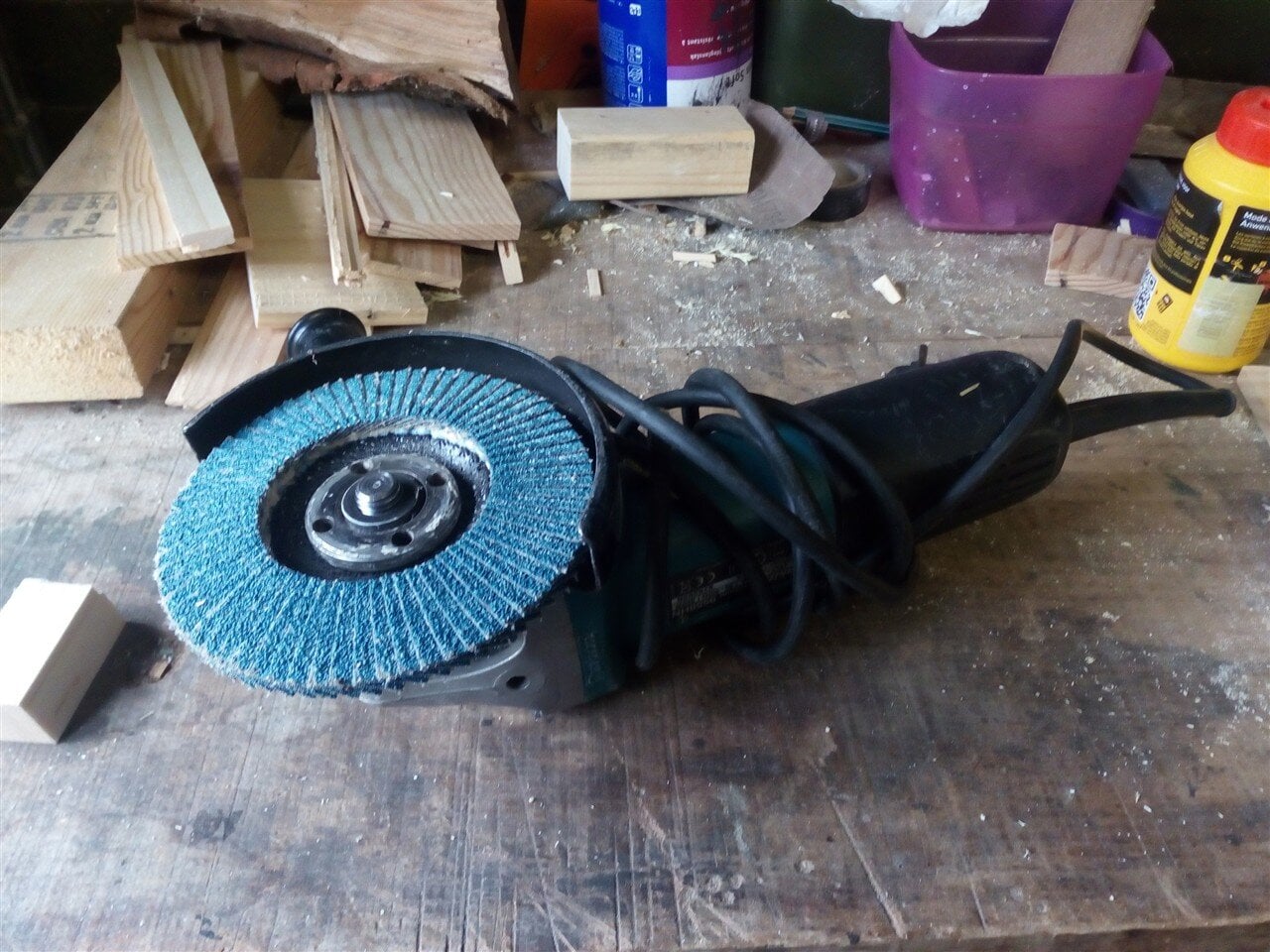
For the starboard side, less patience and having become a bit bolder. The vertical sander an big blocks, this is a few minutes work.
IMG_20170221_152828_1280.jpg


IMG_20170312_165458_1280.jpg


IMG_20170312_165508_1280.jpg


IMG_20170312_170126_1280.jpg


IMG_20170312_170858_1280.jpg


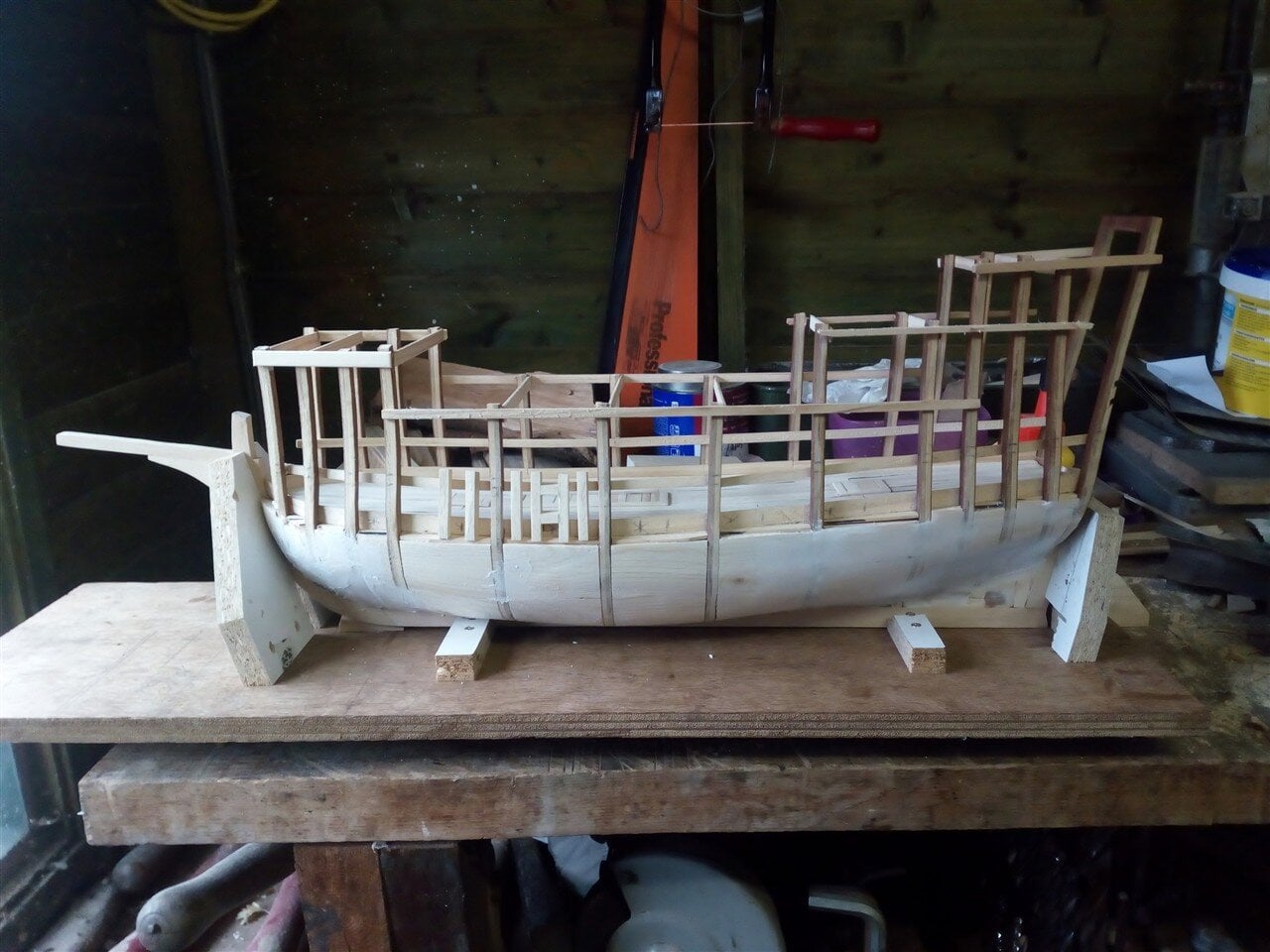
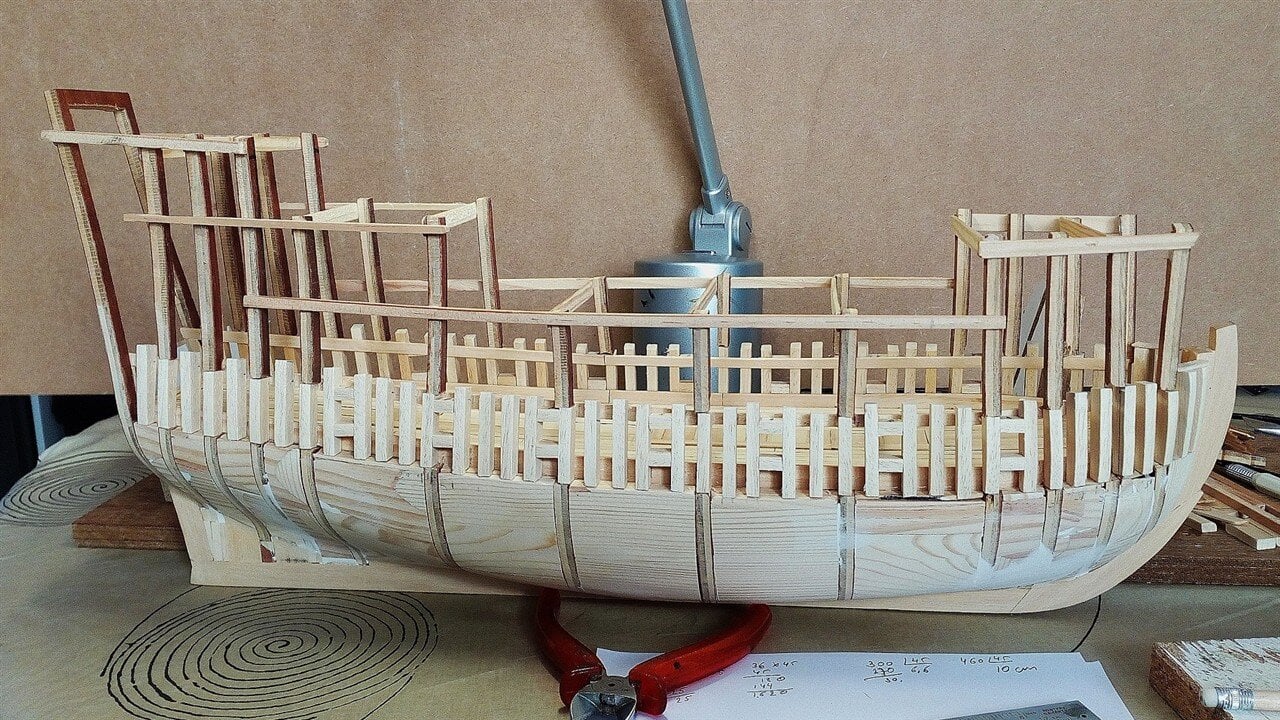
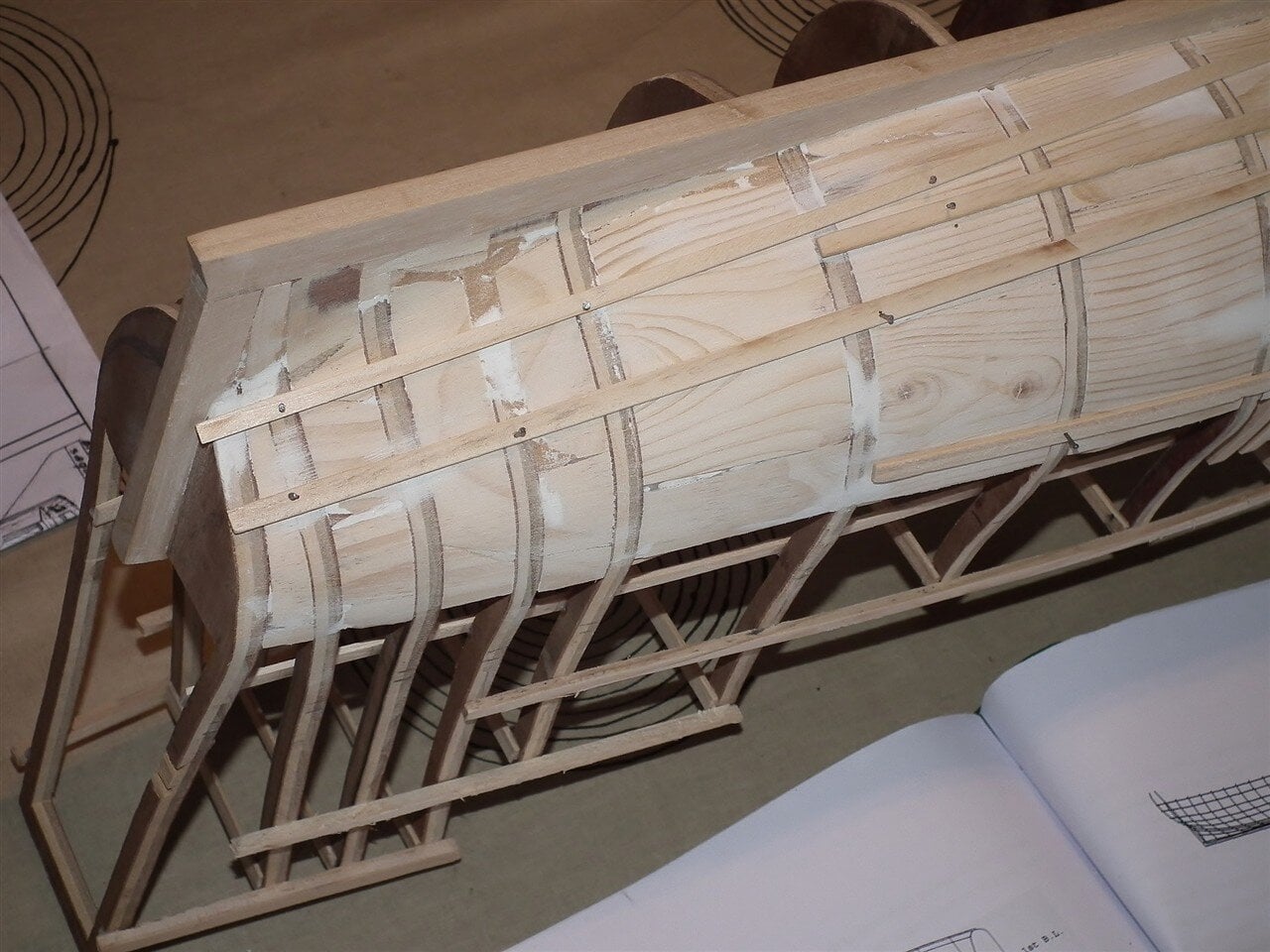
And after filling and fine sanding, quite okay.
IMG_20170316_105738_1280.jpg
 
And then a comment came from a more experienced builder.
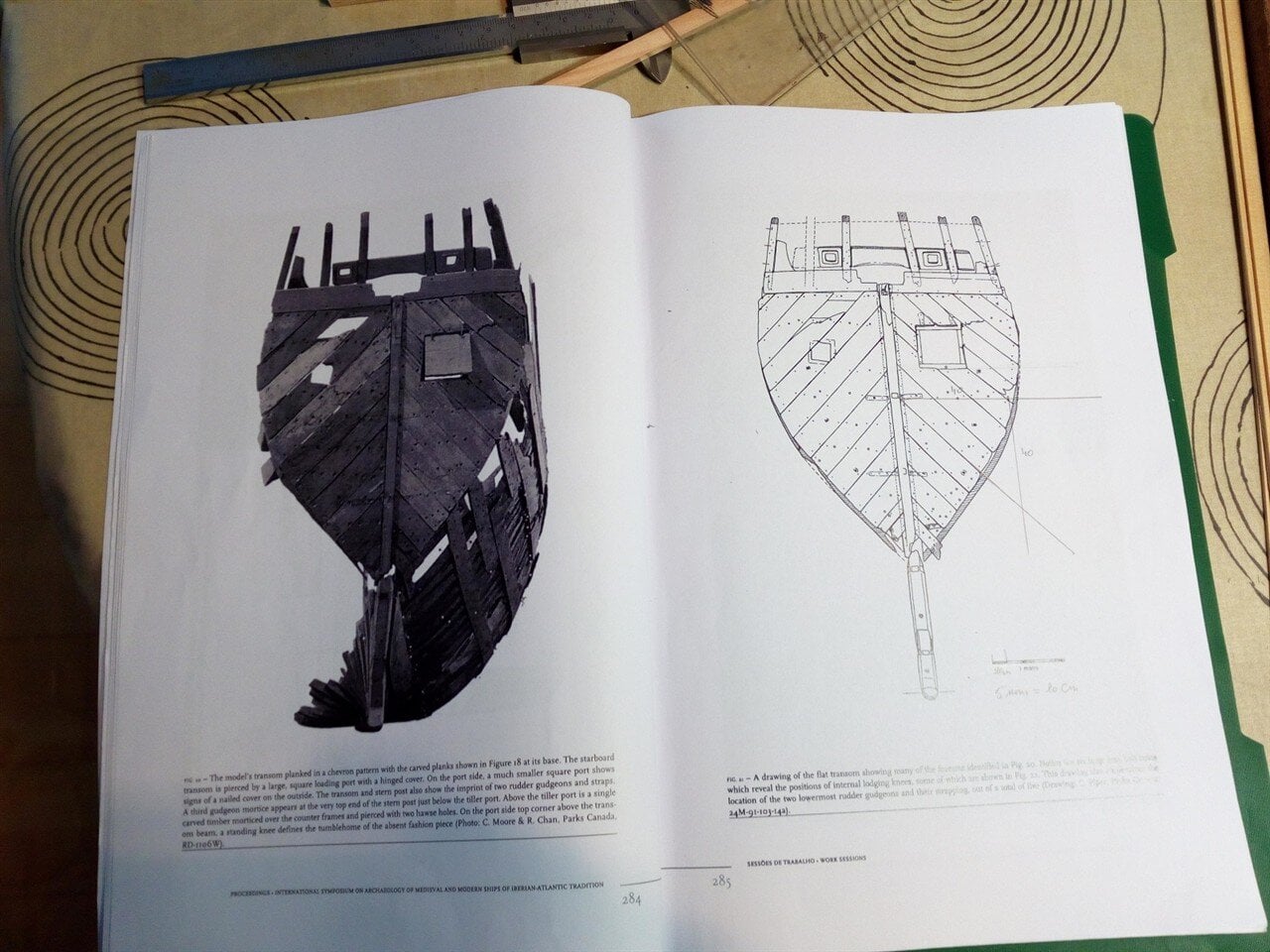
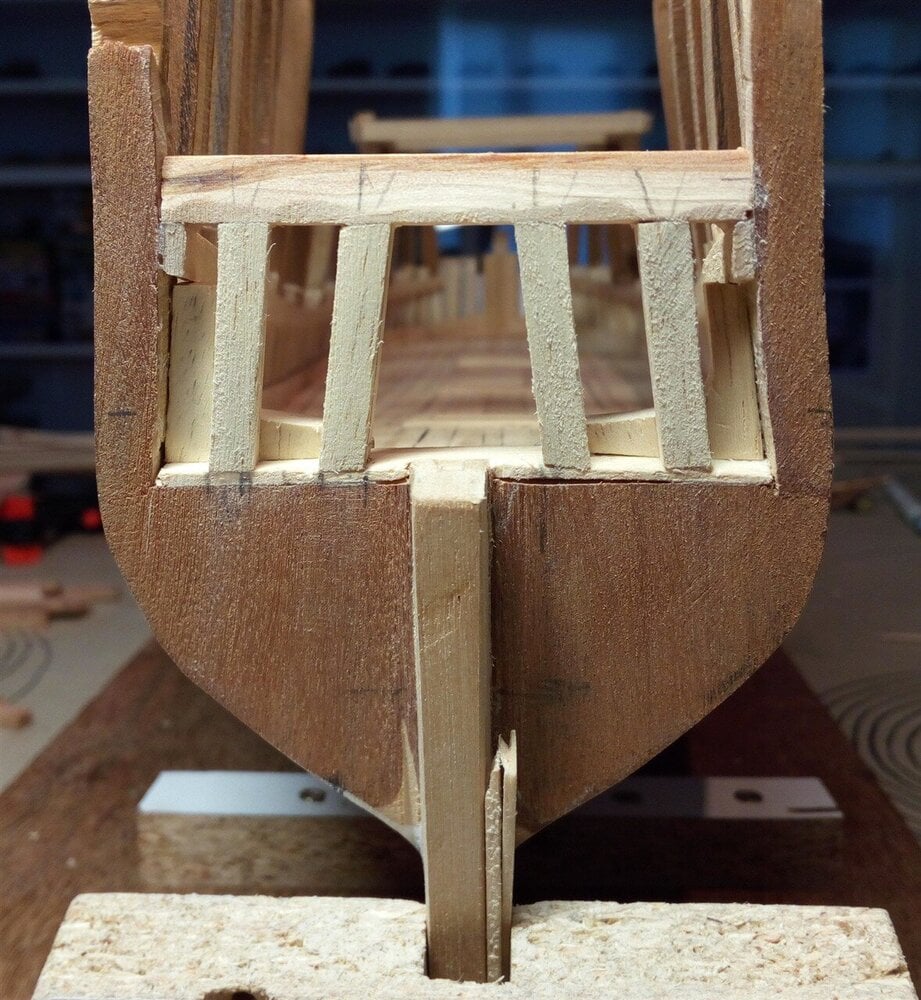
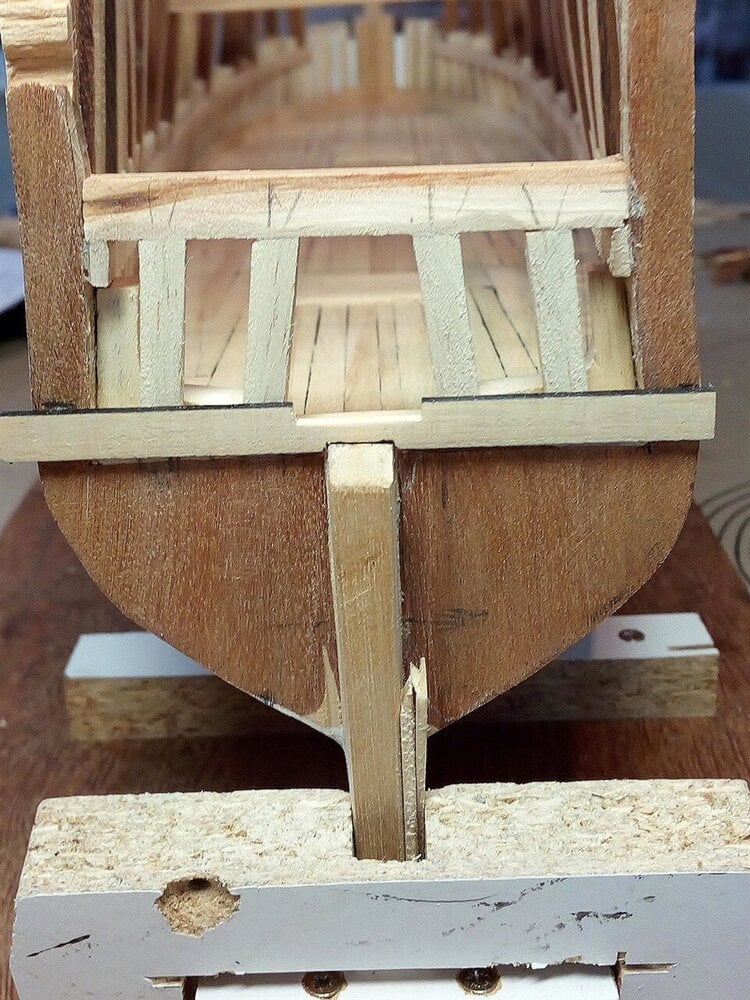
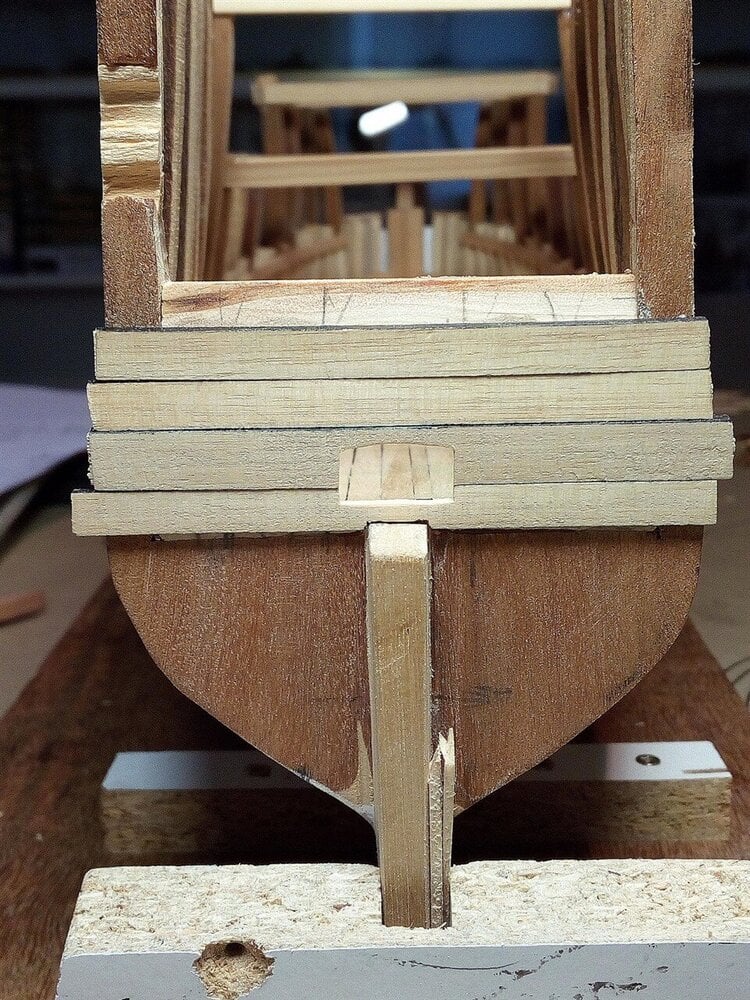
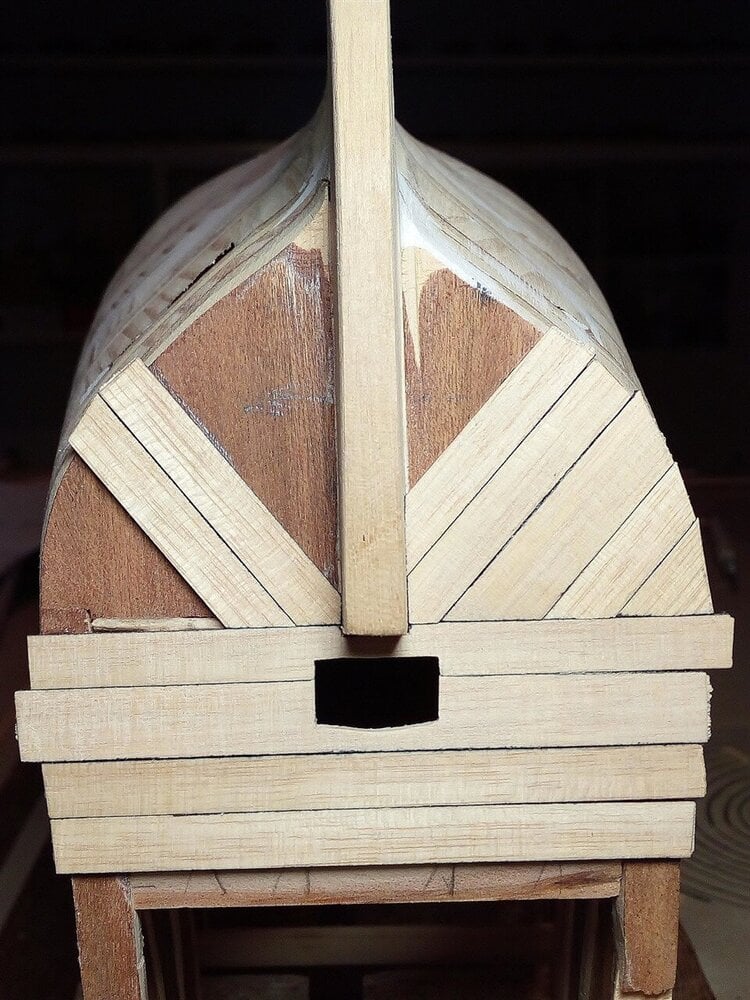
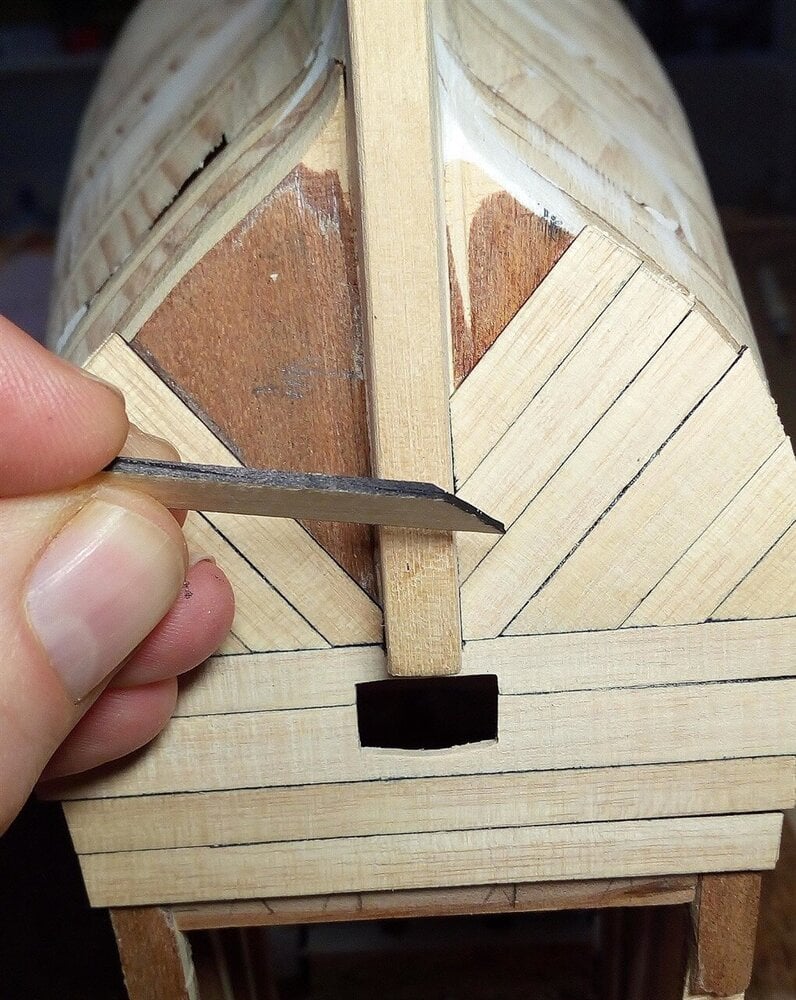
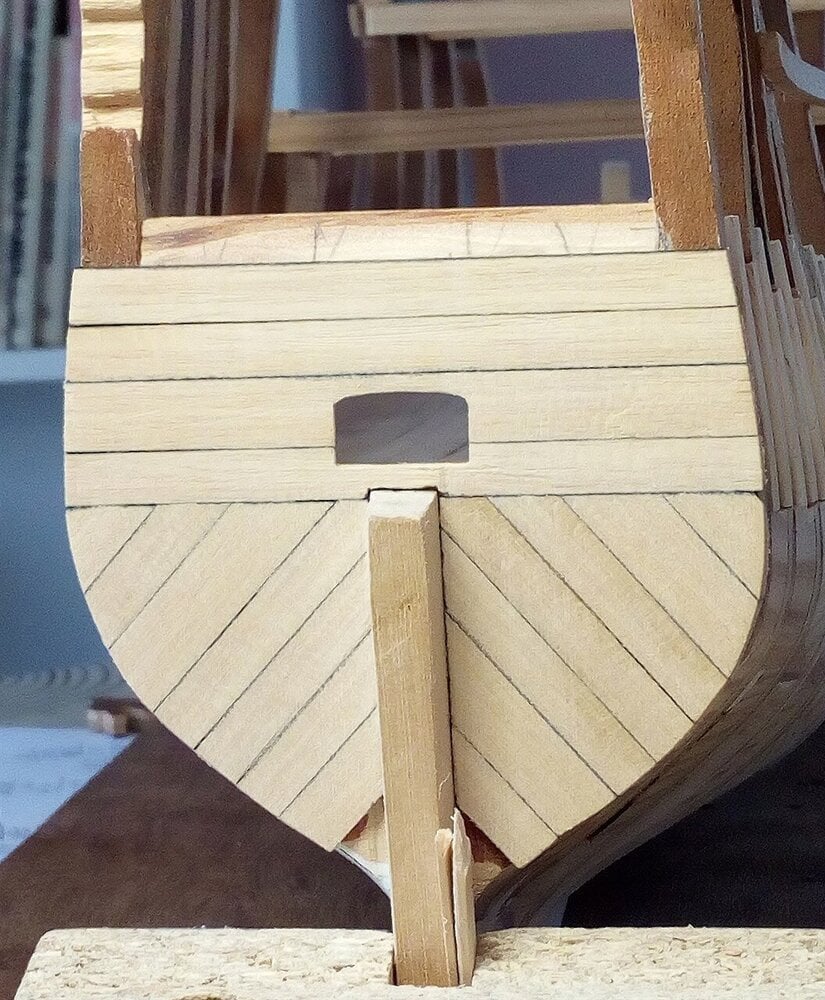
Your transom is going to sit much too low below the waterline. On a real ship, this will affect the operation of the rudder. In hindsight, that was correct. And thanks to the thick filler blocks, this mistake could be sanded out without any problem.
DSCF1181.JPG


The line of the hull is now also smoother at the stern.
DSCF1184_1280.JPG
DSCF1182_1280.JPG
 
Couple things that are really odd. This one may not matter in the least to you, but just in case, there are belaying pins on the drawings. The English did not use belaying pins until the second half of the 18th century.

Allan
 
Couple things that are really odd. This one may not matter in the least to you, but just in case, there are belaying pins on the drawings. The English did not use belaying pins until the second half of the 18th century.

Allan
Very well observed, thanks. And indeed very correct.
Later, much later, you will see that no belaying pins will be used on this model.
 
Back
Top