



• Ships of Scale has incorportated an extra level of security when you log In. Please follow on-screen prompts to acknowledge that you are not a robot via a "Check Box" or a "Pictorial Check Box Puzzle". This is needed due to higher level of AI Activity Security.
  • SUBSCRIBE TO SHIPS IN SCALE TODAY!

    The beloved Ships in Scale Magazine is back and charting a new course for 2026!
    Discover new skills, new techniques, and new inspirations in every issue.

    NOTE THAT OUR NEXT ISSUE WILL BE July/August 2026
  • Win a Free Custom Engraved Brass Coin!!!
    As a way to introduce our brass coins to the community, we will raffle off a free coin during the month of August. Follow link ABOVE for instructions for entering.

I finally managed to build my vertical rope maker.

I have starting experimenting with my other ropewalk which is a planetary ropewalk machine. If I increase the feedrate and keep everything else contant(ie. head RPM and rope tension), then the rope will be less tight because you are giving the head less time to add twists to the rope. So having said that, I thought to myself if I increase the weight on that vertical machine then it's like increasing the feedrate. But I haven't experimented with that vertical ropewalk machine yet because I am trying to figure out where to put it
OMG my friend
I just realized you spent a lot of money for nothing; it took me over a month just trying to adjust that piece-of-shit machine. It loses tension constantly, you have to wind the bobbins with exactly the same tension, and then synchronize the rope-winding mechanism with the speed of the rotating ellipse. Believe me, I know more than one person on this forum who bought that PL4-3 or the even more expensive PL4-4, only to toss it aside and end up buying another one or building their own machines. I couldn't get it to work at all; maybe you'll have more patience and luck with it. I sent mine back and lost both my money and the machine, thanks to the "kindness" of Mr. Radimir Beseda from HisModel who ripped me off. I thought you had the vertical model; you can disregard everything I said earlier. Good luck.
 
OMG my friend
I just realized you spent a lot of money for nothing; it took me over a month just trying to adjust that piece-of-shit machine. It loses tension constantly, you have to wind the bobbins with exactly the same tension, and then synchronize the rope-winding mechanism with the speed of the rotating ellipse. Believe me, I know more than one person on this forum who bought that PL4-3 or the even more expensive PL4-4, only to toss it aside and end up buying another one or building their own machines. I couldn't get it to work at all; maybe you'll have more patience and luck with it. I sent mine back and lost both my money and the machine, thanks to the "kindness" of Mr. Radimir Beseda from HisModel who ripped me off. I thought you had the vertical model; you can disregard everything I said earlier. Good luck.

I have both, actually. But the machine I have is not the PL4 it's a different machine. It seems to work fine for me, I am just figuring out how to control it so i get the same rope that I need. The thing actually has individual strand tensioners, if i can call them that. The thing that is missing is a tension control for the rope itself. I want to try something to resolve that.
 
Last edited:
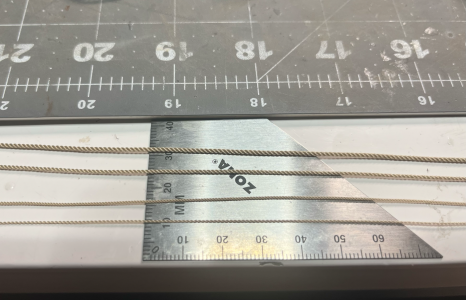
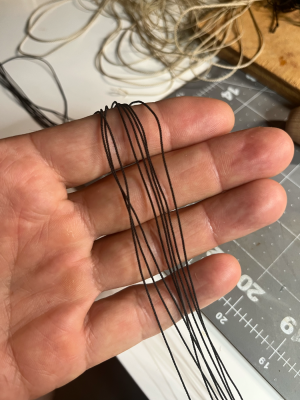
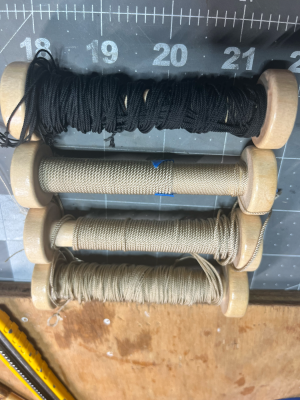
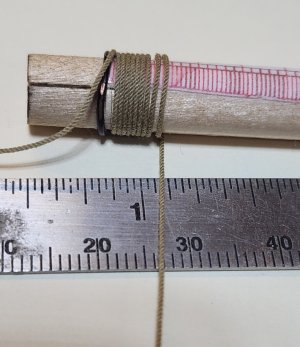
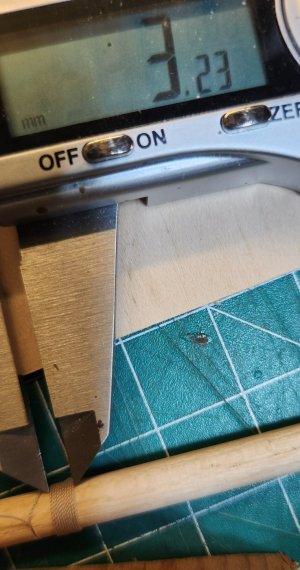
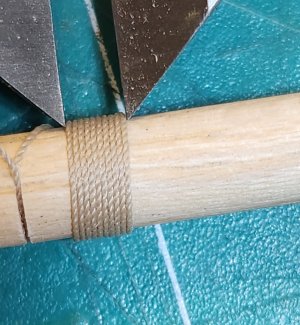
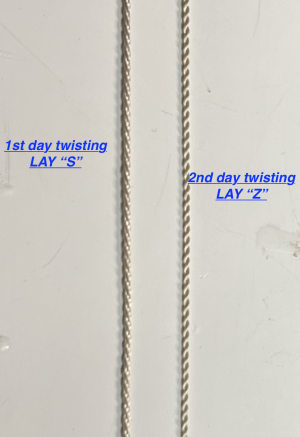
I’m really happy with how the ropes turned out today! I have a question for the experts: should I apply a little heat to the ropes? I believe that since they’re polyester, heat improves the contraction of the strands so they don't lose as much tension—at least, that’s what I recall seeing, reading, or hearing in various posts! Thanks in advance for all your comments; I truly appreciate them, and—most importantly—I’m learning something new! Every day brings something new. Good luck and a big hug to all the friends on this great forum.

Screenshot 2026-09-17 at 8.42.38 PM.png

tempImageCqXk56.png

tempImageK2OE7J.png

tempImagefA3NfH.png
 
I’m really happy with how the ropes turned out today! I have a question for the experts: should I apply a little heat to the ropes? I believe that since they’re polyester, heat improves the contraction of the strands so they don't lose as much tension—at least, that’s what I recall seeing, reading, or hearing in various posts! Thanks in advance for all your comments; I truly appreciate them, and—most importantly—I’m learning something new! Every day brings something new. Good luck and a big hug to all the friends on this great forum.

View attachment 637393

View attachment 637394

View attachment 637395

View attachment 637398
how fine a rope can you make? these above look fantastic
 
now the tough question... gears. printed or bought? i see you've taken alot of care in your design to keep it as simple as possible. very neat and clean.

your motor looks like one from an old cordless drill... I've got a few of those laying around waiting for a purpose.
 
OMG my friend
I just realized you spent a lot of money for nothing; it took me over a month just trying to adjust that piece-of-shit machine. It loses tension constantly, you have to wind the bobbins with exactly the same tension, and then synchronize the rope-winding mechanism with the speed of the rotating ellipse. Believe me, I know more than one person on this forum who bought that PL4-3 or the even more expensive PL4-4, only to toss it aside and end up buying another one or building their own machines. I couldn't get it to work at all; maybe you'll have more patience and luck with it. I sent mine back and lost both my money and the machine, thanks to the "kindness" of Mr. Radimir Beseda from HisModel who ripped me off. I thought you had the vertical model; you can disregard everything I said earlier. Good luck.
Yeah,. it is really like a paper machine winder in the industry. However, everything is done with very expensive controller, not the one encounter on the rope machine for hobby. We have to proceed with axial speed physic, not linear one.

I tried the Chinese machine equivalent to PL4, reproducibility and quality is difficult to maintain. I am tempted to try the vertical machine from Domanov
 
Last edited:
Yeah,. it is really like a paper machine winder in the industry. However, everything is done with very expensive controller, not the one encounter on the rope machine for hobby. We have to proceed with axial speed physic, not linear one.

I tried the Chinese machine equivalent to PL4, reproducibility and quality is difficult to maintain. I am tempted to try the vertical machine from Domanov
that chinese machine does work ok, but I had to heavily modify it. If you go to my build log, I put a lot of notes in how to operate that ZHL machine. Basically, there are 3 things to control, actually 4. you have strand tension, rope tension, head rotation and feedrate. The idea is to determine the lay length you need and calculate the lay ratio and keep it constant. The feedrate needs to be constantly adjusted as the spool fills up because the effective diameter is always increasing. The effective diameter is just the diameter of the rope coil around the takeup spool. This is the theory. How well it works in practice, that's another story. One thing i should mention, I removed 3 of the strand twisters and now it only can make a 3 strand rope, which is all i want. I find the machine runs a lot better this way. Who needs 6 strands?

As the unit operates you will have to continuously check the lay length and tension. THe head RPM should not be touched once you have set a comfortable RPM to it. It's the feedrate that you adjust and the rope tension. Oh before I forget, I am in the process of adding a brake to the takeup spool so that I can control the rope tension rather than relying on the feedrate to control the tension. I hope this will work.

FInally, you will need to check all the screws and hardware because it loosens up as the machine runs. I think I may need to put some locktite on some of the screws. It's a pain in the butt to always tighten things.
 
Last edited:
I am tempted to try the vertical machine from Domanov
Curious why the vertical machine?
I suspect it may be limited workspace.
Do you have less than 36 - 48 inches?
I understand the desire to make longer rope, but is it really necessary?
As long as you keep a good record of your rope recipes you can always make as much as you need with consistency.

Here is my set up, which works on traditional principles. My Rope Maker
Something similar can be put together for less than $50.

Rope1for msw.jpg
Here is my first version. No difference in the way the rope comes out.
4 Whorls/strands give you a lot more flexibility for the size of the rope.
( There are only 3 in my video, but I later changed to 4. )

RopeMaker 11.jpg
This is typical.
 
Last edited:
Curious why the vertical machine?
I suspect it may be limited workspace.
Do you have less than 36 - 48 inches?
I understand the desire to make longer rope, but is it really necessary?
As long as you keep a good record of your rope recipes you can always make as much as you need with consistency.

Here is my set up, which works on traditional principles. My Rope Maker
Something similar can be put together for less than $50.

View attachment 637497
Here is my first version. No difference in the way the rope comes out.
4 Whorls/strands give you a lot more flexibility for the size of the rope.
( There are only 3 in my video, but I later changed to 4. )

View attachment 637498
This is typical.
Because the vertical ine seem's more easy.lol.
 
Because the vertical ine seem's more easy.lol.
Hi Michel
That’s exactly what I was thinking; those treadmills are excellent, but you need 1) space, 2) I think you need a bit more time to achieve the effect I got on just the second day of testing. And finally, 3) I believe the manufacturing cost is lower, though, of course, it all depends on the materials you choose. For instance, I decided to use solid brass gears; I could have bought plastic ones, but I didn't want to. What I’ve created has been a total success, I’m extremely satisfied with the results. Plus, I’m seriously considering what Jack said; maybe I’ll set up my own little rope shop here in the USA. Who knows? I’m going to look into it. Thanks for your comments, I really appreciate all of them, even the negative ones, because we learn every day something new and also from our mistakes, too
Cheers.
 
now the tough question... gears. printed or bought? i see you've taken alot of care in your design to keep it as simple as possible. very neat and clean.

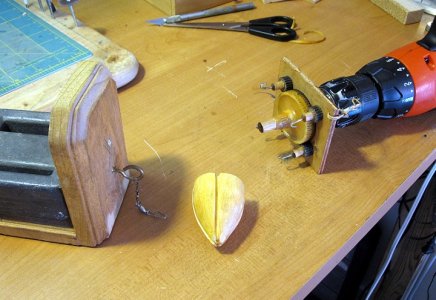
your motor looks like one from an old cordless drill... I've got a few of those laying around waiting for a purpose.
Hi Paul,
The gears are solid brass, purchased ready-made and use an Allen screw to secure them to the central shaft. I also bought a small 12V motor that runs at 1400 RPM; I was wondering if I should have bought a more powerful one, but for now, it’ll do the job until it gives out.;)
 
Curious why the vertical machine?
I suspect it may be limited workspace.
Do you have less than 36 - 48 inches?
I understand the desire to make longer rope, but is it really necessary?
As long as you keep a good record of your rope recipes you can always make as much as you need with consistency.

Here is my set up, which works on traditional principles. My Rope Maker
Something similar can be put together for less than $50.

View attachment 637497
Here is my first version. No difference in the way the rope comes out.
4 Whorls/strands give you a lot more flexibility for the size of the rope.
( There are only 3 in my video, but I later changed to 4. )

View attachment 637498
This is typical.
Hi Buddy
I see you're getting excellent results with your machine, too. I decided to build a vertical machine because I don't have much space for a ropewalk right now; if I move to the house I'm considering the one with a double garage, I'll switch machines and build a 15–20-foot one, although, as you rightly say, they don't need to be very long. For now, mine turn out to be about 7 feet long.
 
Back
Top