
-

SUBSCRIBE TO SHIPS IN SCALE TODAY!
The beloved Ships in Scale Magazine is back and charting a new course for 2026!
Discover new skills, new techniques, and new inspirations in every issue.
NOTE THAT OUR NEXT ISSUE WILL BE July/August 2026 -

Win a Free Custom Engraved Brass Coin!!!
As a way to introduce our brass coins to the community, we will raffle off a free coin during the month of August. Follow link ABOVE for instructions for entering.


You are using an out of date browser. It may not display this or other websites correctly.
You should upgrade or use an alternative browser.
You should upgrade or use an alternative browser.
Making your own Ropes
- Thread starter Phillipsart
- Start date
- Watchers 29

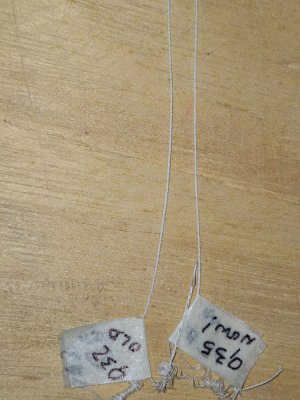
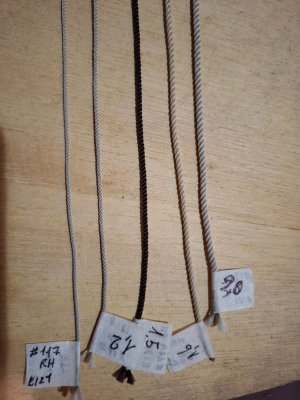
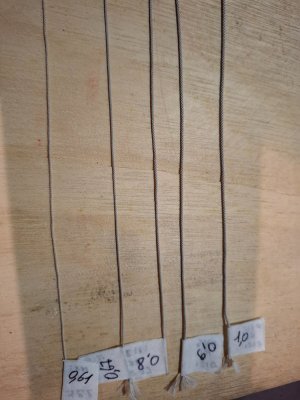
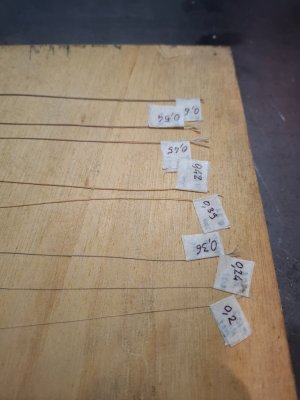
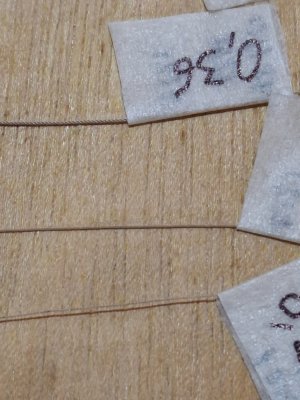
Thank you Dubz and Stef66 for your precious help. I tried to force the torsion, increasing the turns of about 50%. The result is shown in the attached photo (new test on the right). I assume that, on thinner diameters, the cotton thread (that is LH), adsorbs most of the reverse revolution RH that Igive to them.

- Joined
- May 3, 2026
- Messages
- 152
- Points
- 78

Agreed. Needs finer threads. Rope that small is a challenge.0,32 mm has way to less tension,
I stained the ropes with coffee and then treated them with beeswax. You can see the final result in the photos.
For the next batch, I think I’ll follow your advice and add a little more twist to the strands. Thank you all for your helpful feedback!
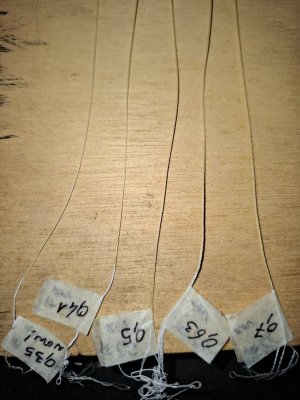
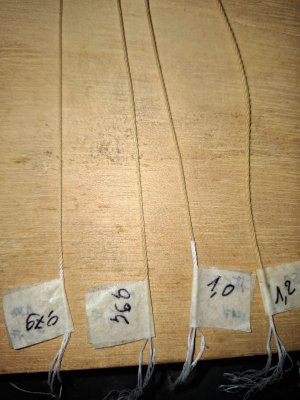
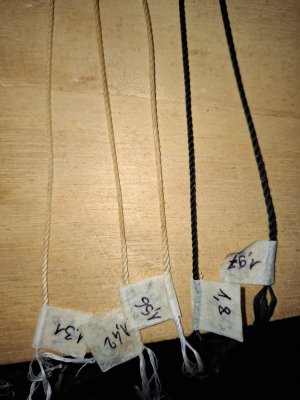
For the next batch, I think I’ll follow your advice and add a little more twist to the strands. Thank you all for your helpful feedback!

- Joined
- Oct 9, 2020
- Messages
- 2,547
- Points
- 538

very nice!
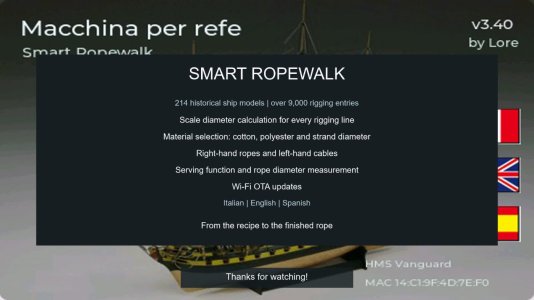
Wondering what the pricing will be if for sale
Lorenzo, I suppose it depends on the price and userfriendliness (and, of course, good and repeatable results).
I use a ropewalk designed by Steef66 (here) and I'm really happy with the results I'm getting (now, after a steep learning curve). It's not as sophisticated as yours, but I suppose it does the job quite well.
I like your machine, and perhaps the only rushed comment I can make is that it seems overly complex. But I'm sure your design is the outcome of extensive study and research and must have a clear objective.
If you had to put a price tag on your ropewalk, what would it be?
Un saluto carissimo! Al netto di tutto, la tua commettitrice sembra funzionare una meraviglia, ed è davvero fighissima
Chris
I use a ropewalk designed by Steef66 (here) and I'm really happy with the results I'm getting (now, after a steep learning curve). It's not as sophisticated as yours, but I suppose it does the job quite well.
I like your machine, and perhaps the only rushed comment I can make is that it seems overly complex. But I'm sure your design is the outcome of extensive study and research and must have a clear objective.
If you had to put a price tag on your ropewalk, what would it be?
Un saluto carissimo! Al netto di tutto, la tua commettitrice sembra funzionare una meraviglia, ed è davvero fighissima
Chris
Here's my latest ropes, after moving from an experimental spring-loaded system (that never really worked propwrly) to a more classic, quantifiable counter-weight pulley.
How do the ropes look? They seem right to my eye, but do tell what you think, please.
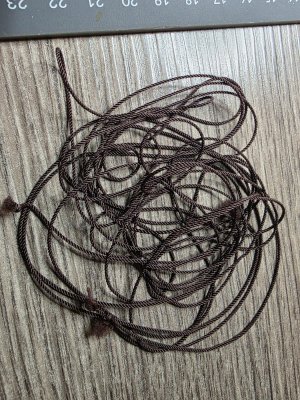
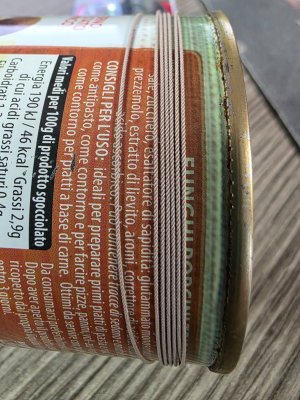
How do the ropes look? They seem right to my eye, but do tell what you think, please.

- Joined
- Aug 8, 2019
- Messages
- 5,872
- Points
- 738

So you used weights for this rope instead of a spring? I think it looks really nice. The twists are at a good angle and are fairly consistent along the entire length. I don't see any irregularities. It's a nice, practical rope for your ship. Good job.Here's my latest ropes, after moving from an experimental spring-loaded system (that never really worked propwrly) to a more classic, quantifiable counter-weight pulley.
How do the ropes look? They seem right to my eye, but do tell what you think, please.
View attachment 638770
View attachment 638773
- Joined
- Oct 9, 2020
- Messages
- 2,547
- Points
- 538
question. When you are making a rope that has strands which are thenselves ropes. lets say each strand is 3 ply, should I unwrap the strand before recombining it, or should I just change the direction of the twist. So lets say the strand is a z twist, then I would just switch to an s twist. I suppose I can expermient with that but I am not ready yet on the ropewalk machine I have and I am just playing mind games with myself right now. lol
Last edited:
- Joined
- Aug 8, 2019
- Messages
- 5,872
- Points
- 738
They will unwind first. So just experience it. The result counts.question. When you are making a rope that has strands which are thenselves ropes. lets say each strand is 3 strands, should I unwrap the strand before recombining it, or should I just change the direction of the twist. So lets say the strand is a z twist, then I would just switch to an s twist. I suppose I can expermient with that but I am not ready yet on the ropewalk machine I have and I am just playing mind games with myself right now. lol
I really like them, looking good!Here's my latest ropes, after moving from an experimental spring-loaded system (that never really worked propwrly) to a more classic, quantifiable counter-weight pulley.
How do the ropes look? They seem right to my eye, but do tell what you think, please.
View attachment 638770
View attachment 638773

I'm not sure about that - he is going to use a continuous ropewalk....They will unwind first. So just experience it. The result counts.
Thank you for your comment, I think that the final resulting ropes of my machine are quite similar to the ones that you showed, I also did a comparison with the highest quality ROPES OF SCALE and i didn't appreciate any difference indeed. The interface is absolutely friendly and you only have to choose the vessel, the scale and the rigging that you are doing, and which thread are you using: the software gives you the correct recipe and the exact number of twisting and turning to obtain it. I created the algorithm myself, with hundreds of tests, an I made a huge database using all the Steel tables to cover almost all the possible rigging of al the categories of vessels (about 9000) and inserting all the known kits of models that I found available on internet ( more than 200). And.. it really works. I tested it with length of 1.8m each, the machine cannot work continuously but I found very useful to build the rope just when I need it, because it's fast, easy an exactly repeatable: 1.8m is more than enough but you can do a longer rope if you want.Lorenzo, I suppose it depends on the price and userfriendliness (and, of course, good and repeatable results).
I use a ropewalk designed by Steef66 (here) and I'm really happy with the results I'm getting (now, after a steep learning curve). It's not as sophisticated as yours, but I suppose it does the job quite well.
I like your machine, and perhaps the only rushed comment I can make is that it seems overly complex. But I'm sure your design is the outcome of extensive study and research and must have a clear objective.
If you had to put a price tag on your ropewalk, what would it be?
Un saluto carissimo! Al netto di tutto, la tua commettitrice sembra funzionare una meraviglia, ed è davvero fighissima
Chris
- Joined
- Aug 8, 2019
- Messages
- 5,872
- Points
- 738
Then it will not work at all. Because the endless ropewalk wil not make enough turns in the strands to bring them back together in the other direction.I'm not sure about that - he is going to use a continuous ropewalk....
- Joined
- Oct 9, 2020
- Messages
- 2,547
- Points
- 538
i guess i am just wondering if the strands have to be unwrapped first or not. The head of my machine has a variable speed drive on it and I can also change it`s direction and I can also control the feedrate on the takeup spool, so I don`t see a scenario where what you said would happen, but hey. I haven`t tested it yet either. I am still playing mind games at this point.Then it will not work at all. Because the endless ropewalk wil not make enough turns in the strands to bring them back together in the other direction.
Last edited: