


• Ships of Scale has incorportated an extra level of security when you log In. Please follow on-screen prompts to acknowledge that you are not a robot via a "Check Box" or a "Pictorial Check Box Puzzle". This is needed due to higher level of AI Activity Security.
  • SUBSCRIBE TO SHIPS IN SCALE TODAY!

    The beloved Ships in Scale Magazine is back and charting a new course for 2026!
    Discover new skills, new techniques, and new inspirations in every issue.

    NOTE THAT OUR NEXT ISSUE WILL BE July/August 2026
  • Win a Free Custom Engraved Brass Coin!!!
    As a way to introduce our brass coins to the community, we will raffle off a free coin during the month of August. Follow link ABOVE for instructions for entering.

exactly what is a ship model kit

Dave Stevens (Lumberyard)

Vendor
Vendor
Sponsor
Joined
Dec 1, 2016
Messages
6,869
Points
728

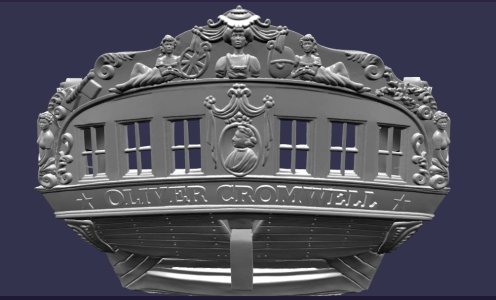
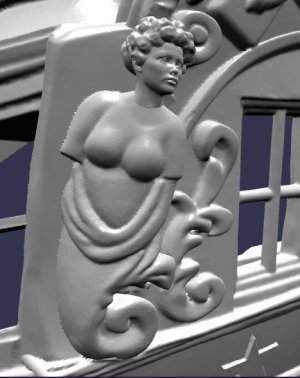
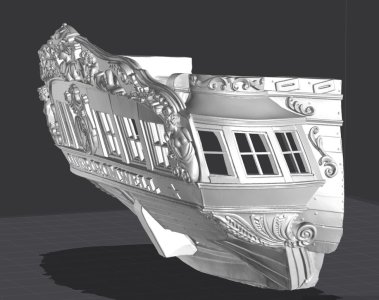
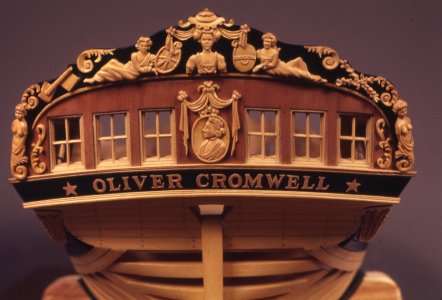
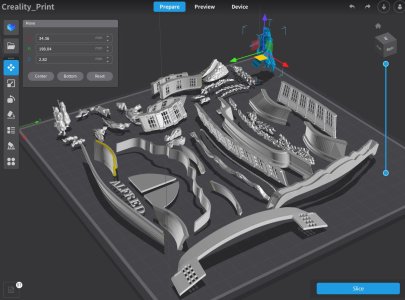
The one big comment i get is i would love to build on of the Hahn models and i can handle the structure of the hull but what i cannot do are the carvings. In the early days there was no way to produce the carvings other than sculpt them, make a mold and cast them in resin. Today with 3D software and printing it is now possible to create the sterns. The early resin castings were rejected by the hard core builders saying "no plastic on wooden ship models" but why not? it is a mixed media art form. True if i built the model and did the 3D carvings myself and printed them it is scratch built because i did it all. If someone else built the model and used the 3D prints is it still scratch building or kit building or something in between?

the original model by Harold Hahn

aoliver06c.jpg

a reproduction

Capture1.JPG

Capture2.JPG

oliver4.JPG

breaking it all down and using some pieces as a pattern and redone in wood and other pieces using the resin print
Capture alfred stern.JPG
 
Last edited:
I see an even more basic question at the core: What is ship modeling?

Hahn fabricated the hull and then hand carved the sculpture and frieze. He used materials that the builders of the original vessels had access to.
Using a 3D printer -- or a 4D computer controlled router to generate a part for assembly is not exactly the same thing. The raw material are "better living thru chemistry" in origin.

What Hahn did in a metaphorical sense is to run a 26 mile Marathon barefoot in July in the rain.
The assembly alternative is driving the same 26 miles in a Lexus and saying that you did the Marathon.

Back to ship modeling - sure - at the end - both methods get you a physical object. The objects may appear to be nearly identical if the finish allows that. Is this really doing the same thing? To me it is two different planets. Not town, not country, not even continent, maybe not quite different solar systems, but close to that.
 
I see an even more basic question at the core: What is ship modeling?

Bob Creek answered that on several occasions but there is no mention of the how and what materials to be used, i don't think.

What Hahn did in a metaphorical sense is to run a 26 mile Marathon barefoot in July in the rain.

Hahn is the exception if he were a member here he would be 1 in 27,000

Hahn fabricated the hull and then hand carved the sculpture and frieze. He used materials that the builders of the original vessels had access to. Using a 3D printer -- or a 4D computer controlled router to generate a part for assembly is not exactly the same thing. The raw material are "better living thru chemistry" in origin.

same coin different sides if i flip the coin Hahn could not do what i do with technology and i cannot do what he did with a knife. but the end results are the same a ship model that represents the original in appearance.

Back to ship modeling - sure - at the end - both methods get you a physical object. The objects may appear to be nearly identical if the finish allows that. Is this really doing the same thing?
in a sense yes, it is the same thing and it is a matter of technique some artists use a paint brush Paul Jackson Pollock splashed and dripped household paint on a canvas. the end results, both are art.

i personally am not in favor of seeing wooden ship model kits being turned in paint by number just gluing parts together. But is a model builder started with a timbering set of raw material and fabricated the model and added printed carvings is that so bad?
 
Human skill, talent, knowledge, expertise, persistence, dedication, LOVE, blood, sweat, & tears. And then there is the "PRINTER". To me it's apples and oranges. They are not the same. But they both still have a place at the table.
 
I agree with MisterCA, it's apples and oranges. If we ask our 3D printers to produce a completely finished model ,including every block and rigging line, the talent (art) of model ship building has been lost and replaced by technology. We don't know how to build a beautiful scale model ship using time tested knowledge and materials, but we know how to program our technological computer equipment to print us one over night. Thanks, but I will stick to the old ways of building my ships.
 
My experience with mixing plastic and wood is that problems arise over time.
If you want to give it a try, you should look into shrinkage, for instance.
What will the ship look like in 10 years? I suspect there will be issues with cracking in the wooden surfaces.
Both Lego and model railway manufacturers have had problems with poor-quality plastic.
There is a lot of experimentation with plastics, and the results aren't always good.
 
I agree with MisterCA, it's apples and oranges. If we ask our 3D printers to produce a completely finished model ,including every block and rigging line, the talent (art) of model ship building has been lost and replaced by technology. We don't know how to build a beautiful scale model ship using time tested knowledge and materials, but we know how to program our technological computer equipment to print us one over night. Thanks, but I will stick to the old ways of building my ships.
With all due respect, that statement is like saying you have no idea about something without actually saying so outright. How do you ask a 3D printer to do something, do you send it a letter or a formal request? Print whole ship overnight, that's some achievment I'm yet to see

If we ask our 3D printers to produce a completely finished model ,including every block and rigging line

Have you ever seen a model like that? Because, aside from board game pawns on a 1:350 or 1:400 scale, I’ve never seen anything like it.

Do you know how much knowledge it takes to design in CAD a ship's hull that is historically accurate?
Out of the same digital hull you can make a CNC POF model, laser POB model or a resin hull. It all depends on choosen material and tool

I have a great deal of respect for people who build models from scratch without using complicated power tools, but if you use a router—though not a CNC router—then I’m afraid I have to disappoint you: the only difference between us is the level of sophistication of our tools, because the crators of the great models we admire in museums didn't have any of that
 
Hahn fabricated the hull and then hand carved the sculpture and frieze. He used materials that the builders of the original vessels had access to.
Using a 3D printer -- or a 4D computer controlled router to generate a part for assembly is not exactly the same thing. The raw material are "better living thru chemistry" in origin.

What Hahn did in a metaphorical sense is to run a 26 mile Marathon barefoot in July in the rain.
The assembly alternative is driving the same 26 miles in a Lexus and saying that you did the Marathon.

Is using a 3D printer or a CNC milling machine considered heresy when it comes to building from scratch, or does this also apply to assembling kits?

To continue with this metaphor: You could run that same marathon in expensive wooden flip-flops and fall over halfway through. Or maybe it’s better to spend a little extra on comfortable shoes—which might be more expensive, but at least they don’t pretend to be something they’re not. Like, for example, so-called POF, which are really just POB with more ribs. They only cost 3/4 of "real" POF kit, but you get a special coin and super rare collectors edition.
I see an even more basic question at the core: What is ship modeling?
Wasn't there a discussion recently about how fewer and fewer people are interested in model building each year?Maybe in a while, there won't be anyone left to argue about who is the truest modeler.

If it weren't for the fact that I live in the countryside and have enough space to build from scratch, I wouldn't even have the chance to create anything from plans.
Continuing the Lexus analogy: If I lived in the city, I’d have to choose between buying one or buying a factory. Because without a garage, access to saws, and various machines, it’s not really possible to work freely and comfortably. Unless you want to buy everything as an accessory—but then it wouldn’t be the price of a Lexus anymore, but that of a Maybach and a Bentley combined.
 
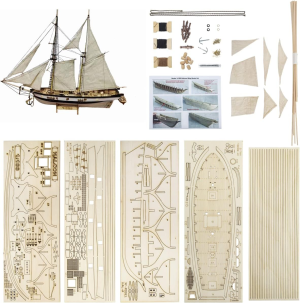
This is a ship model kit:
1790320336317.png
This also is a ship model kit:
1790320455971.png
And this is a ship model kit:
1790320692570.png
A ship model kit is a box containing all the plans, instructions, materials and accessories needed to self-build a model of the ship it supposes to represent. Some actually do so, some others do so to a lesser extend. Material quality and precision may vary from one kit maker to another, but they all remain ship model kits. Some have everything laser cut to a very high standard, with others, you might need to saw it all out by hand. With some, you will find yourself merely a kit assembler, with others an artist. Just pick your liking.
 
In the world of model railways, there are quite a few incomplete kits available.
Sometimes you get nothing more than a few brass parts and a drawing; you have to source the rest yourself to build the wagon or locomotive.
We call them ¨scratch aid kits¨.
I haven't seen anything similar when it comes to boat kits—do they exist, and if so, what should I search for?
 
Lets start at the other end. I want to build a ship.
I need about 150 deadeyes. Do I turn and drill them all myself or do I buy some packets of ready made?
Ditto blocks: lots of mindless, repetitive work or buy some of a chosen quality
I have no casting or 3D printing facilities so I must buy some anchors and cannon
I do not have a ropewalk so ned to buy some spools of rigging thread of various thicknesses.
I could acquire a block of timber, slice it, thickness sand the sheets, cut the sheets into strips to make, say, 60 second stage planks.
Boring, dusty, time consuming. The cost of the machinery would buy an incredible quantity of ready cut strips.
Same again with a block of lime if I chose two stage planking. (Unlikely)
I can transcribe details of the hull profile onto sheets of good quality plywood and cut a keel and bulkheads using a scroll saw.
Fine: I can do (and have done) that. A one-off task which is not too repetitive.
Dowel for the spars I can buy. Rigging plans: Mr Petersson will help for a wide range of periods. For older ships I could invent a rigging plan based on logic.
If I wish to build a ship using original plans it seems I should buy a kit of something similar and proceed from there. Or maybe save a bit of money by just buying castings, wood strips, dowel, thread, blocks and deadeyes. Would that be a kit or a scratch build?
 
Scratch (pseudo) Tab
As an exercise I have done a rough analysis of how much it would cost to build my current model (HMS Unicorn) if I just bought the fillings and materials that I could not bother to make - or do not have the facilities to fabricate.
7mm deadeyesx80 9.00 per 100
6mm deadeyesx60 9.00 per 100
Blocks 5mm (basic) 9.00 per 100
Blocks 5mm double (basic) 9.50 per 100
Blocks 7mm (basic) 9.00 per 100
Cannon x 32 17.00
Carriage wheelsx128 13.00
5x2 walnut x60 31.00
Decking 0.5x3 tanganyika 8.00
Dowel 10.0
Anchors 5.50
Belaying pins 6.00
Rigging thread 21.00
Stanchions 21.00
Miscellaneous strip 5.00
Eyebolts, pins, rudder hinges etc 5.00
Total £188 (I think)

Cost of kit = £278 I could have saved £90
I could have used the saving to buy better quality second stage planking and rigging blocks perhaps.
I could mix Amati cannon, Corel thread, Billing eyebolts, AL deadeyes or other options.

Therefore I could build a non-kit 18th century frigate from plans by cutting my own bulkheads and keel and fitting it out with cannon etc. of my choice for about £200
Or I could pay north of £1000.0 to build AL HMS Surprise.
 
Last edited:
It has always been either build from scratch or build form a kit the gray area between the two gets little attention and that is to create your own version of a kit by collecting parts from different sources "a la carte"

Short John Bronze has hit the mark

Therefore I could build a non-kit 18th century frigate from plans by cutting my own bulkheads and keel and fitting it out with cannon etc. of my choice for about £200
Or I could pay north of £1000.0 to build AL HMS Surprise.

step1 source your plans there are 10s of thousands of plans available
step 2 plan the build POB or POF or SH
step 3 make a material list
step 4 sourcing your materials i.e. milled dimensioned scale lumber, rigging supplies, fittings

bottom line here is doing it your way and choosing your own materials
 
Scratch (pseudo) Tab
As an exercise I have done a rough analysis of how much it would cost to build my current model (HMS Unicorn) if I just bought the fillings and materials that I could not bother to make - or do not have the facilities to fabricate.
7mm deadeyesx80 9.00 per 100
6mm deadeyesx60 9.00 per 100
Blocks 5mm (basic) 9.00 per 100
Blocks 5mm double (basic) 9.50 per 100
Blocks 7mm (basic) 9.00 per 100
Cannon x 32 17.00
Carriage wheelsx128 13.00
5x2 walnut x60 31.00
Decking 0.5x3 tanganyika 8.00
Dowel 10.0
Anchors 5.50
Belaying pins 6.00
Rigging thread 21.00
Stanchions 21.00
Miscellaneous strip 5.00
Eyebolts, pins, rudder hinges etc 5.00
Total £188 (I think)

Cost of kit = £278 I could have saved £90
I could have used the saving to buy better quality second stage planking and rigging blocks perhaps.
I could mix Amati cannon, Corel thread, Billing eyebolts, AL deadeyes or other options.

Therefore I could build a non-kit 18th century frigate from plans by cutting my own bulkheads and keel and fitting it out with cannon etc. of my choice for about £200
Or I could pay north of £1000.0 to build AL HMS Surprise.
You forgot the plans and instructions (+/- £45) and the set metal castings (+/- £120).
 
You forgot the plans and instructions (+/- £45) and the set metal castings (+/- £120).

if you can plan a kit you do not need instructions i would think

Therefore I could build a non-kit 18th century frigate from plans by cutting my own bulkheads and keel and fitting it out with cannon etc. of my choice for about £200
Or I could pay north of £1000.0 to build AL HMS Surprise.

a big gap from 200 to 1,000 enough to buy a few metal castings or 3D printed ones
 
  • Like
Reactions: Ram
if you can plan a kit you do not need instructions i would think

Therefore I could build a non-kit 18th century frigate from plans by cutting my own bulkheads and keel and fitting it out with cannon etc. of my choice for about £200
Or I could pay north of £1000.0 to build AL HMS Surprise.

a big gap from 200 to 1,000 enough to buy a few metal castings or 3D printed ones
Well, maybe you can, but I can't. So I'd buy a kit. And not the most fancy one. In fact, I have a vintage Steingraeber 'La Flore' in my stack. She'll do just fine for me.
 
Last edited:
Two issues:

1. What do you enjoy doing? In my case I enjoy solving problems especially those involving geometric relationships. And I enjoy research. A kit with detailed instructions eliminates the aspects of modeling that I enjoy most. I would also have a hard time feeling ownership for a kit built model.

2. Only time will tell if 3-D printed models and model parts will have longevity of if like lead (pb) model parts willl eventually become unrecognizable blobs. Also, only time will tell if 3-D printed (or any) ship models will have any lasting value.

I am a traditionalist and enjoy using tools and techniques that I inherited and learned from my father. On the other hand, if you’re a high tech guy and learning 3-D printing interests you, go for it!
 
OcCre and Artesania Latina kindly allow free pdf downloads of their ship models. These could be interpreted to cover ships similar in type and period to one chosen for a semi-scratch build.
 
Back
Top