
-

Win a Free Custom Engraved Brass Coin!!!
As a way to introduce our brass coins to the community, we will raffle off a free coin during the month of August. Follow link ABOVE for instructions for entering. -
PRE-ORDER SHIPS IN SCALE TODAY!
The beloved Ships in Scale Magazine is back and charting a new course for 2026!
Discover new skills, new techniques, and new inspirations in every issue.
NOTE THAT OUR FIRST ISSUE WILL BE JAN/FEB 2026
You are using an out of date browser. It may not display this or other websites correctly.
You should upgrade or use an alternative browser.
You should upgrade or use an alternative browser.


- Joined
- Aug 8, 2019
- Messages
- 5,504
- Points
- 738

iDili Ship Model Making Brass Nails - 0.7mm x 10mm Fine Pointed Pins for Wooden Model Boats, Ships, Hull Planking (1000 PCS) - Brass Craft Nails for Model Building - Amazon.com
iDili Ship Model Making Brass Nails - 0.7mm x 10mm Fine Pointed Pins for Wooden Model Boats, Ships, Hull Planking (1000 PCS) - Brass Craft Nails for Model Building - Amazon.com
www.amazon.com

- Joined
- Dec 1, 2016
- Messages
- 6,341
- Points
- 728
go here

 drydockmodelsandparts.com
Search: 5 results found for "nails"
Dry - Dock Models & Parts is providing high quality ship model fittings and parts
drydockmodelsandparts.com
Thanks to all who responded to my question. I actually found just what I think I need at Lowe's. I looked at the Dry Dock offerings as well as Cornwall and a Micro Mark and a couple others. None had the type of head I need. What I was hoping to find are nails just like the ones included in my Mamoli HMS VICTORY. They were easy to use and, because it had a pretty substantial head, easy to extract. I'm going to give the Lowe's nails a try and if they don't work out, I'll try something else. I may reach out to Model Expo to ask if they can get nails from the "new" Mamoli.
For a full length size hull If you taper to the proper breadth of the planks beforehand then pre-bend in both axes, nails are unnecessary. Finger pressure for a few seconds with CA or a minute or less with PVA eliminates the need for nails of any kind. If the model gets double planking the marks from the nails will be covered but it is a problem for the out layer. Just a suggestion, but maybe study some planking tutorials that have been listed here at SoS a number of times and you will find planking is not that hard to accomplish without nails.Planking nails.
If this is for your cross section, nails are totally unnecessary.
Allan
Thanks for the response and the suggestions. I agree with you somewhat. I don't use CA for planking or gluing up wood pieces as I have found it to be too brittle in the long run. Its good for securing rigging, blocks, various knots, etc. I have "historically" used Titebond II and recently started using Gorilla glue. Both set up pretty quick and make very strong bonds, occasionally to my dismay. The VASA will be my 6th PoP ship. I use nails for the base planking. For the second, I have found food success in using straight pins which I bend at about a 75 deg. angle and use as a clamp by inserting the point into the bulkhead/frame over the walnut or mahogany strips. Its a bit of a slow process but has produced good results for me. I have reviewed the planking efforts posted by several members and have learned quite a bit.For a full length size hull If you taper to the proper breadth of the planks beforehand then pre-bend in both axes, nails are unnecessary. Finger pressure for a few seconds with CA or a minute or less with PVA eliminates the need for nails of any kind. If the model gets double planking the marks from the nails will be covered but it is a problem for the out layer. Just a suggestion, but maybe study some planking tutorials that have been listed here at SoS a number of times and you will find planking is not that hard to accomplish without nails.
If this is for your cross section, nails are totally unnecessary.
Allan
Me too! A lot of builders use CA but as you point out it can be limited in usefulness as it does not give much time to play with getting a part in exactly the right place.I have "historically" used Titebond II
Allan
Well, the nails (brads) I got from Lowe's wont do as the shaft is to wide. Length is good but the diameter isn't. I did find a large number of "Mamoli" nails I had forgotten about. These should serve me well for the completion of the first planking.

- Joined
- Feb 15, 2019
- Messages
- 377
- Points
- 168

I'm firmly in the 'no nail' camp.Where can I purchase some good planking nails?
You can combine CA and wood glue at the fore end of the plank, you should have sufficient fixing area either provided in the kit design or an additional bow filler made from scrap. A spot of CA at the hood end will give the hold as the PVA hardens. I'll use any method to avoid those nasty little nails. Provided by the same Eurotrash manufacturers whose idea of premium timber is walnut!


Copper wire works well. At 1/48, I believe #24 wire works for a nail head of 1inch. You can buy wire in one-half pound rolls or 1 pound rolls. You can get about 50,000 fasteners per 1 pound.Where can I purchase some good planking nails?
The procedure is simple. Drill a pilot hole equal to the wire diameter, dip the end of the wire in some CYA, push the wire into the hole and cut it off. Use a needle file to file the wire stub down to the surface of the planking. Done. To test the holding power of the CYA, grab the stub and pull. Usually the wire will break before it can be pulled out. Don't cut the wire into short lengths before you use it; use it direct from the roll. Cutting the wire into short lengths increases the
working time by about 100 times.
- Joined
- Feb 15, 2019
- Messages
- 377
- Points
- 168
Olha B. has devised a nifty little tool made from perspex for the wire 'nails'. I didn't try it, she was cutting thousands of nails for one hull! On one of her videos from about 4 years ago?Copper wire works well. At 1/48, I believe #24 wire works for a nail head of 1inch. You can buy wire in one-half pound rolls or 1 pound rolls. You can get about 50,000 fasteners per 1 pound.
The procedure is simple. Drill a pilot hole equal to the wire diameter, dip the end of the wire in some CYA, push the wire into the hole and cut it off. Use a needle file to file the wire stub down to the surface of the planking. Done. To test the holding power of the CYA, grab the stub and pull. Usually the wire will break before it can be pulled out. Don't cut the wire into short lengths before you use it; use it direct from the roll. Cutting the wire into short lengths increases the
working time by about 100 times.

Copper wire works well. At 1/48, I believe #24 wire works for a nail head of 1inch. You can buy wire in one-half pound rolls or 1 pound rolls. You can get about 50,000 fasteners per 1 pound.
The procedure is simple. Drill a pilot hole equal to the wire diameter, dip the end of the wire in some CYA, push the wire into the hole and cut it off. Use a needle file to file the wire stub down to the surface of the planking. Done. To test the holding power of the CYA, grab the stub and pull. Usually the wire will break before it can be pulled out. Don't cut the wire into short lengths before you use it; use it direct from the roll. Cutting the wire into short lengths increases the
working time by about 100 times.
I understand the process you are describing, but given that metal fasteners were near-invariably countersunk and the countersinks plugged in wooden boat and ship construction (save some Scandanavian lapstrake planked vessels), what possible application would anyone have for the process you've described? What detail of ship construction does the process depict?
- Joined
- Feb 15, 2019
- Messages
- 377
- Points
- 168
Just decorative.I understand the process you are describing, but given that metal fasteners were near-invariably countersunk and the countersinks plugged in wooden boat and ship construction (save some Scandanavian lapstrake planked vessels), what possible application would anyone have for the process you've described? What detail of ship construction does the process depict?
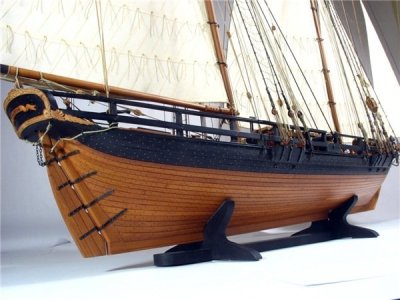
I have seen photos of finished VASAs that appear to have what look like visible bolt heads securing the hull planking. I'm going to have to do more research on this but I'm tending to agree with you.Just decorative.
View attachment 565084