• Win a Free Custom Engraved Brass Coin!!!
    As a way to introduce our brass coins to the community, we will raffle off a free coin during the month of August. Follow link ABOVE for instructions for entering.
  • SUBSCRIBE TO SHIPS IN SCALE TODAY!

    The beloved Ships in Scale Magazine is back and charting a new course for 2026!
    Discover new skills, new techniques, and new inspirations in every issue.

    NOTE THAT OUR NEXT ISSUE WILL BE MARCH/APRIL 2026

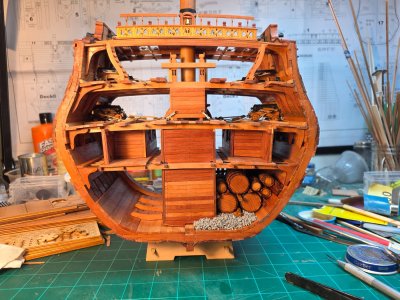
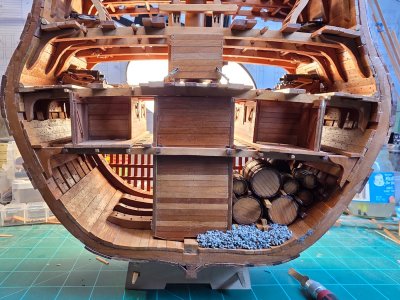
BONHOMME RICHARD, Cross Section

This really is a great looking model. Thumbsup Any thought to going an extra meter and add the racks and then rig a few hammocks to them? This is rarely done from what I have seen, but could be an interesting extra.
Allan
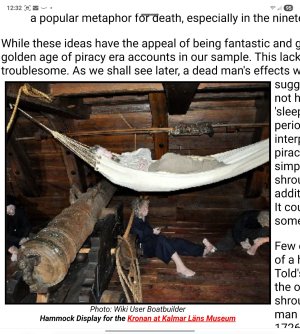
 
This really is a great looking model. Thumbsup Any thought to going an extra meter and add the racks and then rig a few hammocks to them? This is rarely done from what I have seen, but could be an interesting extra.
Allan
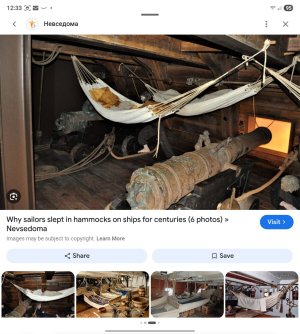
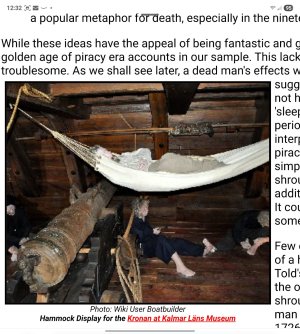
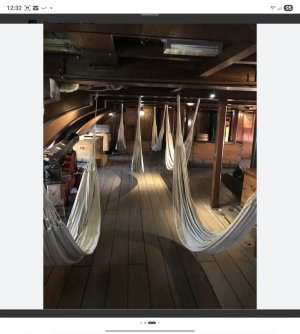
Interesting suggestion. Do you have any image / drawing of how the hammocks will be hanging on a ship of these time period. Will it be parallel to the cannons or perpendicular?

I found these ones online :

Screenshot_20260310_123210_Chrome.jpgScreenshot_20260310_123318_Google.jpgScreenshot_20260310_123210_Chrome.jpgScreenshot_20260310_123236_Google.jpg
 
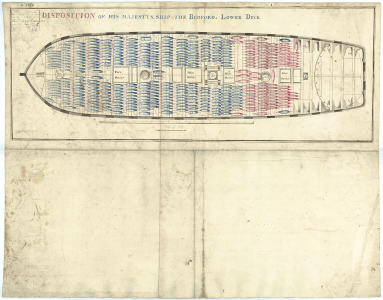
The images above say it all. Hooks or eyes were used until about mid 18th century, then racks were bolted to the beams and the bridles tied to the racks. In general the hammocks were not hung under hatchways for obvious reasons. If they were close to the edge and the seamen complained about getting a little wet at times they were issued tarps if I remember correctly. Brian Lavery goes into dimensions of the hammocks, types, etc in his book The Arming and Fitting English Ships of War. They may be different for other nations, but I suspect they would be similar if not exactly the same. There are a good number of drawings of the layouts on the RMG Collections website for various decks.
One example follows. Note the minimal space between hammocks.
Allan
1773162315645.png
 
Last edited:
The images above say it all. Hooks or eyes were used until about mid 18th century, then racks were bolted to the beams and the bridles tied to the racks. In general the hammocks were not hung under hatchways for obvious reasons. If they were close to the edge and the seamen complained about getting a little wet at times they were issued tarps if I remember correctly. Brian Lavery goes into dimensions of the hammocks, types, etc in his book The Arming and Fitting English Ships of War. They may be different for other nations, but I suspect they would be similar if not exactly the same. There are a good number of drawings of the layouts on the RMG Collections website for various decks.
One example follows. Note the minimal space between hammocks.
Allan
View attachment 583740

OK , you seeded the idea. Now, I am focused on building the partition fence. After that I will try to built a Hammock, if I succeed, the next issue will be how to hang it. Step by step.

Best
Daniel
 
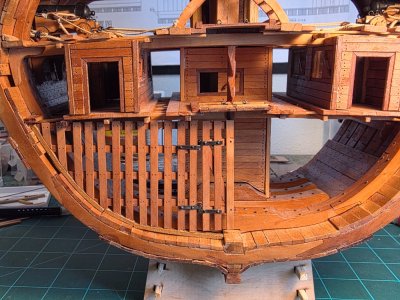
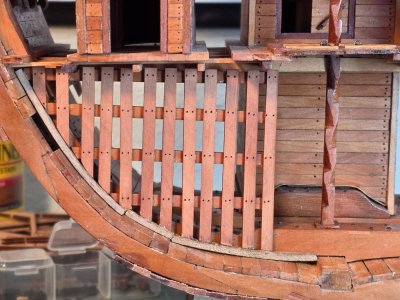
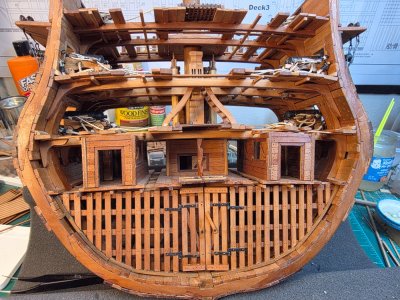
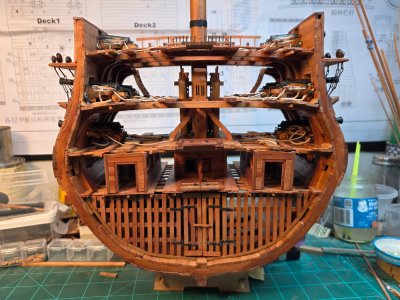
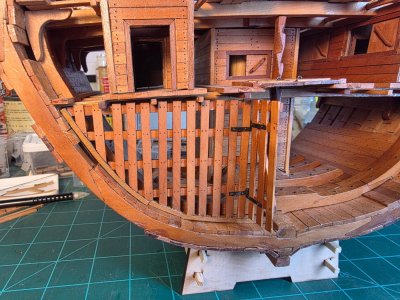
the partition fence
This is a new one for me. What is the purpose of the partition fence? I have only seen solid bulkheads so am wondering what the open slat construction provides. Do you know if this was French construction technique or American? I thought maybe it was part of the original merchant ship design when she was the Duc de Duras. Always something new, and happy for it :)
Thanks Daniel
Allan
 
This is a new one for me. What is the purpose of the partition fence? I have only seen solid bulkheads so am wondering what the open slat construction provides. Do you know if this was French construction technique or American? I thought maybe it was part of the original merchant ship design when she was the Duc de Duras. Always something new, and happy for it :)
Thanks Daniel
Allan
As I wrote, on my first posting of the fence built, the kit developer says that it isn't part of the original ship and is left to the modeler to add it or not.

Besides that, I am not the correct person to answer your question as I have never been interested in naval history. I just build the kits bases on my personal taste and complexity (challenge). But more if I like the final outcome of the kit.

I thought you realized about that when I didn't know how the hammocks where hanged... HAHAHA. :-)

Sorry....
Daniel
 
Good morning Daniel. I have said it before however it is worth repeating. I love the look and feel together with the style which you have achieved with this cross section. It's a real ship look vs a model and of course so much busy detail. Cheers Grant
 
Good morning Daniel. I have said it before however it is worth repeating. I love the look and feel together with the style which you have achieved with this cross section. It's a real ship look vs a model and of course so much busy detail. Cheers Grant
Thank you Grant !!! Appreciate it a lot !!

Guys, thank you very much for all the likes and comments!!!

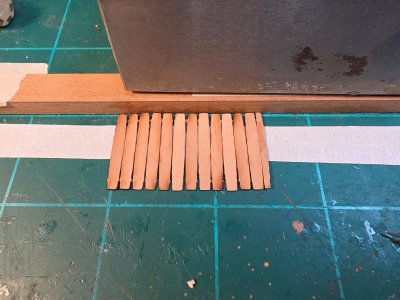
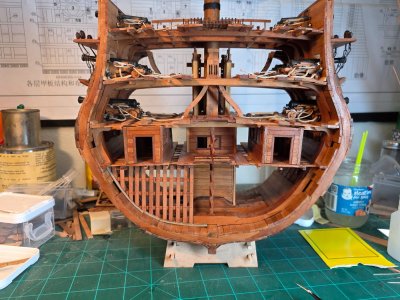
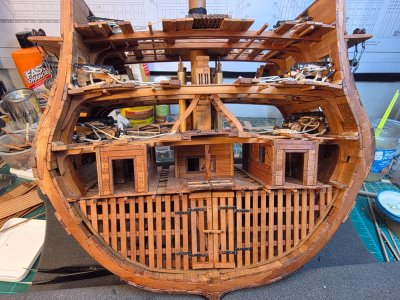
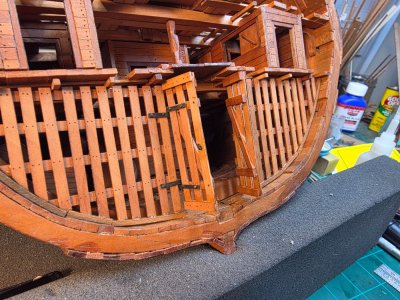
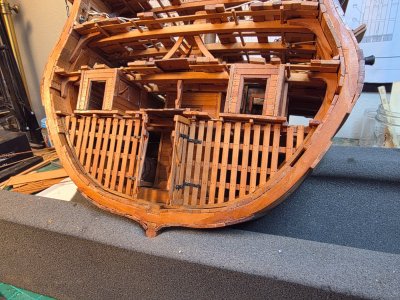
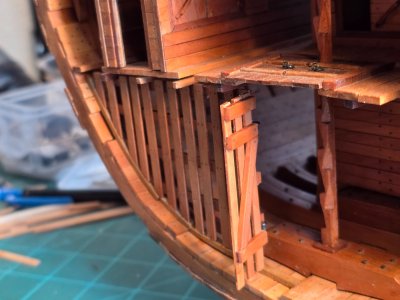
One side of the partition fence is finished. The door moves, as you can see on the images. I need to think how I will do the other side.

20260312_171004.jpg20260312_171033.jpg20260312_171056.jpg

Cheers
Daniel
 
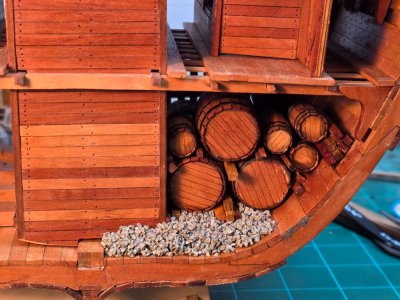
Ok, after some thoughts, my next steps will be Barrels building. I think that, for now, i better leave that side fully open, so i can work on the cargo and ballast. When that is finished, I will do a partial fence, as most of the modelers have done, to show that cargo section.

For Barrels building i will follow Signet built (@Signet ). His postings on this matter are very detailed. See link below.

Post in thread 'Signet's Bonhomme Richard Cross Section [COMPLETED BUILD]' https://shipsofscale.com/sosforums/...ross-section-completed-build.8920/post-220374

Best !
Daniel
 
Hi Guys

I started the barrels built following the methology developed by Signet (@Signet) as i stated above (see link on previous posting).

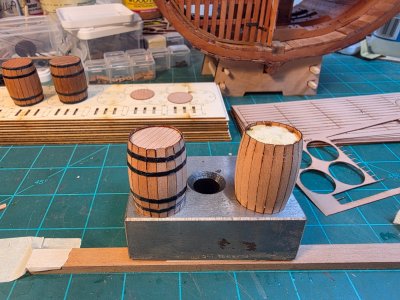
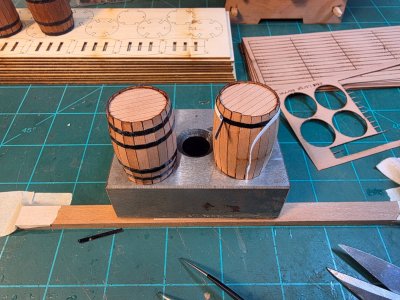
2 finished glued barrels. 1 with the iron rings around it.

20260314_172808.jpg

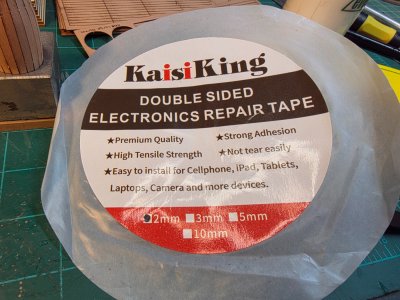
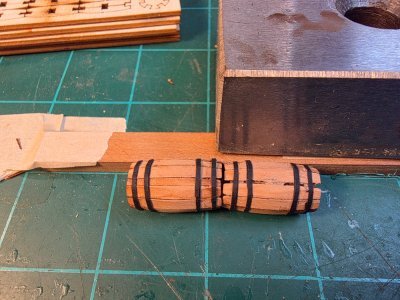
For the iron rings, i used this tape

20260314_172824.jpg
It is 2mm wide. It is a double tape VERY sticky and strong. Other tapes i tried didn't work. You will think that the use of this tape is messy, because it will glue to your fingers (is a double tape). But it isn't a problem. After you pass the oils/stain, all the glue is gone.

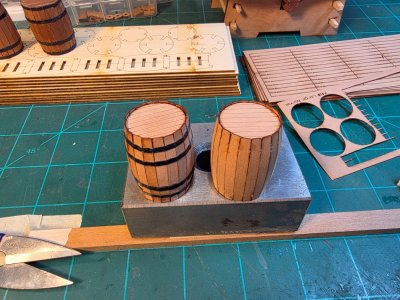
Before you put the tape, glue the Top and Bottom of the barrel. Dont use PVA. They will absorb the PVA water and will bend and that section isn't flat, has a border, so you can't add a weight to wait is dry flat. So just spread superglue and place that round section....Easy !!!

After I glued top and bottom barrel sections:

20260314_173041.jpg

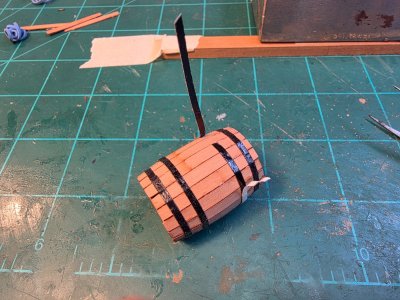
Back to the tape. On the following 2 images you can see how I placed it around the barrells.

20260314_174034.jpg
20260314_173408.jpg

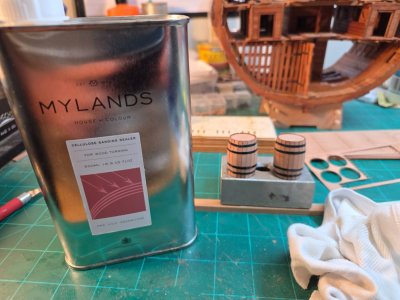
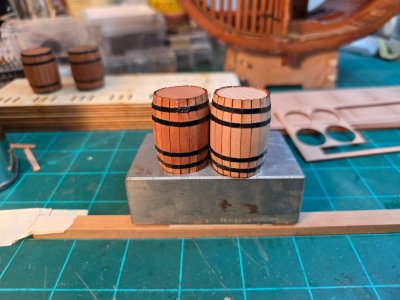
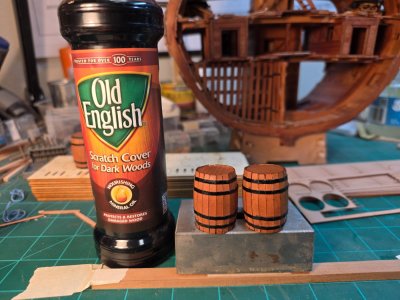
Then I added a coat of Mylands sealer. This pops up the wood color and seal it. After that I used Old English wood scratch repair to darken the barrels a little bit more.

20260314_174216.jpg

After the Mylands on 1 barrell
20260314_174641.jpg
20260314_175904.jpg
Old English was applied to both barrels. Now the tape have lost all his adhesive and will not stick to your fingers :-)

Below is like Signet did the barrells.

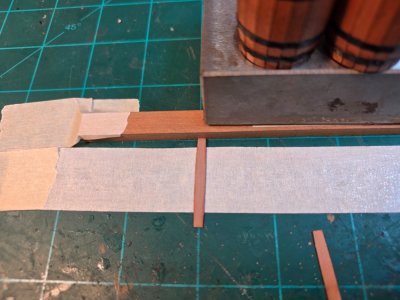
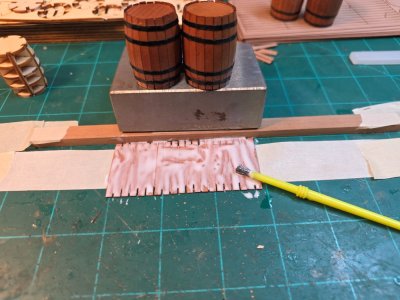
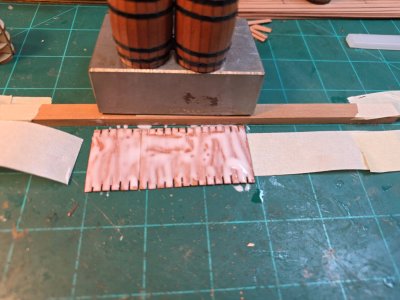
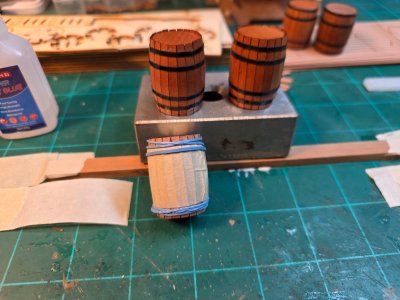
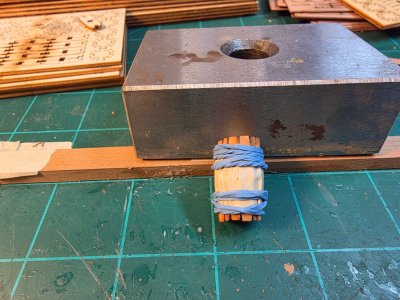
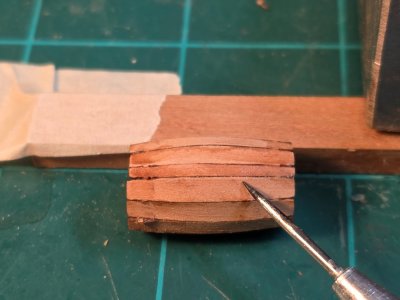
First I center one of the woods. Then I added 19 more (20 total). Spead glue all over them with a brush. Cut the tape "FLUSH" on one side. And placed all that around the barrel frames.

20260314_181200.jpg20260314_182853.jpg20260314_182918.jpg

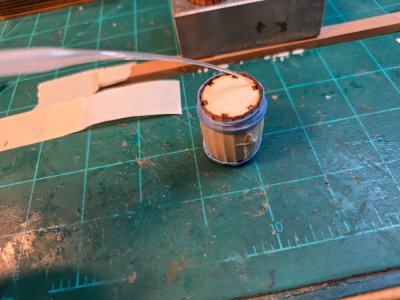
After the wrapping process, I added a line of supper glue all around the top and bottom internal borders. That creates a strong bond at those places.

20260314_183653.jpg

20260314_183721.jpg

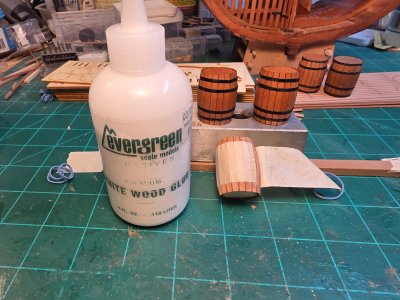
By the time I finished doing this posting the wood glue has already dried. It is a very fast drying glue. And started to take the tape.

17735296148398590792875099272033.jpg

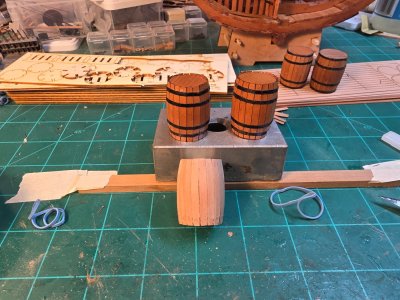
Final result after a soft sanding.

17735299766186298607691466040433.jpg

Cheers
Daniel
 
Back
Top