

• Win a Free Custom Engraved Brass Coin!!!
    As a way to introduce our brass coins to the community, we will raffle off a free coin during the month of August. Follow link ABOVE for instructions for entering.
  • PRE-ORDER SHIPS IN SCALE TODAY!

    The beloved Ships in Scale Magazine is back and charting a new course for 2026!
    Discover new skills, new techniques, and new inspirations in every issue.

    NOTE THAT OUR FIRST ISSUE WILL BE JAN/FEB 2026

36' Tugboat

Highly interesting form of the hull - very good work
Thank you for the kind words.

In his book "Simplified Boatbuilding: The V-bottom Boat", Harry Sucher presents this hull in the chapter entitled "Low Chine Model: The Chesapeake Bay Skipjack." He explains that this hull form developed in the Chesapeake region later than the Northern Skipjack (high chine model), which developed in the Long Island Sound area. The Chesapeake version is wider and shallower than the northern model. Howard Chapelle, in his foundational book "American Small Sailing Craft", says the V-bottomed boat appeared in the US in the second half of the 19th century and documents the rise of the northern skipjack.

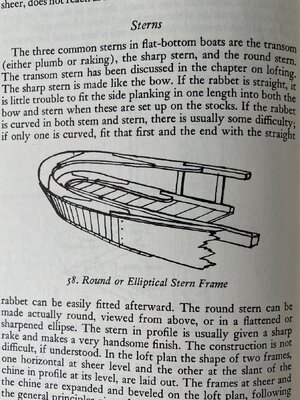
The fantail stern is, of course, very popular on tugboats as it avoids the chance of a hawser catching on the corner of a transom. In small craft, it is notable in the design of New Haven Sharpies. Sharpies were used for oystering and the curved stern was handy when using tongs, again avoiding interference with transom corners. Chapelle details the construction of this type of stern in "Boatbuilding: A Complete Handbook of Wooden Boat Construction" (picture below).


fantail.jpg
 
Back
Top