
• SUBSCRIBE TO SHIPS IN SCALE TODAY!

    The beloved Ships in Scale Magazine is back and charting a new course for 2026!
    Discover new skills, new techniques, and new inspirations in every issue.

    NOTE THAT OUR NEXT ISSUE WILL BE MARCH/APRIL 2026
  • Win a Free Custom Engraved Brass Coin!!!
    As a way to introduce our brass coins to the community, we will raffle off a free coin during the month of August. Follow link ABOVE for instructions for entering.

Amati Fifie Scottish Fishing Boat- RC

Joined
Dec 12, 2024
Messages
22
Points
48

Hello all, after completing my first practice build - the Occre Bounty Jolly Boat - I have embarked on the Amati Fifie. I couldn't resist the challenge of motorisation and thought it would be good practice for later planned builds on mahogany runabouts. This is my first serious build and so any advice or comments tips welcome. I hope some find it useful and informative. I've got to the stage of finishing the hull - but have held off from posting lest it all went wrong. However, I'm quite happy so far - so here goes...

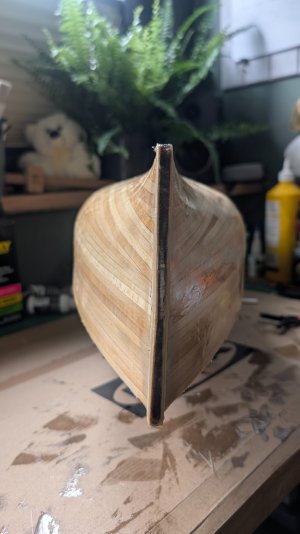
First was the glue up of the false keel and bulkheads and went smoothly - helped a lot by the keel clamp i managed to pick up used from eBay for £30. Planking, likewise didn't offer too many challenges using Everbuild D4 woodglue and pins. I didn't glue down the mdf sub deck at this point - as indicated in the instructions - rather i pinned to ensure the shape for planking but removed later for access to waterproof and fit running gear.
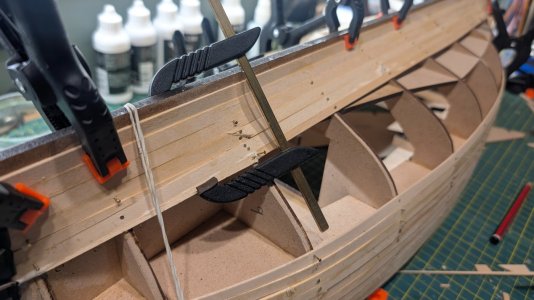
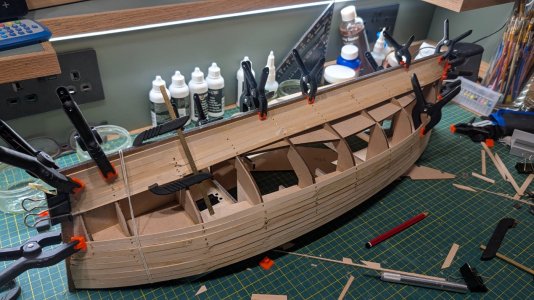
PXL_20260513_195107759.jpgPXL_20260513_195040546.jpg

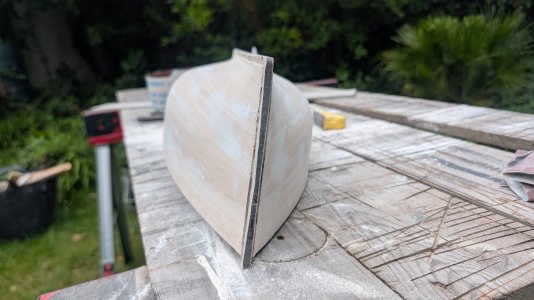
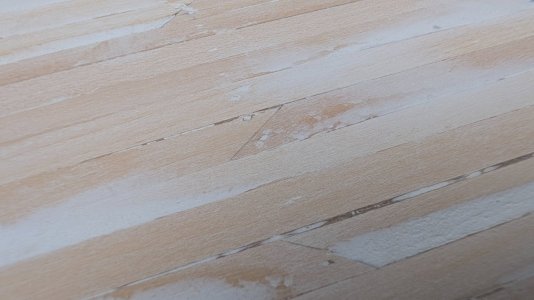
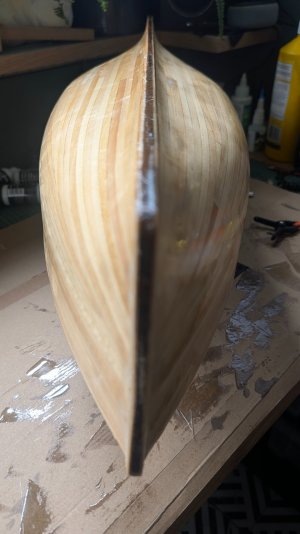
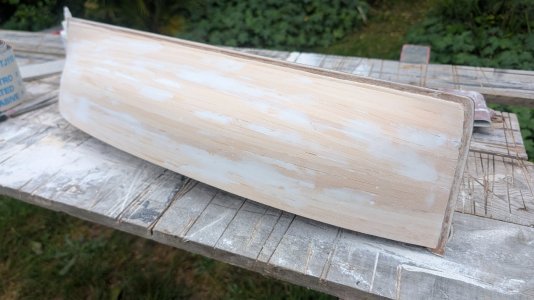
This was then all sanded and filled before sanding again - so far so good. Note the spliced planks as the supplied strips are 600mm for a 720mm (and more with curve) hull.PXL_20260517_161459269.jpgPXL_20260517_161506473.jpgPXL_20260517_161522081.jpg
 
Last edited:
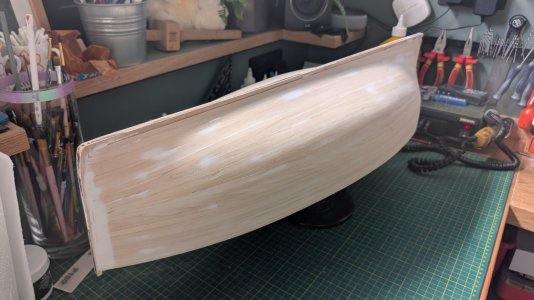
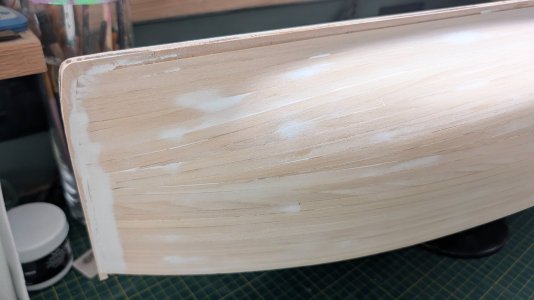
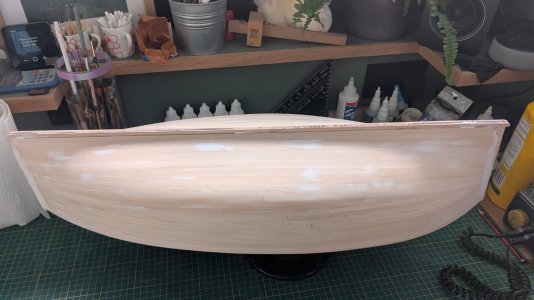
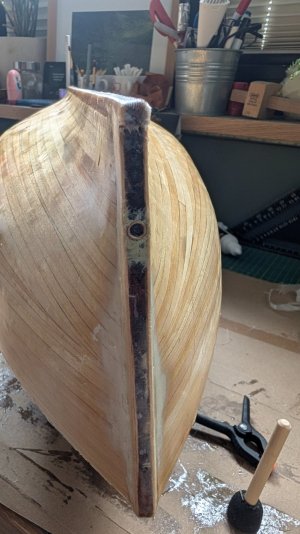
Next up I moved away from the kit slightly - the wood supplied for second planking is 6x1mm walnut, but after reading the experience of others on the difficulty of sanding such a hard wood - and the fact I intend to glass and fully pain the hull - I decided to swap this out and ordered 60 lengths of 6x1mm lime wood strips. This also means i have some nice walnut for future projects. Unfortunately this was lost in the dark recesses of a delivery depot so after 2 weeks delay and final delivery i started on the second planking using medium CA. Again, sanded, filled and sanded. The shape of the hull is nice and very satisfying.PXL_20260604_092037661.jpgPXL_20260604_092040454.jpgPXL_20260604_092047135.jpg
 
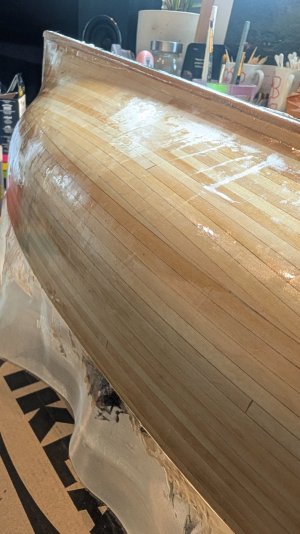
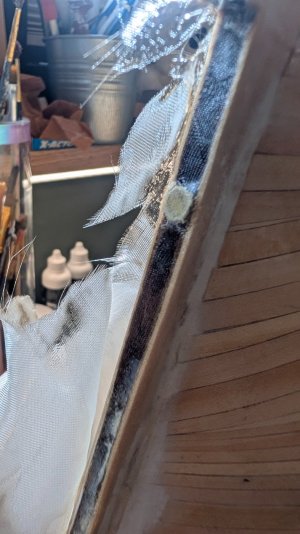
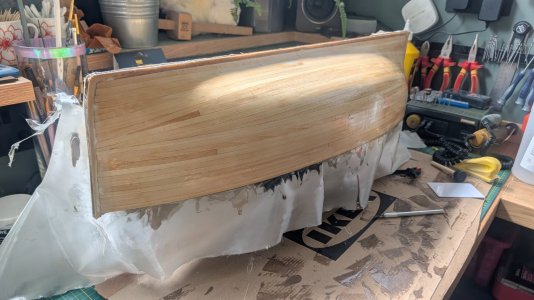
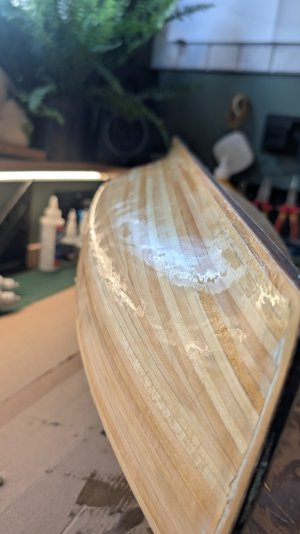
Next up (and what I don't mind admitting i was rather apprehensive about) a coat of ZPozy pt40 finishing resin and 0.003mm fiberglass cloth. I first wiped down the hull with isopropyl alcohol and cut the cloth sheet before covering with a thin layer of mixed epoxy. This was left for an hour or so to go tacky before the cloth was draped over. As i was a bit over ambitious and though i could do both sides in one sheet draped over the hull this inevitable ended up in a stocky mess! No bother, quickly removed and a smaller sheet added one one side covered in fresh epoxy and smoothed out with plastic card - not nearly as hard as it looks i am glad to say!

PXL_20260604_134403695.jpgPXL_20260604_135744087.jpgPXL_20260605_095806037.jpg
 
Last edited:
I realise i have forgotten to post on running gear and stuffing box - will update on this next
 
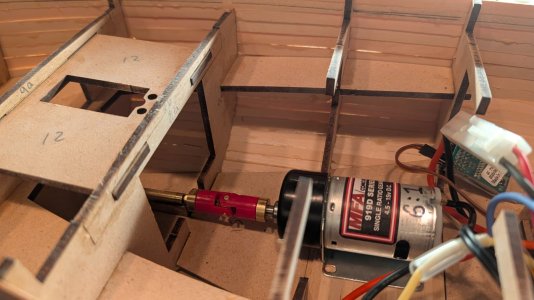
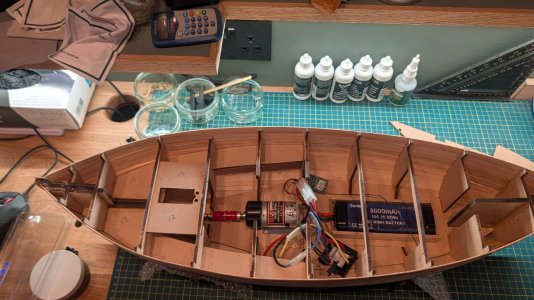
So, on running gear. The plans and instructions offer little help although the kit is designed for RC conversion. The plans show a raised motor with axle and gearbox facing the bow. This results in a longer stuffing box and all looked a bit odd to me (not least where to source such a gear box. Measuring the plans I opted for a 7 inch propellor shaft and 540 motor with 6/1 gearbox from MFA. This seems to fit well and keep all aligned with adding some 1.5mm strips. It should hopefully run at scale speed with a 7.2v Nimh battery. I dry fitted to ensure all was ok and secured the stuffing box with 2 part Gorilla epoxy glue. I also installed a bespoke battery tray.
PXL_20260517_221722816.jpgPXL_20260517_222145343.jpg
 
Epoxy dried and cloth trimmed. A small amount of Milliput epoxy modelling clay was used to fill around the stuffing box at keel before filling with grease and masking before epoxy applied. PXL_20260604_134356690.jpgPXL_20260604_153753558.jpgPXL_20260605_113111893.jpgPXL_20260605_113216614.jpgPXL_20260605_113322392.jpg
 
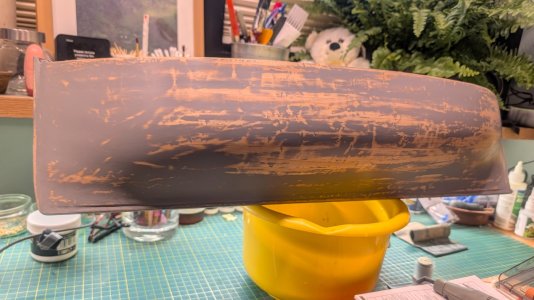
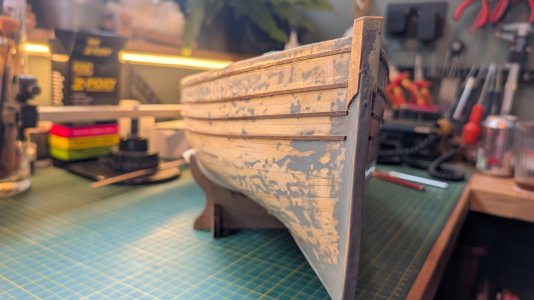
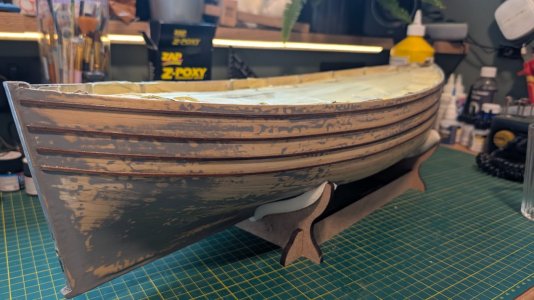
After 48 hours the epoxy was sanded back to touch smooth before a complete covering of Simonix high build acrylic primer. This was then wet sanded to remove any bumps and drips from the epoxy.
PXL_20260607_195600967.jpg
 
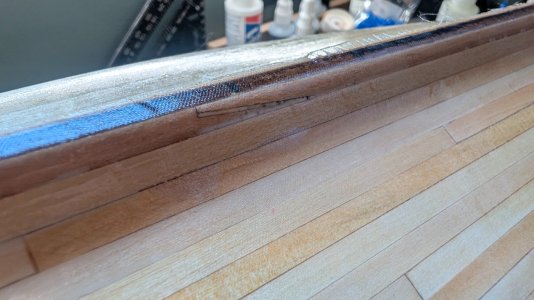
When i was happy with the finish the rubbing strakes and bow detail were added. These were glued with thick CA before a coating of thinned epoxy to seal to the underlying hull.PXL_20260610_160518160.jpgPXL_20260610_160523552.jpgPXL_20260610_160646359.jpgPXL_20260610_160653858.jpgPXL_20260610_163236033.jpg
 
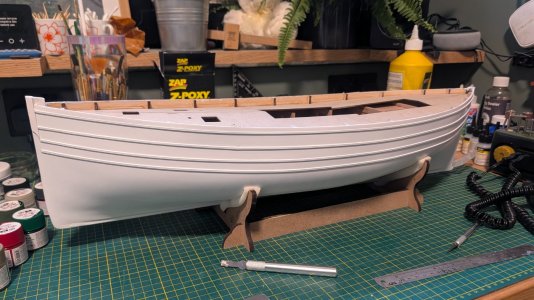
A final rub down and a coat of Tamiya fine white primer. When dry any small gaps between rubbing strakes and hull were filled using thick CA and a needle applicator. PXL_20260611_183400533.jpg
 
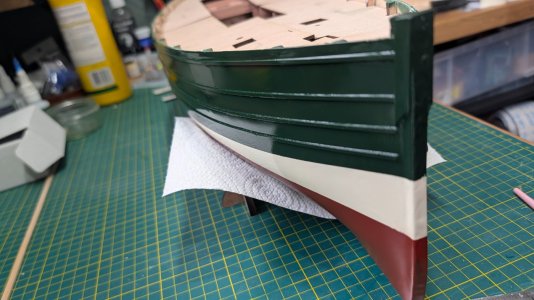
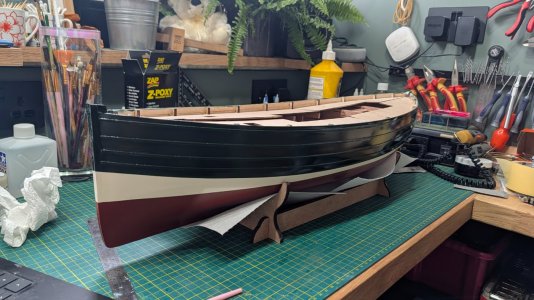
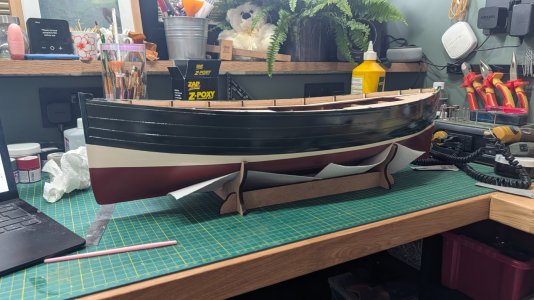
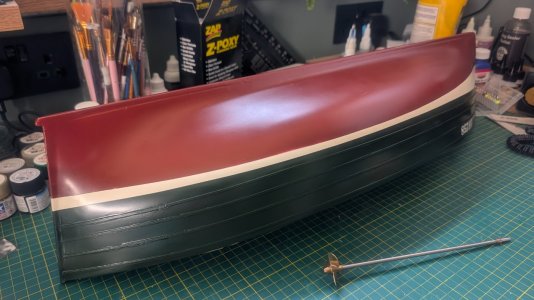
Then for some colour! I chose a standard dull red for the anti-fouling and an off white Racing White for the bot strip. I had originally planned on Tayima NATO green for the top side but this looked too muddy and 'military' on testing (and we don't want another Dogger Bank incident). So I opted for British green and very happy with overall look.PXL_20260615_151447944.jpgPXL_20260615_151512001.jpgPXL_20260615_151515954.jpg
 
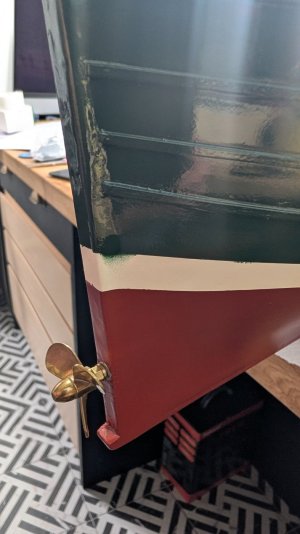
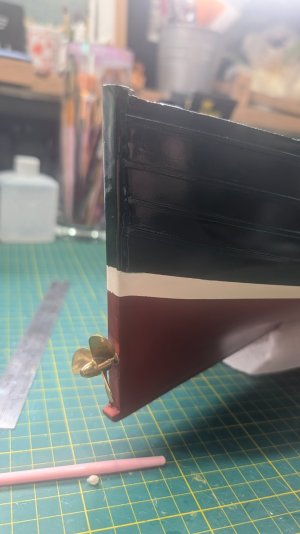
Some slight overspray but i managed to fix the worst of it with some isopropyl alcohol and a cotton budPXL_20260615_152932623.jpgPXL_20260615_154123034.jpg
 
Last edited:
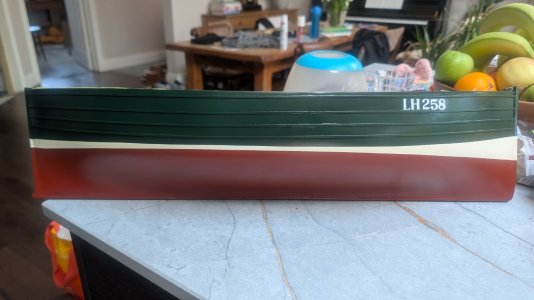
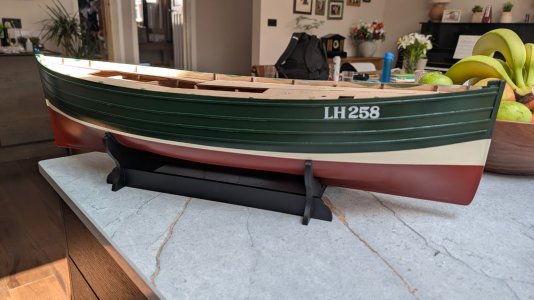
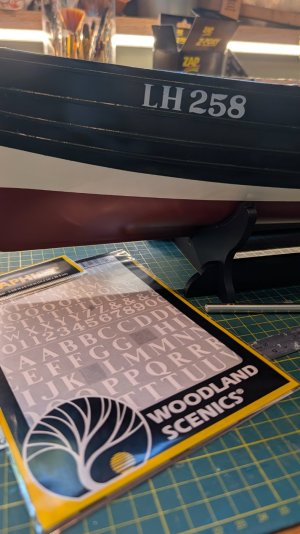
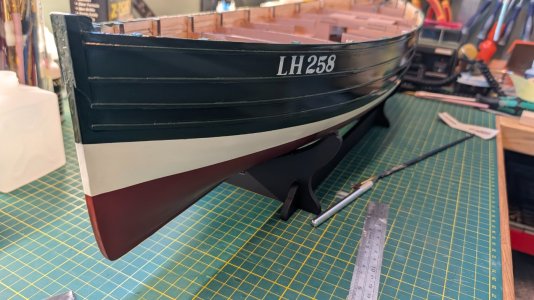
For a touch of historical realism she needed a home port and ID number. I chose LH for Leith as it's the Scottish port i know best having lived in Edinburgh for 5 years and 258 as a sneaky reminder on the shelf to not forget my wedding anniversary (25th August). I used the dry application transfers from Woodland Scenics as these are solvent resistant and will not react to my planned top coat...PXL_20260617_122951349.jpgPXL_20260617_122624797.jpg
 
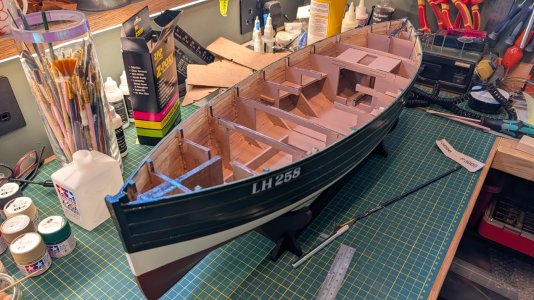
after the resin coat was applied i also painted internally with a thinned coat of resin covered when dry with semi-gloss wood paint left over from the back door. Top was left to allow for adhesion of strips above the deck. PXL_20260617_122636390.jpg
 
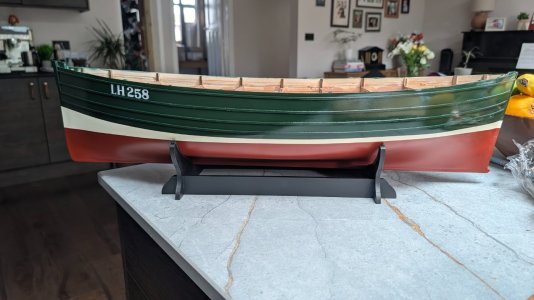
As the green and white was only available in full gloss and in order to seal the decals I sprayed hull with Tamiya semi-gloss. Pictures below show before and after PXL_20260617_170029415.jpgPXL_20260619_103122966.jpgPXL_20260619_103258292.jpg
 
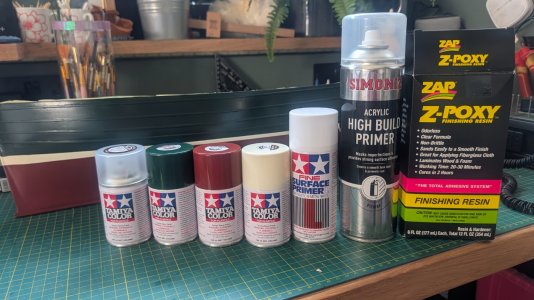
Some of the products used so far in order of application right to left

PXL_20260619_105502267.jpg
 
Last edited:
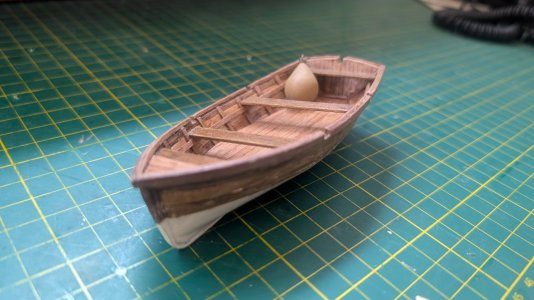
During the wait for materials i also built the dinghy and completed some of the net floats. These were created by adding Milliput to the supplied wooden balls and then painted with Tamiya yellow-brown to replicate the canvas floats of the period (c.1910)PXL_20260619_111005395.jpg
 
So that's progress so far. Next steps are to fit the propellor and running gear and conduct some sea trials in the bath. If she passes it will be on to gluing down the deck.

View attachment 613240
Nice job! But just as reminder: MDF is NOT waterproof. I think you ought to seal the interior of the hull with a few coats epoxy resin before getting her wet. Or better still, remove the entire MDF structure and glass the hull interior as the outside, but without making fuss about a few resin drips there.
 
Nice job! But just as reminder: MDF is NOT waterproof. I think you ought to seal the interior of the hull with a few coats epoxy resin before getting her wet. Or better still, remove the entire MDF structure and glass the hull interior as the outside, but without making fuss about a few resin drips there.
Thanks! I've really enjoyed the process so far. Rest assured I have coated the inside with 2 coats of epoxy and painted - see post above with interior showing pinkish paint.
 
Back
Top