Hi, John. Here I found one of the threads/discussions
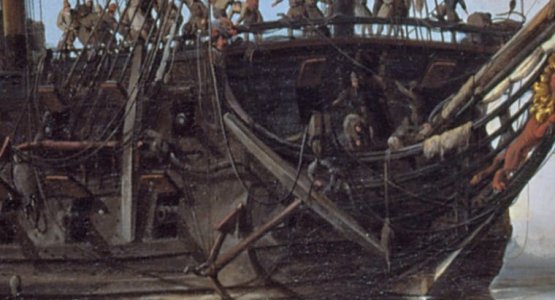
Can someone point me at an explanation of how the cathead and rigging was used in raising and lowering the anchor. When and how the cathead rigging hook was attached/unattached to the anchor puzzles me.
shipsofscale.com
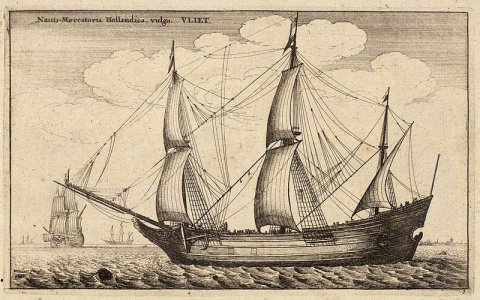
On 16th-century Dutch merchant vessels (such as early koffs, fluyts precursors, ketch-rigged traders, or buys), securing a heavy, wooden-stocked bower anchor was a crucial multi-step process called catting and fishing.
Because these merchant ships had full, round bows to maximize cargo capacity, improper stowage risked hull damage or the anchor shifting in heavy seas.
Because these merchant ships had full, round bows to maximize cargo capacity, improper stowage risk damaging the hull or having the anchor shift in heavy seas. Step-by-Step Securing Process
1. Heaving to the Hawse Hole: Using the main windlass. The heavy hemp anchor cable is hauled in using the forecastle windlass or capstan. The anchor is pulled up through the water until the heavy iron ring reaches the hawse hole at the bow stem.
2. Catting the

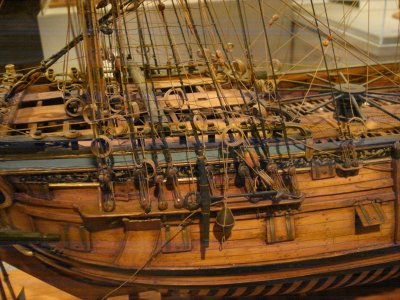
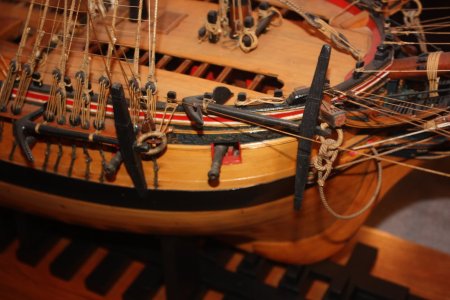
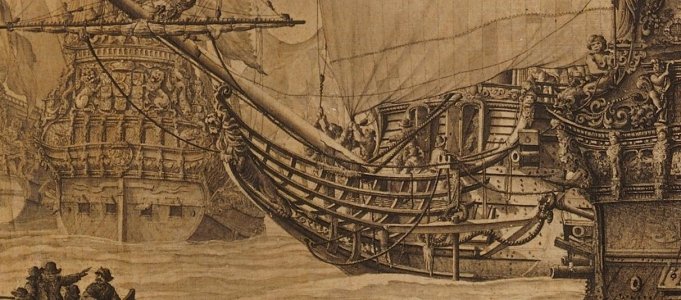
: Lifting the ring to the cathead. To prevent the metal ring and stock from smashing into the wooden hull, a heavy block-and-tackle (the cat-tackle) suspended from the cathead—a thick timber projection extending outwards over the bow—is hooked into the anchor ring. The crew hauls the cat-tackle to hoist the ring up to the cathead beam and secures it with a heavy rope known as the cat stopper.
3. Fishing the
: Lifting the heavy flukes. With the ring suspended at the cathead, the lower arm and flukes hang awkwardly down near the waterline. The crew rig a fish-davit (a portable or swinging wooden spar) or a heavy tackle hung from the foremast shrouds. A large hook is attached to the arm near the crown, and the crew hoists the flukes up to deck level.
4. Lashing and Stowing: Securing for sea transit. The anchor shank is brought parallel along the hull/fore-channels. A short rope or chain called the shank-painter is passed around the shank and flukes and bound tightly to timberheads or eyebolts on the rail. The wooden stock rests vertically or slightly tilted against the bow, clear of the water.
Key Components of 16th-Century Dutch
Stowage
| Component | Function |
| Cathead (Kattenkop) | A heavy oak timber projecting from the bow to hold the anchor suspended clear of the wooden hull. |
| Wooden Stocked | The classic Admiralty-style anchor made of wrought iron with a large two-piece oak cross-stock held together with iron hoops. |
| Shank-Painter | The primary lashing rope securing the flukes and shank tightly against the hull channels during passage. |
| Hawse Plug | A fitted wooden or canvas plug inserted into the hawse hole once the cable is secured to prevent seawater from flooding the anchor deck. |
| Buoy | A small wooden barrel tethered to the anchor crown that floats on the surface to mark its position on the seabed. |