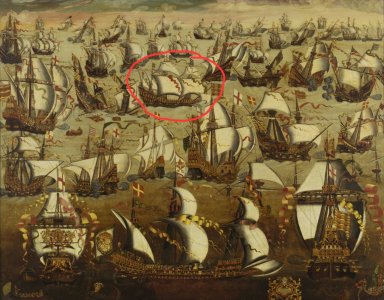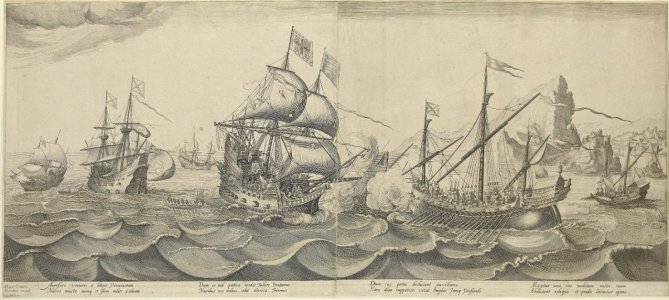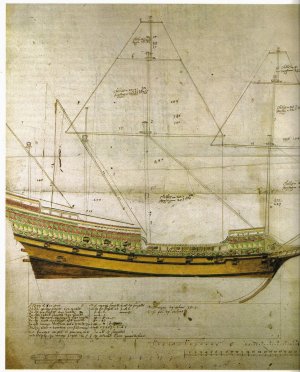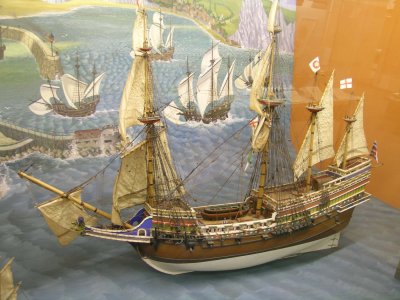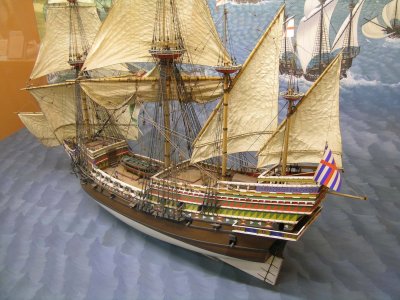



Galleons existed first in the Northern European navies, then in Spain. English Galleons differed somewhat from those of Spain. At the time of the Golden Hind/Pelican, the English tended to avoid any situation in which Spanish soldiers were allowed or enabled to board, and soon developed stand off techniques that focused on long-range gunnery, later developing the race-built Galleons that relied on speed as well. To me, it is important to consider that each Navy that operated Galleons emphasized different qualities from each other depending on tactical thinking at the respective times.Good day,
You are right about easy and rapid access to the fore and aftercastles from main deck, this could be suggested from modern point of vew I could guess))
But absence of such ladders on the contemporary galleon pictures could be explained by contrary purpose - to make this eccess as much difficult as posible for enemy boarding team, which was very common tactics in that time of XVI th for Spanish Navy especially, to board enemy vessel after one broad artillery shot and to attempt amborcation enemy vessel and continue fighting on board to get it as prize...
In my signature there is a link to museum site with plenty galleon pictures of Dutch, Spanish and other origins... no these kind of ladders could be seen
From other point of vew, to have such details as ledders on the ship model make it more attractive for vewing...I ve heard that Mayflower II galleon replica had even steering wheel installed instead of whipstaff and ladders as well , during her cross atlantic voyage...so what...
My source is a book by the German author and historian Peter Kirsch called The Galleon: The Great Ships of the Armada Era.