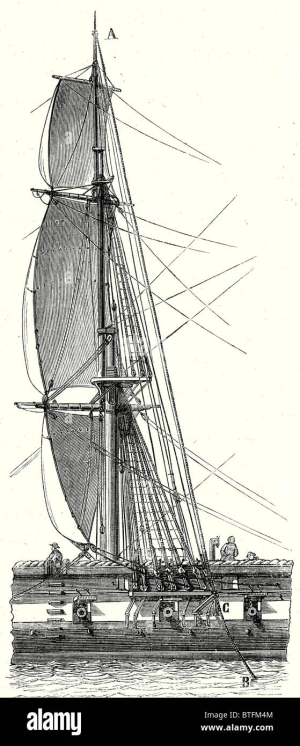
I'm looking for detail model shots of lightning rod(s) on a square rigger. The English navy officially adopted them in the 1840's so I've read, the Beagle had a lightning rod, and a number of ships well before 1840 had them, though I didn't find a start date but it's close enough for my 'could've been' ship. The rod has been described as a copper cable line from the top of the mainmast following the mast to the hull then to a metal plate to the outside of the hull. I've also seen a drawing of the line parallel to a back stay to the chain plates to the hull. Anybody model this or some other method?
Hellow Farmboy,
The idea of using lightning rods on ships began after the publication in 1752 of Benjamin Franklin's experiments with kites during storms. Accidents caused by lightning on ships were quite frequent, resulting in fires, deaths, and sinkings. Over the following years, the first lightning rods were gradually installed on board European ships.
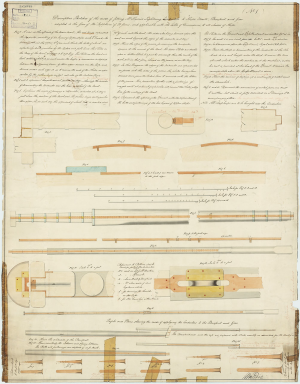
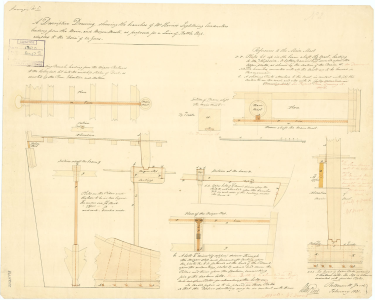
I can't say specifically about the Royal British Navy, but based on my research in French naval museums, and especially in the book "Musée de la Marine - Modèles Historiques - Collection Archéologie Navale Française" by Jean Boudriot, lightning rods were already being used in the French Navy by at least 1780, when one was installed on the barge "La Boussole", as evidenced by the fragments recovered and exhibited at the Musée de Marine in Paris. The model I built of the frigate "L'Unité" - 1:48, 1794 (full version available here on S.O.S.), also used lightning rods, as did the French frigate "La Flore", from 1804, which is featured in Jean Boudriot's book, with photos of the original model on display at the Museum in Paris.
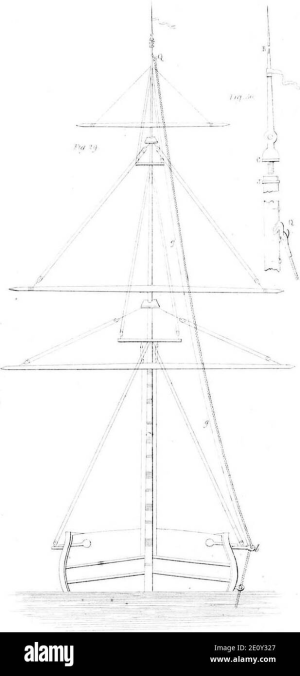
The installation of lightning rods was done from the top of the main mast, with the placement of a copper piece called a "finial", connected to two copper chains that ran down each side, and were attached to solid copper anodes grounded to the hull's metal plates at the waterline. The system efficiently ensured the dispersion of electrical energy from lightning into the sea, and also helped to continuously discharge static electricity present in the masts and yards.
I hope this information is helpful, I'm at your disposal.










 .
.