
-

SUBSCRIBE TO SHIPS IN SCALE TODAY!
The beloved Ships in Scale Magazine is back and charting a new course for 2026!
Discover new skills, new techniques, and new inspirations in every issue.
NOTE THAT OUR NEXT ISSUE WILL BE July/August 2026 -

Win a Free Custom Engraved Brass Coin!!!
As a way to introduce our brass coins to the community, we will raffle off a free coin during the month of August. Follow link ABOVE for instructions for entering.


You are using an out of date browser. It may not display this or other websites correctly.
You should upgrade or use an alternative browser.
You should upgrade or use an alternative browser.
- Joined
- Oct 2, 2025
- Messages
- 590
- Points
- 198

Nautical museums in Spain may have resources that are not widely known outside Spain.
In the English speaking world -
If I were to contemplate your project, I would approach it with the following understanding:
Ships built in the 16thC. did not use plans that were the three plane oriented lines drawings that we are familiar with.
Any commercial plans are not real. They are all a modern designer's best guess about the shape and look of the ships. Some may be based on the current information at the time the plans were drawn. Some may be pure fantasy B.S.
The best chance for something reasonable is a personal reconstruction.
The book for that:
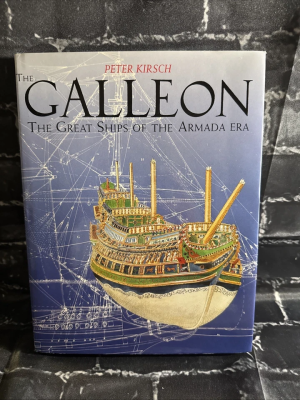
The Galleon: Great Ships of The Armada Era (Conway's History of Sail) by Kirsch, P.
The cost for some of the used copies looks reasonable.
It is more English than Spanish - but the English shipwrights of the time were not shy about stealing ideas and designs from whomever and wherever.
Google came up with this:
Presentation
Anatomy of a 16th-century Spanish galleon: The evolution of the hull design
January 2017
Conference: 2017 SHA Conference At: Fort Worth, TX
Authors: Jose Luis Casaban . KU Leuven
https://www.researchgate.net/public...nish_galleon_The_evolution_of_the_hull_design
In the English speaking world -
If I were to contemplate your project, I would approach it with the following understanding:
Ships built in the 16thC. did not use plans that were the three plane oriented lines drawings that we are familiar with.
Any commercial plans are not real. They are all a modern designer's best guess about the shape and look of the ships. Some may be based on the current information at the time the plans were drawn. Some may be pure fantasy B.S.
The best chance for something reasonable is a personal reconstruction.
The book for that:
The Galleon: Great Ships of The Armada Era (Conway's History of Sail) by Kirsch, P.
The cost for some of the used copies looks reasonable.
It is more English than Spanish - but the English shipwrights of the time were not shy about stealing ideas and designs from whomever and wherever.
Google came up with this:
Presentation
Anatomy of a 16th-century Spanish galleon: The evolution of the hull design
January 2017
Conference: 2017 SHA Conference At: Fort Worth, TX
Authors: Jose Luis Casaban . KU Leuven
https://www.researchgate.net/public...nish_galleon_The_evolution_of_the_hull_design
- Joined
- Jun 11, 2026
- Messages
- 70
- Points
- 78

Nobody alive today knows for sure what a complete 16th century Spanish galleon looks like. These vessels were not built using drawn plans, a technology which only began to come into use in the later part of the 17th century. There are a few contemporary paintings of 16th century Spanish galleons, but their historical accuracy is uncertain, being dependent upon the accuracy of the artist's renderings which are often somewhat fanciful. A Google images search will turn up many "galleon" artworks, but care must be taken to rely upon those which are contemporary, which is to say presumably painted from "life" at the time the subject vessel actually existed. There are many fanciful, romanticized artists' impressions of "galleons" done in later centuries that are useless as reliable historical records.
Critically, there are probably very, very few, if any, accurate contemporary artists' renderings of the hull shapes of 16th century vessels, as the artists were much more inclined to portray their subjects afloat, rather than hauled out of the water. At the time, scientific methods of accurately describing three-dimensional irregularly curved hull shapes were not in widespread use.
Also, the term "galleon" was rather generic. Are you interested in a galleon warship or a galleon merchant ship, or a hybrid "armed merchantman?" Additionally, most of the major maritime powers in the period had their somewhat unique versions of the "galleon." The English galleons were also quite well represented at the time. Then there are "galleons" and there are "galleons." Galleons were much smaller in earlier times, for example, Francis Drake's Golden Hind has been described as a "galleon," but we have no images of her at all. On the other hand, the famous Spanish Manilla treasure "galleons" were some of the largest ships in the world in their day. Some "galleons" were plainly built undecorated cargo ships, while others, often warships, bristled with cannon and were encrusted from one end to the other with exquisite gold-leafed carvings, all in spectacular demonstrations of national pride and prestige. You'll have to decide which type of "galleon" interests you.
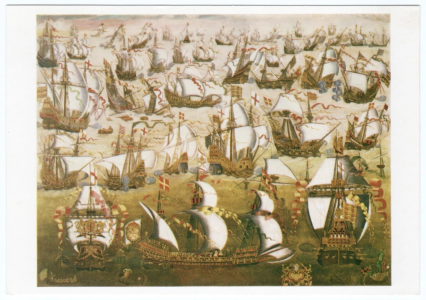
Defeat of the Spanish Armada (1588), Artist unknown, possibly contemporary, Royal Museum, Greenwich, England:
Archaeological surveys in the Spanish‑speaking Americas have identified many shipwrecks from the late 15th and early 16th centuries, but no complete excavation of a 15th century galleon has been published. Most early wrecks in the Gulf of Mexico, Caribbean, and Pacific are either unexplored, only partially surveyed, or remain under legal disputes over ownership. The Spanish Ministry of Culture’s “Spanish Galleons Overseas” program focuses on these sites, but its work is largely in mapping, documentation, and research, not full excavation. Without a thorough excavation of a sufficiently intact 15th century vessel's hull, we have no reliable historical record of the actual construction details of any particular vessel of that period.
There have been many plans drawn for the construction of models of 16th century "galleons." There was a time in the late 1800's and early 1900's when "galleons" were something of a romantic fad and many sought to create "galleon" models of their own. "Galleon-looking" fantasy models were also commercially manufactured and sold as decorator items and these often turn up even now in antique stores. They cannot be considered historically correct records, but rather only the modeler's impression of what they thought a galleon might look like. Some of these models had the benefit of knowledgeable modelers who spent considerable time researching the sparse historical record in making their projections, while other modelers produced crude fantasy models which bore little, if any, reliable historically accurate resemblance to the prototypes.
We do know most all the "galleons" of any type were carvel planked and we have an excellent understanding of carvel planking. There aren't, however, any such things as "blueprints" for carvel planking. The plans for carvel planked vessels (called the ship's "lines" drawings,) where they exist at all, having not been "invented" until the later part of the 17th century, are drawn "to the inside" or the "outside of the planking," as indicated on the drawings. The spacing and dimensions of carvel planking are calculated based on the framing structure of the vessel as built. Each plank must be spiled (shaped to fit) and hung independently of the others. As noted, neither do we have any reliable historical record of the exact methods of framing for these vessels, as they were "built by eye."
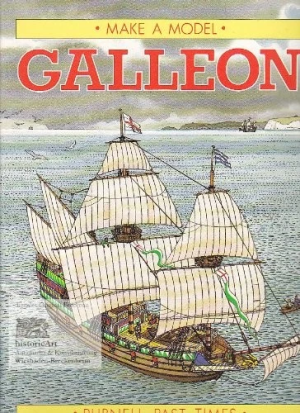
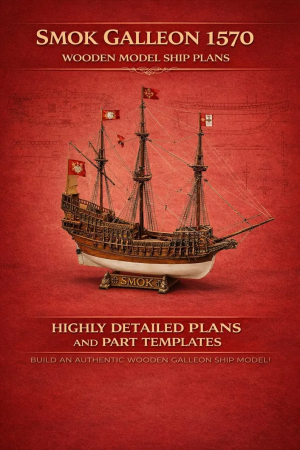
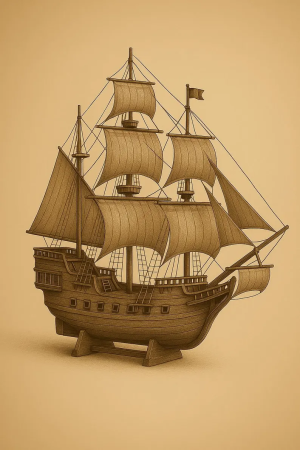
Particularly during the "galleon fad" period, there were a lot of modeling plans published for scratch-building what their designers thought looked like "galleons." As accurate scale models of any given vessel, they are of no practical use whatsoever, but some do look quite impressive, at least to those who don't know otherwise. You can use Google "images" to find available galleon modeling plans which are sold by online retailers. You can also purchase a number of old used ship modeling books that contain detailed instructions and plans for building galleon models. These old books are quite helpful to the beginning modeler as they were written at a time before manufacturers began manufacturing the highly prefabricated ship model kits commonly seen today.
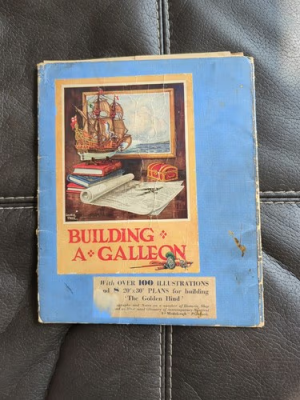
 www.abebooks.com
117008005
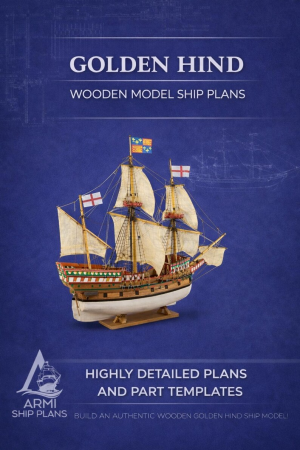
I can't warrant the quality of any of the above books, but I've posted them to give you an idea of what's out there in terms of plans and ship modeling books. Good luck with your project. Let me caution you not to bite off more than you can chew. Ship modeling can be a very demanding exercise. It's best to start slow and work your way up.
The last galleon model I built was about forty years ago now. My daughter had to build a galleon for a school project. I built a very rough hull frame with a keel and bulkheads. I then attached a wire mesh (window screen) "skin" on that and then applied cheese cloth and plaster of Paris strips to build a hull out of the same stuff the doctors used to use to make casts when you broke your arm. I sanded this fair when it dried. Painted it brown. The spars were just straight dowels. Rigging was cheap twine. Sails were cut from scrap cloth from a bedsheet. Flags the same and painted with acrylic craft paint. The details, such as they were, were made from craft sticks (popsicle sticks,) toothpicks, construction paper and poster board. Everything was assembled with a hot-melt glue gun. The hull took about an hour on one day and, after it dried, the rest of the model took about four or five hours to complete the next day. The finished model was about 4 feet long. She won first prize in the school "project contest" and the model was placed on permanent display in the school library.
Try to keep it simple. Let it be a kid's first effort. You both have the rest of your lives to build ever-increasingly complex ship models after you're done with this one. Keep it fun. Enjoy yourselves!
Critically, there are probably very, very few, if any, accurate contemporary artists' renderings of the hull shapes of 16th century vessels, as the artists were much more inclined to portray their subjects afloat, rather than hauled out of the water. At the time, scientific methods of accurately describing three-dimensional irregularly curved hull shapes were not in widespread use.
Also, the term "galleon" was rather generic. Are you interested in a galleon warship or a galleon merchant ship, or a hybrid "armed merchantman?" Additionally, most of the major maritime powers in the period had their somewhat unique versions of the "galleon." The English galleons were also quite well represented at the time. Then there are "galleons" and there are "galleons." Galleons were much smaller in earlier times, for example, Francis Drake's Golden Hind has been described as a "galleon," but we have no images of her at all. On the other hand, the famous Spanish Manilla treasure "galleons" were some of the largest ships in the world in their day. Some "galleons" were plainly built undecorated cargo ships, while others, often warships, bristled with cannon and were encrusted from one end to the other with exquisite gold-leafed carvings, all in spectacular demonstrations of national pride and prestige. You'll have to decide which type of "galleon" interests you.
Defeat of the Spanish Armada (1588), Artist unknown, possibly contemporary, Royal Museum, Greenwich, England:
Archaeological surveys in the Spanish‑speaking Americas have identified many shipwrecks from the late 15th and early 16th centuries, but no complete excavation of a 15th century galleon has been published. Most early wrecks in the Gulf of Mexico, Caribbean, and Pacific are either unexplored, only partially surveyed, or remain under legal disputes over ownership. The Spanish Ministry of Culture’s “Spanish Galleons Overseas” program focuses on these sites, but its work is largely in mapping, documentation, and research, not full excavation. Without a thorough excavation of a sufficiently intact 15th century vessel's hull, we have no reliable historical record of the actual construction details of any particular vessel of that period.
There have been many plans drawn for the construction of models of 16th century "galleons." There was a time in the late 1800's and early 1900's when "galleons" were something of a romantic fad and many sought to create "galleon" models of their own. "Galleon-looking" fantasy models were also commercially manufactured and sold as decorator items and these often turn up even now in antique stores. They cannot be considered historically correct records, but rather only the modeler's impression of what they thought a galleon might look like. Some of these models had the benefit of knowledgeable modelers who spent considerable time researching the sparse historical record in making their projections, while other modelers produced crude fantasy models which bore little, if any, reliable historically accurate resemblance to the prototypes.
We do know most all the "galleons" of any type were carvel planked and we have an excellent understanding of carvel planking. There aren't, however, any such things as "blueprints" for carvel planking. The plans for carvel planked vessels (called the ship's "lines" drawings,) where they exist at all, having not been "invented" until the later part of the 17th century, are drawn "to the inside" or the "outside of the planking," as indicated on the drawings. The spacing and dimensions of carvel planking are calculated based on the framing structure of the vessel as built. Each plank must be spiled (shaped to fit) and hung independently of the others. As noted, neither do we have any reliable historical record of the exact methods of framing for these vessels, as they were "built by eye."
Particularly during the "galleon fad" period, there were a lot of modeling plans published for scratch-building what their designers thought looked like "galleons." As accurate scale models of any given vessel, they are of no practical use whatsoever, but some do look quite impressive, at least to those who don't know otherwise. You can use Google "images" to find available galleon modeling plans which are sold by online retailers. You can also purchase a number of old used ship modeling books that contain detailed instructions and plans for building galleon models. These old books are quite helpful to the beginning modeler as they were written at a time before manufacturers began manufacturing the highly prefabricated ship model kits commonly seen today.
Building A Galleon Over 100 Illustrations And Plans For Building The Golden Hind | The Bookish Stitch
Extras as photographed as welllThis fantastic book, "Building A Galleon", is a must-have for any collector or enthusiast of ephemera. With over 100 illustrations and plans, it offers a detailed guide on how to build the famous Golden Hind, a ship that played an important role in British history...
117008005
I can't warrant the quality of any of the above books, but I've posted them to give you an idea of what's out there in terms of plans and ship modeling books. Good luck with your project. Let me caution you not to bite off more than you can chew. Ship modeling can be a very demanding exercise. It's best to start slow and work your way up.
The last galleon model I built was about forty years ago now. My daughter had to build a galleon for a school project. I built a very rough hull frame with a keel and bulkheads. I then attached a wire mesh (window screen) "skin" on that and then applied cheese cloth and plaster of Paris strips to build a hull out of the same stuff the doctors used to use to make casts when you broke your arm. I sanded this fair when it dried. Painted it brown. The spars were just straight dowels. Rigging was cheap twine. Sails were cut from scrap cloth from a bedsheet. Flags the same and painted with acrylic craft paint. The details, such as they were, were made from craft sticks (popsicle sticks,) toothpicks, construction paper and poster board. Everything was assembled with a hot-melt glue gun. The hull took about an hour on one day and, after it dried, the rest of the model took about four or five hours to complete the next day. The finished model was about 4 feet long. She won first prize in the school "project contest" and the model was placed on permanent display in the school library.
Try to keep it simple. Let it be a kid's first effort. You both have the rest of your lives to build ever-increasingly complex ship models after you're done with this one. Keep it fun. Enjoy yourselves!
Last edited:
- Joined
- Jun 29, 2024
- Messages
- 2,152
- Points
- 488

There is one Galleon era Spanish Ship that has been found and investigated by archaeologists. It is the “Red Bay Galleon” discovered at a Basque shore based whaling station at Red Bay at the Canadian Province of Labrador. The vessel, moored offshore, was apparently crushed by ice. Archaeologists measured each piece found, and built a model. They published a 5 volume set of books, but I believe that you can find information on line. Depending on your son’s age studying what a real vessel of this era actually looked like could be an interesting project.
Roger
Roger


This could be a fun one:
It's a plan for/from a discontinued Amati set. But for a shoolproject, I'd rather choose something simpler and smaller than this one. Amati still has a simpler and easier version of the "same" ship: https://www.amatimodel.com/en/kit-a...ct-elizabethan-galleon-first-step-a60002.html
It's a plan for/from a discontinued Amati set. But for a shoolproject, I'd rather choose something simpler and smaller than this one. Amati still has a simpler and easier version of the "same" ship: https://www.amatimodel.com/en/kit-a...ct-elizabethan-galleon-first-step-a60002.html
Last edited:
Welcome to SoS to both you and your son. I am sorry to be a skeptic, but taking on a project like this for a first model is not a great idea. Plank on frame models can take hundreds, and more likely, thousands of hours. If you still want to go ahead and can accept an old ship that is not Spanish, I have drawn up plans for a 17th century British 50 gun ship from the age of the spritsail top mast that I would be happy to send to you. It is based on original contracts and drawings.We are very new to this but want to do this build for his school project.
The below is obviously low resolution, but the originals that I did are in high res in 1:64 scale or any other scale you may want. You may want to consider plank on bulkhead instead of plank on frame. There are typically over a hundred frames if you do a plank of frame and every frame is made up of from 5 to 10 pieces. The bottom right shows the framing dispostion on this particular ship.
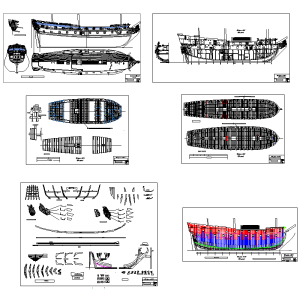
Page one of contract from 1693 is below. Transcribing a contract may be a good project as it will take a lot less time. There is a tutorial on paleography available at the National Archives in Kew England if this could be an interesting alternative project.
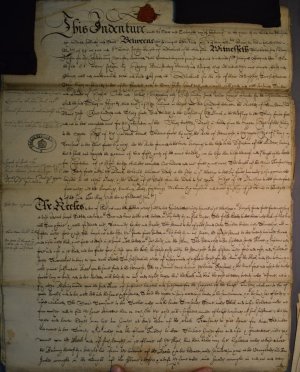
Good luck with the project!!!!
Allan


Hello,Does anyone know where my Son and I can get plank on frame blueprints to build a 16th Century Spanish Galleon 1/64 scale (approx 2’ long)? We are building from scratch. We are very new to this but want to do this build for his school project.
You could try contacting the team behind the "San Juan" project; a replica of the ship is currently being built at the Albaola shipyard in the Pais Vasco", Spain.
It isn't a galleon, but it serves as a good approximation.
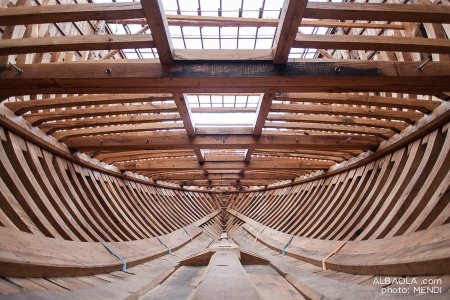
Cheers

- Joined
- Dec 1, 2016
- Messages
- 6,922
- Points
- 728

here are two historic North American ships both are reconstructions with available plans
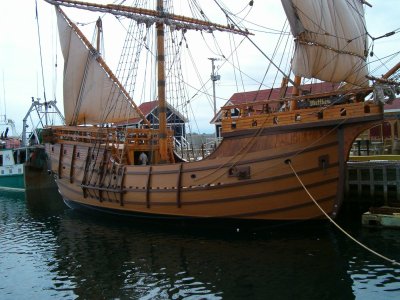
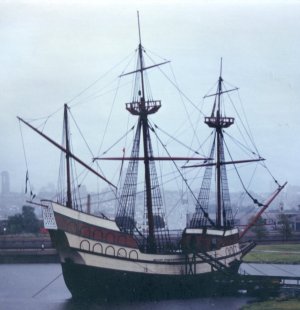
- Joined
- Jun 29, 2024
- Messages
- 2,152
- Points
- 488
The San Juan project that Adry posted above is a modern reconstruction of the “Red Bay Galleon” that I discussed above. I don’t know the purpose of your son’s project, wether it’s to build a model or to report on an old ship, but it seems to me that something associated with this actual ship and its modern reconstruction could be a great project.
Roger
Roger