

- Joined
- Apr 12, 2025
- Messages
- 304
- Points
- 158

Barking well smacks emerged in the 1830s as a direct response to the expanding range and demands of the Thames fishing fleet, and by 1835 Barking had become the principal center for their development. The defining innovation was the integrated circulating seawater well, which allowed cod, ling, turbot, and other bottom fish to be kept alive for days—transforming both the economics and geography of the fish trade. By the early 1830s, Barking already had 30–40 well smacks in operation, and demand for fresh (not salted) fish drove rapid refinement of their construction and rigging. The well smack evolved from the traditional Thames sailing smack, but with a radical modification: a midships compartment isolated by watertight bulkheads, pierced with auger holes below the waterline. These holes allowed continuous seawater circulation, keeping the well oxygenated and the fish alive. This design was already known in the late 18th century, but Barking’s shipyards standardized and scaled it in the 1830s as fishing grounds moved farther from home. By 1833, Barking fishermen were forced to travel farther for viable catches, and the older method of salting and drying fish was no longer sufficient for the London market. The well smack solved this problem and quickly became the backbone of the Barking fleet.
Barking-built well smacks of this period typically measured 50–60 feet in length and were gaff‑cutter rigged. The hull was heavily reinforced around the well, since the midships section had to withstand constant hydrostatic pressure and the stresses of perforation. The well itself was usually 10 feet long, divided into two or three compartments, with a narrowed “welldeck” above to control water movement when the vessel rolled. Auger holes were drilled well below the waterline to prevent air intrusion during heavy rolling. This ensured a stable water level and continuous exchange with the sea. Fish were placed alive into the well; flatfish such as turbot were suspended on thin lines to prevent them from blocking the holes. While the sources do not specify timber species, the construction was known for being exceptionally heavy around the well—so distinctive that marine archaeologists note it as the key identifying feature of a wrecked well smack. Although Barking ceased to be the center of well smack operations by the late 19th century, the vessels themselves continued in service—some even into the 1950s in the Faroe Islands. Their influence persists in modern vivier (live‑well) fishing vessels.
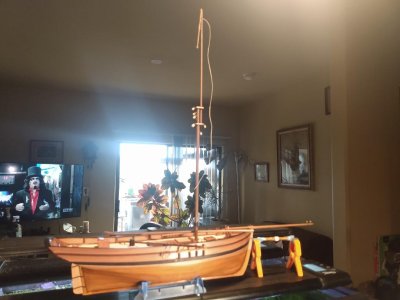
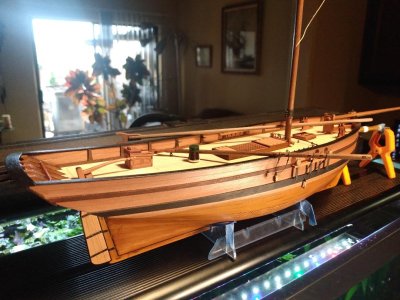
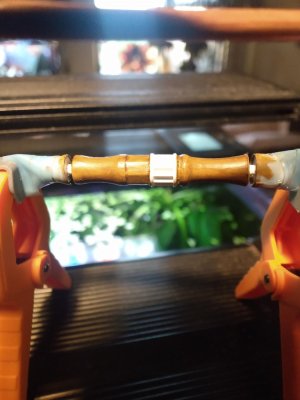
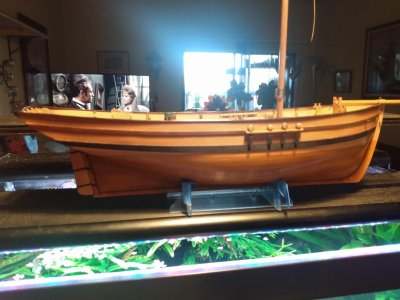
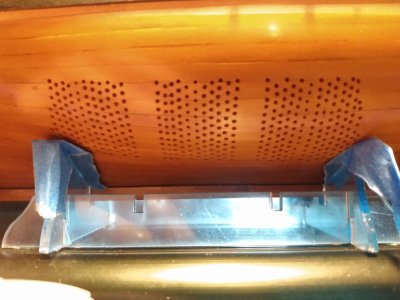
What follows is my logical interpretation as to how the hulls of these boats were likely ported for the live well. I cannot verify this to be 100% accurate, nor can anyone else. True details are somewhat of a mystery. The model shown below is the 'Saucy Jack' by Vanguard Models. I'm bashing it a bit to show the live well porting, etc.
My build log for this model was lost on MSW. This is where I'm at right now, for whatever 'that's' worth...
Barking-built well smacks of this period typically measured 50–60 feet in length and were gaff‑cutter rigged. The hull was heavily reinforced around the well, since the midships section had to withstand constant hydrostatic pressure and the stresses of perforation. The well itself was usually 10 feet long, divided into two or three compartments, with a narrowed “welldeck” above to control water movement when the vessel rolled. Auger holes were drilled well below the waterline to prevent air intrusion during heavy rolling. This ensured a stable water level and continuous exchange with the sea. Fish were placed alive into the well; flatfish such as turbot were suspended on thin lines to prevent them from blocking the holes. While the sources do not specify timber species, the construction was known for being exceptionally heavy around the well—so distinctive that marine archaeologists note it as the key identifying feature of a wrecked well smack. Although Barking ceased to be the center of well smack operations by the late 19th century, the vessels themselves continued in service—some even into the 1950s in the Faroe Islands. Their influence persists in modern vivier (live‑well) fishing vessels.
What follows is my logical interpretation as to how the hulls of these boats were likely ported for the live well. I cannot verify this to be 100% accurate, nor can anyone else. True details are somewhat of a mystery. The model shown below is the 'Saucy Jack' by Vanguard Models. I'm bashing it a bit to show the live well porting, etc.
My build log for this model was lost on MSW. This is where I'm at right now, for whatever 'that's' worth...