
• Win a Free Custom Engraved Brass Coin!!!
    As a way to introduce our brass coins to the community, we will raffle off a free coin during the month of August. Follow link ABOVE for instructions for entering.
  • SUBSCRIBE TO SHIPS IN SCALE TODAY!

    The beloved Ships in Scale Magazine is back and charting a new course for 2026!
    Discover new skills, new techniques, and new inspirations in every issue.

    NOTE THAT OUR NEXT ISSUE WILL BE MARCH/APRIL 2026

Build log Chesapeake Double Kayak from Model Expo

Joined
Dec 20, 2020
Messages
1,536
Points
488

Location
Connecticut, U.S.A.
Before I delve into building the Black Swan, I thought I would do a small kit to unwind a bit. Model Expo has the Chesapeake Double Kayak on sale for $35 (one of their seemingly forever sales) so I thought I would get it. A large box arrived quickly and in another was the kit.
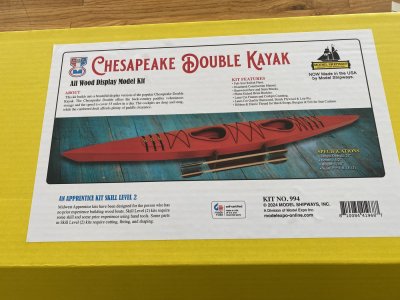
IMG_1951.jpeg

Inside it seemed to consist mostly of air ;). I guess this is one of their standard size boxes that they use and they decided it was easier to use this instead of investing in a smaller box.
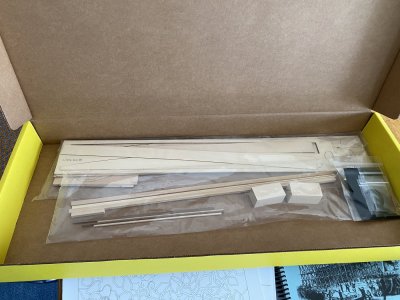
IMG_1946.jpeg


There was also a one sheet set of rolled plans with a building jig guide and a set of instructions.
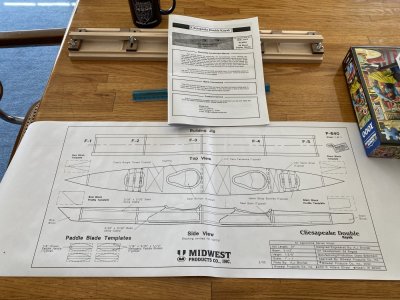
IMG_1944.jpeg

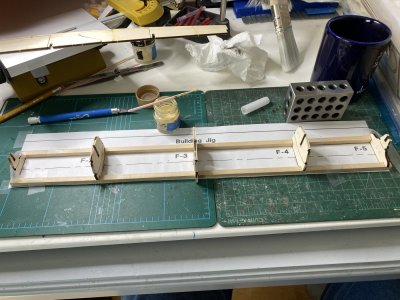
I have to say the instructions were well written (with a few typos) and very complete. This kit is obviously set out for a beginner. After flattening the rolled plans for a few days,I cut the building jig out of the plans and taped it onto my required green cutting mats. Two 1/4 x 1/4" wood strips were then taped on top of the plans. A set of 5 laser cut frames are provided. The frames are not labeled but there is a picture in the instruction showing which is which. Frames 2 and 4 are very similar so be careful when setting them up. After taking off the superficial char, I glued the frames along the wood strips. These were kept square and perpendicular using a machine block as the glue was setting.
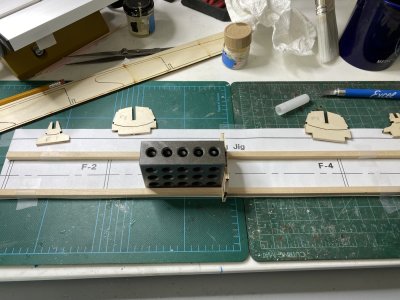
IMG_1947.jpeg

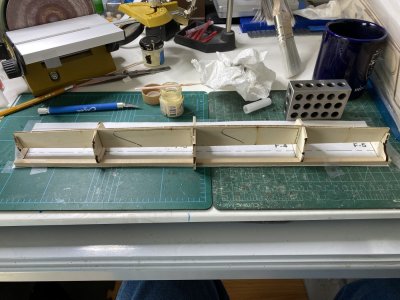
All 5 frames went easily in place.

IMG_1948.jpeg
 
Last edited:
Down the middle of the frames runs the "spine" of the kayak, also laser cut. After removing some char it fit easily into place. Due to the spacing of the frames it can only fit in one direction. Clever engineering! It was glued into place.

IMG_1950.jpeg

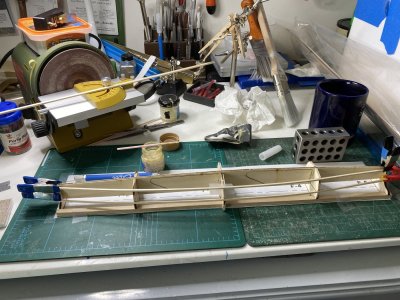
Smaller strips of wood were then fitted and glued into notches along the frame.

IMG_1952.jpeg
 
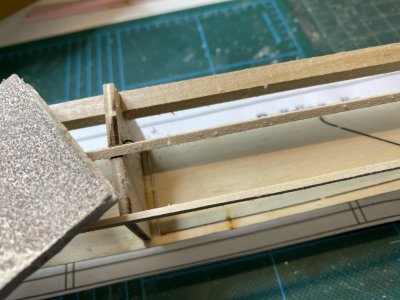
The smaller strips of wood have to be faired to curve along with the angle of the frame members. This took about 15 minutes of sanding with 100 grit sandpaper.

IMG_1954.jpeg

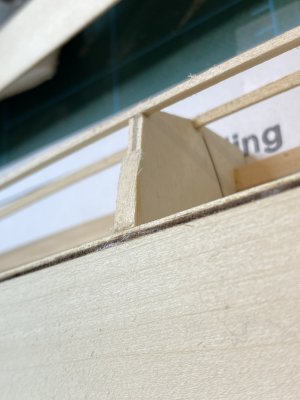
The spine at the position of the middle frame (F-3) was about a mm taller than the frame member. To help get rid of that gap I took some scrap 1/32" pieces and glued two of them on top of each other. They were about 1/2 the length of the frame to the first strip. I then faired those to blend them into the curve of the frame.

IMG_1955.jpeg

The bottom planks were then glued onto the frame. They are purposefully oversized. The frame in the front (F-1) has a rather sharp curve. It is possible to bend the wood to meet the strip, but I am not certain that this is what is needed. I will try to decide what to do when the side planks are attached.

IMG_1956.jpeg
 
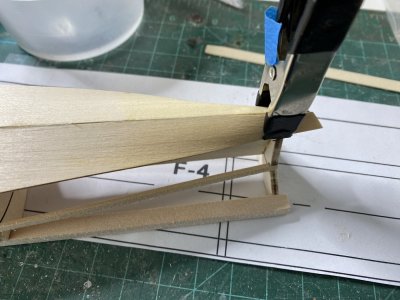
After rereading the instructions I decided to glue the ends of the bottom planks to the strips on the ends at a very acute angle. In order to make the wood more pliable (it is only 1/32" thick) I painted both ends with water and then clamped them into place. That allowed to wood to conform much easier to the sharp angle.

IMG_1957.jpeg

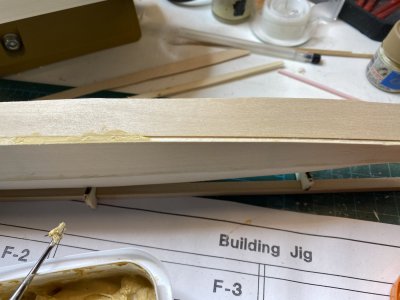
There was a small gap between the 2 bottom pieces. While I was waiting for the ends to dry I decided to fill the gap with Elmers wood filler. I like using it. It is inexpensive, fills the gap well and sands nicely. It is water soluble and reconstitutes easily if it dries out in the container.

IMG_1959.jpeg

After everything dried, I flipped the kayak over and reenforced the glued surfaces with more glue to make sure it was evenly done. I then took my X-acto blade and trimmed the wood to conform to the wood strips and sanded the edges until they were flush.

IMG_1960.jpeg

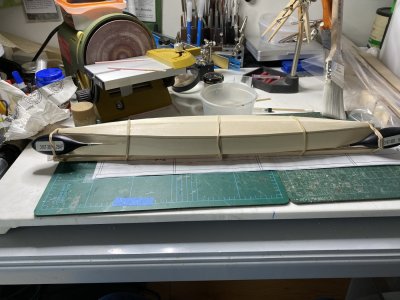
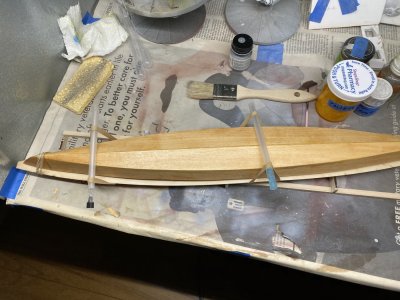
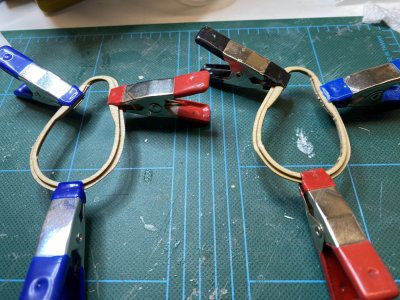
I then attached the side planks. They also had some steep curves at the ends. Once again I used water to soften them and clamped them in place using rubber bands. I used 2 small paint brush handles on the ends to help the wood conform to the curves.

IMG_1963.jpeg
 
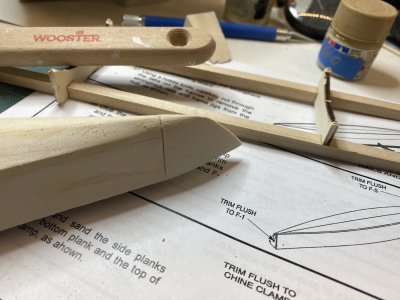
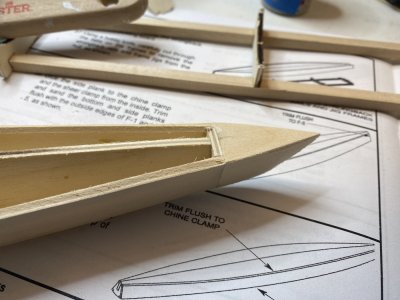
Once the two side planks of the kayak tired in place the overhanging ends of the planks were trimmed from the bow and stern frames.
IMG_1965.jpeg

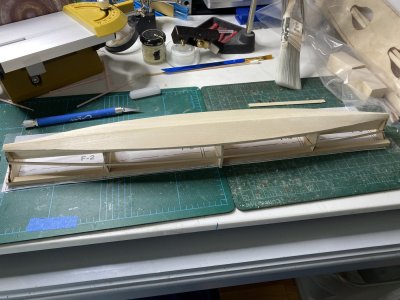
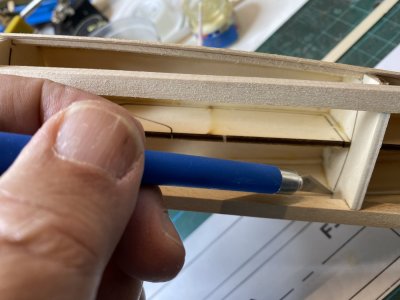
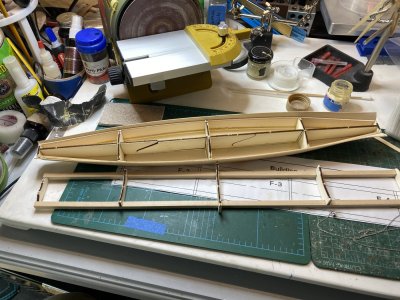
Now for the most difficult (so far) task in this model. The construction jig portion of the frame assembly is cut away from the rest of the frame. I was able to use a small razor saw for the bow and stern sections, but the interior frames hat to be slowly separated by using an X-acto blade. it was difficult due to the confined spaces.

IMG_1966.jpeg

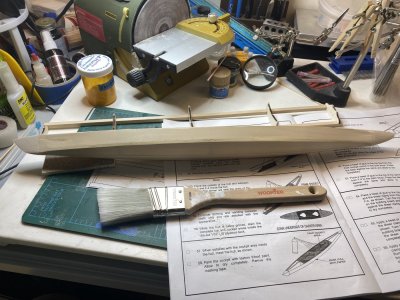
Finally though the bottom of the frame was separated from the rest of the kayak.

IMG_1967.jpeg

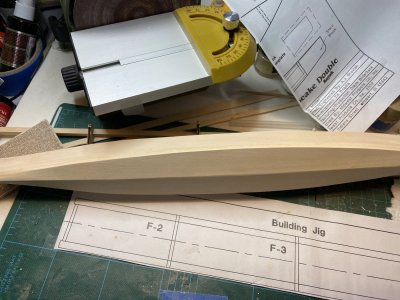
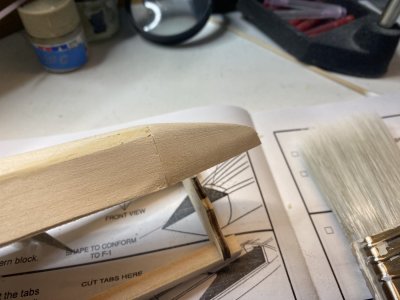
After it was a simple matter of running a sharp blade against the lower rail to separate the overhanging excess of the planks.
 
Last edited:
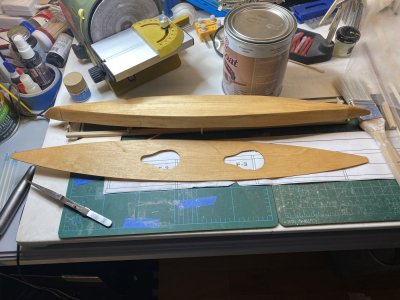
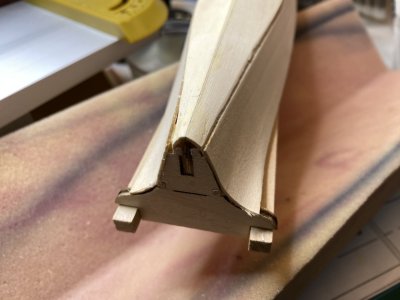
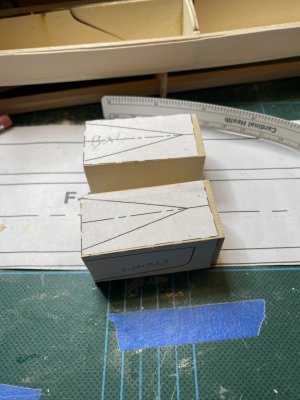
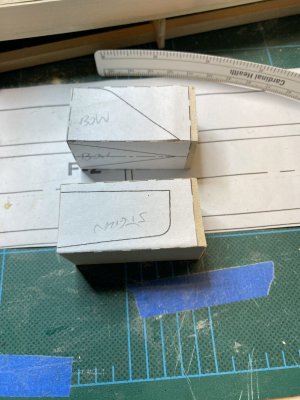
Next the bow and stern blocks have to be shaped and attached to the kayak. Two blocks of wood are provided as well as an outline of the basic shapes on the plans. I copied the shapes, cut out the copies and glued them onto the blocks.

IMG_1971.jpeg

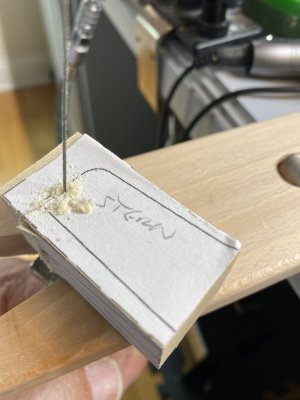
IMG_1972.jpeg

These shapes were then cut out using a jeweler's saw and a small saw.

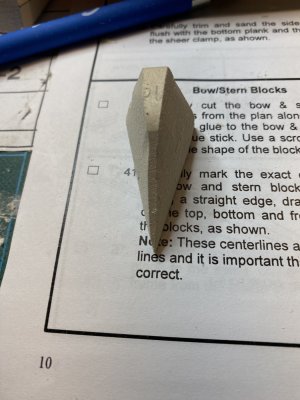
IMG_1973.jpeg

The blocks were refined a bit more (I wanted to take off as much of the excess material as possible before I attached them to the kayak). I put the blocks against the bow and stern and traced the basic outline of where they would attach. Using an X-acto knife I then trimmed the blocks.

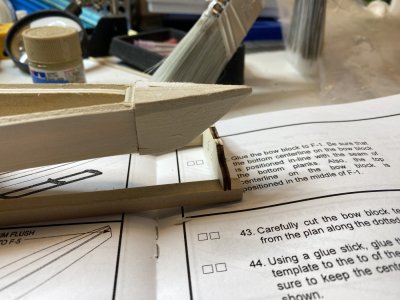
IMG_1975.jpeg

The trimmed blocks were then glued to the kayak and will be set overnight for the glue to dry

IMG_1976.jpeg
 
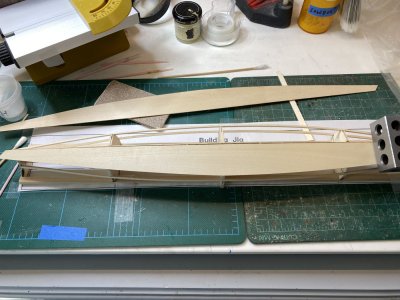
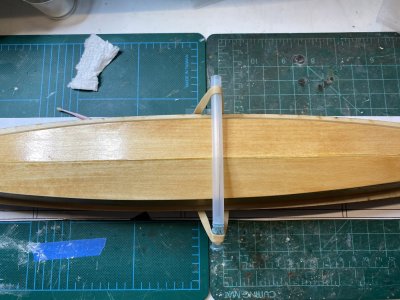
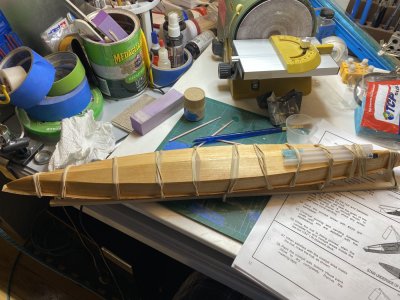
Next is to glue the deck of the kayak to the hull. EDIT: Having done this I would modify the procedure. I would paint the underside of the deck with a lot of water and using rubber bands shape it along the camber of the kayak frame BEFORE I glued it into place. I would allow it to dry for several hours to help shape the deck piece before gluing it. You first glue along the spine of the boat starting in the middle section of the boat. After laying down a line of glue along the spine between the two openings for the cockpits, I carefully aligned the deck and secured it with a rubber band. The hull is upside down.IMG_1997.jpeg


After the glue set set a line of glue along the bow and pressed the deck down with more rubber bands.
IMG_2006.jpeg

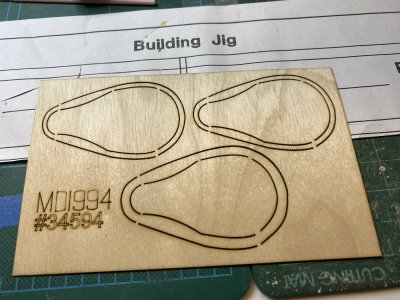
While waiting for the glue to set I decided to sand and glue together the coaming and coming spacer. This comes as laser cut parts on 1/32" sheets.

IMG_2003.jpeg

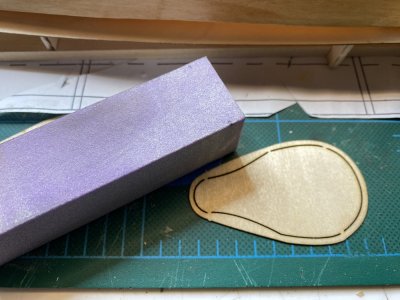
The two spacers are thinner in width. As you can imagine these are just waiting for you to snap them into pieces. To try to avoid that, I cut each one out but did not cut out the center part as I sanded off the char on the outer edges.

IMG_1998.jpeg

After this the center portions were cut out and the 3 sections glued together.

IMG_2005.jpeg

After that the inner surfaces were gently sanded.
 
Last edited:
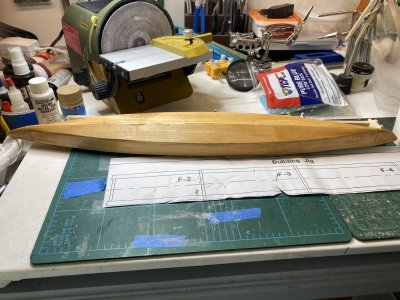
Trying to glue the edges of the deck to the sides of the kayak has proven difficult. The way the grain of the wood is set it does not flex well to the sides. I tried wood glue without success. I have now brushed water onto the the sides of the deck that faces the kayak as much as I could and have used rubber bands to let the wood curve along the camber of the top of the kayak.

IMG_2007.jpeg

If I were to do this again I would have soaked the undersurface of the deck and used rubber bands to help it set before I glued it in place in the center of the frame. I will amend the parts before I glued the deck to reflect this information.
 
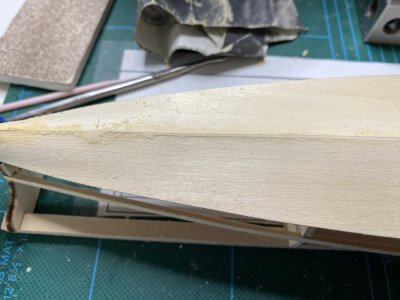
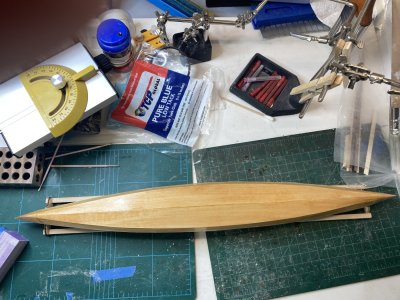
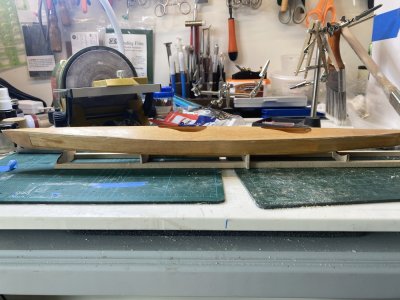
After the deck dried, it conformed much more closely with the curve of the frame. I slowly glued the edges, in sections, using thick CA glue. I am not a big advocate of CA glue for wooden boats but I needed something quick setting with some strength. After everything set I removed the rubber bands and carefully cut the excess of the deck away. I then sanded the edge of the deck using 100 then 320 grit sandpaper to smooth it.

IMG_2037.jpeg

IMG_2039.jpeg

IMG_2040.jpeg

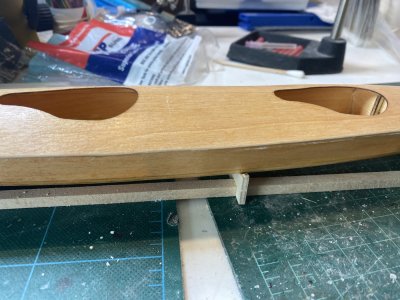
At this point I am trying to decide what to do with the color of the kayak. I believe I will leave the deck portion the wood color it is. However, I am undecided what to do with the hull. Leave it as is or paint it red? Perhaps white? Any opinions about this would be appreciated!
 
After the deck dried, it conformed much more closely with the curve of the frame. I slowly glued the edges, in sections, using thick CA glue. I am not a big advocate of CA glue for wooden boats but I needed something quick setting with some strength. After everything set I removed the rubber bands and carefully cut the excess of the deck away. I then sanded the edge of the deck using 100 then 320 grit sandpaper to smooth it.

View attachment 594912

View attachment 594913

View attachment 594914

At this point I am trying to decide what to do with the color of the kayak. I believe I will leave the deck portion the wood color it is. However, I am undecided what to do with the hull. Leave it as is or paint it red? Perhaps white? Any opinions about this would be appreciated!
Good morning Rob. You got the wood looking really good. I personally like natural wood finish so my opinion would to leave it natural. That’s just me tho. A natural deck and painted hull may give it some visual bang. Cheers Grant
 
Back
Top