• SUBSCRIBE TO SHIPS IN SCALE TODAY!

    The beloved Ships in Scale Magazine is back and charting a new course for 2026!
    Discover new skills, new techniques, and new inspirations in every issue.

    NOTE THAT OUR NEXT ISSUE WILL BE MARCH/APRIL 2026
  • Win a Free Custom Engraved Brass Coin!!!
    As a way to introduce our brass coins to the community, we will raffle off a free coin during the month of August. Follow link ABOVE for instructions for entering.

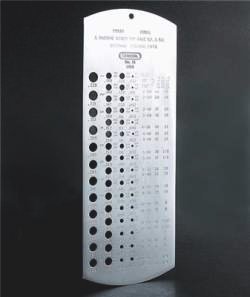
Byrnes Draw. Plate.

if you go to their website drawplate

you can see they are still available to order. Items that are no longer available to order can't be selected or marked out of stock. you can also send donna a message from the website.
 
I purchased Byrnes draw plate close to a year ago on their site. I got in contact with Donna (widow of Byrnes) to get a tracking number. I successfully received the plate. Never used it yet. It should be good per reviews.
 
Roger,

I started all this in the early 1970's. I bit on all of the suggestions in the old books and journals.

I have about three jewelers draw plates - Thick, heavy as heck, weird series of hole progression, not that good at having a burr scraping edge when the Bamboo is pushed thru the bass ackwards side, i.e. lousy at cutting, it is a long way into the cone on the other side to get a grip on a substantial enough part of the stick to pull.

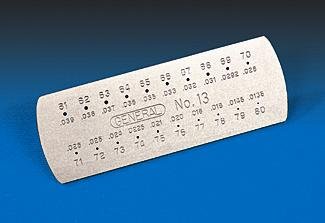
I used actual quality steel drill gauges. They hold a burr. are not too thick, have actual grill gauge numbers, they rust
drill guage 1-60 General 15.jpgdrill micro bit gauge.jpg

I have the Byrnes. It does the job better than the above - as well as the job can be done I guess. It is thicker than the General but not as thick as a wire draw plate. The General is still a help if the Jim interval is too stubborn. It is thin enough that a bigger hole will allow a pull through at an angle.

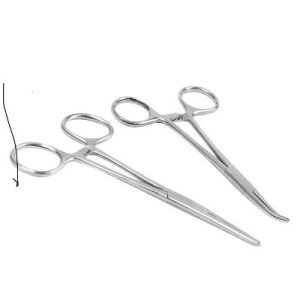
As for the pull - I use a curved KellyKelly clamps.jpg

I have a piece of IV tubing over the serrated tips and use a piece of folded 220 grit to grip for the pull

It is catch as catch can as for the species of Bamboo used for isle end cap Bamboo skewers but the soft type draws much better for me.
 
I have a Byrnes draw plate. And one day, when I had nothing better to do, I tried to see how thin I could cut a piece of bamboo down to.. After a few attempts I got it down to the smallest diameter ( drill #59. .0410 in). It took a long time, and truthfully it wasn’t worth the effort. But it is possible
 
If the skewers are split first - much smaller is possible. I have #78 0.016" dia.
#70 is my default. Boy! is the yield low..

A froe is a narrow wedge with a dull edge - used to split wood - Cedar roofing shakes is its primary job - I think.
For us - a froe can get square rods from a plank. Ideal for spar shaping stock that is split along the grain - no bending later in life.
For Bamboo an Xacto type blade - dull - can act as a froe.

Bamboo skewers are hollow bored I think. No attention is paid to the nature grain direction. Many of them will go cattywompus if a split follows the natural grain. A sharp blade is quarunteed to go astray for me.

I made a jig from a NRJ tip? - Two pieces of wood - sharing 1/2 of a long hole that is a bit larger than the dia. of a skewer. Fixed part way down the hole/tube is a Gem single edge blade freed from its backing. A Bamboo stick that is semicircular in cross section is not the best shape to start with. A stick with a quarter circular cross section shaves down quickly. The jig would rather twist a half circle stick than let it go thru in the starting orientation.

All in all - the whole process is tedious, frustrating and there is a miss about as often as a hit. The worst part is when a piece of Bamboo gets frozen in the gauge hole. Drilling into end grain with fragile drill bit that would rather walk sideways and trying not to break it is no fun.
 
Back
Top