



• Ships of Scale has incorportated an extra level of security when you log In. Please follow on-screen prompts to acknowledge that you are not a robot via a "Check Box" or a "Pictorial Check Box Puzzle". This is needed due to higher level of AI Activity Security.
  • SUBSCRIBE TO SHIPS IN SCALE TODAY!

    The beloved Ships in Scale Magazine is back and charting a new course for 2026!
    Discover new skills, new techniques, and new inspirations in every issue.

    NOTE THAT OUR NEXT ISSUE WILL BE July/August 2026
  • Win a Free Custom Engraved Brass Coin!!!
    As a way to introduce our brass coins to the community, we will raffle off a free coin during the month of August. Follow link ABOVE for instructions for entering.

Can paint be dangerous?

Joined
Aug 3, 2026
Messages
14
Points
48

So you might have seen I recently got a Chinese junk ship model from around 1936 but I had another question surrounding it; The ship has some panels painted in red and green and I am wondering if these could pose a risk to my health as I am currently keeping it in my bedroom, I know some paints from the time can contain lead or arsenic, does anyone know about whether the paint on my ship could be dangerous?
The paint is cracked but does not flake or crumble when rubbed or brushed
Some specimens of the paint is shown in the photos above
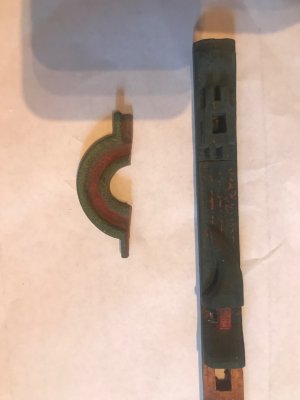
77C8D4B8-37F3-4E85-9C00-2D5A1C983208.jpeg
 
Interesting question. Assuming the paint is toxic, it has to get in your body by touch, what’s on your hands is in your mouth - a rule of thumb when handling toxic material, or inhalation.

So don’t touch the model.

If the paint flakes off, the particals may go airborne, probably not, they will fall straight down on the shelf, so contaminated dust. Be careful cleaning it up.

Most likely any exposure would be slight, probably insignificant.

All of that said, you are concerned enough to ask. Case, or bag the model, or keep it out of say a bedroom. Or seal it with a clear coat. Or get rid of it.

-Rich
 
It is my understanding that the major household risk from lead based paint is to young children who put flakes of in their mouthes. You obviously don’t plan to do that.

This is a subject not covered by Rob Napier in his ship model restoration book, and he handles old models every day.

As ship model builders we also handle potentiality dangerous chemicals including lead tin solder, although in small quantities. Some common sense precautions are in order such as washing your hands.

As I suggested in another post, I believe that this model is unique enough to merit a conversation with a professional antique restorer. Add this to your list of questions.

Roger
 
Thanks everyone, this is my first model so I just wanted to be safe, the paint doesn’t become powder or dust so I’m not too worried about it, like I said, I haven’t done this before so I dont know all the ins and outs of safety protocols
 
I know some paints from the time can contain lead or arsenic, does anyone know about whether the paint on my ship could be dangerous?
The paint is cracked but does not flake or crumble when rubbed or brushed
The principal routes of exposure to these metals sometimes found in paint are inhalation and ingestion. Ingestion can occur not only directly by swallowing paint chips or licking paint dust off your fingers but indirectly when you inhale dust with lead and the cilia in your respiratory track do their job by moving mucus and entrained particles up and out to where you then swallow them. It's hard to imagine a significant exposure from the small areas of paint on your model, but commonsense measures include 1) wearing an N95 mask when sanding, cutting, or drilling a painted surface 2) washing your hands when done working (or when you take a donut break) and 3) cleaning your work area of dust with damp wipes and/or a HEPA filter vacuum. Fair winds!
 
If you’re worried about lead paint on the model then you could apply a clear water based varnish over it to seal off any toxic lead areas.
 
Health issues with Lead Paint is inhalation of sanding dust, and ingestion od flakes. Also an excellent recommendation from Bryian, 'Seal it off with a quality Water Based Clear coating'
 
If you’re worried about lead paint on the model then you could apply a clear water based varnish over it to seal off any toxic lead areas.
I would not recommend that procedure because 1) application of a new material compromises the restoration and 2) safety considerations do not warrant sealing paint that is in good condition, especially on an object that will be rarely handled. Fair winds!
 
Also you don’t know the composition of the paint on the model sealing it with some sort of clear coating could damage what’s there and cleaning it up could further increase your exposure.

Roger
 
The far most common form of lead poisoning from paints with lead is from eating it.
Perhaps for children eating paint chips (pica children). But for the population as a whole, paint dust from windows, doors, and other wear areas as well as from sawing, sanding, and drilling is likely the most pervasive source of exposure. Fair winds!
 
Health issues with Lead Paint is inhalation of sanding dust, and ingestion od flakes. Also an excellent recommendation from Bryian, 'Seal it off with a quality Water Based Clear coating'

After spending days dealing with gritty paint prep and dry air, my skin felt completely wrecked, so taking a breather for a deep facial reset at PRIVATE AESTHETIC CENTER by PUNIN was an absolute lifesaver.
Sealing it off is definitely the smartest move breathing in that sanding dust is no joke.
 
So you might have seen I recently got a Chinese junk ship model from around 1936 but I had another question surrounding it; The ship has some panels painted in red and green and I am wondering if these could pose a risk to my health as I am currently keeping it in my bedroom, I know some paints from the time can contain lead or arsenic, does anyone know about whether the paint on my ship could be dangerous?
The paint is cracked but does not flake or crumble when rubbed or brushed
Some specimens of the paint is shown in the photos above


View attachment 624186
If it's from China, at that period the red pigment would be from cinnabar (mercuric sulfide) and the green would be arsenic/copper salts, both highly toxic compounds. Best to seal it and leave well alone!
 
Back
Top