



- Joined
- Oct 22, 2018
- Messages
- 155
- Points
- 253

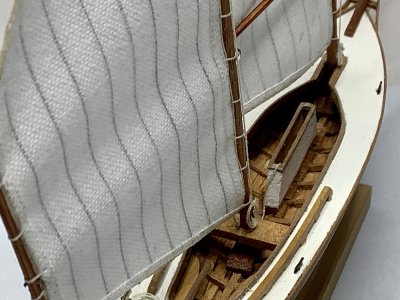
Originally, log canoes were working boats on the Chesapeake Bay, used by their owners to earn a living by harvesting oysters, crabs, and engaging in any other profitable activity they could think of. The name comes from the fact that they were literally built from logs. Their origins can be traced back to the dugout canoes of Native Americans, which they constructed from loblolly pine and tulipwood. The logs were hollowed out with fire, using oyster shells to scrape the charred wood. In the 19th century, European settlers expanded on the design by joining an odd number of logs side by side, first carving the exterior into an attractive double-pointed shape and then hollowing out the interior. The tools they used for this were the hatchet, the hand axe, and the adze.
There were boats made of 3, 5, 7 and even 9 logs built in this way. The history of the log canoe is closely linked to the development of the oyster farming industry in the bay. Until the advent of motors, the log canoe was an economical vessel that could be assembled without shipyards, and before dredging was legalized as a harvesting method in 1865, these boats met the needs of oyster farmers. However, they lacked the necessary traction for dredging, and therefore their construction was adapted and combined with features of other boats to form the first bugeyes, much larger and more powerful vessels. With the arrival of motorized power, fishermen gradually abandoned sailing, and the reserves of suitable timber were also depleted.
Despite their origins as work boats, by 1840 races were already being organized between log canoes, and the construction of lighter and faster canoes specifically for competition began. During this same period, however, informal canoe races evolved into a semi-formal sport, and boats began to be built specifically for competition. Although the Civil War brought these races to an end, from 1885 onward, various clubs and associations sponsored organized races. With the resumption of racing, the boats were restored to an even better condition than their original state, and rigging and sail designs became larger and more innovative.
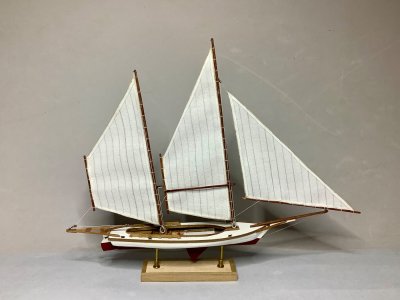
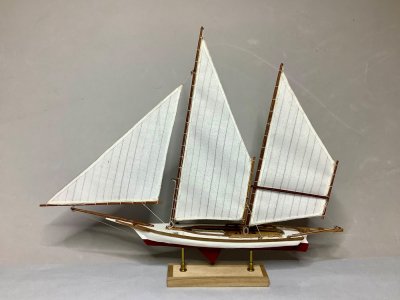
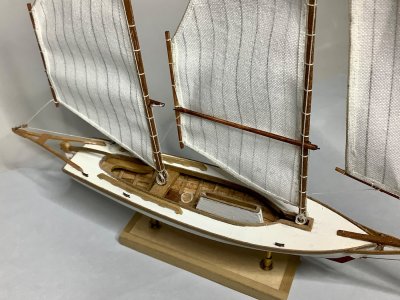
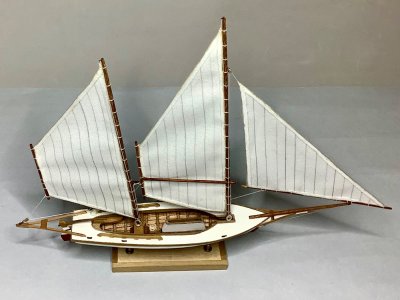
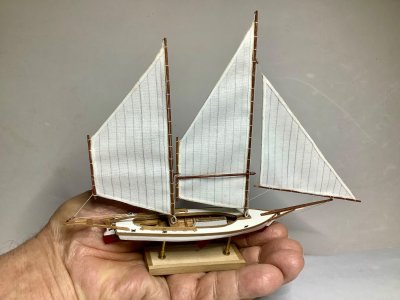
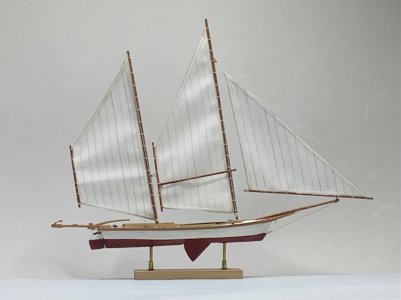
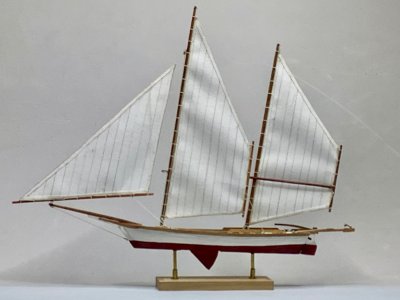
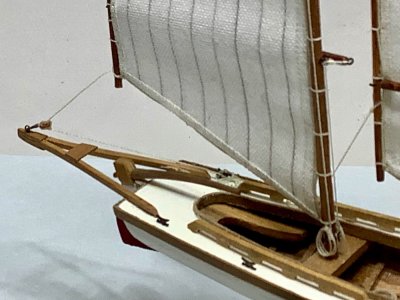
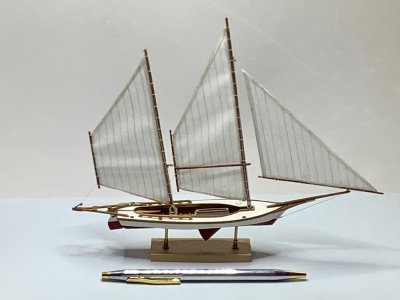
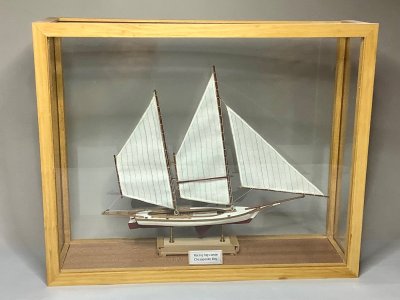
Typical racing log canoes had two angled masts without shrouds, vaguely resembling a ketch rig. They also carried a bowsprit for hoisting the jib. The sail pattern evolved into a "goose-wing" shape, in which the sail became trapezoidal. The pointed clew was replaced by a vertical spinnaker pole, attached to the aft end of the bowsprit or spar, which was hinged to the mast. This allowed for a larger sail area between the masts than with a triangular sail. The jib rig was equally unusual, as it was equipped with a bowsprit at its base, which was attached to the end of the bowsprit with a line or fitting. This allowed for a larger jib that could function similarly to a spinnaker when sailing downwind, with the advantage that this tight and balanced jib did not require quick sheet adjustments when tacking.
A final distinctive feature was the use in competition of support boards to prevent the boat from capsizing. These were long, flat boards that hooked one end under the deck and, resting against the opposite gunwale, extended well over the side of the boat. The crew climbed onto these boards as a counterweight to counteract the force of the sails, thus preventing the boat from listing. This was especially important for these racing canoes, whose sail area and lack of ballast made them extremely unstable without such counterweight.
There were boats made of 3, 5, 7 and even 9 logs built in this way. The history of the log canoe is closely linked to the development of the oyster farming industry in the bay. Until the advent of motors, the log canoe was an economical vessel that could be assembled without shipyards, and before dredging was legalized as a harvesting method in 1865, these boats met the needs of oyster farmers. However, they lacked the necessary traction for dredging, and therefore their construction was adapted and combined with features of other boats to form the first bugeyes, much larger and more powerful vessels. With the arrival of motorized power, fishermen gradually abandoned sailing, and the reserves of suitable timber were also depleted.
Despite their origins as work boats, by 1840 races were already being organized between log canoes, and the construction of lighter and faster canoes specifically for competition began. During this same period, however, informal canoe races evolved into a semi-formal sport, and boats began to be built specifically for competition. Although the Civil War brought these races to an end, from 1885 onward, various clubs and associations sponsored organized races. With the resumption of racing, the boats were restored to an even better condition than their original state, and rigging and sail designs became larger and more innovative.
Typical racing log canoes had two angled masts without shrouds, vaguely resembling a ketch rig. They also carried a bowsprit for hoisting the jib. The sail pattern evolved into a "goose-wing" shape, in which the sail became trapezoidal. The pointed clew was replaced by a vertical spinnaker pole, attached to the aft end of the bowsprit or spar, which was hinged to the mast. This allowed for a larger sail area between the masts than with a triangular sail. The jib rig was equally unusual, as it was equipped with a bowsprit at its base, which was attached to the end of the bowsprit with a line or fitting. This allowed for a larger jib that could function similarly to a spinnaker when sailing downwind, with the advantage that this tight and balanced jib did not require quick sheet adjustments when tacking.
A final distinctive feature was the use in competition of support boards to prevent the boat from capsizing. These were long, flat boards that hooked one end under the deck and, resting against the opposite gunwale, extended well over the side of the boat. The crew climbed onto these boards as a counterweight to counteract the force of the sails, thus preventing the boat from listing. This was especially important for these racing canoes, whose sail area and lack of ballast made them extremely unstable without such counterweight.