Sahure's Ship and its Context in Egypt's Fifth Dynasty.
Egypt's Fifth Dynasty (approximately 2465–2325 BCE) marks a significant period in Egyptian history, especially in terms of commercial and maritime development. During this time, the pharaohs promoted trade and exploration, and the ships of this dynasty were essential for undertaking expeditions to distant lands. In this context, Pharaoh Sahure, the second ruler of the Fifth Dynasty, stands out for his ambitious maritime expeditions and their impact on Egypt's economy and politics.
Sahure.jpg (221.94 KiB) Viewed 4940 times
Historical Context of Sahure and the Fifth Dynasty
: Sahure reigned from approximately 2487 to 2475 BC. During his reign, Egypt experienced a period of prosperity and commercial expansion. Sahure promoted maritime trade and was one of the first pharaohs to organize expeditions to the mythical Land of Punt, a region likely located on the Red Sea coast in present-day Somalia or Eritrea. These expeditions not only brought material goods back to Egypt but also strengthened the country's prestige and influence abroad.
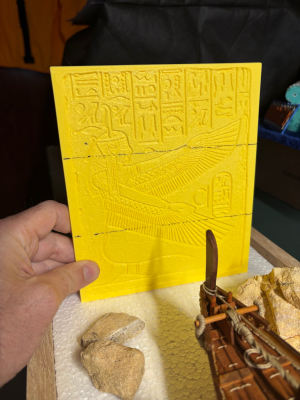
The temples of Abusir, especially Sahure's mortuary temple, contain detailed reliefs depicting these ships laden with goods from distant lands. These reliefs are one of the most valuable sources for understanding the development and use of ships in the Fifth Dynasty, highlighting the importance of trade and navigation during this period.
Design and Construction of Sahure's Vessels:
Sahure's vessels reflect a significant advancement in Egyptian naval engineering, designed to withstand long voyages and carry large cargoes. The main details of their construction are as follows:
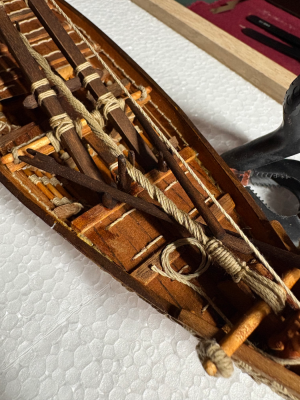
Materials: Due to the scarcity of tall trees in Egypt, the Egyptians imported cedar wood from Lebanon to build these ships. The hull design was simple, without a keel, so stability depended on an assembly technique using planks tied together with thorns and ropes.
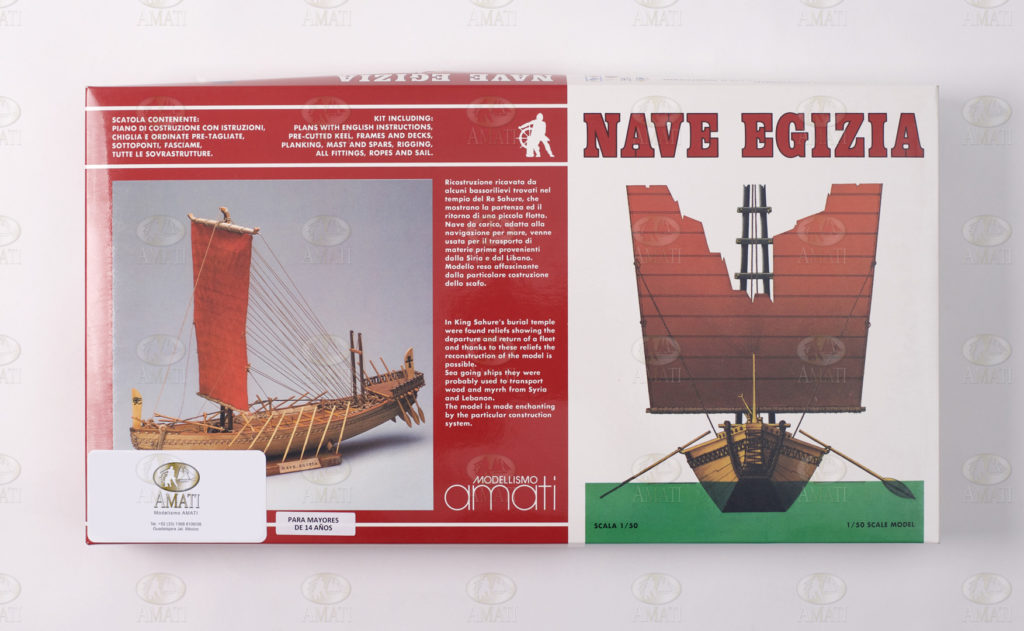
Structure and Capacity: These vessels measured between 20 and 30 meters in length and had sufficient capacity to transport large quantities of goods. Among the products transported were precious woods, gold, copper, ivory, and precious stones—all materials of great value to the economy and the construction of temples and monuments.
Navigation: The ships used both oars and a central square sail, allowing them to take advantage of favorable winds on their voyages in the Mediterranean and the Red Sea. This combination of oars and sail was essential for long-range navigation.
Decoration and Symbolic Meaning:
In addition to their functional design, Sahure's ships also possessed decorative and symbolic elements. Reliefs suggest that the vessels were decorated with motifs representing the power and wealth of Egypt. The ships could be painted in dark tones, with details in bright colors, such as red and blue on the oars and ropes.
In some depictions, the prows of the ships include figures of animals or sacred symbols, a decorative touch that also served a protective purpose, as these figures were believed to invoke the protection of the gods for the vessel and its crew.
Innovations in Navigation and Stabilization
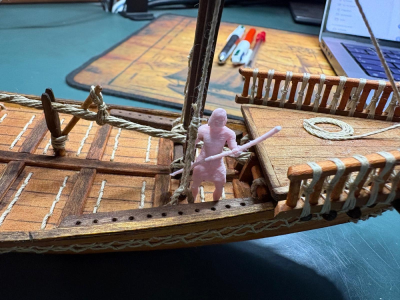
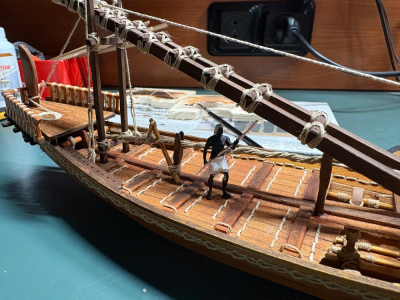
To ensure stability and seaworthiness, Sahure's ships employed certain ingenious advancements. In addition to long stabilizing oars, the hulls of these vessels were lashed together from bow to stern with thick ropes, which gave the structure greater strength.
The lack of a keel forced Egyptian shipwrights to develop unique techniques to ensure that the vessels could navigate smoothly on the open sea. This skill was crucial for reaching distant destinations and expanding the Egyptian trade network, an impressive feat for the technology of the time.
Reliefs and Historical Sources
Reliefs in the temples of Abusir offer a detailed view of these ships and the expeditions they undertook. These depictions show ships laden with cargo, surrounded by crew and rowers, and scenes describing the arrival of these goods at Egyptian ports.
These reliefs are a key source for understanding not only the design of the ships, but also the organization of expeditions, the logistics of foreign trade, and the symbolism that accompanied these voyages.
Cultural and Strategic Importance:
Sahure's ships were not only commercial tools, but also symbols of power and prosperity. These vessels allowed Egypt to access distant resources, strengthen its influence in the Mediterranean and the Red Sea, and establish a trade network that would be fundamental to the development of Egyptian civilization.
The design of the ships, their cargo capacity, and their decoration reflect the ingenuity and power of Egypt during this period, and allow us to understand how navigation and trade were fundamental to consolidating the wealth and prestige of the Fifth Dynasty.
Regards