

- Joined
- Sep 1, 2026
- Messages
- 8
- Points
- 43

After more than 1.5 years of working on the Jahre Viking, it is time for a new challenge at the paper shipyard:
De 7 Provinciën
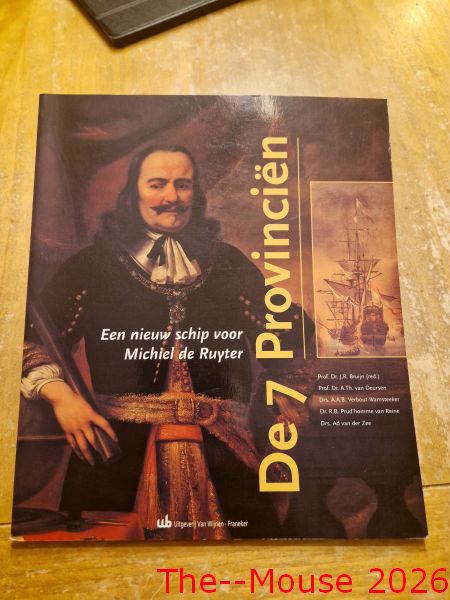
De 7 Provinciën was a Dutch ship of the line from the 17th century and is best known as the flagship of Lieutenant Admiral Michiel de Ruyter. The ship was built at the Admiralty Shipyard in Rotterdam under the supervision of master shipbuilder Salomon Jansz. van den Tempel. Her keel was laid in 1664, and she was launched on 4 March 1665, just in time to take part in the Second Anglo-Dutch War.
De 7 Provinciën was a so-called three-deck warship, although the upper gun deck did not extend along the ship's full length. Upon entering service, she carried approximately 80 cannons distributed over several decks. During her career, her armament was increased to around 96 cannons. Depending on the mission, her crew consisted of approximately 420 to 500 men, including officers, sailors, marines, gunners, and cabin boys.
The ship measured approximately 48 metres in length on the gun deck, had a beam of about 12 metres, and a draught of around 5 metres. Her displacement was approximately 1,600 tons, making her one of the largest and most powerful warships of the Republic of the Seven United Netherlands.
De 7 Provinciën played a leading role in several of the most famous naval battles in Dutch maritime history. As Michiel de Ruyter's flagship, she fought in the Four Days' Battle (1666), the St. James's Day Battle (1666), the Battle of Solebay (1672), both Battles of Schooneveld (1673), and the Battle of Texel (1673). She also took part in the famous Raid on Chatham in 1667 as part of the Dutch fleet.
In addition to her military importance, De 7 Provinciën was renowned for her richly decorated stern, magnificent wood carvings, and impressive appearance. The ship remains one of the most famous warships of the Dutch Golden Age and a symbol of the maritime power of the Dutch Republic.
After 29 years of service, the ship was broken up in 1694.
(Source: ChatGPT)
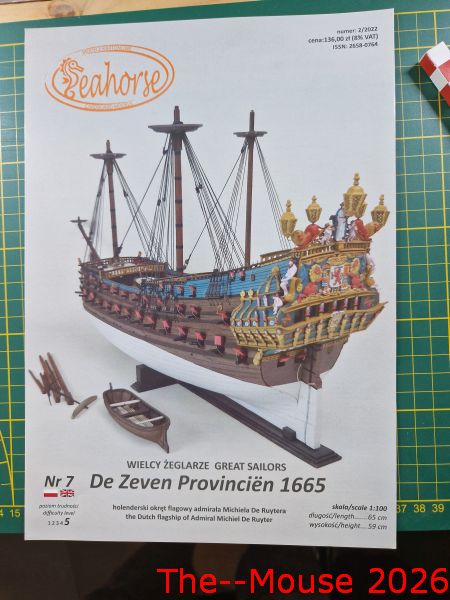
The model is produced by Seahorse, and I purchased it through Scaldis.
The difficulty rating is 5 out of 5, and the description states that it is intended for highly experienced model builders... it should be manageable, right?
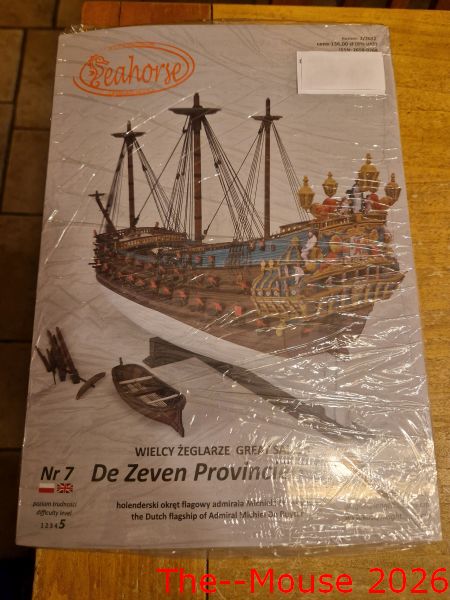
It's quite a substantial kit:
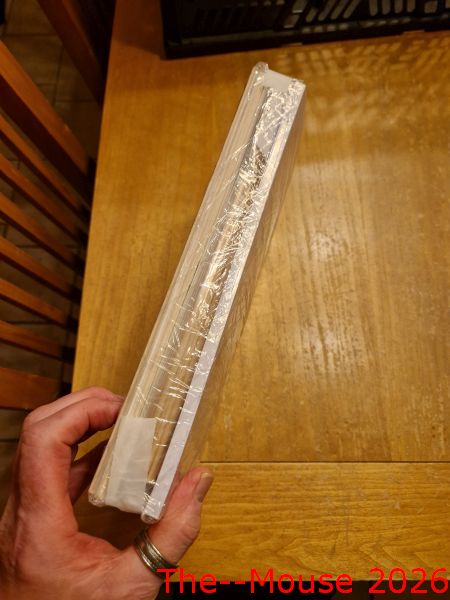
The kit includes, among other things:
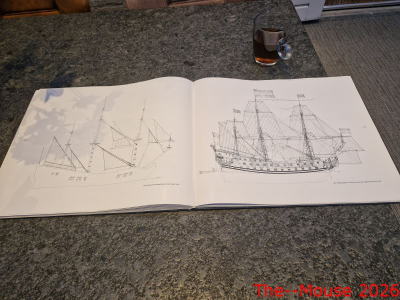
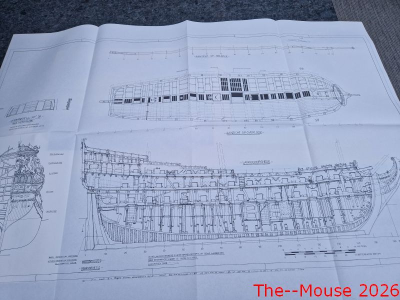
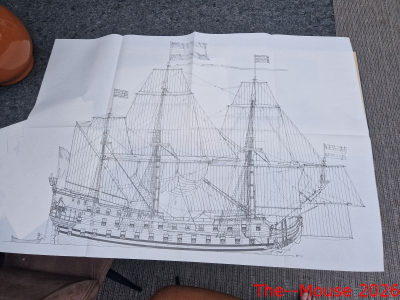
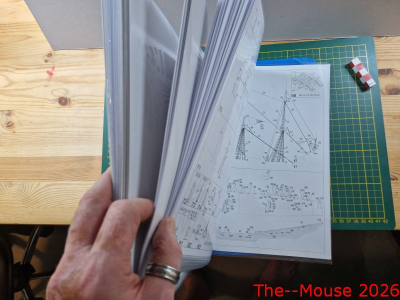
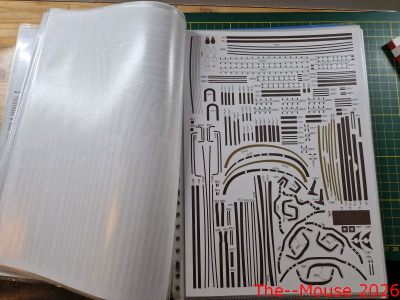
The ship itself, consisting of an entire book of printed paper sheets.
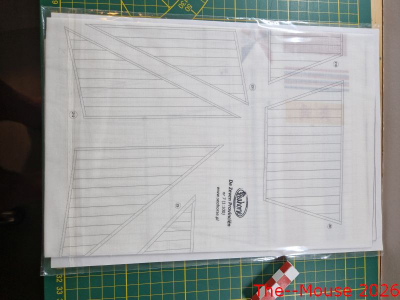
I have placed all the sheets in plastic sleeves to keep everything neatly organized together:
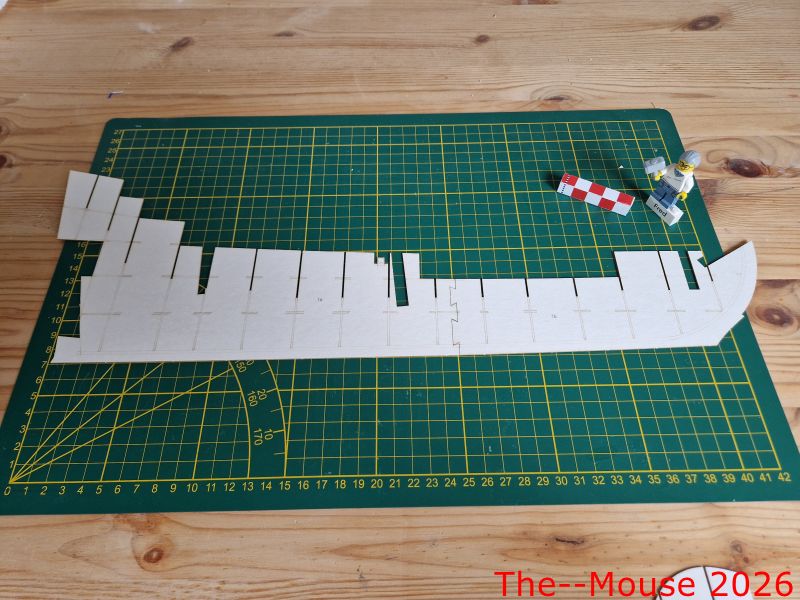
Laser-cut frames:
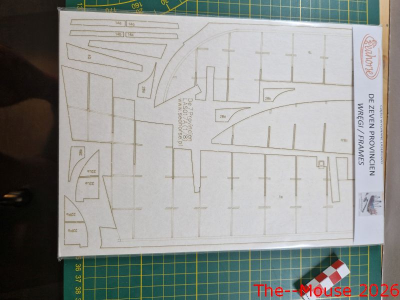
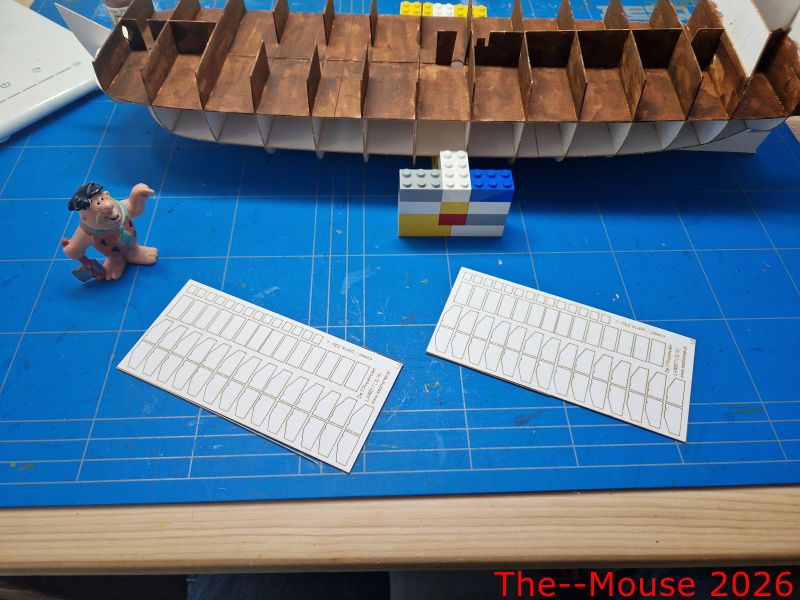
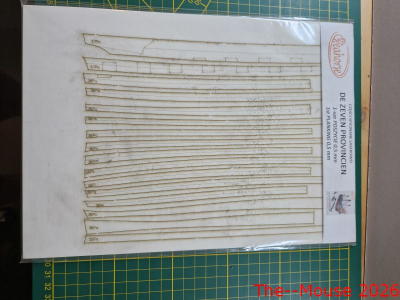
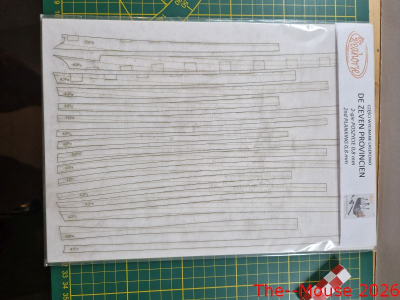
Laser-cut first and second planking:
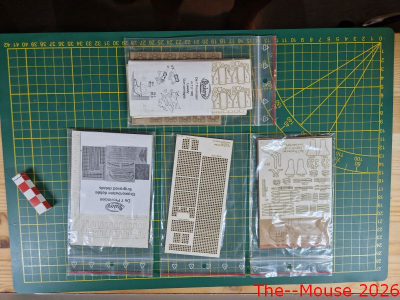
Even more laser-cut parts:
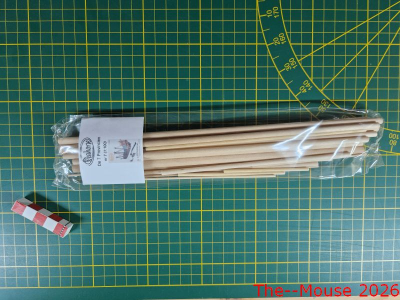
The masts, which are made of wood:
The sails:
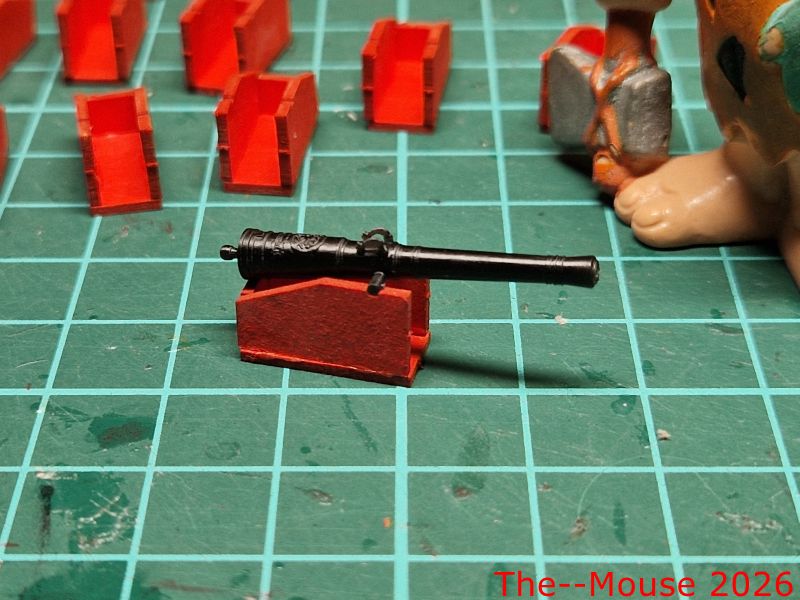
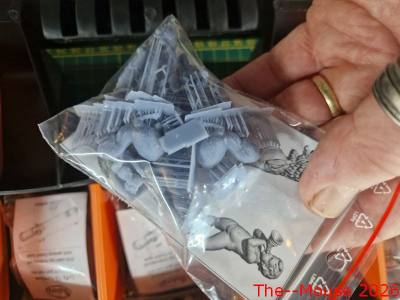
The cannons, deadeyes, blocks, decorative figures, and many other parts are 3D printed:
I think this will once again be a model that will be standing on my workbench for quite some time. I will have to learn new techniques again, including painting the 3D figures and assembling all the rigging...
The ship will be built completely, including all the masts and with a full set of sails.
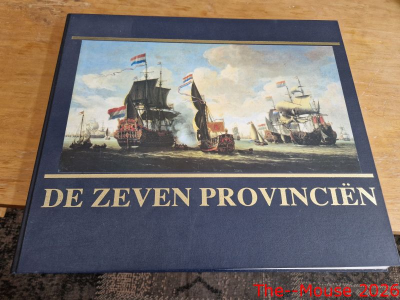
So it will not be built like the photo on the cover of the book.
I have started studying this ship, and the actual construction will begin from mid-September.
Fred
De 7 Provinciën
De 7 Provinciën was a Dutch ship of the line from the 17th century and is best known as the flagship of Lieutenant Admiral Michiel de Ruyter. The ship was built at the Admiralty Shipyard in Rotterdam under the supervision of master shipbuilder Salomon Jansz. van den Tempel. Her keel was laid in 1664, and she was launched on 4 March 1665, just in time to take part in the Second Anglo-Dutch War.
De 7 Provinciën was a so-called three-deck warship, although the upper gun deck did not extend along the ship's full length. Upon entering service, she carried approximately 80 cannons distributed over several decks. During her career, her armament was increased to around 96 cannons. Depending on the mission, her crew consisted of approximately 420 to 500 men, including officers, sailors, marines, gunners, and cabin boys.
The ship measured approximately 48 metres in length on the gun deck, had a beam of about 12 metres, and a draught of around 5 metres. Her displacement was approximately 1,600 tons, making her one of the largest and most powerful warships of the Republic of the Seven United Netherlands.
De 7 Provinciën played a leading role in several of the most famous naval battles in Dutch maritime history. As Michiel de Ruyter's flagship, she fought in the Four Days' Battle (1666), the St. James's Day Battle (1666), the Battle of Solebay (1672), both Battles of Schooneveld (1673), and the Battle of Texel (1673). She also took part in the famous Raid on Chatham in 1667 as part of the Dutch fleet.
In addition to her military importance, De 7 Provinciën was renowned for her richly decorated stern, magnificent wood carvings, and impressive appearance. The ship remains one of the most famous warships of the Dutch Golden Age and a symbol of the maritime power of the Dutch Republic.
After 29 years of service, the ship was broken up in 1694.
(Source: ChatGPT)
The model is produced by Seahorse, and I purchased it through Scaldis.
The difficulty rating is 5 out of 5, and the description states that it is intended for highly experienced model builders... it should be manageable, right?
It's quite a substantial kit:
The kit includes, among other things:
The ship itself, consisting of an entire book of printed paper sheets.
I have placed all the sheets in plastic sleeves to keep everything neatly organized together:
Laser-cut frames:
Laser-cut first and second planking:
Even more laser-cut parts:
The masts, which are made of wood:
The sails:
The cannons, deadeyes, blocks, decorative figures, and many other parts are 3D printed:
I think this will once again be a model that will be standing on my workbench for quite some time. I will have to learn new techniques again, including painting the 3D figures and assembling all the rigging...
The ship will be built completely, including all the masts and with a full set of sails.
So it will not be built like the photo on the cover of the book.
I have started studying this ship, and the actual construction will begin from mid-September.
Fred