• SUBSCRIBE TO SHIPS IN SCALE TODAY!

    The beloved Ships in Scale Magazine is back and charting a new course for 2026!
    Discover new skills, new techniques, and new inspirations in every issue.

    NOTE THAT OUR NEXT ISSUE WILL BE MARCH/APRIL 2026
  • Win a Free Custom Engraved Brass Coin!!!
    As a way to introduce our brass coins to the community, we will raffle off a free coin during the month of August. Follow link ABOVE for instructions for entering.

Detailed Rigging for the Alert 1777 Cutter by Serikoff in 1:48 scale.

Joined
Oct 1, 2024
Messages
1,200
Points
493

Location
Ukraine, Kyiv
For those who enjoy reading, there's a lot of information below (which I will update over time). But for everyone else, here’s a brief summary.

I have studied the anatomy of this ship and other rigging books (listed below) for a long time and created my own guide on making the masts, rigging, and sails. I originally made it for myself, using various sources, as the anatomy contains many errors, typos, and inaccuracies... and even more omissions! I will write about all of this below, justifying the corrections and proposed rigging solutions.

You can download all the materials at this Google Drive link: Rigging Alert 1777 by Serikoff

Here’s an example of what the first two sketches look like, drawn to a 1:48 scale!


When printing, you need to select A0 format (841 × 1189 mm)—this is indicated in the file names with “0” and “00.” The guide itself (files named “01-11”) can be printed in A4 or preferably A3 format.

Updates: The first version of the calculations has been removed and replaced with version 2.0
New diagrams will be presented in post #17
.

It may seem like I went overboard, but solving this puzzle over three weeks was interesting for me. If someone had done this earlier with the same level of quality, I would have been very grateful. That’s why all materials will be available for free. If you see someone building this ship, feel free to share the link to this article—I’m sure they’ll appreciate it. If you have any questions, you can write to me, and I’ll try to answer. I’ll also be grateful for well-founded corrections backed by sources (opinions like “I think so” will not be accepted).

What I based my work on. These are the books I used:


At the same time, I studied other ship anatomies. ChatGPT also assisted me throughout the process, and together we tried to recreate the most realistic rigging layout. I deeply respect all the book authors, including the one who wrote the Alert anatomy, but upon closer examination, I found many inaccuracies, typos, and gaps—for example, there is no diagram showing how the rigging is attached to the hull.
I also researched rigging rope diameters, and on page 11 of the guide, I listed all of them to 1:48 scale. The standard conversion tables don’t work here, as a three-masted ship is very different from a single-masted one. On a cutter, the main and largest sail is the mainsail, which was raised and lowered differently than on a three-masted ship. It was proportionally larger and moved together with the gaff, rather than being gathered at the mast and gaff. This affected the rigging layout and rope diameters.
The anatomy also specifies single-sheave blocks for lifting the gaff, square sail yard, and securing the boom. I increased them to two- and two-sheave blocks because ships of this class and size had fewer crew members, so more sheaves were needed to reduce the weight of lifted objects. The deck space was also limited, so not many people could work the rigging simultaneously.
For the same reason, some rigging elements were simplified or combined. For example, there were no separate Sling, Vangs, or Guy rigging elements, and the Lifts were performed by the lower Sheets.
The topgallant sail yard had no Lifts or Braces—it was held only by the Topgallant sail yard Tie and Sheets. In strong winds, it was either taken down completely or secured to the Topsail yard. Truss or Parrel ropes were likely absent or used only when the ship was docked.
The Topsail yard could have had either Truss or Parrel ropes (this isn’t specified in the anatomy, but it’s a reasonable assumption). In strong winds, a Truss would have been useful. However, the lower two yards were a different case. The Gaff had to move freely along the mast, with rings attached to the mainsail, so any fixed lower yard trusses would obstruct this movement. They were likely used only when the ship was stationary.
As for the Square sail yard, it also had no Lifts or Braces. It was fully raised and lowered to the deck using the Tie. That’s why the Spreadyard had no Footrope, just like all other yards except the Topsail yard. The Square sail yard was held only by the Tie, Brace, and Tack, and its maneuverability was controlled between the Topsail and Spreadyard rigging.
One of the biggest mistakes in the Alert anatomy is in the placement and method of securing the Boom topping lift, Peak halyard, and Gaff Jeers blocks.
If installed as shown in the anatomy, the Topgallant Mast could not be lowered on the Top rope, as the mast would hit these block fittings. I repositioned them alongside the mast’s lowering path, fixing the blocks to rings with hooks. There are many such issues in the anatomy.
Another major mistake is how the rigging is attached to the mast. According to the anatomy, if such a connection broke, the entire mast rigging would have to be disassembled from the top down to replace the loop. Instead, I designed all central mast fittings as tie-downs rather than loops. This is clearly shown in the guide.
The anatomy also doesn’t explain what the ship’s windlass was used for. Logically, it should have been used for raising the heaviest sail—the Mainsail on the Gaff. So, the Gaff Jeers were wound onto the windlass.
These are the most critical errors and changes, but there are many others. When analyzing the logic and supporting materials, everything falls into place.
If this text explanation is unclear, I will try to illustrate these descriptions with diagrams when I have time.
I have listed the minimum set of blocks required for the model. To calculate their size, you need to multiply the rigging thread diameter by 12—this gives the block length. But this applies to the rigging section, not the entire rope, as the upper part is thicker, while the working (rigging) end is thinner.
This guide and drawings will be useful for those building Alert from the Trident kit or scratch-building the model in 1:48 scale. In other cases, you’ll need to recalculate the dimensions and adjust the drawings to match your scale.

Ship-1

Continuing with the topic of drawings to wrap it up completely.

I have compiled another A0 sheet, with half of it containing the original drawings from the Trident Model kit—now in a more readable format (black on white instead of the nearly illegible blue on blue). The other half is scaled to 1:48, including the hull (side and top views), deck details, boats, and other elements.
Why did I do this, and why might it be useful for anyone building the Trident Model kit? This is for those who want to go beyond just assembling the skeleton and wish to add planking, decking, and other details. I specifically scaled all the elements so they match the true dimensions of the model in 1:48 scale.
Of course, these drawings won't help you build the hull from scratch—that’s not their purpose. Their function is to provide accurate real-time dimensions: plank widths, nail patterns and positioning, bolt placements, boat drawings (which are missing from the kit), and precise dimensions of some parts that were slightly oversized in the kit. Using these drawings, you can make necessary adjustments.
So, if you have the Trident Model kit and plan to add planking and some refinements, this will be useful. And if you also want to rig the ship with sails, the first two sheets and the rigging guide will help.
I made these drawings for myself, but I’m happy to share them with you.

Below is a sample of the format A0 sheet, as the full format cannot be uploaded here. You can download the original from Google Drive via this link.

 
Last edited:
Wonderful work! It's sad that such quality work can be accomplished by an individual, yet model kit builders making many thousands of dollars from a kit cannot spend a fraction of the time you have to present anything reasonable to the customer. I have no intention of building the kit, but have downloaded some just to admire your work.

I understand your reasoning in making this publication available for free, but you might consider certain (larger?) projects that you could publish and sell, like ANCRE. I imagine any model ship builder would by happy to pay for a similar publication for the model they are building. I know I would!
 
Serikoff

I’m building the Vanguard kit of Alert. I have done far less research than you. But I come to a rather different conclusion, and I’d be most grateful for your judgement.

In his study of the Alert, Goodwin apparently bases much of his interpretation on a model of the cutter Hawke in the Royal Maritime Museum. He describes her as rigged with a square sail, topsail and topgallant sail, bent to four yards including a spreadyard. He shows the upper ends of the shrouds fixed to a collar some way below the mast cheeks. This goes against normal practice: the shrouds were usually looped over the trestle trees.

But the Hawke model is not a reliable source. Hawke and Alert were built at the same time, and were of similar size and similarly armed: but it is not clear how closely they resembled one another. The model of Hawke was apparently contemporary. But it was later damaged and repaired, so there is no assurance that rigging arrangement it shows is accurate.

Goodwin says Alert was rerigged in the 1780s without a spreadyard. He suggests that the rerigged Alert resembled another model in the Royal Maritime Museum: which is also the basis for Lennarth Petersson’s book Rigging: Period Fore-And-Aft Craft. This shows the shrouds rigged in the conventional way over the trestle trees. But this model was not completed until 1960, well after the RMM acquired it. So it too is unreliable as a source.

I have come across references to only two documentary sources. Thucydides kindly drew my attention to a possible rigging warrant for Alert in the RMM:
https://www.rmg.co.uk/collections/objects/rmgc-object-557865. Blue Ensign (build log post 54) says the Admiralty lines describe the topsail yard as 4’ shorter than the equivalent yard on the Hawke model, and the square-sail yard as 2’ longer).

I’m sure I should do a good deal more reading. Despite the uncertainties, I think I will nevertheless rig my own model of Alert with square and topsail yards only, and no spreadyard. But I’d be grateful for your views first.

Rodric
 
Congratulations. A masterful piece of research. There are lots of ship plans available but rigging plans are hard to come by. I usually have to make do with a lot of improvisation so work like yours is a real contribution to the hobby.
Thank you for the praise. I was looking for the same information, but if you don't go deep there isn't much. I had to approach it seriously))

Wonderful work! It's sad that such quality work can be accomplished by an individual, yet model kit builders making many thousands of dollars from a kit cannot spend a fraction of the time you have to present anything reasonable to the customer. I have no intention of building the kit, but have downloaded some just to admire your work.

I understand your reasoning in making this publication available for free, but you might consider certain (larger?) projects that you could publish and sell, like ANCRE. I imagine any model ship builder would by happy to pay for a similar publication for the model they are building. I know I would!
Thank you. Yes, I also thought about the price and cost. But there are 2 points. I don't have time to put it on stream and make many such manuals of other ships. And secondly, I did it for myself, and would be glad if someone did this work for me)))) That's why I shared it) It was like a challenge, and solving a riddle or puzzle, so I don't regret the time spent. But the idea is good))

Serikoff

I’m building the Vanguard kit of Alert. I have done far less research than you. But I come to a rather different conclusion, and I’d be most grateful for your judgement.

In his study of the Alert, Goodwin apparently bases much of his interpretation on a model of the cutter Hawke in the Royal Maritime Museum. He describes her as rigged with a square sail, topsail and topgallant sail, bent to four yards including a spreadyard. He shows the upper ends of the shrouds fixed to a collar some way below the mast cheeks. This goes against normal practice: the shrouds were usually looped over the trestle trees.

But the Hawke model is not a reliable source. Hawke and Alert were built at the same time, and were of similar size and similarly armed: but it is not clear how closely they resembled one another. The model of Hawke was apparently contemporary. But it was later damaged and repaired, so there is no assurance that rigging arrangement it shows is accurate.

Goodwin says Alert was rerigged in the 1780s without a spreadyard. He suggests that the rerigged Alert resembled another model in the Royal Maritime Museum: which is also the basis for Lennarth Petersson’s book Rigging: Period Fore-And-Aft Craft. This shows the shrouds rigged in the conventional way over the trestle trees. But this model was not completed until 1960, well after the RMM acquired it. So it too is unreliable as a source.

I have come across references to only two documentary sources. Thucydides kindly drew my attention to a possible rigging warrant for Alert in the RMM:
https://www.rmg.co.uk/collections/objects/rmgc-object-557865. Blue Ensign (build log post 54) says the Admiralty lines describe the topsail yard as 4’ shorter than the equivalent yard on the Hawke model, and the square-sail yard as 2’ longer).

I’m sure I should do a good deal more reading. Despite the uncertainties, I think I will nevertheless rig my own model of Alert with square and topsail yards only, and no spreadyard. But I’d be grateful for your views first.

Rodric
Well, let's say this, I proceeded from what is in the anatomy and logic of constructing the rigging of those times. I was able to adapt and correct all the shortcomings that were in the anatomy. And this is just my version. It may not be accurate, which is most likely the case, but they definitely do not contradict logic and could well be. Everyone decides how to equip a model, I decided to do it this way, and as best I could, I argued the reality of such an option, and it is up to everyone to decide. In any case, whoever takes my version as a guideline - will save a lot of time on research and guesses on how everything should work. If someone had done this before me, I would have used it, even if I knew that maybe I was wrong in something, but, in general, all the rigging was logical and detailed for production))) and it is up to everyone to decide.
 
Fascinating and quirky rig on this vessel. A question: since the ratlines end well below the topsail yard, how did the sailors get onto the yard?
 
Thank you for such a clear and rapid reply.


Of course you’re right: in the end one has to deccide for oneself. Although I can’t match your research, I’ve been interested in square-rigged ships, their history and handling, for very many years; and I sailed my own small boat, which help one imagine what it’s like.


So we’ve ended up going in different directions. But I and everyone else will benefit from the mass of orderly material you’ve assembled, Very many thanks.


Rodric
Fascinating and quirky rig on this vessel. A question: since the ratlines end well below the topsail yard, how did the sailors get onto the yard?
I’m not sure that the crew would have to go out along the topyard very often, perhaps only when the topsail had to be reefed or unreefed. For that purpose the yard would be in tis lower position just above the doubling. From there it could be reached easily enough from the shrouds, assuming they were rigged in the normal position over the trestle trees. Otherwise the sails could mostly be handled from deck through the sheets, lifts, clew lines, bunt lines, and bow lines.

These naval cutters had very large and agile crews: Alert may have had as many as fifty to work the ship and fight the guns. All needed to be fed and crammed into the meagre accommodation below decks. Some very good fiction helps on imagine how they did it: Richard Woodman’s A King’s Cutter, Captain Marryat’s The Three Cutters. Both men were professional sailors and new what they were talking about. Patrick O’Brian wasn’t: but his novels about the Royal Navy during the Napoleonic wars contains the most convincing description of what it was like to be aboard a square rigged ship at sea in all weathers that I know.

Rodric
 
Fascinating and quirky rig on this vessel. A question: since the ratlines end well below the topsail yard, how did the sailors get onto the yard?
The lower square sail was lowered to the deck and gathered there. The upper sail was lowered to the fore-sailyard and gathered there. That is why the sailors did not rise above the fore-sailyard. This was done to simplify the rigging on such a class and size of ships.
 
Thank you for such a clear and rapid reply.


Of course you’re right: in the end one has to deccide for oneself. Although I can’t match your research, I’ve been interested in square-rigged ships, their history and handling, for very many years; and I sailed my own small boat, which help one imagine what it’s like.


So we’ve ended up going in different directions. But I and everyone else will benefit from the mass of orderly material you’ve assembled, Very many thanks.


Rodric

I’m not sure that the crew would have to go out along the topyard very often, perhaps only when the topsail had to be reefed or unreefed. For that purpose the yard would be in tis lower position just above the doubling. From there it could be reached easily enough from the shrouds, assuming they were rigged in the normal position over the trestle trees. Otherwise the sails could mostly be handled from deck through the sheets, lifts, clew lines, bunt lines, and bow lines.

These naval cutters had very large and agile crews: Alert may have had as many as fifty to work the ship and fight the guns. All needed to be fed and crammed into the meagre accommodation below decks. Some very good fiction helps on imagine how they did it: Richard Woodman’s A King’s Cutter, Captain Marryat’s The Three Cutters. Both men were professional sailors and new what they were talking about. Patrick O’Brian wasn’t: but his novels about the Royal Navy during the Napoleonic wars contains the most convincing description of what it was like to be aboard a square rigged ship at sea in all weathers that I know.

Rodric
I was glad to be of help))
 
Better than what the model companies are doing. I am curious on the following good sir Serikoff,

Firstly, how much did the 4 cutters of the alert class differ from each other in the rigging? I mean, the deck plan for the rigging of the Shipyard HMS Rattlesnake seems logical, but there is serious deviation from your main mast arrangement that I have to ask. Also a very different arraingment of rigging tie offs around the rudder as well.

Secondly, in the last illustration of your post 1, you present an excellent set of plans, but there is a detail issue in them that I need help with.

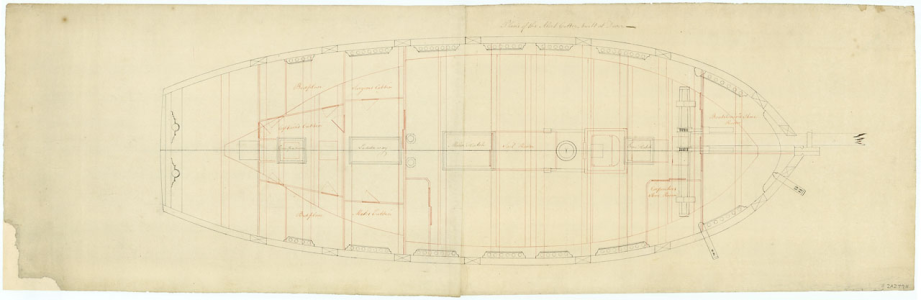
in the spot next to the rudder assembly, it shows an over head plan view of the bit of raised decking that the rudder head penetrates the hull at. In this view you show two hoops attached to the front edge of this section of raised decking. Then you should a front view and show what looks like a flag pole stuck inserted into one.
But as this detail is NOT shown in any other part of the plans, I must kindly ask, what are they for? I have never seen them in a built model of Alert or her sisters, its seriously screwing with my head.
 
@tball4217 - The hoops are two alternate locations for the small, optional mizzen mast. (According to the Anatomy of the Ship book by Peter Goodwin.)
 
Last edited:
The hoops are two alternate locations for the small, optional mizzen mast.
You may have the answer with these being to support a mizzen, but the rigging warrants list no rigging lines or blocks for a mizzen mast. In the end one may have nothing to do with the other, but curious that there would be no rigging available if there was to be a mizzen mast. Add to that, Alert 1777 was reclassed the same year she was launched as a cutter rigged sloop so she would, by definition of a sloop, carry only one mast.

It could be the drawing from RMG below was made before the conversion. RMG comments they do not know the date of the drawing.


1742984034978.png


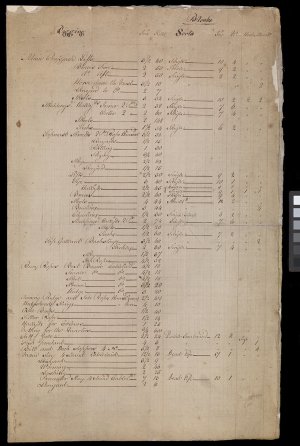
The pages below make up the rigging warrant for Alert. Description at RMG
A sheet folded in two recording handwritten details of the rope thicknesses and lengths for the various rigging parts, as well as the type and size of the blocks for rigging Kite and later for Alert (1777), a 10-gun Cutter (later classed as a sloop but still cutter-rigged).
1742983546169.jpeg
1742983578008.jpeg

There are various slight sketches of the Alert plus a sketch drawn to scale of the profile view of the body of a sailing vessel (Drawing) (PAE9598) at RMG that may help, but it is not on their website so would require a visit and/or a fee.
 
Better than what the model companies are doing. I am curious on the following good sir Serikoff,

Firstly, how much did the 4 cutters of the alert class differ from each other in the rigging? I mean, the deck plan for the rigging of the Shipyard HMS Rattlesnake seems logical, but there is serious deviation from your main mast arrangement that I have to ask. Also a very different arraingment of rigging tie offs around the rudder as well.

Secondly, in the last illustration of your post 1, you present an excellent set of plans, but there is a detail issue in them that I need help with.

in the spot next to the rudder assembly, it shows an over head plan view of the bit of raised decking that the rudder head penetrates the hull at. In this view you show two hoops attached to the front edge of this section of raised decking. Then you should a front view and show what looks like a flag pole stuck inserted into one.
But as this detail is NOT shown in any other part of the plans, I must kindly ask, what are they for? I have never seen them in a built model of Alert or her sisters, its seriously screwing with my head.
According to anatomy, this is a mount for a mizenmast. The book has alternative sailing rigs, both storm and additional. But I think one mast was mostly used.
 
shockingly, no reply as to the carronade mounted long guns has arrived, but the kit does have these two bits on the model. But I cant see any iron hoop, just the wood.
 
shockingly, no reply as to the carronade mounted long guns has arrived, but the kit does have these two bits on the model. But I cant see any iron hoop, just the wood.
English is not my native language, I can not always understand the question from the translator, especially when there are terms. If you ask the question in more detail and simply, I can help you.
 
2.0 version of my rigging guide for the cutter Alert 1777.

Previously, I wrote that I used many rigging books (listed above), about 15 volumes of Ship Anatomies from that period, and used 2 artificial intelligences to cross-check the data. This took more than 80 hours of work, I hope you appreciate it...

What was done:
  • Several rigging nodes were drastically changed, as a cutter is a unique vessel and it is not enough to simply take the forward rigging from a 3-masted ship ahead of the foremast and connect it with the aft rigging abaft the mizenmast—it doesn't work that way here! Plus, everything is complicated by the fact that this cutter does not have proper bulwarks with pinrails, making everything even more difficult. One could, of course, not bother and just wing it, but I decided to dig out the truth, and I hope I succeeded.
  • Anatomy errors were corrected, of which there are quite a few, but most importantly...
  • Many nodes omitted in the Anatomy were added, without which no vessel can function. Among the most significant:
  1. Spreadyard lifts (topenants), without which the entire structure simply could not be horizontally stable.
  2. Heavy burton pendants were added (as every vessel needed to load items into the hold or handle the ship's boat).
  3. Indicated which rigging was served/wormed and what kind of seizing was used where.
  4. Dead connections were replaced in places where they should be quick-release setups—which is practically everywhere, since this is a cutter.
  5. Indicated how the sails were bent and how the running ends of the entire rigging were led (which is completely absent in the Anatomy).
  6. Added the mainsail reef tackle system, which no cutter could do without.
  7. Indicated how the gaff blocks were rigged so as not to interfere with housing the topgallant mast.
  8. Provided alternative options for rigging and joining nodes (you can choose).
  9. Added a shroud pinrail on the shrouds and described its appearance.
  10. Detailed the sail corners, connections, and how they were bent to the yards.
  11. Detailed the working principle of the anchor gear and added rigging for securing the ship's boat.
  12. Added footropes on the spreadyard, as it was from there that the square sail was reefed.
  13. Added the flying sail traveler system on the spreadyard and detailed its mechanism.
  14. Calculated the diameters of every single rigging rope and cable.
  15. Updated the belaying plan for the running ends of all rigging... and much more.
  16. Made text annotations to explain the nodes.
  17. At the end of the post, I provided a definition for each rigging term to make it easier to understand what line was responsible for what.
*If you open the image in a new tab, it will be in its original quality.
You can also download all the diagrams via a direct link from Google Drive. Rigging Alert 1777 by Serikoff

Please note: I could be wrong, so I'm not asking anyone to take my word for it. I'm simply sharing all the information I've gathered bit by bit and showing how I'll be doing it. Since the rigging is still a long way off, changes may be made along the way. At the very end, after I've completed all the rigging on my model, I'll post the final version.


STANDING RIGGING

Main stay (Fore stay)
  • Lanyard - The primary heavy rope preventing the mast from falling aft. The lanyard is a thinner line reeved through deadeyes or hearts to provide powerful tension to this stay.
  • Seizings - Small lines wound tightly around the turned-back end of the stay to securely bind it in place and form the eye.
  • Worming - Spiraling a fine line (spunyarn) along the lay between the strands of the rope to smooth its surface before parceling and serving, protecting it from internal moisture.
Main Preventer stay
  • Lanyards - A redundant, auxiliary stay running parallel to the main stay to support the mast in action. It is tensioned using its own separate lanyards.
  • Seizing
  • Worming
Main Shrouds
  • Deadeye lanyard - Heavy ropes supporting the mast from the sides to prevent lateral swaying. The deadeye lanyard is the running line laced through the three holes of a pair of deadeyes to set up and tension the shrouds.
  • Seizings - Strong rope bindings that secure the shrouds at their eyes over the masthead and around the upper deadeyes.
  • Ratline - Small tarred lines hitched horizontally across the shrouds at regular intervals, serving as the steps of a rope ladder for climbing aloft.
Running Backstays
  • standing end of RBs - Movable rigging supporting the mast from abaft. The standing end is the long, fixed section of the rope leading from the mast head, passing through a block, and ending in a tackle block.
  • tackles falls - The running ends of the ropes reeved through the backstay tackle blocks, used by the crew to haul the weather backstay taut or ease the lee one.
Bowsprit Shrouds
  • tackle - Heavy ropes securing the outboard end of the bowsprit to the vessel's bows for lateral support. The tackles allow their tension to be adjusted as the spars flex.
Topgallant
  • Fore stay
    • tackles
    • A thin stay supporting the topgallant mast from forward. It leads down to the jibboom end, returns through a block toward the hull, and is tensioned via tackles.
  • Backstays
    • tackles
    • Long, light ropes leading from the topgallant masthead down to the channels to support the spar from abaft, set up taut with small tackles.

RUNNING RIGGING


Foresail
  • Foresail halyard
    • tackle
    • The line and blocks utilized by the crew to hoist the head (upper corner) of the foresail up along the stay.
  • Foresail downhauler
    • A running line secured to the head of the foresail and leading down to the deck; used to forcibly haul the sail down during heavy weather.
  • Foresail sheet tackle
    • A tackle system secured to the aft lower corner (clew) of the foresail to control its trim and position relative to the wind. These tackles are fixed to an iron travel-ring that slides automatically across an iron horse bolted athwartships to the deck beams.
  • Foresail tack
    • A line or tack-piece holding the lower forward corner (tack) of the sail firmly down near the stemhead.

Jib
  • Jib halyard
    • tackle
    • A tackle and block system used to hoist the jib up into its working position.
  • Jib sheet
    • tackle
    • The running line and tackles holding the clew of the jib to regulate its trim from the quarterdeck or main deck.
  • Jib tack
    • A short strop or line securing the lower forward corner of the jib to the movable traveler ring on the bowsprit.
  • Jip travelling inhauler
    • A line used to haul the traveler ring (jib traveler) back inboard toward the stem when dousing or furling the sail.
  • Jip travelling outhauler
    • A line passing through a sheave at the bowsprit end used to haul the traveler ring with the sail outboard along the bowsprit.

Flying jib
  • Flying jib halyard
    • A light running line used to hoist the head of the flying jib to the topmast head.
  • Flying jib tack
    • A line securing the tack of the flying jib to the outermost end of the bowsprit or jibboom.
  • Flying jib sheet
    • The running rigging line used to control and trim the aft clew of the flying jib.

Mainsail
  • Mainsail sheet
    • Rigging designed to extend the foot of the sail and adjust the belly of the mainsail along the boom.
  • Mainsail reef pendants
    • tackle
    • Heavy lines passed through the reef points and cringles of the sail to shorten its area step by step in high winds, hauled taut via reef tackles.
  • Mainsail bralls
    • Four distinct lines (two on each side) used to gather and haul the aft leech of the mainsail forward to the mast when brailing up or lowering the gaff, preventing the sail from billowing out board when the gaff is dropped.
  • Mainsail Gaff lacing
    • A line passed through the eyelets of the head of the sail and wound spirally around the gaff to secure the sail upper edge to the spar.

Peak halyard
  • tackle
    • A system of ropes and blocks used to hoist, support, and adjust the outer end (peak) of the gaff at the correct angle.
  • Gaff Span
    • A wire or heavy rope span fitted with eyes, fixed permanently at both ends along the timber of the gaff, serving as a secure traveler or attachment point for the peak halyard blocks.

Gaff Jeers
  • Heavy, powerful tackles used to vertically hoist, support, and lower the throat of the gaff at the mast.

Boom topping lift
  • tackle
    • A line running from the masthead down to the outboard end (nock) of the boom. It supports the weight of the boom, preventing it from crashing onto the deck when the mainsail is lowered or being reefed.

Boom sheet tackle
  • Heavy lower tackles that rigidly control and secure the angle of the boom relative to the vessel's stern, preventing dangerous swinging.

Square sail
  • Square sail yard tie
    • A heavy rope or tye by which the square sail yard itself is suspended and hoisted up the mast.
  • Square sail reef
    • Lines or points used to reduce the height and area of the square sail as the wind freshens.
  • Square sail sheet
    • A line securing the lower aft corner of the square sail and leading inboard to the vessel's side.
  • Square sail tack
    • A rope hauling the lower forward corner of the square sail down and forward to keep the weather edge taut.
  • Square sail bowline
    • A line attached to the vertical leech of the square sail to haul it forward into the wind, preventing the weather edge from curling back.
  • Squaresail lacing
    • A spiral lacing line used to quickly secure the head of this temporary sail to its yard, allowing it to be easily detached and stowed below.

Topsail
  • Spreadyard tie
    • A tye line used for the vertical hoisting of the spreadyard up the mast.
  • Spreadyard brace
    • Lines attached to the yardarms to swing and wheel the yard horizontally to face the wind.
  • Spreadyard lift
    • Lines supporting the ends (yardarms) of the yard to keep it strictly horizontal.
  • Topsail yard tie
    • The tye line designed to hoist the upper topsail yard along the topmast.
  • Topsail yard brace
    • Running lines secured to the topsail yardarms to control its horizontal angles relative to the wind.
  • Topsail sheet
    • Lines that extend and sheet home the lower corners of the topsail out to the ends of the spreadyard below it.
  • Topsail clewline
    • Lines that haul the lower corners (clews) of the topsail up to its own yard for rapid spilling and furling.
  • Topsail bowline
    • Lines used to haul the weather leeches of the topsail forward when sailing close to the wind.
  • Topsail truss
    • A parrel or collar holding the topsail yard close to the mast, preventing it from swinging away forward.
  • Footrope
    • Ropes slung loosely beneath the yards for the crew to stand upon while working aloft to furl or reef the sails.
  • Topsail robands
    • Small braided rope-bands or yarn ties that lash the head of the topsail securely to the topsail yard.

Topgallant sail
  • Topgallant tie
    • tackle
    • A line fitted with small tackles used to hoist the topgallant yard to the topgallant masthead.
  • Topgallant sheet
    • Thin lines extending the lower corners of the topgallant sail out to the yardarms of the topsail yard below it.
  • Topgallant yard lacing
    • A spiral lacing line for temporary attachment of the topgallant sail to its yard, allowing rapid deployment and removal.

Top rope
  • A heavy, strong line used to hoist or sway up and lower the topmast through the cap and trestletrees during rigging setup or dismantling.

NECESSARY ROPES

  • Cat-fall
    • A heavy rope reeved through cat-blocks by which the anchor is hoisted from the water's surface up to the cathead using the windlass.
  • Fish tackle pendent
    • A heavy rope pendant equipped with a large iron hook, lowered from the fish davit to catch the fluke of the anchor when lifting it onto the gunwale.
  • Cat-Stoppers
    • Strong, secure chains or ropes (the cat-stopper for the ring and the shank-painter for the fluke) used to lash the anchor tightly to the hull for sea-going storage.
  • Anchor rope
    • The thickest, heaviest cable of the vessel, bent to the anchor ring to hold the ship fast when riding at anchor.
  • Flag halliard
    • Light, thin lines used to hoist flags, pennants, and signals to the masthead or gaff peak.
  • Boat Gripes
    • lanyards
    • Wide, heavy canvas or rope lashings passed over the hull of the ship's boat. Their lanyards are laced through small deadeyes or hearts to deck rings, clamping the boat rigidly to the deck during heavy weather.
 
Last edited:
2.0 version of my rigging guide for the cutter Alert 1777.

Previously, I wrote that I used many rigging books (listed above), about 15 volumes of Ship Anatomies from that period, and used 2 artificial intelligences to cross-check the data. This took more than 80 hours of work, I hope you appreciate it...

What was done:
  • Several rigging nodes were drastically changed, as a cutter is a unique vessel and it is not enough to simply take the forward rigging from a 3-masted ship ahead of the foremast and connect it with the aft rigging abaft the mizenmast—it doesn't work that way here! Plus, everything is complicated by the fact that this cutter does not have proper bulwarks with pinrails, making everything even more difficult. One could, of course, not bother and just wing it, but I decided to dig out the truth, and I hope I succeeded.
  • Anatomy errors were corrected, of which there are quite a few, but most importantly...
  • Many nodes omitted in the Anatomy were added, without which no vessel can function. Among the most significant:
  1. Spreadyard lifts (topenants), without which the entire structure simply could not be horizontally stable.
  2. Heavy burton pendants were added (as every vessel needed to load items into the hold or handle the ship's boat).
  3. Indicated which rigging was served/wormed and what kind of seizing was used where.
  4. Dead connections were replaced in places where they should be quick-release setups—which is practically everywhere, since this is a cutter.
  5. Indicated how the sails were bent and how the running ends of the entire rigging were led (which is completely absent in the Anatomy).
  6. Added the mainsail reef tackle system, which no cutter could do without.
  7. Indicated how the gaff blocks were rigged so as not to interfere with housing the topgallant mast.
  8. Provided alternative options for rigging and joining nodes (you can choose).
  9. Added a shroud pinrail on the shrouds and described its appearance.
  10. Detailed the sail corners, connections, and how they were bent to the yards.
  11. Detailed the working principle of the anchor gear and added rigging for securing the ship's boat.
  12. Added footropes on the spreadyard, as it was from there that the square sail was reefed.
  13. Added the flying sail traveler system on the spreadyard and detailed its mechanism.
  14. Calculated the diameters of every single rigging rope and cable.
  15. Updated the belaying plan for the running ends of all rigging... and much more.
  16. Made text annotations to explain the nodes.
  17. At the end of the post, I provided a definition for each rigging term to make it easier to understand what line was responsible for what.
*If you open the image in a new tab, it will be in its original quality.
You can also download all the diagrams via a direct link from Google Drive. Rigging Alert 1777 by Serikoff

Please note: I could be wrong, so I'm not asking anyone to take my word for it. I'm simply sharing all the information I've gathered bit by bit and showing how I'll be doing it. Since the rigging is still a long way off, changes may be made along the way. At the very end, after I've completed all the rigging on my model, I'll post the final version.


STANDING RIGGING

Main stay (Fore stay)
  • Lanyard - The primary heavy rope preventing the mast from falling aft. The lanyard is a thinner line reeved through deadeyes or hearts to provide powerful tension to this stay.
  • Seizings - Small lines wound tightly around the turned-back end of the stay to securely bind it in place and form the eye.
  • Worming - Spiraling a fine line (spunyarn) along the lay between the strands of the rope to smooth its surface before parceling and serving, protecting it from internal moisture.
Main Preventer stay
  • Lanyards - A redundant, auxiliary stay running parallel to the main stay to support the mast in action. It is tensioned using its own separate lanyards.
  • Seizing
  • Worming
Main Shrouds
  • Deadeye lanyard - Heavy ropes supporting the mast from the sides to prevent lateral swaying. The deadeye lanyard is the running line laced through the three holes of a pair of deadeyes to set up and tension the shrouds.
  • Seizings - Strong rope bindings that secure the shrouds at their eyes over the masthead and around the upper deadeyes.
  • Ratline - Small tarred lines hitched horizontally across the shrouds at regular intervals, serving as the steps of a rope ladder for climbing aloft.
Running Backstays
  • standing end of RBs - Movable rigging supporting the mast from abaft. The standing end is the long, fixed section of the rope leading from the mast head, passing through a block, and ending in a tackle block.
  • tackles falls - The running ends of the ropes reeved through the backstay tackle blocks, used by the crew to haul the weather backstay taut or ease the lee one.
Bowsprit Shrouds
  • tackle - Heavy ropes securing the outboard end of the bowsprit to the vessel's bows for lateral support. The tackles allow their tension to be adjusted as the spars flex.
Topgallant
  • Fore stay
    • tackles
    • A thin stay supporting the topgallant mast from forward. It leads down to the jibboom end, returns through a block toward the hull, and is tensioned via tackles.
  • Backstays
    • tackles
    • Long, light ropes leading from the topgallant masthead down to the channels to support the spar from abaft, set up taut with small tackles.

RUNNING RIGGING


Foresail
  • Foresail halyard
    • tackle
    • The line and blocks utilized by the crew to hoist the head (upper corner) of the foresail up along the stay.
  • Foresail downhauler
    • A running line secured to the head of the foresail and leading down to the deck; used to forcibly haul the sail down during heavy weather.
  • Foresail sheet tackle
    • A tackle system secured to the aft lower corner (clew) of the foresail to control its trim and position relative to the wind. These tackles are fixed to an iron travel-ring that slides automatically across an iron horse bolted athwartships to the deck beams.
  • Foresail tack
    • A line or tack-piece holding the lower forward corner (tack) of the sail firmly down near the stemhead.

Jib
  • Jib halyard
    • tackle
    • A tackle and block system used to hoist the jib up into its working position.
  • Jib sheet
    • tackle
    • The running line and tackles holding the clew of the jib to regulate its trim from the quarterdeck or main deck.
  • Jib tack
    • A short strop or line securing the lower forward corner of the jib to the movable traveler ring on the bowsprit.
  • Jip travelling inhauler
    • A line used to haul the traveler ring (jib traveler) back inboard toward the stem when dousing or furling the sail.
  • Jip travelling outhauler
    • A line passing through a sheave at the bowsprit end used to haul the traveler ring with the sail outboard along the bowsprit.

Flying jib
  • Flying jib halyard
    • A light running line used to hoist the head of the flying jib to the topmast head.
  • Flying jib tack
    • A line securing the tack of the flying jib to the outermost end of the bowsprit or jibboom.
  • Flying jib sheet
    • The running rigging line used to control and trim the aft clew of the flying jib.

Mainsail
  • Mainsail sheet
    • Rigging designed to extend the foot of the sail and adjust the belly of the mainsail along the boom.
  • Mainsail reef pendants
    • tackle
    • Heavy lines passed through the reef points and cringles of the sail to shorten its area step by step in high winds, hauled taut via reef tackles.
  • Mainsail bralls
    • Four distinct lines (two on each side) used to gather and haul the aft leech of the mainsail forward to the mast when brailing up or lowering the gaff, preventing the sail from billowing out board when the gaff is dropped.
  • Mainsail Gaff lacing
    • A line passed through the eyelets of the head of the sail and wound spirally around the gaff to secure the sail upper edge to the spar.

Peak halyard
  • tackle
    • A system of ropes and blocks used to hoist, support, and adjust the outer end (peak) of the gaff at the correct angle.
  • Gaff Span
    • A wire or heavy rope span fitted with eyes, fixed permanently at both ends along the timber of the gaff, serving as a secure traveler or attachment point for the peak halyard blocks.

Gaff Jeers
  • Heavy, powerful tackles used to vertically hoist, support, and lower the throat of the gaff at the mast.

Boom topping lift
  • tackle
    • A line running from the masthead down to the outboard end (nock) of the boom. It supports the weight of the boom, preventing it from crashing onto the deck when the mainsail is lowered or being reefed.

Boom sheet tackle
  • Heavy lower tackles that rigidly control and secure the angle of the boom relative to the vessel's stern, preventing dangerous swinging.

Square sail
  • Square sail yard tie
    • A heavy rope or tye by which the square sail yard itself is suspended and hoisted up the mast.
  • Square sail reef
    • Lines or points used to reduce the height and area of the square sail as the wind freshens.
  • Square sail sheet
    • A line securing the lower aft corner of the square sail and leading inboard to the vessel's side.
  • Square sail tack
    • A rope hauling the lower forward corner of the square sail down and forward to keep the weather edge taut.
  • Square sail bowline
    • A line attached to the vertical leech of the square sail to haul it forward into the wind, preventing the weather edge from curling back.
  • Squaresail lacing
    • A spiral lacing line used to quickly secure the head of this temporary sail to its yard, allowing it to be easily detached and stowed below.

Topsail
  • Spreadyard tie
    • A tye line used for the vertical hoisting of the spreadyard up the mast.
  • Spreadyard brace
    • Lines attached to the yardarms to swing and wheel the yard horizontally to face the wind.
  • Spreadyard lift
    • Lines supporting the ends (yardarms) of the yard to keep it strictly horizontal.
  • Topsail yard tie
    • The tye line designed to hoist the upper topsail yard along the topmast.
  • Topsail yard brace
    • Running lines secured to the topsail yardarms to control its horizontal angles relative to the wind.
  • Topsail sheet
    • Lines that extend and sheet home the lower corners of the topsail out to the ends of the spreadyard below it.
  • Topsail clewline
    • Lines that haul the lower corners (clews) of the topsail up to its own yard for rapid spilling and furling.
  • Topsail bowline
    • Lines used to haul the weather leeches of the topsail forward when sailing close to the wind.
  • Topsail truss
    • A parrel or collar holding the topsail yard close to the mast, preventing it from swinging away forward.
  • Footrope
    • Ropes slung loosely beneath the yards for the crew to stand upon while working aloft to furl or reef the sails.
  • Topsail robands
    • Small braided rope-bands or yarn ties that lash the head of the topsail securely to the topsail yard.

Topgallant sail


  • Topgallant tie
    • tackle
    • A line fitted with small tackles used to hoist the topgallant yard to the topgallant masthead.
  • Topgallant sheet
    • Thin lines extending the lower corners of the topgallant sail out to the yardarms of the topsail yard below it.
  • Topgallant yard lacing
    • A spiral lacing line for temporary attachment of the topgallant sail to its yard, allowing rapid deployment and removal.

Top rope
  • A heavy, strong line used to hoist or sway up and lower the topmast through the cap and trestletrees during rigging setup or dismantling.

NECESSARY ROPES

  • Cat-fall
    • A heavy rope reeved through cat-blocks by which the anchor is hoisted from the water's surface up to the cathead using the windlass.
  • Fish tackle pendent
    • A heavy rope pendant equipped with a large iron hook, lowered from the fish davit to catch the fluke of the anchor when lifting it onto the gunwale.
  • Cat-Stoppers
    • Strong, secure chains or ropes (the cat-stopper for the ring and the shank-painter for the fluke) used to lash the anchor tightly to the hull for sea-going storage.
  • Anchor rope
    • The thickest, heaviest cable of the vessel, bent to the anchor ring to hold the ship fast when riding at anchor.
  • Flag halliard
    • Light, thin lines used to hoist flags, pennants, and signals to the masthead or gaff peak.
  • Boat Gripes
    • lanyards
    • Wide, heavy canvas or rope lashings passed over the hull of the ship's boat. Their lanyards are laced through small deadeyes or hearts to deck rings, clamping the boat rigidly to the deck during heavy weather.
What a great amount of work, Sergey. The drawings looks very nice with all the details very well explained. I am not building the Alert, but for sure I can use different details on my build.
Regards, Peter
 
Back
Top