

• Win a Free Custom Engraved Brass Coin!!!
    As a way to introduce our brass coins to the community, we will raffle off a free coin during the month of August. Follow link ABOVE for instructions for entering.
  • SUBSCRIBE TO SHIPS IN SCALE TODAY!

    The beloved Ships in Scale Magazine is back and charting a new course for 2026!
    Discover new skills, new techniques, and new inspirations in every issue.

    NOTE THAT OUR NEXT ISSUE WILL BE MARCH/APRIL 2026

DKM Battleship Bismarck by Trumpeter 1:200 with Pontos set

Joined
Mar 22, 2026
Messages
48
Points
68

Location
Germany
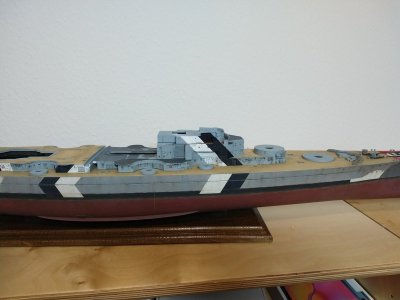
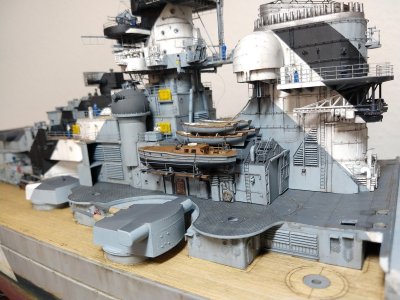
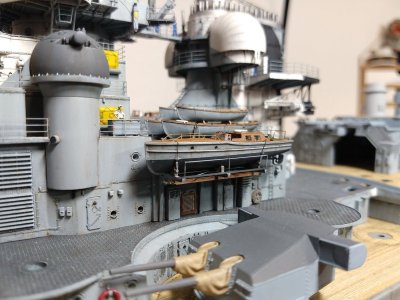
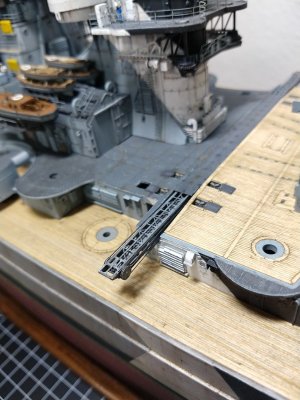
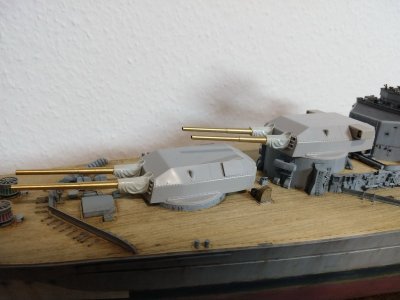
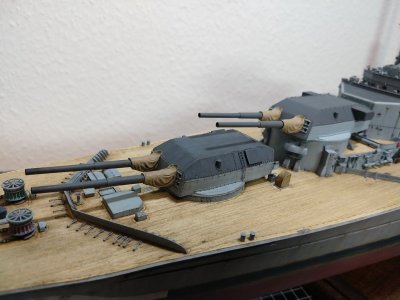
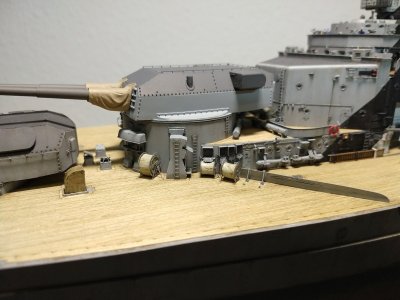
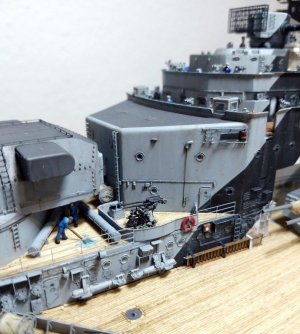
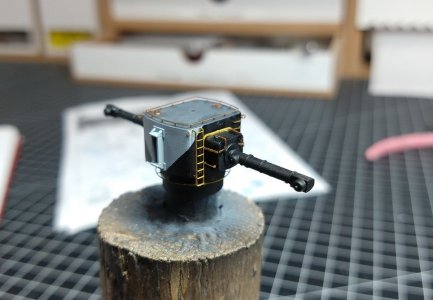
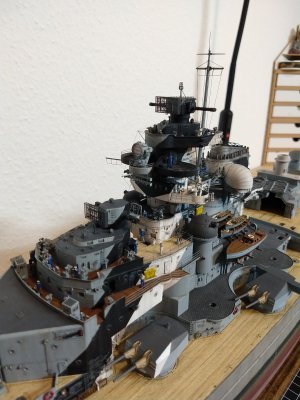
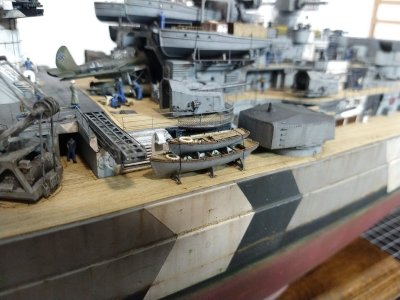
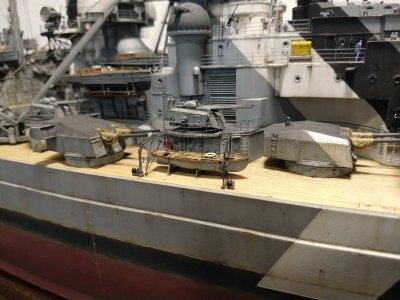
Hello everyone, here is the construction report of my Bismarck model from the Trumpeter brand in the scale 1:200.

The Pontos Detail Up Set “Advanced” is used for optimal detailing of the model. Various Veteran Models sets and all sorts of other aftermarket accessories do the rest.
Not to mention a bunch of styrene profiles for scratch building and the famous leftovers box.
I’m trying to create a model that shows the period from April 1941 to about 80% historically correct.
I worked on the model for almost two and a half years and it was finished in January 2023.

This is the start:

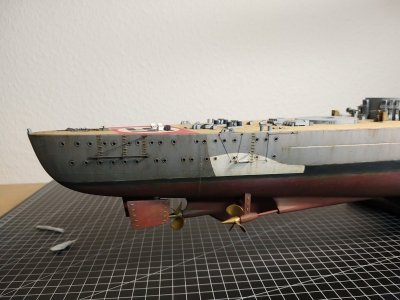
The torso needs my attention first. Portholes have to be built up and the cooling water intakes have to be added.
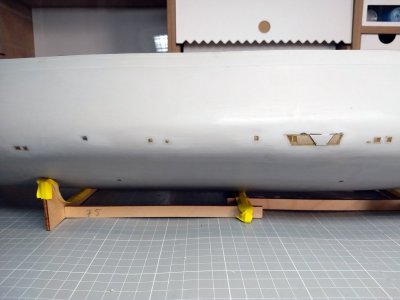
1.jpg

The original kit is missing the sacrificial anodes on the shaft pants.
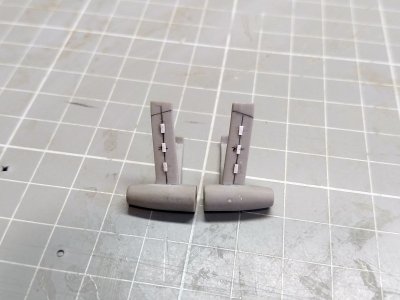
1a.jpg

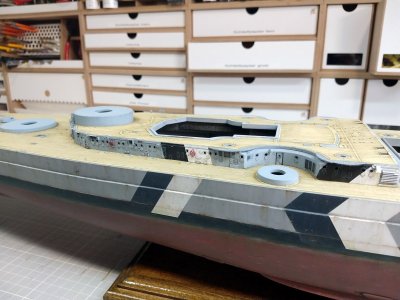
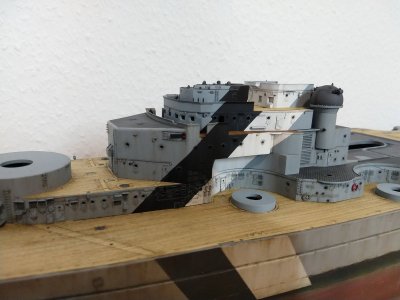
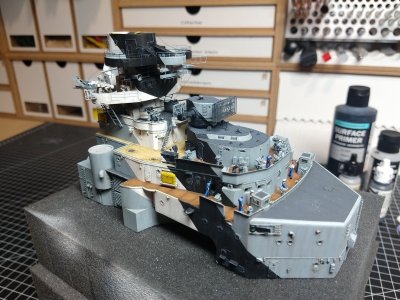
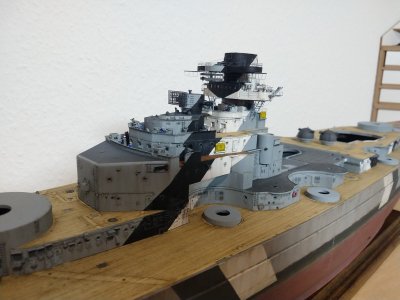
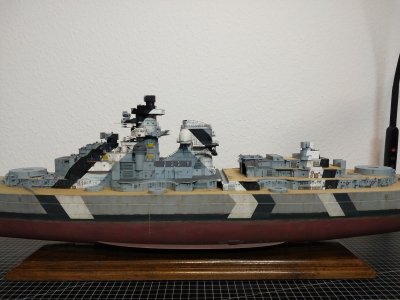
I had decided to apply the Baltik camouflage scheme. She simply looks her best this way. But I didn't know what work there would be on the superstructure.
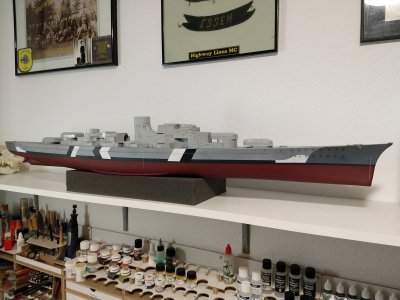
1b.jpg

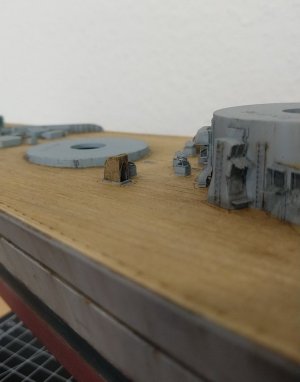
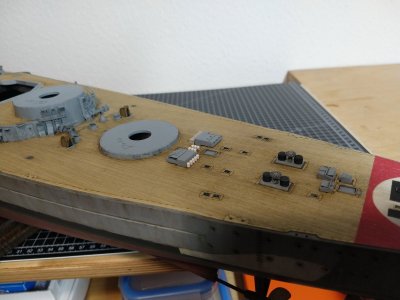
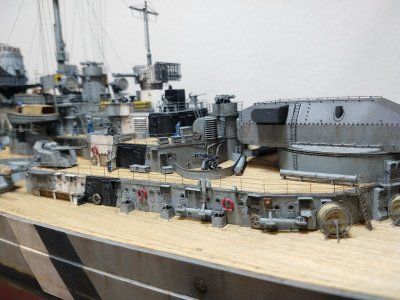
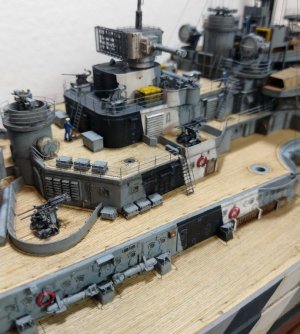
The wooden deck of Pontos simply looks authentic.
I think the deck from scaledeck is nicer, but unfortunately it came onto the market too late.
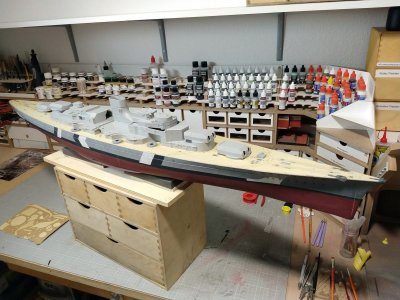
1c.jpg

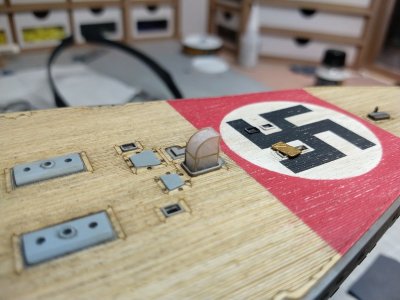
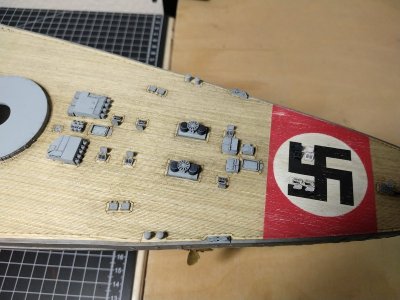
Then comes the swastika in the aircraft identification, which is banned in Germany.
Naturally painted, no decal.
This way you can better see the grain of the wood.
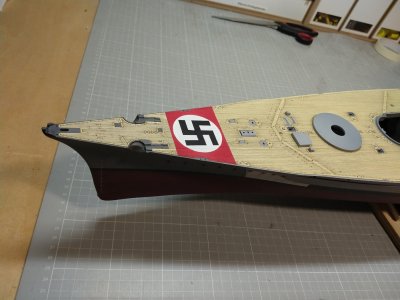
1d.jpg

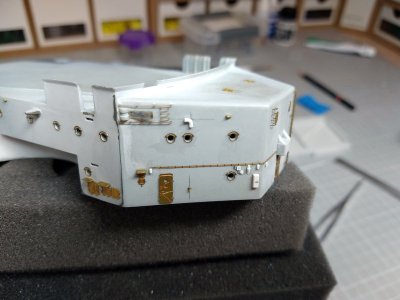
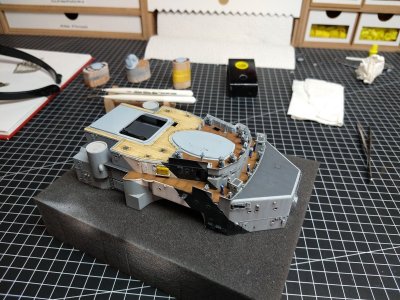
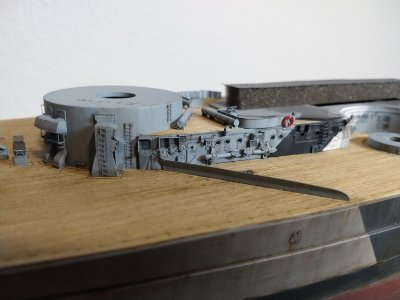
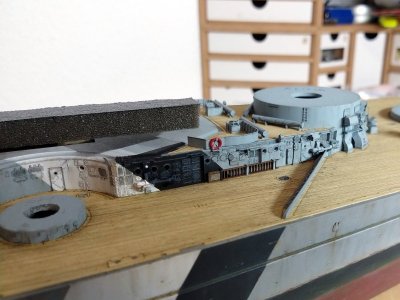
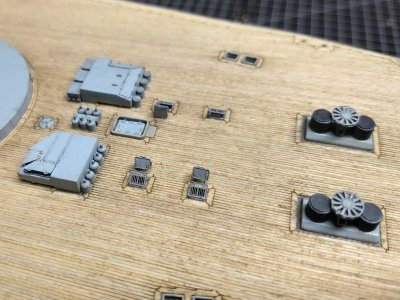
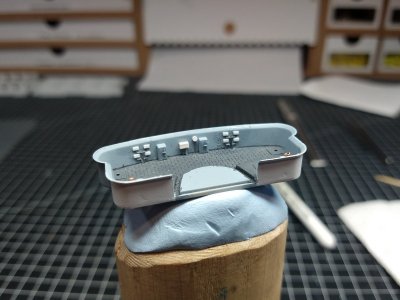
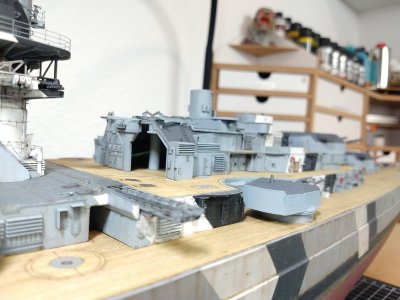
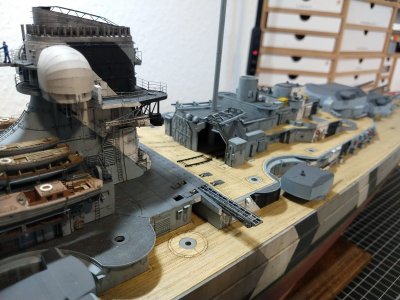
Then the first fine details of Pontos come onto the lower superstructure.
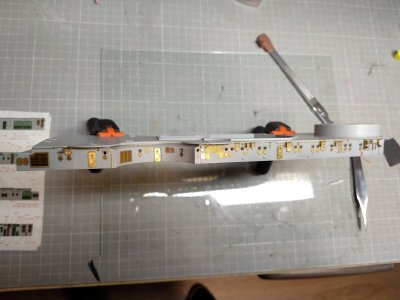
2.jpg

A close-up of this fan shows the depth Pontos brings to the model.
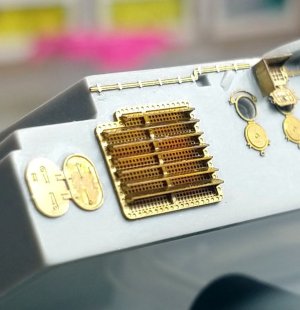
2b.jpg

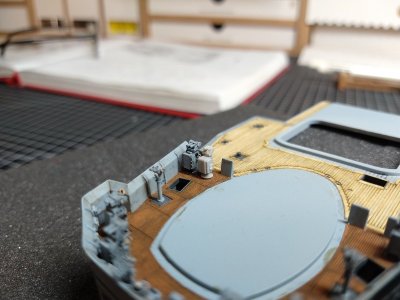
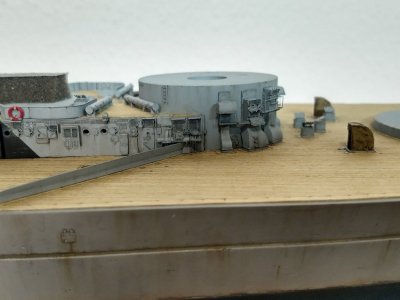
The fan details on the front barbette are just great.
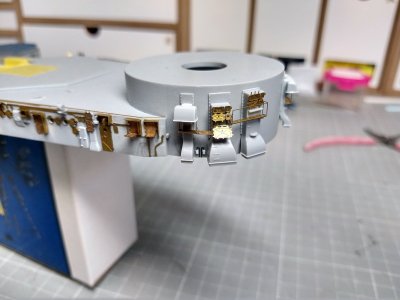
2c.jpg

All sorts of missing details are added with styrene profiles and lead wire.
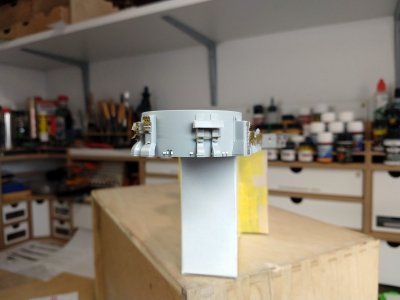
2d.jpg

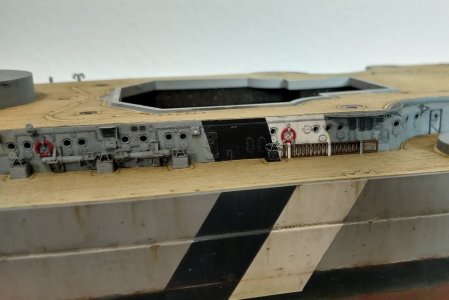
Now the camouflage stripes had to be built on top of them.
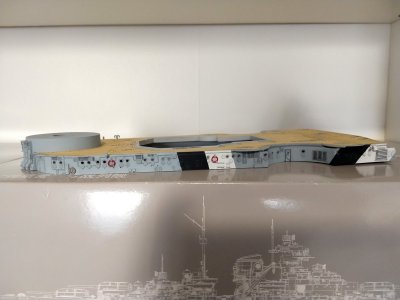
2e.jpg

And glued to the deck.

2f.jpg

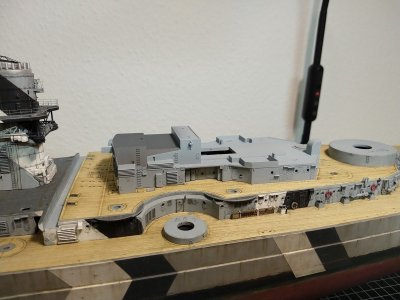
And then the ship comes to its final position, because next the rear superstructure with the deck and closes the hull
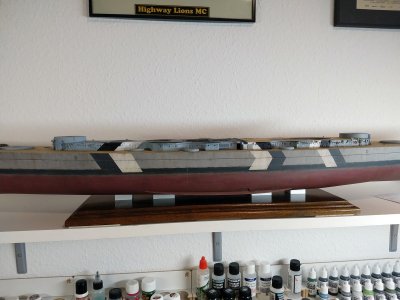
2g.jpg

Now I continued at the bow and laid anchor.
Note the double bridge chains. With an aftermarket product as expensive as Pontos', you'd think they'd be included. But far from it, only normal jewelry chains are included.
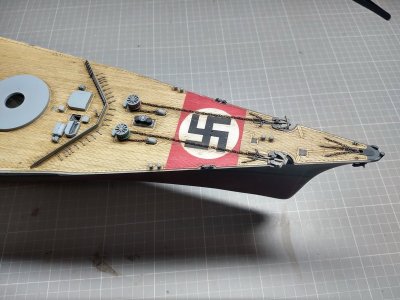
2h.jpg
 
Last edited:
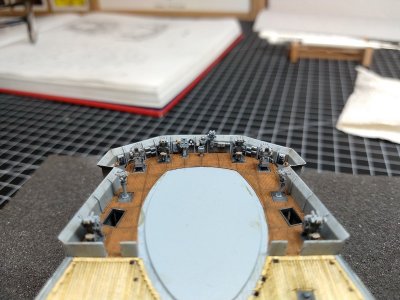
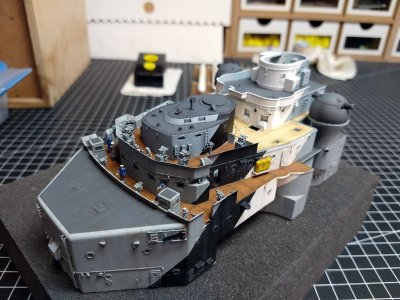
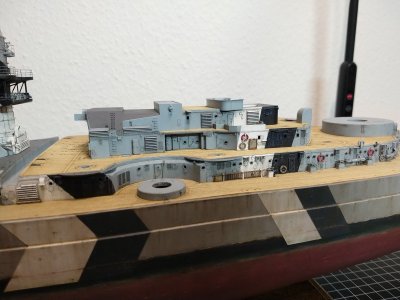
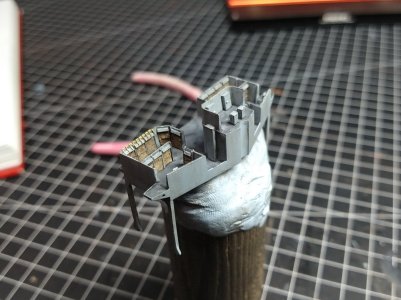
Let's move on to the next floor of the superstructure.
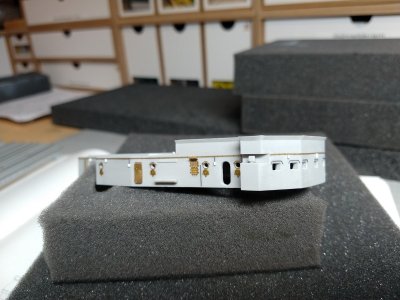
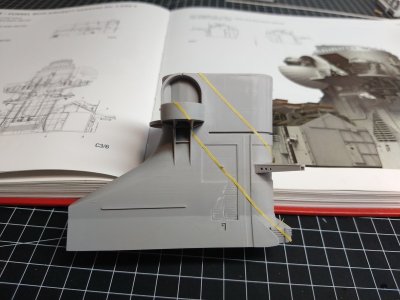
Missing details were corrected using Styrene profiles.

3a.jpg

All surfaces still showing above were painted dark gray in 1941.

3b.jpg

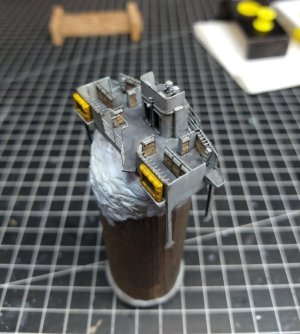
Continue to the next floor. Only a little styrene was required here.

3c.jpg

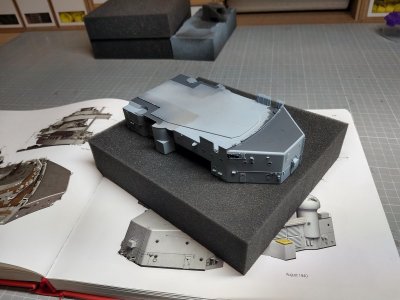
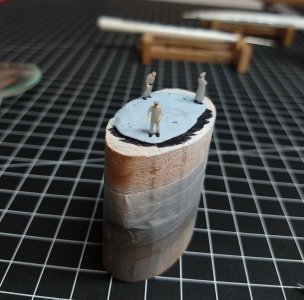
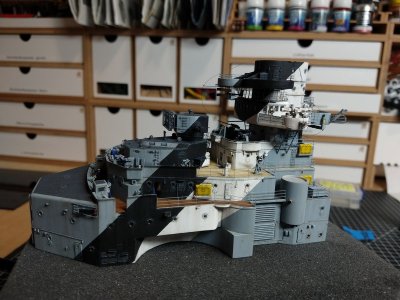
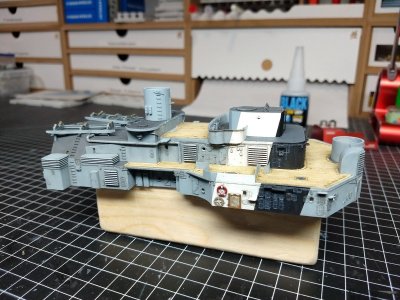
In order to find the right angle for the camouflage scheme, a mock-up test.

3e.jpg

Out of box the bridge is almost completely empty.
It couldn't stay like that.

3f.jpg

Lead wire and styrene are also used here.

3g.jpg

Here are examples from Veteran and OOB.

3h.jpg

And from the front.
I like it better that way. Even if you can't see much of it in the finished model.

3i.jpg

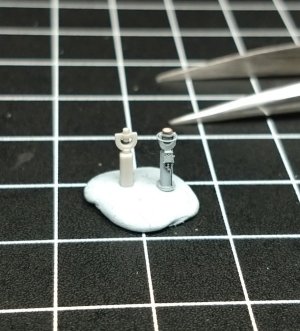
The compass is excellently detailed. I probably won't have to mention which one is the original.

4.jpg

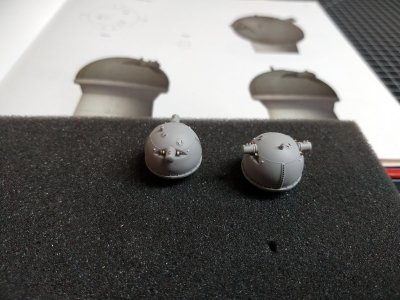
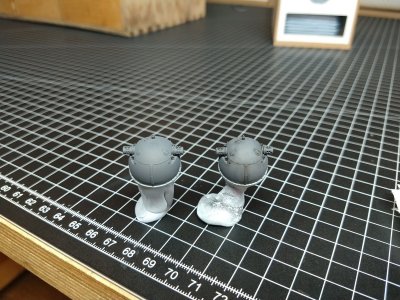
The wobbly pots also received a small upgrade.

4a.jpg

Very nice in a patent dress.

4b.jpg

Another test.

4c.jpg

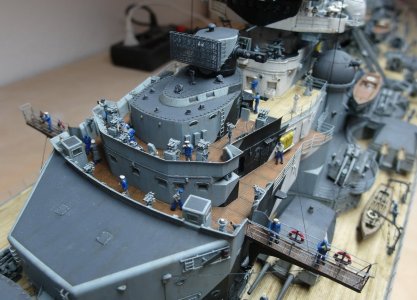
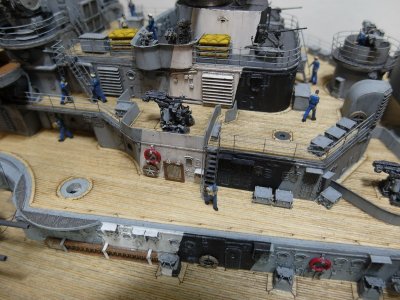
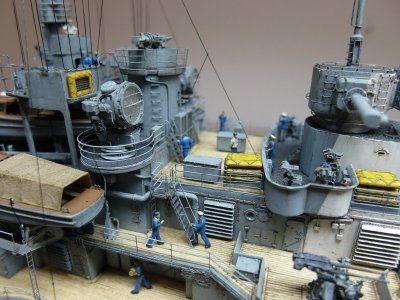
To add more life on deck, I got the very good figures from Northstar in a variety of activities.

5.jpg

But painting is really Sisyphos work.

5a.jpg

And the first sailors come onto deck.

5b.jpg

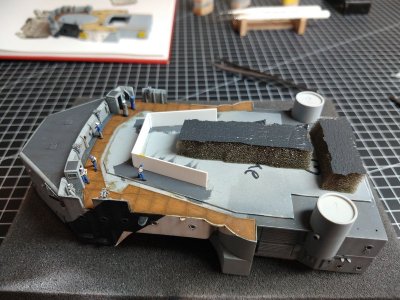
The doors of the next floor were opened, so I put in an interior wall and the next level could be glued.

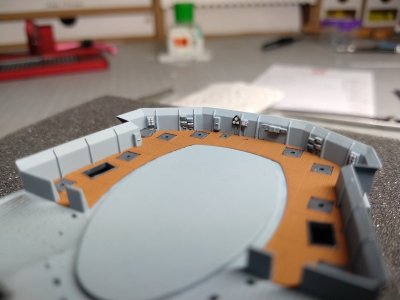
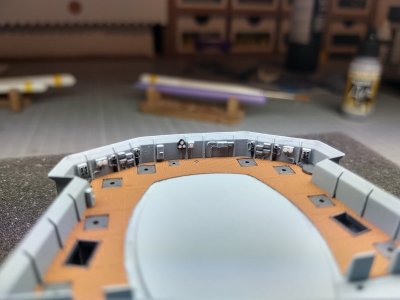
5c.jpg

Some things had to be corrected again on the tower segment.

5d.jpg

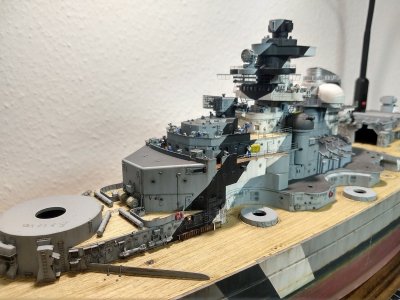
Likewise at the front artillery position, which could then also be installed.

5e.jpg
 
Many thanks Bryian. :)
I still have a little time before I go to work and can continue doing things for a bit.

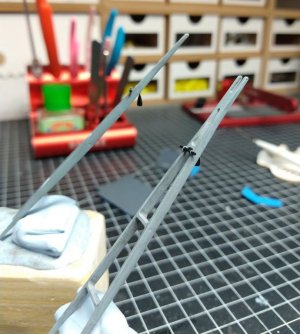
Then the crane booms. Again, a very delicate work. Here I soldered the parts to get more stability.

6.jpg

And then he can go to the gallery.

6a.jpg

The platform for the rangefinder is also being prepared.

6b.jpg

And that's the gem from Veteran that belongs there.

6c.jpg

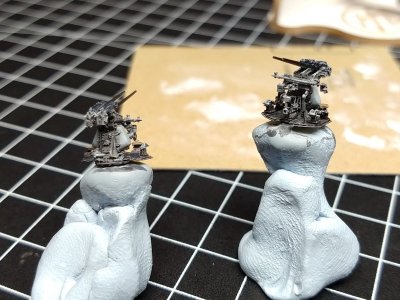
Her the first weapons from Veteran Models. An incredible amount of depth.

6d.jpg

They look fantastic when painted.

6e.jpg

And with that the admirals bridge can be put together.

6e1.jpg

But the 2cm C/30 gun from Pontos is also impressive.

6f.jpg

A little bit of rigging is already attached as I won't be able to get to these places afterwards.

7b.jpg

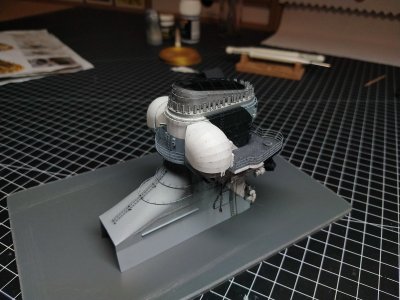
The tower slowly grows taller.

7c.jpg

Finally, another test to see if everything fits together.

7d.jpg
 
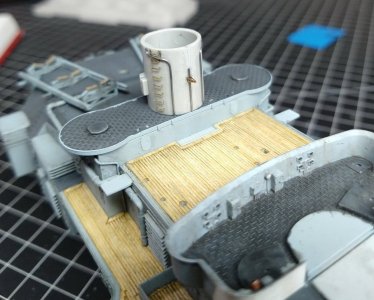
Then let's move on to the funnel.
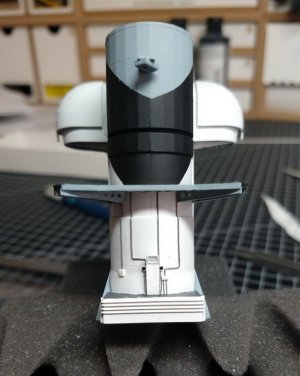
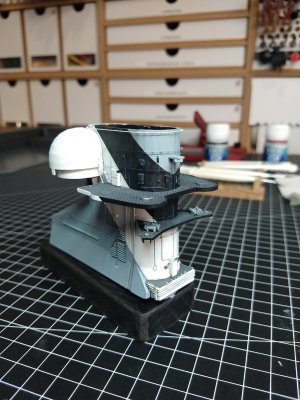
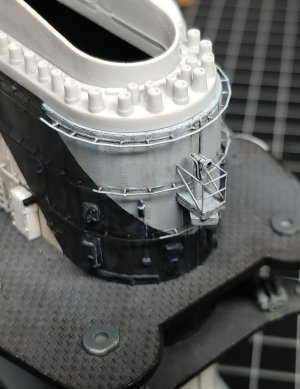
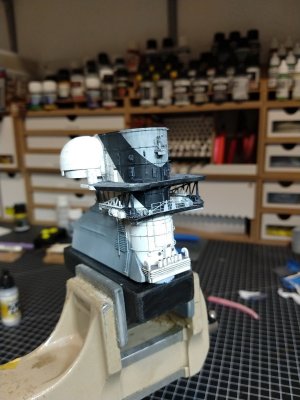
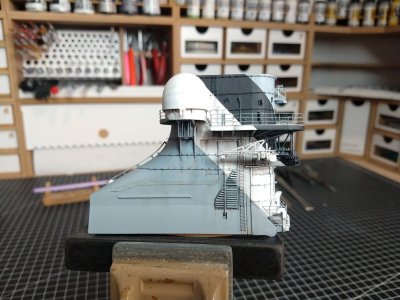
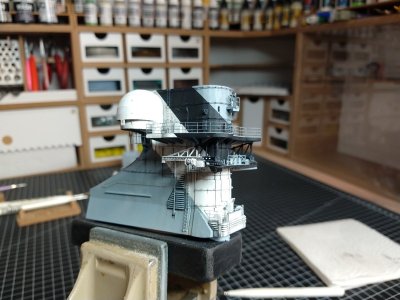
Here I had to proceed differently when painting than with the superstructure. Since it is extremely detailed, I painted the camouflage stripes in front of all the attachments. Otherwise it would not have been possible to mask him properly.

8.jpg

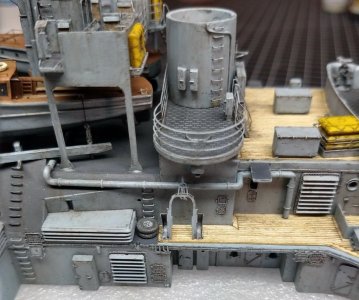
I then laid a variety of pipes using lead wire.

8a.jpg

And so the funnel gradually fills up.

8b.jpg

The pipe also received a small Styrol upgrade from me.

8c.jpg

Crane installed.

8d.jpg

And the railing.

8e.jpg

Ready to put the crown on the whole thing.

8f.jpg

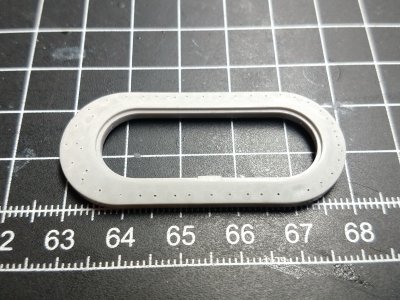
First get rid of the rough plastic tubes.

9.jpg

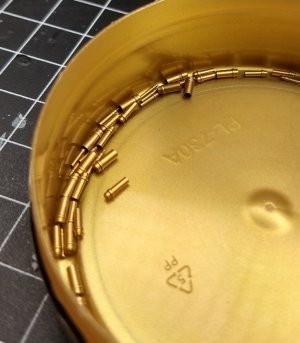
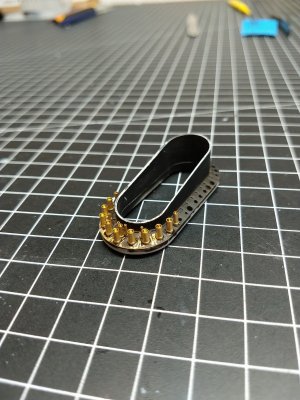
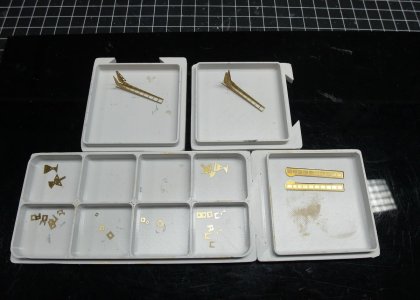
And sorted what felt like 1000 brass tubes from Pontos.

9a.jpg

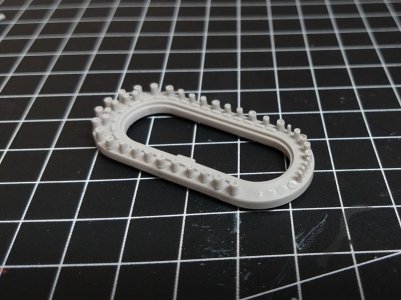
One of the things I particularly like about Pontos is their drilling templates.
No matter whether it's for the tubes or for the crampons on the hull or the superstructure.
It couldn't be more accurate. That's why I prefer Pontos to KA Models.

9b.jpg

Absolutely 100 percent hole spacing. That's the way it has to be.

9c.jpg

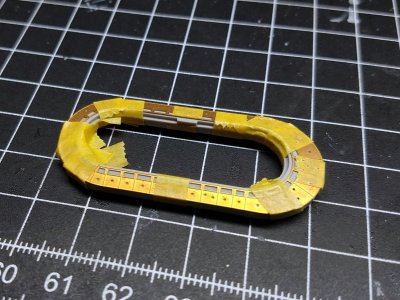
Then the holes are drilled out and the pipes are put into place.

9d.jpg

Still insert the inner workings.

9e.jpg

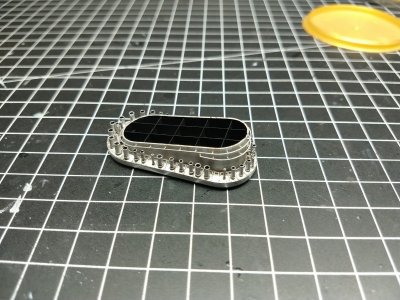
That's why the coronation now follows. Note that unlike the Tirpitz, the Bismarck has an aluminum cap.

10.jpg
 
Let's take care of the little things on deck.
First of all the paravane called otters and the rear breakwaters.

10b.jpg

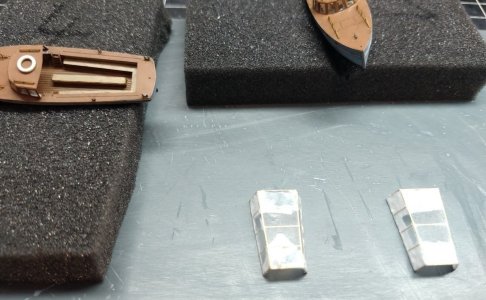
Then to my self-created tents for the companionways
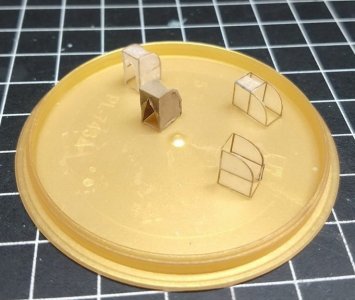
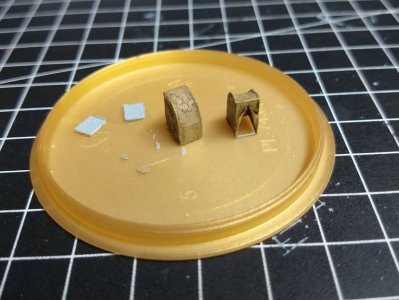
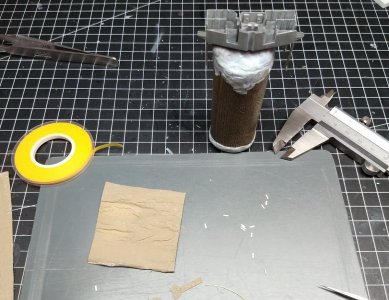
Pontos supplies the framework, but I had to make the canvas myself.

11.jpg

I made them out of diluted wood glue and tissue.

11a.jpg

Painted with a beige brown and aged.

11b.jpg

And placed over the companionways.

11c.jpg

From the other side.

11d.jpg

Here are the skylights improved by Pontos.

11e.jpg

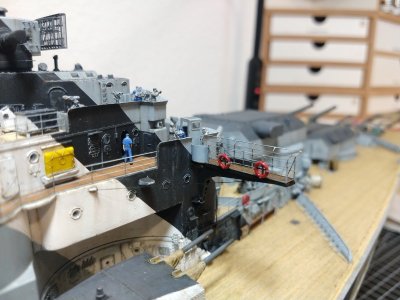
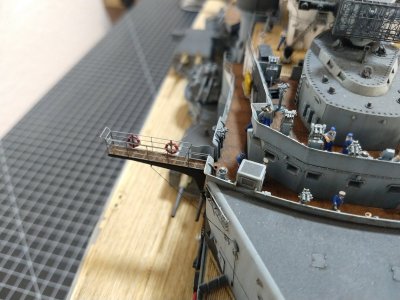
Since my ship was to be shown at full speed, the gangways had to be in their loading position.
Here too, the brackets were scraped from Sytren profiles.

11f.jpg

And the gangway in front of it.

11g.jpg

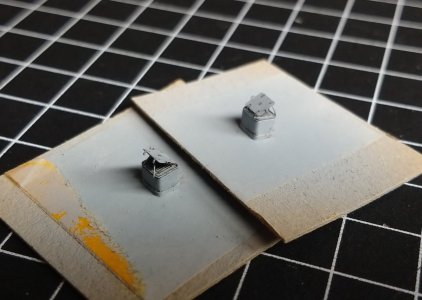
The depth charges and smoke generators were also missing from the original packaging. No problem.

12.jpg

Pontos also excellently expands the rear roof windows.

12a.jpg

And again the extended Pontos set is extremely detailed.

12b.jpg

The screw protection and the boom was still missing on the outside of the fuselage.

12c.jpg
 
Thank you so much for the kind words, Maarten. I'm glad to hear that. :)

We come to the rear deckhouse.
Here you can see very clearly from the crampons on the right what the drilling templates from Pontos will do.

13.jpg

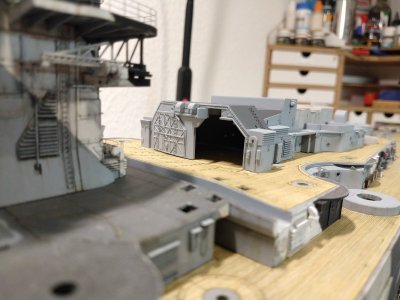
First test. I need to show the lower part of the main mast and cover some of the inside because I want to show the hangar open.

13a.jpg

There was also a little scratch work missing on the night control post.

14.jpg

And towards the bow.

14a.jpg

The deckhouse grows and is adapted to the original ship. Here too, the kit is missing some details like parts of the gangway.

14b.jpg

Now it was time to prepare the upper part of the tower.

14c.jpg

The obligatory angle check.

14d.jpg

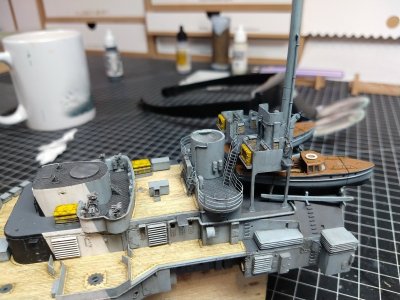
First fix the bridge between the tower and the funnel and then go to the front hangars.

69.jpg.a84af1ce21ee64892264efe4f7609849.jpg

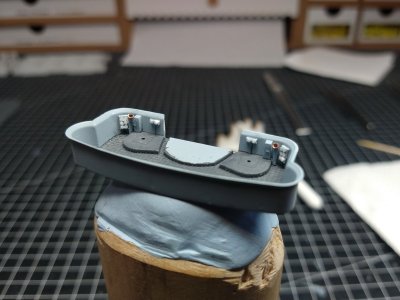
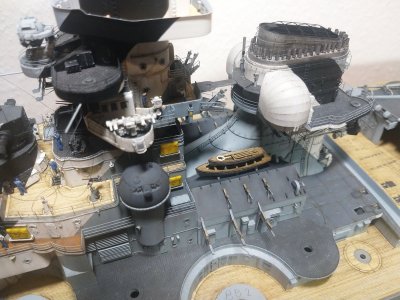
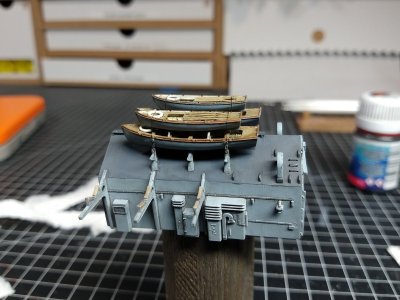
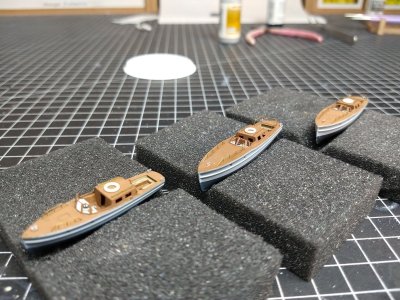
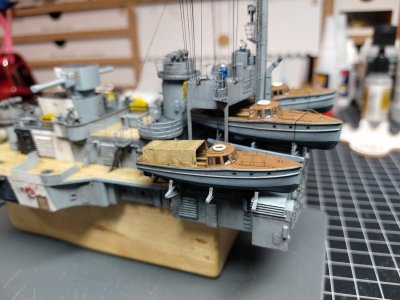
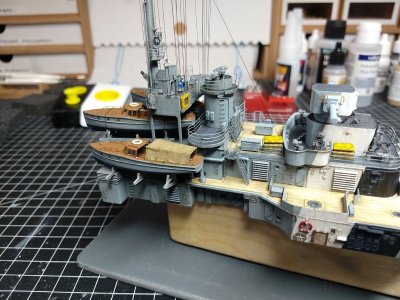
I really wanted to build the small boats. They were secured with rigging twine and rope tensioners.

15a.jpg

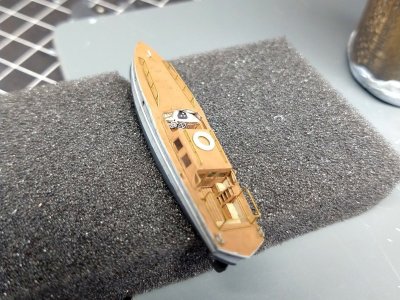
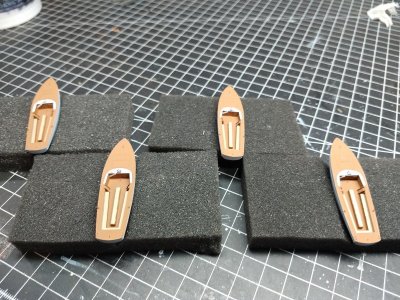
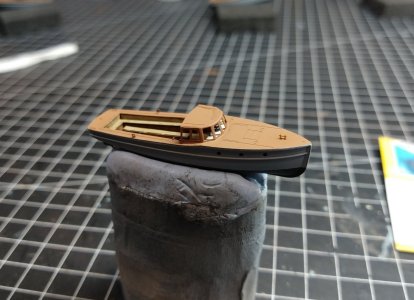
Then it was time to produce boats like on an assembly line. Here too, a little scratch to refine the fittings.

15b.jpg

Align with the boat cradle

74.jpg.9989248fd96c739285a76af2b7e4416e.jpg

And finish building.

15d.jpg

The admiralty boat is also amazing.

15e.jpg

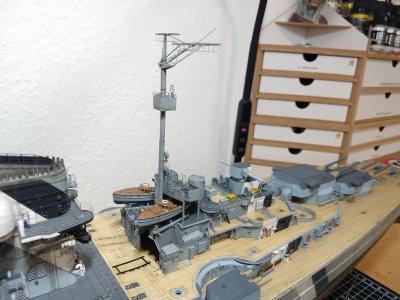
Now it was time to raise the foremast and equip the top gallery.

71.jpg.876af36ff56fa6ada3486ad98422a161.jpg

The struts, railings and signal lines were still missing.

15g.jpg

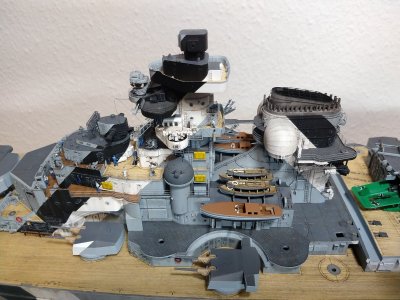
Now the boats could also take place.

16.jpg

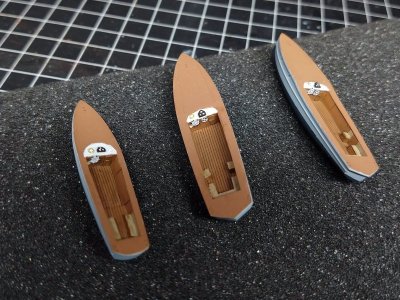
Here you can clearly see that the underwater hull of the boats was not painted red but dark gray.

16a.jpg

Still putting the Pontos catapult together. And installed.

16c.jpg
 
A big thank you to you too, leysend.

This motivates me to write more in my time-lapse construction report, and it's time to bring out the big guns.

17.jpg

The blast bags from Pontos are really nice, it's just a pity that they're always the same.

17a.jpg

But of course it looks better this way than it appears openly.
Anton has aged, Bruno has not yet. The wire rope wheels have been distributed on deck.

17b.jpg

The next 3.7 cm twin mount from veteran and a cleaning crew.

17c.jpg

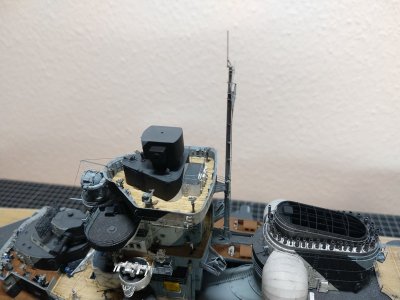
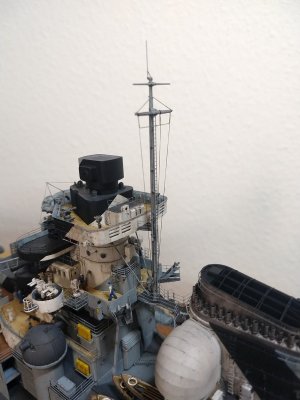
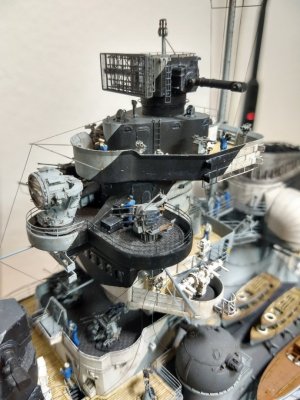
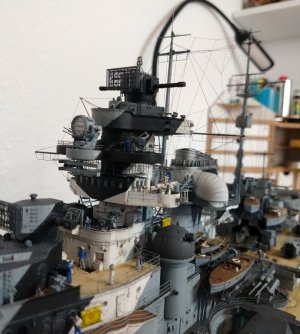
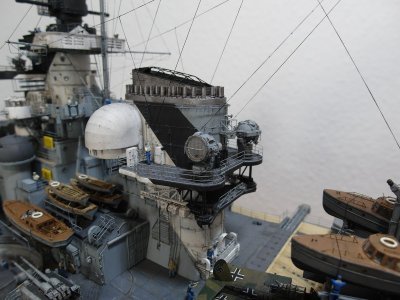
Then let's finish the tower. Start with the fire control.
The camouflage stripes are already on here too. I then paint the etched parts later with a brush. These fine details simply cannot be masked.

17d.jpg

And so he can get to the top.

17e.jpg

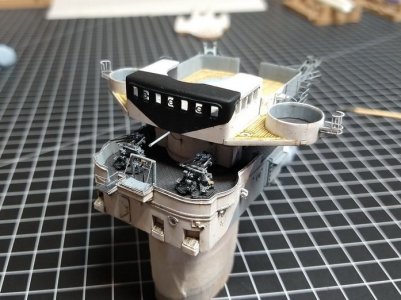
All that was missing was the 2 cm C/38 quadruple mount.
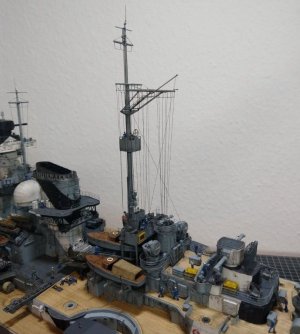
This completed the front part of the superstructure.

17f.jpg

Let's go back to the rear deckhouse.
The base of artillery direktor D missing some details.

18.jpg

And finished the two Boat cradle.

18a.jpg

The lower missing part of the main mast in the hangar is created using a profile.

18b.jpg

And this is how it can be installed.
Pontos still supplies the rail system on which the onboard aircraft were pushed. This will still play a role in my model.

18c.jpg

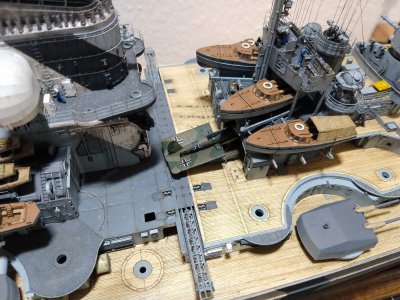
On to the next mass production.

18d.jpg

This time the transportions boats.

18e.jpg

The first one takes up space. The lower part of the main mast is also being refined.

18f.jpg

And again cellulose paper is needed.
This time for the signal bridge.

19.jpg

The signal flags that were stored here are covered with a canvas tarpaulin.
This is completely missing OOB. It couldn't stay like that.

19a.jpg

Better.

19b.jpg

Now I had to come up with something to attach all the signal lines. To do this, I cut an etched ladder in half.

19c.jpg

Finished and approved.

19d.jpg

And so the signal bridge could also be installed.

19e.jpg

Now we come to another special feature of the DKM. The Bismarck carried the army's 2cm Flack 30 on board.
It was therefore mandatory to also carry the trailer called “Sonderanhänger 51”.
German complicated legislation.
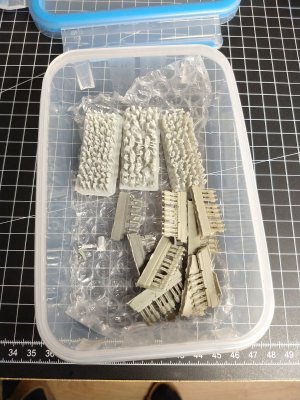
But Pontos also thought of that. They just forgot the tires. I then printed them out.

19f.jpg

Then the next delicate part of the main mast for guys with strong nerves.

20.jpg

And on with it.

20a.jpg

Now the signal lines could be pulled.

20b.jpg
 
One last time I had to use paper tissue and wood glue. Tarpaulins had to be made for the transport boats.

20c.jpg

Starboard

20d.jpg

Portside.

20e.jpg

How about starting a little performance.
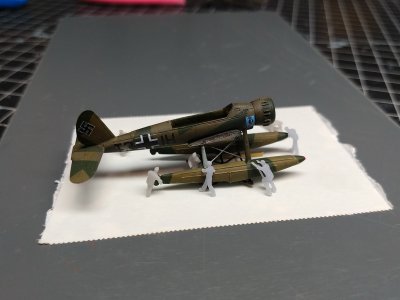
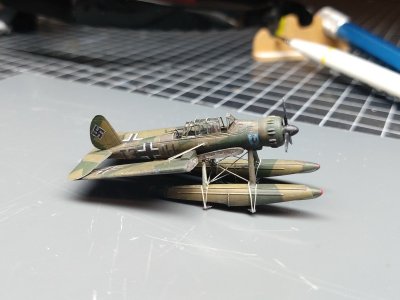
The Arado AR 196A floatplane is usually most shown standing on the catapult ready to take off.
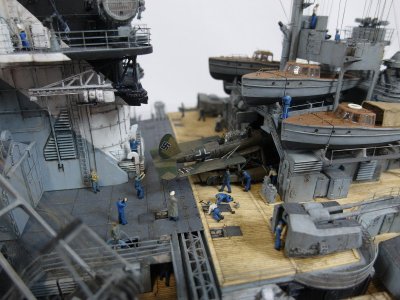
But since Pontos already provides the removable rail system, I wanted to simulate a little exercise of how the bird is pushed out of or into the hangar.
I have original pictures of this scene that show such an exercise.
First Test.

21.jpg

Then I repurposed a few figures and modified them a little...

21a.jpg

I think that's how it works.

21b.jpg

Cockpit installed

21c.jpg

The Arado also becomes a small work of art with Pontos.

21d.jpg

She is attached to her sleigh with the white rigging thread, which cannot be seen.

21e.jpg

And still glazed with Micro Kristal Klear.

21f.jpg

And that's how I implemented the scene.
The officer shouts, the sergeant also shouts louder and a mechanic tries to repair the hydraulic jacks.
The pilots are laughing their heads off.

21g.jpg
 
Thank you so much for the great feedback, John.

I was already looking forward to the next component.
The individual parts of the bridge wing.

22b.jpg

Pontos is really not a cheap deal, but the wealth of detail gained is absolute.
You can hardly get any closer to the original.

22c.jpg

And installed.

22d.jpg

When installing the railing I still had to make corrections because Pontos had forgotten something here.

22e.jpg

This sheet metal was used to close the created bridge wing.
And when it was extended, like here with me, it naturally prevented the sailors from falling off. It was formed by me from thin brass sheet.

22f.jpg

That's how I like it again.

22g.jpg

22h.jpg

Now the crew can safely get on the bridge wing.

22i.jpg

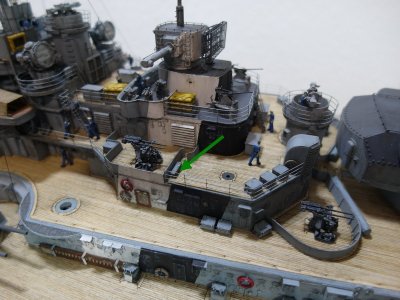
When mounting the 37mm double flack, i noticed that Pontos had once again made a mess with their research. The ladder to get to the rear deckhouse is missing.

23.jpg

Railing snipped and a ladder fumbled in.

23a.jpg

The missing ladders and railings are still installed at the back.

23b.jpg

And boxes on the other side.
Like the army's 2cm Flak 30 mentioned above.

23c.jpg

Here's another close-up of veteran's searchlights.

23d.jpg
 
Thanks a lot, Peter, I'm glad you like my model.

I solder the photo-etched parts with a small, high-quality soldering station from Ersa. I only do that, though, when I need a very strong connection.
For the most part, I use an acrylic adhesive like the one from Mig. It does an excellent job. Very clean and easy to work with. I'll discuss it in more detail in my next build report.
 
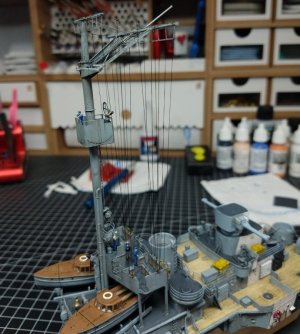
Let's get to the rigging.
Of course, the main mast must be completed first.

24.jpg

Then the tension cables...

24a.jpg

And lastly the mizzenmast.
The pictures here are not entirely in chronological order. You can already see the mast in the last post.

24b.jpg

Now all the masts are up and things can continue.

24c.jpg

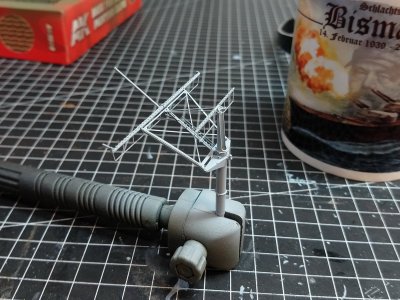
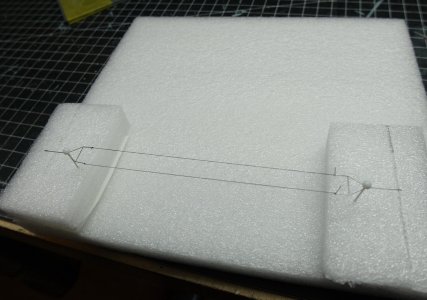
First I built a device to run the longwave antennas parallel between the triangles.
This way you can get the same tension on both sides.

24d.jpg

And the first threads are already hanging.

58.JPG

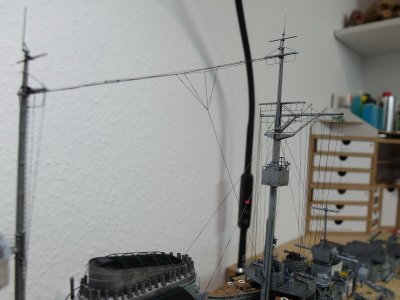
Now came a point that got on my nerves. Four cables each led from the two double-stranded long-wave antennas, which narrowed into one towards the mast.

24f.jpg

Then the rest was easy. However, the rigging is not yet complete, as I still had to attach searchlights and anti-aircraft guns to the funnel. according to my motto, always work from the inside out.

65.JPG

And from the front.

24h.jpg

The last two searchlights are on the gallery.

24i.jpg

24g.jpg
 
Congratulations Joerg, you hav built a beautiful ship with no expense spared, but most of all your painting is outstanding. It all looks very believable and correct, The only query I have is the colour of the naval uniforms, I did not think that they where such a bright blue. I assumed them to be more like, but slightly bluer than, the blue-black of the Royal Navy. I am in no way certain of this, so perhape you can put me right.

I love your work.
Regards Jack
 
Thank you so much, Jack, that's very kind of you. I'm so glad you like my work.

In retrospect, I also think my uniforms are a bit too light. I only had old colored black/white images as a reference, and the blue overalls were quite light in those.
 
Last edited:
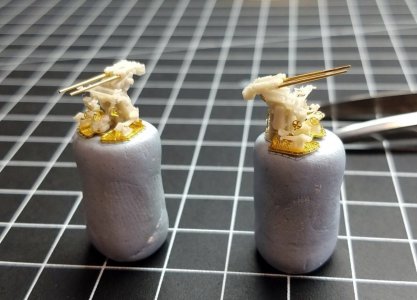
I still have time to write a post.
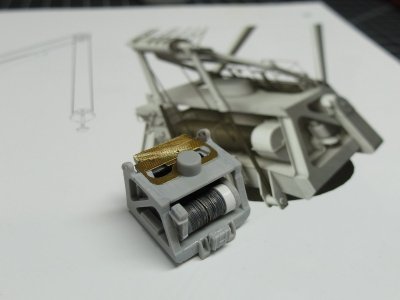
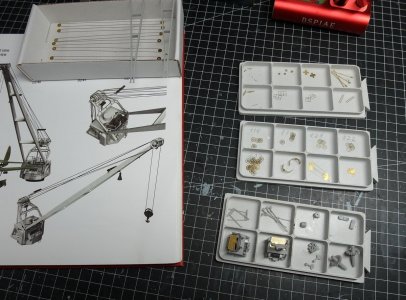
With that to the on-board crane. First scratched two rope drums. OOB only bare roll.

25.jpg

The crane body is already finished and there are still endless components.

25a.jpg

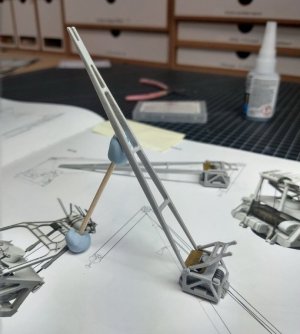
The angle of the crane arm had to be exactly right so that it would fit into the boom.

25b.jpg

A cross brace against the beating of the rope and a lamp were also scratched.

25c.jpg

Everything comes together like that.
I created the crane rope with silver-colored white rigging thread.

25d.jpg

Fits perfectly into the crane holder.

25e.jpg

And so the rigging could also be completed.

25f.jpg

The foremast.

25g.jpg

25h.jpg

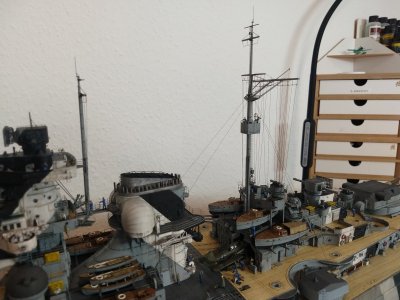
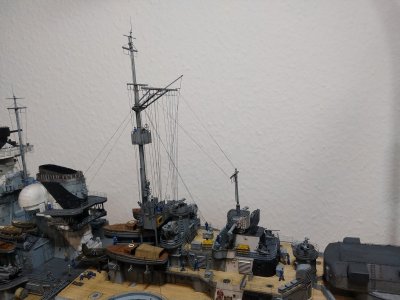
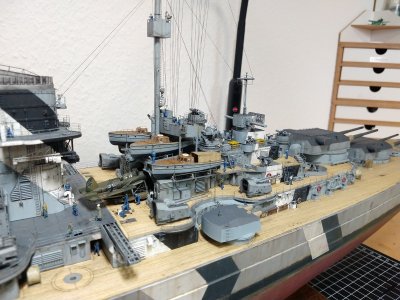
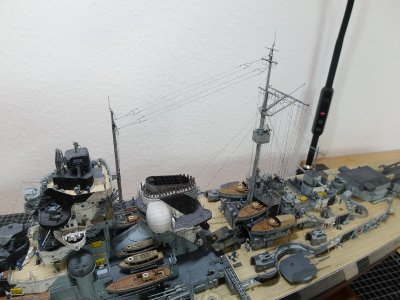
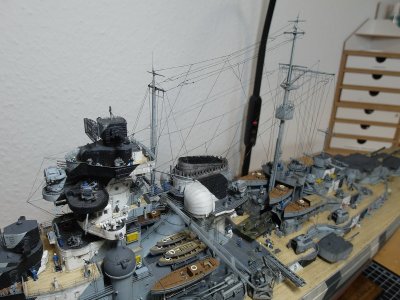
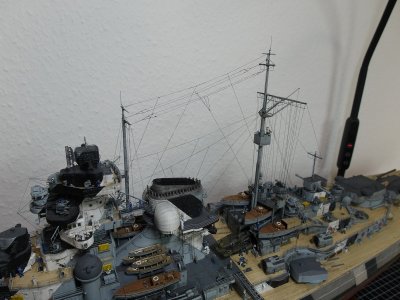
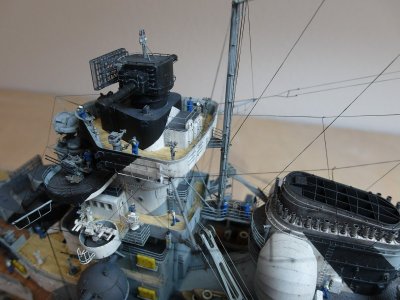
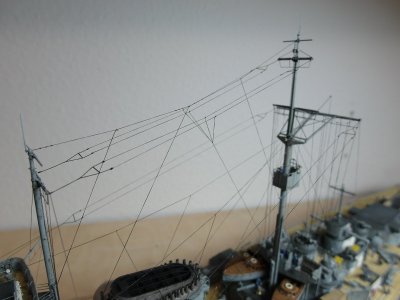
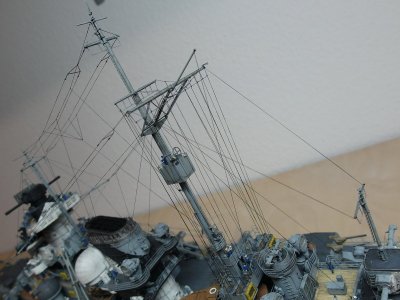
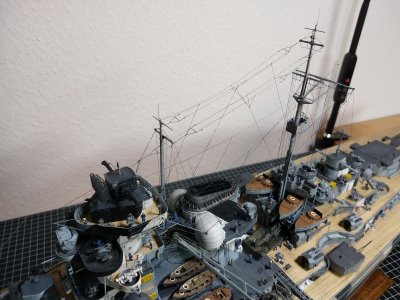
And here are pictures of the complete rigging.

25i.jpg

25j.jpg

25k.jpg

Since I liked the row cutters and dinghies on deck so much, I chose the period from April 1941.

26.jpg

The last yawls in the davits have come on deck. A PE set from a destroyer in 1:350 had to be used for the cable drums.

26a.jpg
 
Back
Top