
Follow along with the video below to see how to install our site as a web app on your home screen.
Note: This feature may not be available in some browsers.
Win a Free Custom Engraved Brass Coin!!!
As a way to introduce our brass coins to the community, we will raffle off a free coin during the month
of August. Follow link ABOVE for instructions for entering.
The beloved Ships in Scale Magazine is back and charting a new course for 2026!
Discover new skills, new techniques, and new inspirations in every issue.
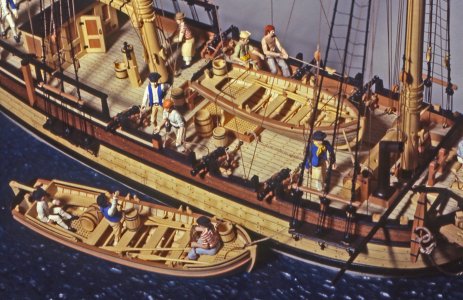
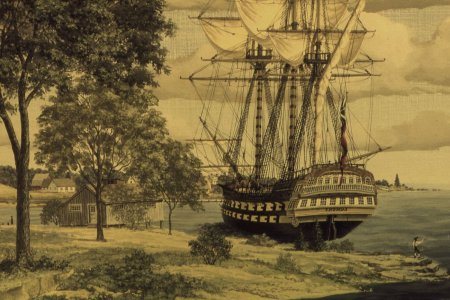
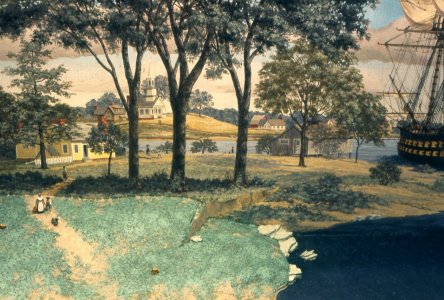
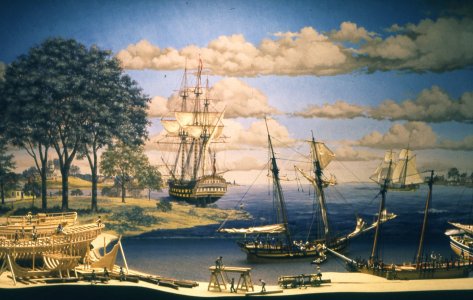
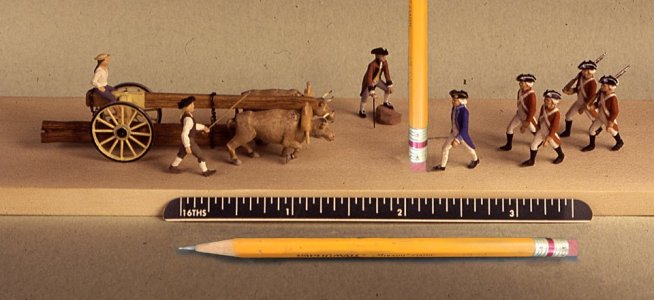
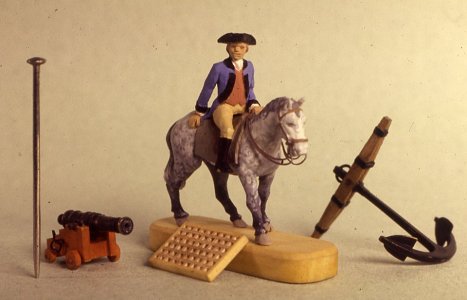
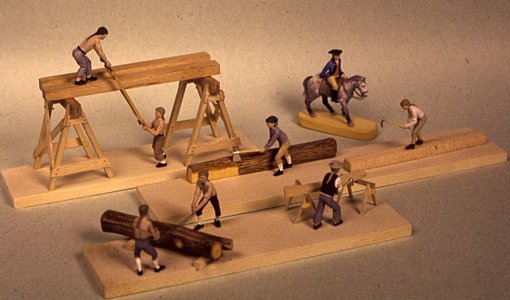
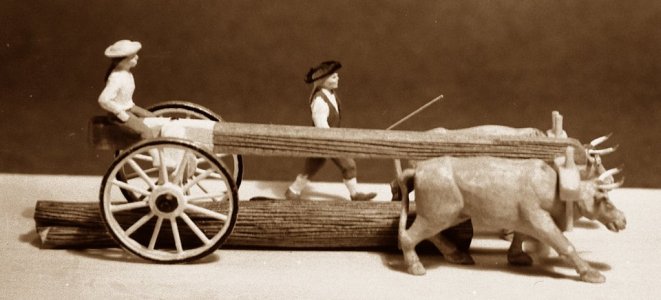
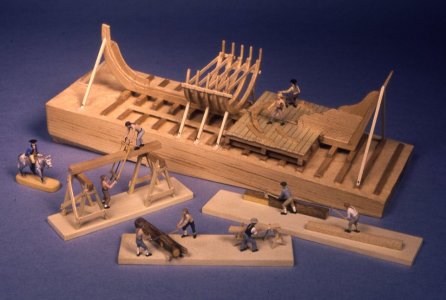
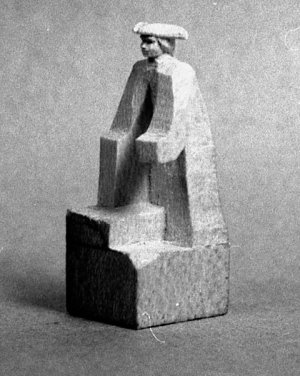
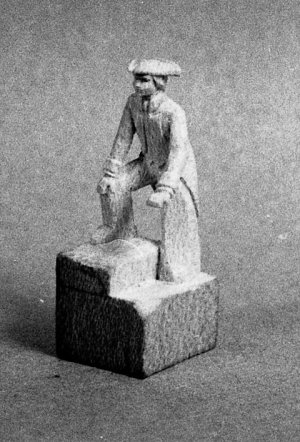
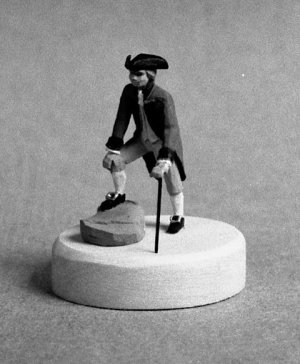
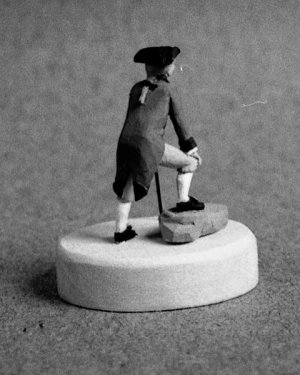
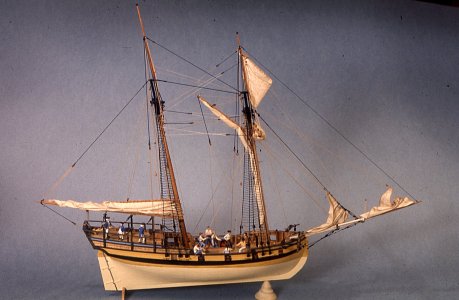
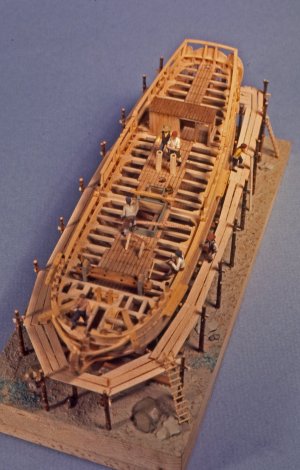
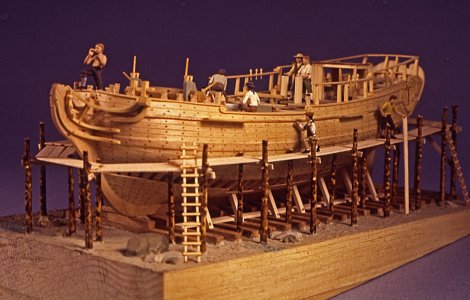
I believe that the first picture that Dave posted is from Hahn’s Colonial Shipyard Diorama. If that’s correct, the scale is 1:96. How many ship model builders could scratch build the small boat and crew to that scale?
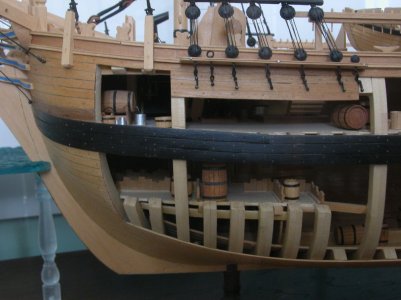
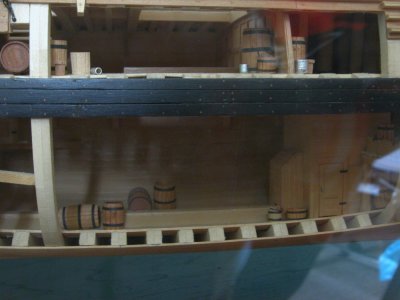
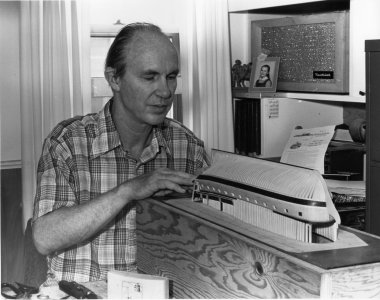
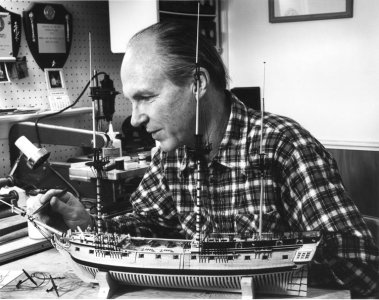
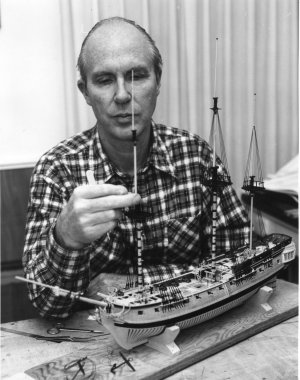
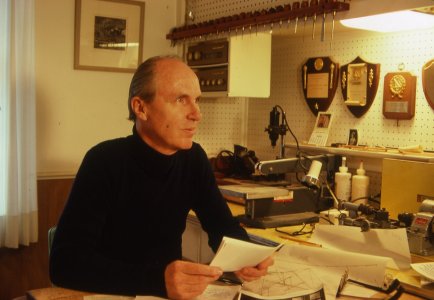
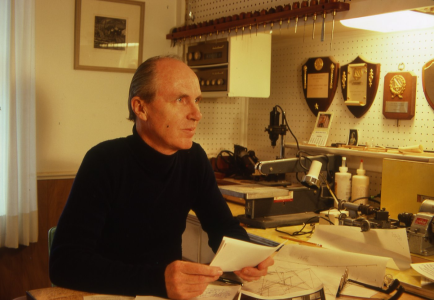
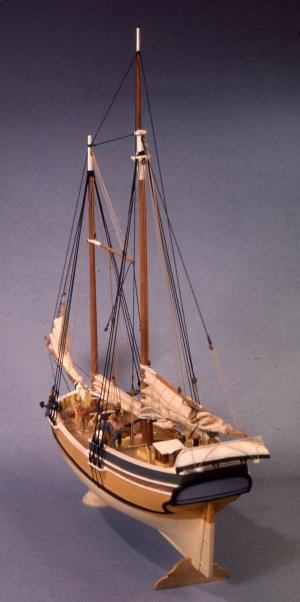
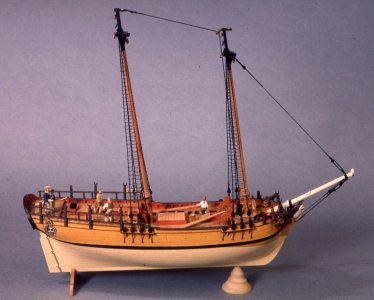
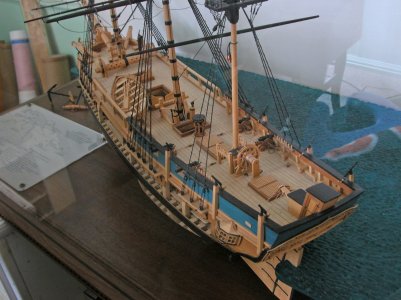
the first color photo was the last thing Harold did. I was sitting with him in his workroom and asked him 'that model has been sitting there 2 months are you going to finish it?" "Nope! and that's that had enough." i am not sure what the ship is Notice not a single figure on the model. I do not remember if he intended on a full crew or not. I do know he was getting fed up with the constant argument about figures on models.
in the Hahn collection is an autobiography titled the Memoirs of Harold Maxwell Hahn. Harold believed one's destiny is pre-determined their life path is set from the start.
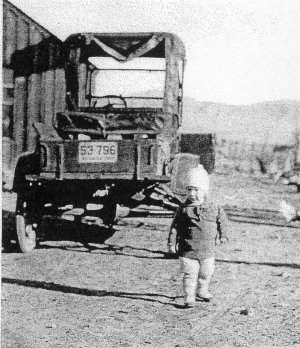
An early picture of Harold does give an impression he wasn’t about to waist any time getting started in life and he was ready to begin his career. The caption under the photo said it all, it read “here I come”.
Model ship building runs from the casual hobby builder who just wants to escape the everyday routine and have some personal time to those with a deep passion of model ship building to achieve higher and higher levels of accomplishment. Lucky the hobby industry provides kits for all levels of building from simple to complex. The kit does not have to be historically correct or even built like a real ship that is not their purpose. The purpose is self-satisfaction, personal achievement and the comradery of enjoying a hobby. Kits are also the yellow bricks in the road to the Emerald City, the capital of the historical ship models which symbolizes the illusion of a real miniature ship and the quest for historic truth all the way to fine art models. For many this is not a quest to reach such a place and then again for some it is that quest seemingly born to do so.
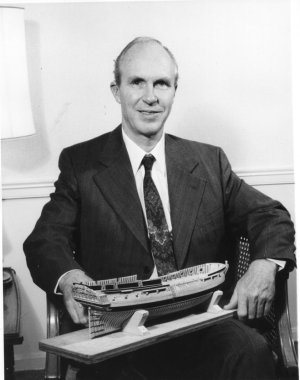
From time to time an artist comes along and changes everything, Harold Hahn is one of those renaissance men who took the craft of model ship building and raised it to a fine art form, influencing and inspiring an entire generation of model ship builders. Born in Oakland California on March 25 1920 Harold’s dad moved the family to Cleveland Ohio 4 years later. It was here in Cleveland where Harold grew up, received his education, married, raised a family and continues to reside. Like all prolific artists something or someone in their lives provided the spark that ignited the creative energy. For Harold it was back in Shaker Heights junior high school where he had an excellent manual training teacher who taught him to appreciate woodworking, after building an end table he started a big project of building a pair of twin beds and a desk which carried over into Shaker High school. Aside from building furniture Harold at the age of 10 started to build a ship model of the “swallow” from plans and an article in Popular Science magazine, work on the Swallow drudged out for 2 years. The love of fine wood was reflected in the first ship model as Harold remembered going into Cleveland to buy Ebony for the model. From the shop classes in junior high school Harold’s education remained centered around art.
Print making was a large part of Harold’s life that began in the 3rd grade when his teacher Miss Burnside introduced him to print making with a class project that involved gouging out a pattern on the surface of a rubber block. This absolutely enthralled young Harold and launched a life long adventure. After high school Harold’s freshman year was spent at the college in Wooster Ohio. While enrolled at Wooster collage Harold ran across a newspaper article about the Cleveland school of art. Having an interest in art Harold questioned his studies at Wooster and toyed with the idea of enrolling in art school. That summer Harold enrolled in two summer school classes at the Cleveland School of Art to see if that might be the right direction to follow. After the summer classes Harold felt qualified enough to sign up for the fall classes, his ambition was to draw better ship pictures
The exquisite workmanship and detailing that I saw in the complicated Admiralty models i decided to shelve any thought of continuing model building at that time. I decided to really apply myself to the courses that I anticipated taking at art school in order to develop my potential for work in the field of fine art.” That fall Harold began his pursuit of fine art at the Cleveland School of Art. Although Harold’s father never complained about Harold’s abrupt changing of direction and flightiness in schooling he did comment once that he didn’t think I had much of a financial future as an artist. After three years in art school Harold agreed with his father thought, determined to continue with an interest in fine arts, but having no real interest in finding a place in commercial art Harold began thinking of becoming an English teacher, to this end he transferred to Western Reserve University. After only a semester Harold realized he wasn’t cut out to be an English professor. With his fourth try Harold started school at the Case School of Applied Science, here he enrolled in the engineering curriculum. Seems at this point Harold set aside model ship building and pursued etching and print making. At the Cleveland Museum’s art show two of Harold’s prints were accepted for display and purchased by the print club for the museums collection. During this time Harold’s etchings would win him prizes and recognition at museums in Cleveland, New York and Washington. After a year at Wooster college, three years at the Cleveland School of Art, one semester at Western Reserve, and three years at Case School of Technology Harold joined the army specialized training program.
Out of the thirty-three months spent in the army six of those months were spent at Louisiana State University where Harold found himself repeating the same courses he took at Case, so he spent many hours in their art studio. While at Louisiana a picture he did won him third place in national competition at the library of congress.
Out of the Army Harold returned to Cleveland and back to Case School of Technology to get his degree in engineering and also attended selective classes at the Cleveland School of Art. While at Cleveland School of Art Harold met Nancy Norris, on July 19, 1947 Harold and Nancy were married and on July 19, 2007 they celebrated their 60th wedding anniversary.
Harold remained quite active in competitive art by entering in various shows throughout the 1950s aside from etchings and print making Harold also worked in watercolors and oils
The art work of Harold Hahn began with a Saturday morning class in etching back in 1939. This class was designed for high school students. It was these classes that launched fifteen years of competition etching. It was in 1942 he won first place at the Cleveland art museum the same year his work was shown at the New York Metropolitan Museum where the Library of congress for its collection purchased it. One of the etchings was reproduced in the book Prize Prints of the Twentieth Century. Aside from the 39 pieces of his work in the Cleveland Museum of Art there are five in the Library of Congress and one in the New York Metropolitan Museum.
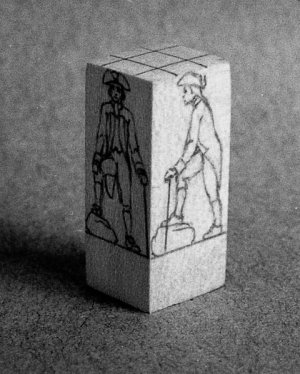
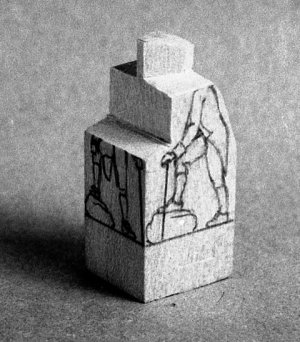
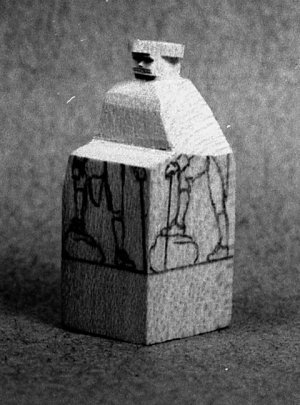
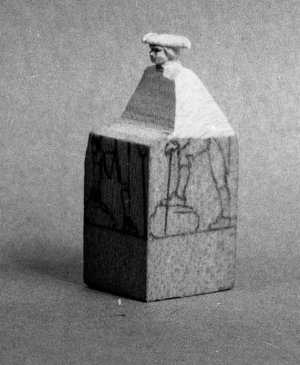
The writing was on the wall and a shift in art from the “realism” to the abstract expressionism had pushed the realistic approach of Harold art out the door. By this time Harold realized the competitive shows no longer offered the opportunities of recognition and there was no longer an incentive to do etchings for which there was no outlet. At this time the print career of Harold was put on hold, but not the love of working in wood and doing oil painting as a hobby. While he and his wife Nancy raised a daughter and three sons and being engaged in all the activities of their children, Harold built rooms in his house as well as cabinets, furniture and a staircase where he milled the banister and newel posts. As the kids grew older Harold found time and he began to search for an activity to satisfy the creative artist within him, it was only natural for him to return to his childhood interest in model ship building. To begin Harold made a trip to a local hobby shop and decided to build a plastic kit. This resulted in little artistic satisfaction and no real sense of accomplishment, it was obvious to him he needed to move on to scratch building models and working with wood. He had a well equipped work shop so he choose the Niagara as his first subject. This took about a year to complete which included a case with a painted background. Not remembering exactly how it happened but he got the notion to try and carve a couple of figures to stand on the model and nameplate, this started the habit of adding figures to all his models. The model was loaned to the Western Reserve Historical Society and used on an afternoon TV program. His son Mike now has the model. As a second subject Harold selected a little harder subject which was the Mayflower and now that he had a taste of carving figures he was ready to develop the skill. He carved a scene of pilgrims walking to church mounted on the name plate. With this second model Harold had developed a good system for carving the miniature figures out of Boxwood. As a third project the Essex was selected which was more complex and more of a challenge. For the nameplate a cross section of the gun deck with cannon and complete gun crew was carved.
Harold launches a career in ship modeling
Up until this point Harold had little to no contact with other ship modelers. When an ad appeared in the newspaper a ship modeling contest was to be held at the Maritime Museum in Vermillion Ohio Harold entered the Niagara model. The model won first place, which was the first of many awards Harold would win. From the competitive print shows Harold found a new and exiting field in ship modeling. At about the same time Harold joined a Washington D.C. based group called the Nautical Research Guild. Joining the guild launched Harold into a career that challenged his artistic talents as well as provide an outlet for his work. The journal opened Harold’s eyes to many possibilities one of these made him think seriously about building plank on frame models rather than carving solid hulls. Several times Harold applied to the position as journal editor and every time he was rejected. Early on reasons, he was not well known as a model ship builder, his work did not fit in the historical and research goals of the guild, selling of plans, books and involvement of selling timbering set were a conflict of interest, his style was too controversial.
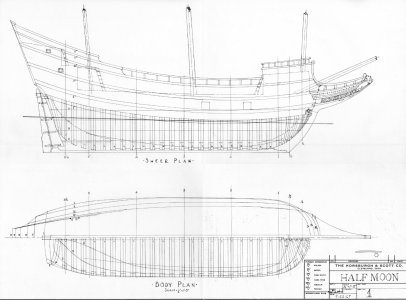
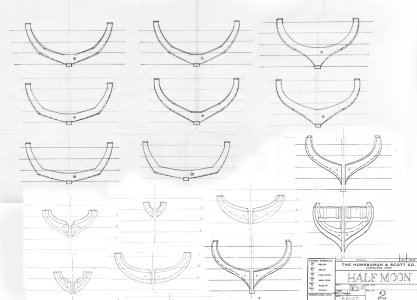
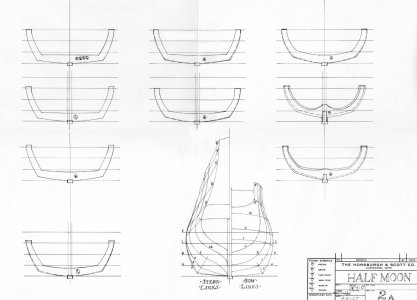
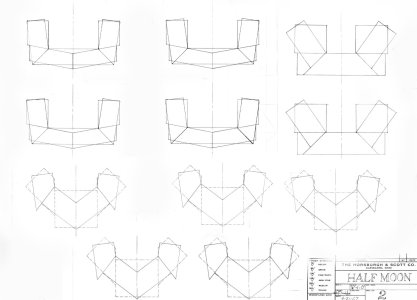
This next model was the Half Moon, which used an unusual construction method. From the waterline up the hull was solid and from the waterline down he drew plans and cut frames which fastened to the upper solid hull. To this hull planking was added from the waterline up. The nameplate included a mini diorama of Henry Hudson trading with the Indians.
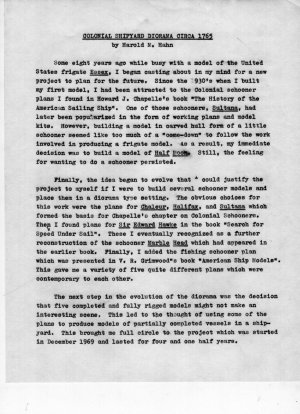
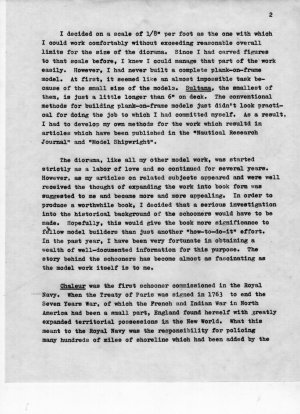
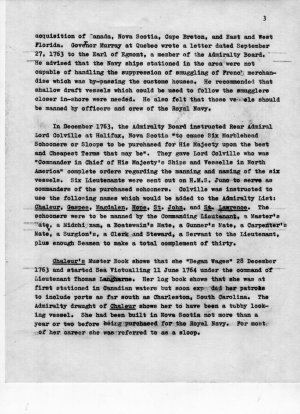
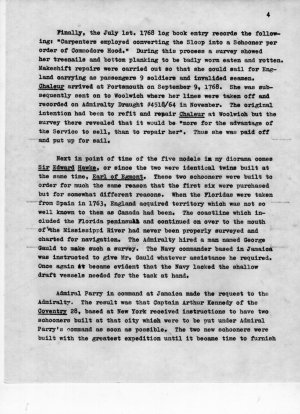
From the first model Harold included figures on board each ship as well as a mini dioramas as a nameplate. His next project would be a diorama of a colonial shipyard.
Harold never actively sought an apprentice nor were his sons Mike and Chris interested in their fathers work.
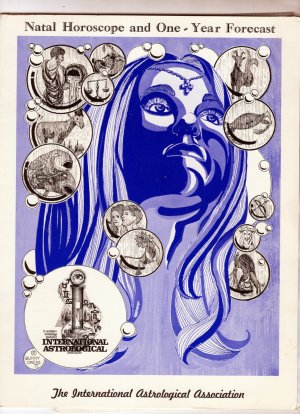
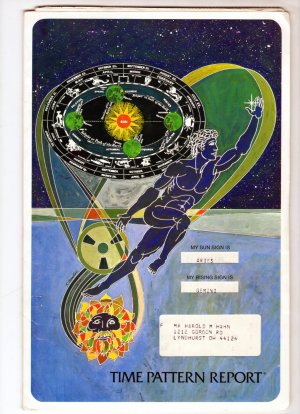
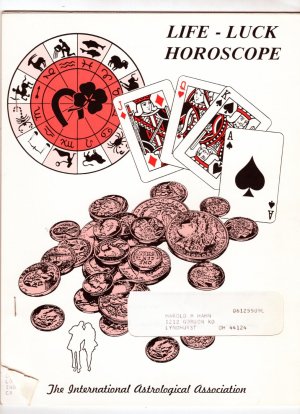
what i found interesting as Harold said he believed a person's life path is pre-determined what i found was every year Harold had a horoscope done, maybe he wanted to see "what's next" to make plans accordingly
did he see me coming? or was i just the pest that kept buzzing around showing him my drawings, sending him letters bouncing ideas around?
by design or ransom fate but i got a call from the family to come to the house everything was given to me. HUM? is this the sign to carry on?
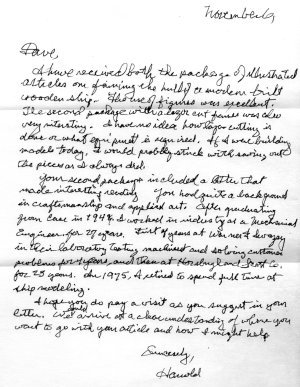
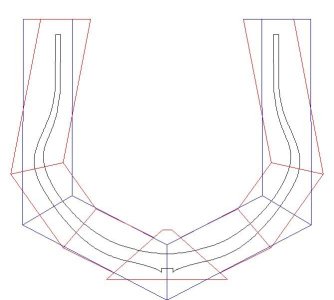
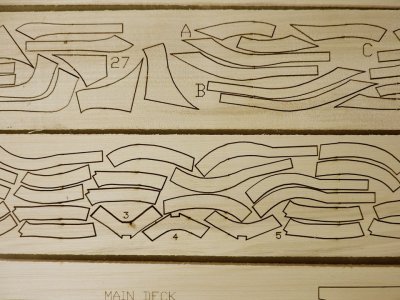
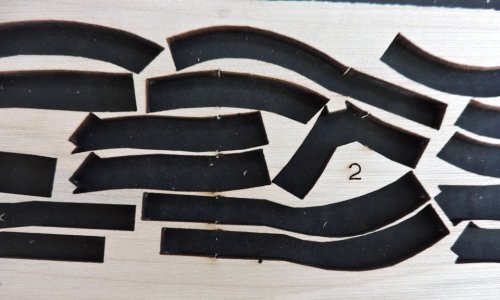
There was no doubt about it Harold Hahn had a dislike for model ship kit and everything about them. As time passed here i am pitching new ideas new methods and maybe i moved the master to reconsider the value of kits or semi kits. I started experimenting with laser cutting and a new improved methods to his system. I would send him samples of what i was doing.
He did point out he still would stick with the hands-on methods of scratch building but he did see possibility in new ideas.
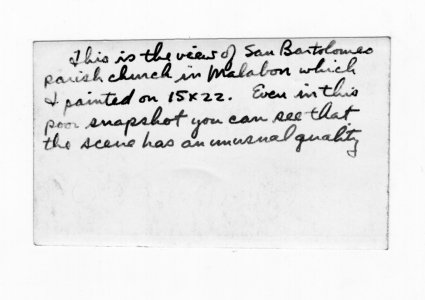
by the way he could carve to astonishing precision buy his handwriting was something else.
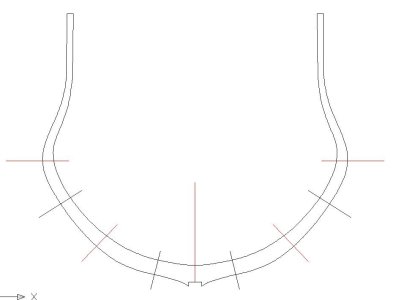
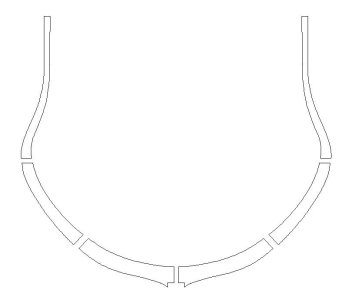
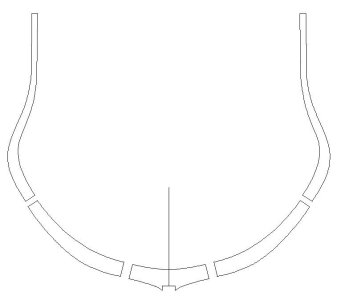
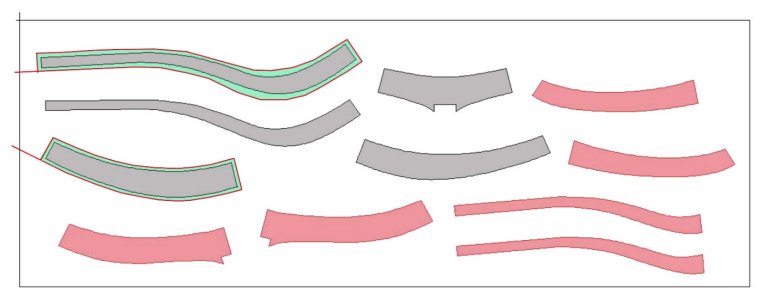
it is the Harold Hahn method 2.0 which we will now explore