




I have been experimenting with the Paranoid B-72 that can apparently be used as an adhesive or a clear seal.
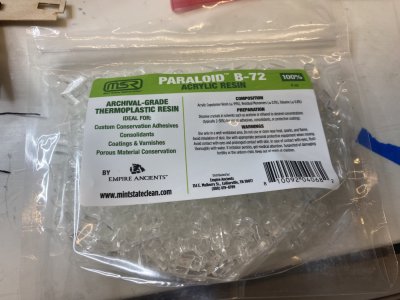
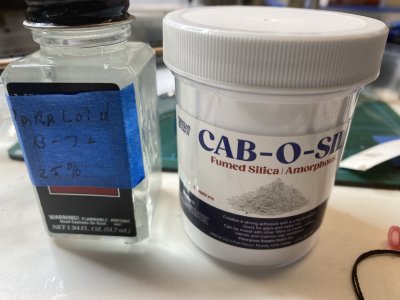
I mixed it (by weight) to a 25% solution in acetone. It can also apparently be resolved in alcohols. It resolves in acetone very slowly. I let it dissolve overnight. In the morning it was a viscous transparent layer on the bottom of the acetone that you could discern because of the different index of refraction. I had to shake it vigoursly for several minutes to get it to mix evenly with the acetone.
I tried it to attach line to some blocks and gluing two pieces of wood together.
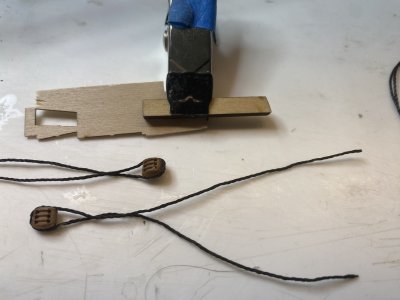
The acetone evaporates very quickly. even after clamping the wood together there was no real adhesion between the parts. The line stuck to the block, but I would say much less than if I used PVA glue. I will try using more between the wood pieces to see what happens.
I also bought the suggested fumed silica to mix with it. This is supposed to improve the viscosity and adhesive properties. The silica is an extremely fine dust. It will probably be hard to mix evenly and I will be using my paint hood and a respirator mask before I take it out of the container. I recommend that anyone else who wishes to to experiment with the silica do the same to protect their lungs.
I'll report back in a few days with the results. If I am unhappy with it I will try desolving it in alcohol.
Rob
I mixed it (by weight) to a 25% solution in acetone. It can also apparently be resolved in alcohols. It resolves in acetone very slowly. I let it dissolve overnight. In the morning it was a viscous transparent layer on the bottom of the acetone that you could discern because of the different index of refraction. I had to shake it vigoursly for several minutes to get it to mix evenly with the acetone.
I tried it to attach line to some blocks and gluing two pieces of wood together.
The acetone evaporates very quickly. even after clamping the wood together there was no real adhesion between the parts. The line stuck to the block, but I would say much less than if I used PVA glue. I will try using more between the wood pieces to see what happens.
I also bought the suggested fumed silica to mix with it. This is supposed to improve the viscosity and adhesive properties. The silica is an extremely fine dust. It will probably be hard to mix evenly and I will be using my paint hood and a respirator mask before I take it out of the container. I recommend that anyone else who wishes to to experiment with the silica do the same to protect their lungs.
I'll report back in a few days with the results. If I am unhappy with it I will try desolving it in alcohol.
Rob


 ) It's a good all-purpose thickener but when using it to thicken an adhesive, remember that while the silica powder thickens the resin, it does not add any adhesive properties. It will add some structural strength to the adhesive matrix, but it is not "sticky," so realize that a thin solution of B 72, as mixed for use as a sealer or coating, when thickened with silica will not increase the adhesive strength of the thin B 72 mixture.

