



• Win a Free Custom Engraved Brass Coin!!!
    As a way to introduce our brass coins to the community, we will raffle off a free coin during the month of August. Follow link ABOVE for instructions for entering.
  • SUBSCRIBE TO SHIPS IN SCALE TODAY!

    The beloved Ships in Scale Magazine is back and charting a new course for 2026!
    Discover new skills, new techniques, and new inspirations in every issue.

    NOTE THAT OUR NEXT ISSUE WILL BE MARCH/APRIL 2026

HMS Unicorn by Corel

Joined
Aug 26, 2020
Messages
524
Points
308

Location
UK Dorset
Why?
As noted at the end of my Fram build log: after building a robust, functional vessel I fancied something more elegant with nice wood and less paint. Browsing through the Corel options (usually good wood) I settled on HMS Unicorn. There are some posts suggesting that this kit has some historical inaccuracies but that is not one of my concerns. I want a good looking graceful model that might (possibly) be allowed in the lounge rather than being confined to the shipyard (spare room) or the stair well.
The Box
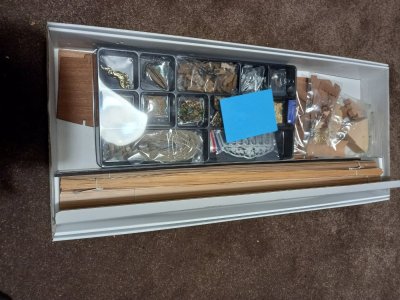
The box contains the usual compartmented tray full of fittings, bundles of wood strips (No sapele!) and plywood bulkheads, keel and decks. These are all pre-cut rather than being part of laser cut sheets. I have not removed the film from the fittings tray (I will not need them for a while) so the token photo below is partially masked by reflections.
Dry Fit of Bulkheads
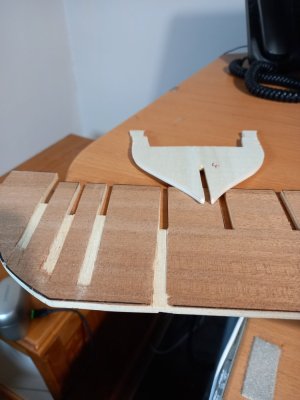
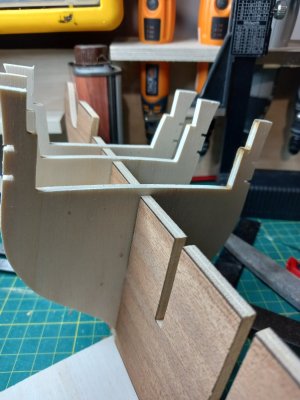
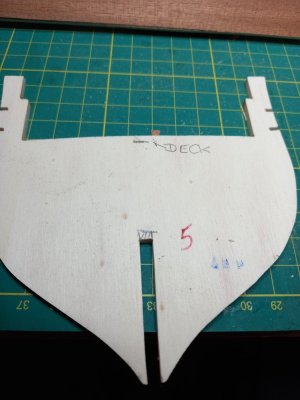
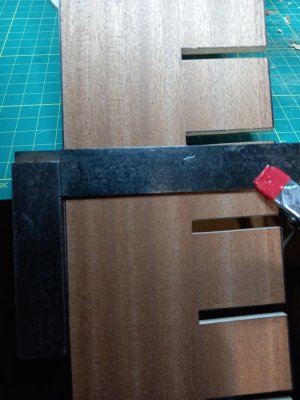
Corel have made a complete pig's ear of cutting these components! The slots in the bulkheads are 4mm wide but the keel is 5mm thick Rather than trying to widen the slots by cutting/filing 0.5mm from each side I decided to cut channels in the keel by removing strips of veneer from both sides. This seems to be more precise since the carcase layers are about 4mm thick. The result is a bit messy but not ultimately visible (photo 2). When I eventually managed to fit some bulkheads I found that their tops were not flush with the top of the keel so the slots need lengthening. (Photo 3 and 4) .The slots in the keel are not quite normal to the keel base (photo 5) and their edges are not parallel. Photo 6 shows light coming through part of the slots.
Perhaps Corel should take more care setting up their jigs or invest in a computer controlled laser cutter. I am aprehensive about what I will discover about the bulkhead profiles and decks
Unicorn box.jpg poor fit 1.jpg
poor fit 2.jpg poor fit 5.jpg
Poor fit 4.jpg Poor fit3.jpg
 
Bulkhead assembly
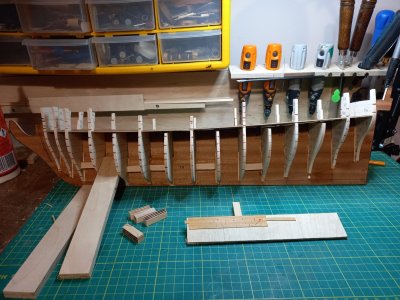
After about five building sessions I have reached the stage normally reached in session1. The bulkheads have been glued in place and the gun deck dry fitted (after widening and deepening the edge slots of course!) to square them off. The first photo shows the assembly with some reinforcing pieces being fitted. Some of the bulkhead/keel joints were a bit floppy after the necessary modifications and the keel stiffness was compromised. The bulkheads and keel are covered with markings at 10mm intervals above the base of the keel. I'm not sure why but they may come in useful and were easy to apply while the components were on the bench.
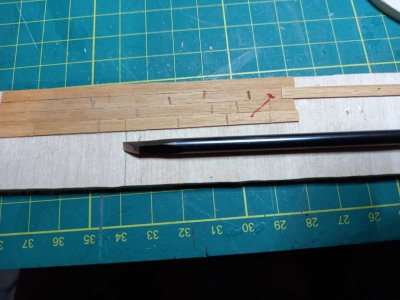
The next stage is supposed to be fixing the gun deck and planking it. It seems a bit odd to follow the usual practice of cutting the supplied deck strips into short sections then gluing them back together again so I have experimented with an alternative. (Not pencil marks!) I glued a sample of strips to a piece of scrap wood and tried simulating joints with chisel cuts of various severity. The initial results are shown in photo 2. The only chisel I have that is narrow enough is 3mm wide and the planks 4mm. Also, the chisel orientation is difficult to control so the cuts are not very square. I have ordered a decent 4mm chisel to carry this experiment further. The red mark on the test piece points to a conventional joint between two separate pieces.
If this option shows promise it will probably be better to apply it on the bench rather than after fitting the deck.
bulkheads.jpg planktest2.jpg
Gun Ports.
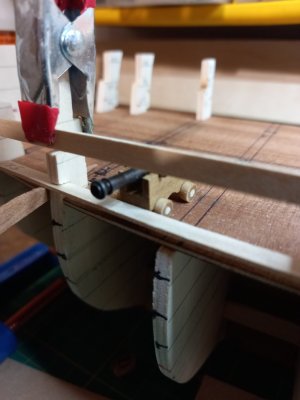
The Corel instructions refer to the gun ports being made with a "patented system" which appears to comprise cutting slots in the bulkhead edges to mark the upper and lower limits of the gun ports. (Big Deal) What a pity Corel didn't cut them at the right height. The instructions say to fix a first layer planking strip above and below the slots I am now wise enough not to nail and glue these in place. Instead, I clipped a sample section of upper strip to the bulkheads and represented the lower strip by the bottom surface of a strip placed edgeways in the lower slot.
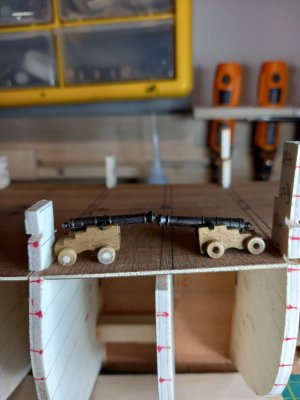
Next I assembled a token cannon and checked how it would fit. Although not apparent in the photo below, the top of the barrel was very close to the upper strip - and I haven't planked the deck yet. Something needs bodging.
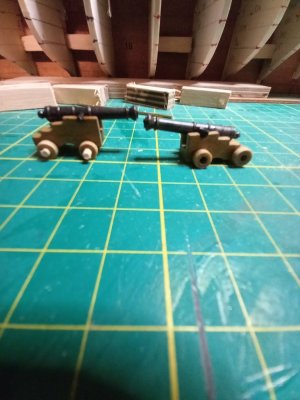
Looking at the cannon assembled as intended with the axles sitting in slots under the pre-formed carriage it seems to resemble an off-toad vehicle with enhanced ground clearance. I'm sure the navy would want to keep the cannon c C of G as low as possible. I 'sacrificed' a second gun carriage and experimentally glued the trucks to the sides (omitting the axle) to minimise the ground clearance. A sports coupe version! Photos are included to compare the two cannon builds. The coupe looks more convincing. The centre holes in the trucks could be filled with dummy axles.
This gave me about 1mm of extra clearance under the gun port top - but still not quite right.
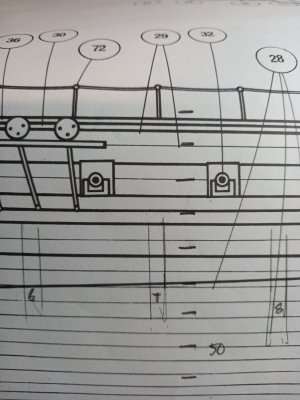
The photo of part of the plan sheet (allegedly 1:1 scale) shows the cannon mouths being about half way up the gun ports and 100mm above the base of the keel. To replicate this on the assembled model suggests the upper and lower bounding strips should not be set by the (patented!) bulkhead slots but raised above them by at least 1 mm. I don't think this will add to the anticipated problems with the upper gun deck.
Gunport.jpg cannon1.jpg

cannon2.jpg plansheet1.jpg
 
Gun Tackles
The rigging blocks supplied with this kit are the usual, clunky, unshaped cuboids common to AK, OcCre, Mantua, Amati et al. They are far to clumsy to be used in gun tackles at 1:75 scale. I have therefore bought some of the excellent moulded blocks from ktl_model_shop
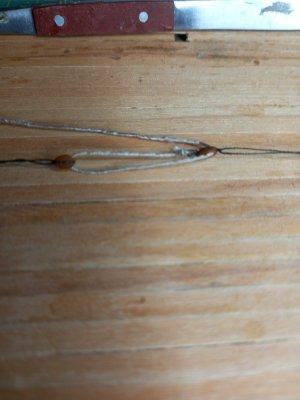
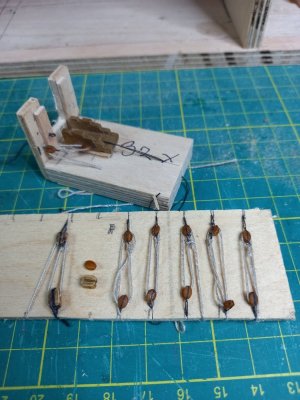
After experimenting with various rigging threads and fine wire I have concluded that the easiest way to strop these very small blocks is to use common sewing thread filched from the Admirals sewing box. This fits securely in the notches at top and bottom of the block and looks correct in scale. (photo 1)
The second photo below includes a number of illustrations.
A KTL block is compared with a block supplied in the kit.
A gun tackle rigged with the kit supplied blocks is shown for comparison with those I am in the process of preparing.
A dummy gun port has been cobbled together to test installation spacings. Even with the small blocks there does not seem to be room for an authentic rig with eyebolts, rings and hooks. As a compromise I have simply threaded the extensions of the stropping lines through holes in the cannon carriages and bulwalks. I think this will look OK in a general view and will be partly masked by the addition of breech ropes.
With potentially 32 guns to rig (64 tackles and 128 strops) I think the future tedium of tying ratlines will seem relatively exciting. This is further confirmation of my lack of desire to build HMS Victory.

strop.jpg Gun Tackles.jpg
 
clunky, unshaped cuboids common to AK, OcCre, Mantua, Amati et al.
Great post, thanks for sharing with us. Bravo to you for not settling for the usual dross used by some kit makers. It is nice to see you using two single blocks for the nine pounders she carried instead of the commonly seen double and single blocks which were normally only for 32 pounders. As these kinds of things appear important to you, and if you do not already have them, there is the original contract for Unicorn 1776 and Perseus 1776 as well as five original plans at RMG. I have a transcribed copy of the contract as well if you are interested. https://www.rmg.co.uk/collections/objects/search/Unicorn 1776

Allan
 
Unicorn Hull Planking
The Corel kit provides 1.5mm lime primary and 1mm walnut secondary planking. I have gone off the idea of double planking with its associated duplication of shaping and fixing efforts. However, is 1mm thick enough for single planking? I decided to risk it using the following reasoning.
The bulkhead spacing on this model is less than any I have encountered before: sixteen bulkheads with a spacing of about 35mm which should provide plenty of support.
Many kits (eg OcCre) use 1.5mm primary planking with 0.5 secondary. If one doesn’t sandpaper through 0.5mm to expose primary planking then I probably won’t sand through 1mm to expose a hole. I hope!
1mm should provide just about enough edge area for gluing each plank securely to its neighbours.
Before fitting each plank I ran a 5mm wide file across the edges of the bulkheads adjacent to the previous plank. This created a local flat to improve the glue contact area and faired the bulkhead edge at an appropriate fore/aft angle.
A fall-back option (not invoked) would have been to use the miles of 0.5mm sapele planking discarded from previous kits as a secondary layer)

The decision to single plank was just about viable but the results were not very satisfactory for various reasons.
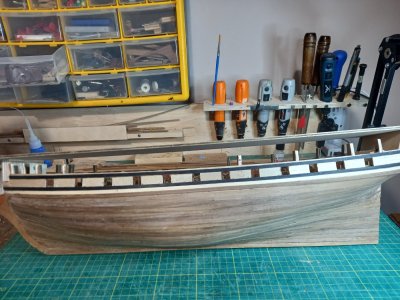
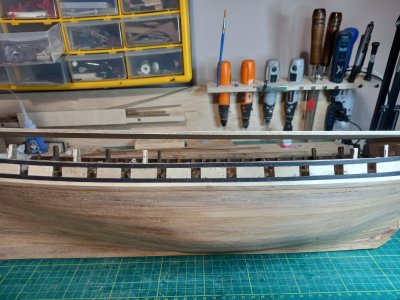
Other models I have made with walnut planking resulted in hulls with a uniform, pleasing. Golden brown finish. Not so with the planking strips provided in this kit. The colour of the strips varied between dark and light brown. To avoid producing something looking like a zebra fish I tried to grade the shades to put the darker planks on the port side and lighter ones to starboard. (Photos below. Some more sanding to be done). Even so, there are the occasional rogue colourings that make the overall appearance irregular. Reluctantly, I shall have to resort to applying a dark stain or varnish to conceal these effects.
The profiles of some bulkheads seemed to be rather inaccurate leading to potential bulges and depressions in the lay of a plank. I tried to file or pad these away as I encountered them. The midships bulkheads met the keel below the bilge at differing heights.
For future reference: 1 mm planking is rather too thin for single planking. 1.5mm would be a reasonable minimum with 2mm better if the bows are reasonably pointed – eg a clipper. For bluffer bows thick planks could always be thinned over the part that bends round a bow block..
Kit manufactures tend to advertise the woods used for planking but not the widths or thicknesses. A table in SOS summarising these plank properties would be useful
Eg:
Artesania Latina Cutty Sark. 5x2 mm single sapele planking.
Panart Royal Caroline. Primary 1.6x6mm lime; Secondary 1.0x6mm walnut.
OcCre Fram. primary 2.x5 mm line; secondary 0.4x5mm sapele
Corel Unicorn. Primary 1.5x5mm lime; secondary 1,0x5mm walnut.
Amati Nina. Primary 1.0x3 lime;secondary 0.5x3 walnut
Dark side.jpg Light side.jpg
 
Bulwarks
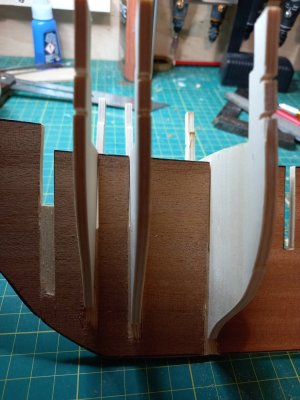
The instructions describe the bulwarks being built up from first layer planking (5x1.5mm lime) glued edge to edge which is not very satisfactory. There are sections between the lower gun deck ports where there is no support from the bulkhead extensions – not very stable.
The bulwarks are clad on the outside with various planking strips but the inner surfaces would appear white. I believe they would normally be painted red but the instructions state “Don’t paint the model: the various types of timber used make it possible to attain an excellent chromatic effect.” I’m inclined to support this approach.
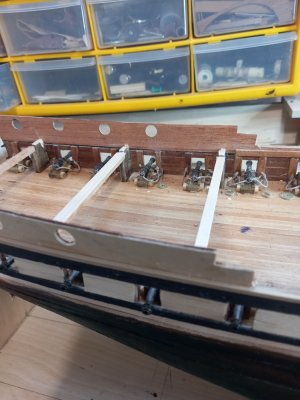
To resolve these issues I cut the bulwarks from 1mm plywood and faced the inner surfaces with 0.5mm sapele left over from other models. This is a token nod towards red. The combination has a total thickness of 1.5mm which is the same as the method described in the instructions but stronger.
The photo below shows the same method being adopted for the (unfinished) upper deck bulwarks.
builwarks.jpg
 
Lower deck cannon
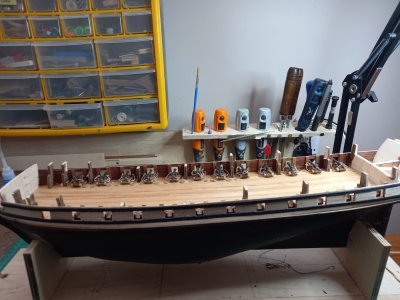
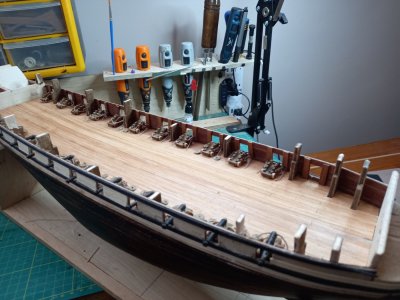
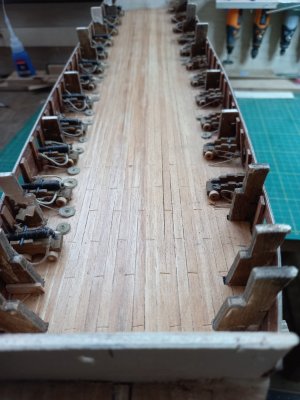
Many of the lower deck cannon are scarcely visible after installing the upper deck. I have therefore taken a few short cuts when fitting them out. On each side:-
I have omitted the trucks on the aft side of the gun carriages for the three guns nearest the stern This will leave me with a few spares to guard against the predations of the carpet goblins. I have also omitted the gun tackles on these three.
On the next two cannon I have added a gun tackle only on the visible forward side of the carriage.
The next six cannon are fully rigged as they are visible through the opening in the upper deck.
Finally, the foremost cannon is rigged only on its visible aft side.
All cannon have breech ropes fitted as these help obscure the omissions from anyone peering through a gun port with a lamp and a magnifying glass.
Given that many kits have dummy lower deck cannon barrels stuck into a block of wood I feel the above liberties are justifiable.
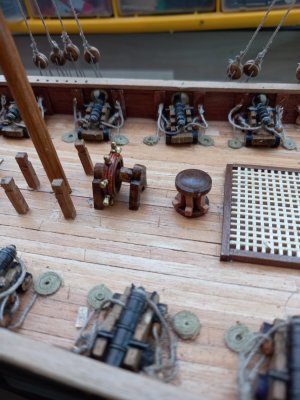
On a fully rigged cannon there are lots of things to join! Gun tackle to carriage, bulwark and deck; carriage to deck; breech rope to bulwark and barrel; barrel to carriage. I tried various sequences on the 24 cannon for variety and research. Some sequences lead to difficulty of access; others to a tangle of unsecured tope ends. I’m not sure which is optimum but leaving the barrels off the carriages until the last step seems a good idea.
The free ends of the gun tackles were pushed down small holes in the deck then covered by coils formed on the bench

cannons1.jpg cannons2.jpg
cannons3.jpg
 
Back
Top