
When I was about 14, my grandfather brought me to Plymouth to see HMS Victory. I remember the long train journey from my grandparents home in Haywards Heath, taking over two hours. But when we finally arrived, I was in awe at her size, complexity and grace. The journey back again flew by as I read and then re-read a booklet on her, musing over what it must have been like to actually sail on her. I spent the remainder of my month's UK holiday building the Airfix model of her, hand painted and with the rigging made from sprue stretched over a candle. I would be embarrassed now by the low quality of my teenage work, but she held pride of place on the top of my bemused grandparents’ maple living room cabinet for many years.
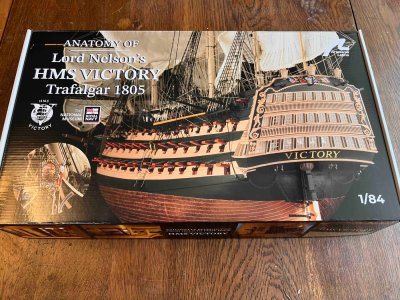
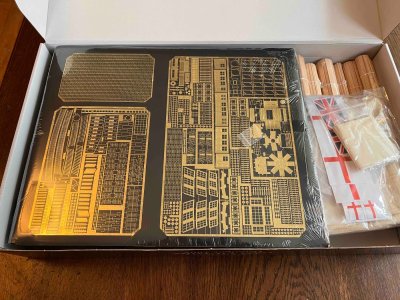
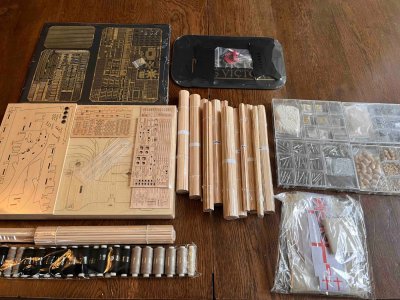
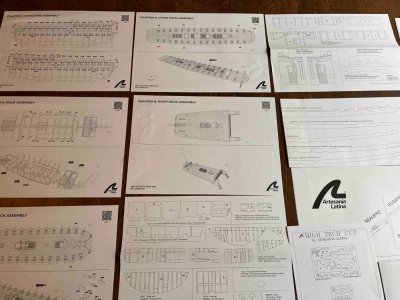
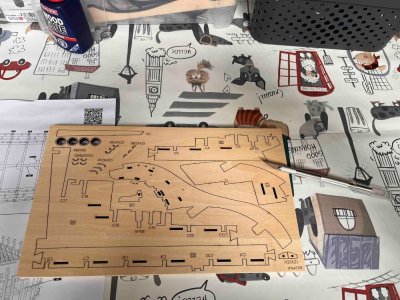
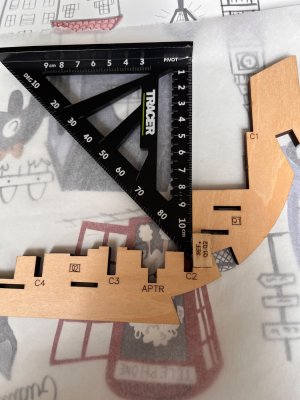
Now, fifty-five years later and retired, I am going to try again. With a slight trepidation I’ve plunged in and bought the Artsanía Latina 1:84 anatomy model of HMS Victory. I’ve always been a keen amateur modeller, chiefly with plastic kits but also a couple of wooden kit ships (including the Artsanía Latina San Francisco model), although rarely had much time during my working career. This new project will be my largest and -- inevitably -- longest I’ve ever undertaken.
My chief sources include of course the excellent forums here on Ships Of Scale, and Youtube video playlists, of those of you who have gone before me, capturing so many useful tips and a few “gotchas” as you’ve progressed. I don’t intend to duplicate here the recommendations and lessons of others, but hope I can nevertheless contribute a few small things of value to those who come after us and take the plunge themselves.
My first chief reference book is Alan McGowan’s “HMS Victory: Her Construction, Career and Restoration”. It includes an intriguing collection of essays on the decision to build and commission her, her service in the Royal Navy, and the discoveries and work during her current ten-year restoration which started in 2022. There are many photographs, and a valuable set of detailed drawings. Although an expensive book, I believe it well worth the investment, particularly in the context of the Artsanía Latina anatomy model.
My second reference is Thomas Gropp’s “Rigging First-Rate Ships of the Royal Navy, circa 1805: Modeler’s Rigging Handbook”. Published just last September, it contains a huge set of Blender (3D design software) drawings completely detailing the rigging of HMS Victory. The author has conducted extensive research including of course multiple visits to Plymouth. I am really looking forward to the rigging phase although naturally it will be many months from now until I get there.
Now, fifty-five years later and retired, I am going to try again. With a slight trepidation I’ve plunged in and bought the Artsanía Latina 1:84 anatomy model of HMS Victory. I’ve always been a keen amateur modeller, chiefly with plastic kits but also a couple of wooden kit ships (including the Artsanía Latina San Francisco model), although rarely had much time during my working career. This new project will be my largest and -- inevitably -- longest I’ve ever undertaken.
My chief sources include of course the excellent forums here on Ships Of Scale, and Youtube video playlists, of those of you who have gone before me, capturing so many useful tips and a few “gotchas” as you’ve progressed. I don’t intend to duplicate here the recommendations and lessons of others, but hope I can nevertheless contribute a few small things of value to those who come after us and take the plunge themselves.
My first chief reference book is Alan McGowan’s “HMS Victory: Her Construction, Career and Restoration”. It includes an intriguing collection of essays on the decision to build and commission her, her service in the Royal Navy, and the discoveries and work during her current ten-year restoration which started in 2022. There are many photographs, and a valuable set of detailed drawings. Although an expensive book, I believe it well worth the investment, particularly in the context of the Artsanía Latina anatomy model.
My second reference is Thomas Gropp’s “Rigging First-Rate Ships of the Royal Navy, circa 1805: Modeler’s Rigging Handbook”. Published just last September, it contains a huge set of Blender (3D design software) drawings completely detailing the rigging of HMS Victory. The author has conducted extensive research including of course multiple visits to Plymouth. I am really looking forward to the rigging phase although naturally it will be many months from now until I get there.
Last edited: