• Win a Free Custom Engraved Brass Coin!!!
    As a way to introduce our brass coins to the community, we will raffle off a free coin during the month of August. Follow link ABOVE for instructions for entering.
  • PRE-ORDER SHIPS IN SCALE TODAY!

    The beloved Ships in Scale Magazine is back and charting a new course for 2026!
    Discover new skills, new techniques, and new inspirations in every issue.

    NOTE THAT OUR FIRST ISSUE WILL BE JAN/FEB 2026

How to protect a painted hull?

Joined
Nov 26, 2021
Messages
339
Points
238

Location
Virginia
Good morning, and Happy Holidays!

I have a couple of questions that pertains to my current build, but thought I'd post it here for anyone else with a similar question. I searched the SoS archives and couldn't find an answer that might neatly sum this up.

I sanded the whole hull with the intent of repainting it. How important is it to apply some type of sealer to the paint job? The last paint job I did I applied a satin lacquor and I feel like the hull wasn't matte looking enough. So I was thinking of maybe not applying a finish. Those more experienced than I who have models that have passed the test of time, what do you think? And if it is important, what do you recommend?

IMG_1271.jpg

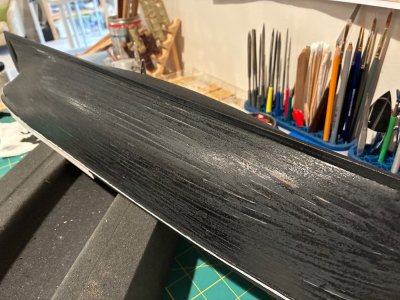
My other question regards a possible 'happy accident'. When I finish the model I plan to put it in a diorama showing the last days of the Endurance before it was crushed and sunk. So I always wanted the model to look more weathered, not very polished. But intentionally weathered, not just a sloppy job. I want to be proud of the model I built, so I want the weathering to always remind me that they weren't mistakes, and were instead attributed to skill (some skill) and patience. So after I sanded it, this is what I got. I used 600 grit sandpaper. As usual, the pictures aren't great. You can see there are some spots where I got down almost to bare wood. The hull looks a lot more weathered and not as shiny, although the pictures look a bit shiny. Knowing my goal, any thoughts out there on what I should do?
 
Cap'n Kramer:
You will find a wide range of opinions on various aspects of finishes. It all depends on how you want your model to look. Having written that, your model looks to me like you didn't sand enough because you started with too fine a grit. I would start with 220 grit and work down to finer grits. As far as sealer, some folks like to use a primer. Others prefer to apply the topcoat directly to the wood. If you're referring to a sealer over the color coat, that is usually to be avoided. The more coats of primer, topcoat, and sealer you apply, the more blurring of details. A typical thickness for a coat of paint is 0.0025 inch. At 1:100 scale, that translates to 1/4 inch. In the end, it depends on the type of wood you use and the look you want. When it comes to degree of gloss, there is one strict rule: museum-grade models cannot have gloss finishes. If you want a matte finish, use matte paint. If you want to learn about weathering techniques, observe what modelers have done to plastic models of aircraft, cars and military armor. Some of the work is quite amazing. Weathering is principally applied over base coats of paint.
Fair winds!
 
On of the first things an apprentice painter is taught is that a fine finish is 90% preparation and 10% application. Viewed up close as ship models are, a fine finish is one of the most essential features of a high-quality model and one most often overlooked by ship modelers. It is apparent that your hull is not yet even close to being sufficiently sanded fair. As can be seen from the photo, the higher spots are sanded flat while the lower spots are still somewhat glossy. The entire hull must be perfectly smooth as a baby's bottom. Even when all the surface appears the same level, you should carefully run your fingertips over the surface to be sure of uniform smoothness. Your fingertips are a more reliable method of evaluating smoothness than your eyes are. Remember also that the reflective properties of any paint surface can be modified as may be desired by hand-rubbing with rottenstone and pumice powders, common traditional (and inexpensive) products available at paint and hardware stores. These abrasive powders can dull a glossy finish or even produce a beautiful soft glossy finish, depending upon how lony one rubs. Hand rubbing also removed any minute imperfections such as a speck of dust from the surface. A hand-rubbed finish can always be identified by running the fingertips over it. They look better than any premixed "flattened" or "matte" paint or "satin" varnish coating designed to imitate the true hand-rubbed finish. A hand-rubbed finish may be more effort than the average kit assembler may want to invest in their model, but it sure does make a model stand out. It's one of the distinguishing features of the amazing "builder's models" produced on either side of the turn of the 19th century into the first half of the 20th.

Even when one desires to portray a weathered, perhaps roughened, hull of an old, worn-out vessel, a correct appraisal of scale viewing distance must be taken into account if the model is to create the effect of realism required of a high-quality scale model. Scale viewing distance is simply "what does a thing look like when viewed from a given distance." If a miniature is to appear realistic, it must be made to appear as the full-size subject would appear if being viewed from its full-scale distance. sIf the posts on ship modeling forums are any indication, ignorance of scale viewing distance, or outright refusal to abide by its limitations because of one's ego, is one of the most frequently apparent errors seen. At most all scales below 1:12, plank seams, wooden plugs and trunnels, copper sheathing "rivets" (they are tacks,) and the like, are invisible at scale viewing distances. Many modelers mistakenly show out of scale plank seams, plugs, trunnels, and other fasteners thinking they are "adding detail." Out of scale detail is distraction that destroys the compelling impression of reality that defines a high-quality ship model. (And some ship model kit manufacturers have no hesitation including out of scale parts in their kits and claiming their model is "more detailed" than their competitors'!)

Scale viewing distance is easy to calculate by calculating the distance from the model viewer's eyes multiplied by the denominator of the model's scale. For example, if the model will be viewed by three feet away and the model's scale is 1:48, the scale viewing distance is 144 feet (3 x 48 = 144). The detail on the model should be what one sees on the full-size ship when viewed from 148 feet away. If you're a modeler who expects your 1:48 model to be scrutinized from a foot away, then scale viewing distance is 48 feet.

Scale viewing distance applies not only to details, but also to color and gloss. As the viewing distance increases, glossy reflections decrease. Glossy finishes on models are out of scale. Also, colors tend to darken, or take on a greyish cast, as viewing distance increases. No competent landscape painter will ever paint the hills in the distance the same color green as the meadow in the foreground. Modelers need to learn and apply these principles to the finishes of their models to avoid their looking like "toys." Studying landscape painting manuals will be helpful to learn this.

Modelers who haven't acquired the ability to intuitively recognize the scale viewing distance of ship models from their own experience of full-size ships, should experiment with other subjects. Create a full-size mock-up of the detail in question and view it from a measured distance. If you can see it, then portray on your model exactly what you can see on your experimental subject, not what the thing looks like when viewed up close! If you can't see it at full-scale, don't model it at scale! Out of scale details just scream at the viewer, "It's a not a real ship!" which by any definition is the antithesis of what scale ship modeling is all about.

Considerations of scale viewing distance are particularly important when working with dioramas which impose the greatest demands for accurate detail on the modeler's skills. If you want your hull to look like a hull long laid up in ordinary without regular maintenance, you need to determine what such a hull will look like at its scale viewing distance. In most instances, the detailing, or "weathering" will be surprisingly subtle if it is done correctly. Exactly what that will actually look like will depend upon the research you do on similar surfaces viewed from a similar distance. Virtually all ship's hulls will appear flat or "matte" finish at any scale viewing distance in 1:24 scale and below (A few "gold plater" yacht models will rise to an "eggshell" or "satin" finish at 1:24, though.) At most all scale viewing distances, most hulls will also appear perfectly smooth. Details like rivets and copper antifouling sheathing tacks can't be discerned by eye at half the length of a football field (at 1:48 scale) and certainly not at the full length of a football field (at 1:96 scale.) "Weathering" detail is added "on top" of the basic finishing job. It's really where the modeler's "artistry" comes into play. To pull it off, you have to add subtle "detail" in much the same fashion as an impressionist oil painter who uses slight variations of color washes to create the impression of distance for the viewer who's looking at the painting, or model, "up close."

Here are a couple of videos on landscape painting which address viewing distances greater than most model scale viewing distances, but nonetheless address the basic principles we have to apply in the context of ship modeling.



 
How important is it to apply some type of sealer to the paint job?
A sealer is a clear finish with grit like:
with rottenstone and pumice powders
It is to be used on open pore wood species - to fill the pores in full size furniture - so that when viewed from an acute angle - the surface is smooth - the pores being filled. This should not be a factor with a well planned ship model. Open pore species should be avoided where they would be seen.

A primer -shellac being well suited for this - fills the voids within the near surface of the wood - or for a wall plaster or drywall - to reduce the volume of expensive topcoat needed. On a model, shellac if done well- offers a proper base for follow-on color.

You are well past needing a primer and a sealer should not be in it anyway.

The last paint job I did I applied a satin lacquor and I feel like the hull wasn't matte looking enough.
Why did you choose lacquer to begin with?
Lacquer is nitrocellulose in a fierce solvent. It is intended to produce "thick" layers. The surface is supposed to look like there is a layer of glass on top.
Thick layer and glass- like do not fit with a ship model.
I use lacquer in my sheets of frame timber patterns because it doubles or triples the thickness of the paper and turns it into something like Mylar and is semi-waterproof. There is nothing about this that fits with a ship model itself.

If you follow Bob's advice and do a full=on sanding job, stop at 220 grit. Give the surface a just wet coat of blonde shellac and apply an enamel based color finish. With the sanding, the lacquer will be mostly gone anyway. Enamel will go over lacquer if it has tooth, but the shellac will remove any possible problem.

Get a copy of Bob Flexner's book on wood finishing and you can answer these questions.
 
This is exactly why I created a separate post for this question! These responses from Bob, Jaager, and Andy are amazing. Incredibly in-depth, very knowledgeable answers and suggestions. One of the things that makes SoS such a great community is the well-thought-out responses to newby questions. Thanks very much for taking the time to think about the problem and provide thoughtful ideas.

I'm very much a person who needs a plan. And after reading through the responses, I think I'm formulating one. When I posted I wasn't crazy about the state of the hull, but knew I wasn't happy. I'm not striving for perfection, but I do strive for creating something that reflects the idea in my head.

1. First thing I think I should do is sand down the hull fair. I agree, the 600 grit sand job really does show the hull is not fair. I'll go back to a coraser grit and stop at 220 grit to get the hull fair, even if I get down to bare wood in spots, and get the hull smooth.

2. I'll apply a layer of shellac after sanding. I'm assuming I should thin it out?

2. Repaint the hull with a matte black paint. Jaager recommends an enamel-based black matte. I plan to brush it on, not spray. Any favorites?

3. I need to think about the viewer of the diorama. Bob has great points about scale. I've definitely noticed models that are too detailed when viewed from a certain distance, which makes them look like models or toys. I've already messed up some other parts of the ship by trying to add details that I now see are out of scale. The deck has too much of that with the treenails and seams. I might try and dull the deck and make it a little greyer and also dull some of those details. I also think I've been looking at the ship in the wrong light. I have a small lamp on my work bench, which sits by a window that gets lots of natural light. Pictures of the Endurance in the ice show a very gray/blue environment. The light at my bench is all wrong. I need to set up an area with the proper light, more like where the diorama will be displayed, so I can move back and forth when working on details.

4. Seems like no matter if the paint says it's flat or matte, there always seems to be some kind of sheen on it. I love the idea of hand-rubbing the hull with some dental pumice powder to remove any sheen.

5. After paint, I'm not going to apply anything on top of that. When I first painted the hull, I primed it, then spray painted several layers, then lacquer based on a recommendation. I'll research some weathering techniques to get my Endurance hull to the state it might have looked in its last few days. I'll shoot for subtle, not too detailed. There are lots of good pictures, albeit black and white, of the Endurance in it's last days. I'll have to marry up my weathering techniques with the photos.

What do you think? Sounds like a plan?
Thanks again!
 
an enamel-based black matte
I am going to go hardcore and pare this down to the basics. Use a tube of Artist's tube oil black. It is more work and testing than a small bottle of premixed, but a small tube will outlast you. Keep it caped and it will not polymerize. Depending on what it is mixed with it is brush, spray, thin wash. It is essentially what every form of model paint starts with. Read the 3 post discourse I had with Bob Cleek =
https://shipsofscale.com/sosforums/threads/model-master-paint-use-survey.17517/post-483824
and give it serious thought. For what you want I think a bit more "boiled" Linsead oil to speed drying and terp or mineral spirits to your preferred consistency for brush or spray. (I am obsessed with having most every resource so I have a bottle of Grumbacher Japan Drier- just in case.)
If you start out using tubed oils for any painting - I think you will only need to buy any one color only once -period. With a few primary and basic colors and a color wheel this may be as economical over the long run as it gets.

I think that the degree of gloss is proportional to sanding medium grit. If you stop at 220 I think the surface will be fairly dull. Go up to 2000 Si Carbide and it should just about glow. Do not take my word for this - experiment.
 
I'll apply a layer of shellac after sanding. I'm assuming I should thin it out?
If it was bare wood - old shellac directions recommend the first coat be half-saturated. Essentially it is a 1:1 dilution with alcohol thinner. This mostly all penetrates the wood with very little on the surface. Follow on coats then are all surface coats.
With shellac flakes, the closer to clear is the product - the less soluble in alcohol. Learning to use shellac flakes is another step in becoming self-sufficient - if that is your want.
I think that when you interact with scratch builders you are dealing with a basic philosophy is towards self-sufficiency and being independent of commercial firms. It requires a lot more work and schooling..
 
Expert ship model builder Eric Ronnberg has also written about painting. You you can find an article that he wrote on the Nautical Research Guid’s website NRG.org. Look under Resources. Ronnberg advocates the use of Neutral Grey to be added to colors to help provide the scale effect. In other words, if you just paint your model with black paint, it will be “too black.” This will be especially true of a vessel like Endurance where paint would be sun bleached.

Bob Cleek should correct me if I’m wrong, but I believe neutral grey is just grey with no blue tones.

Roger
 
I think that when you interact with scratch builders you are dealing with a basic philosophy is towards self-sufficiency and being independent of commercial firms. It requires a lot more work and schooling..

Well, It does require dealing with a learning curve, but it's not that steep. The payback for that is generally better-quality materials and a whole lot less expense! Not to mention that there are no limits on what you can build when you aren't any longer dependent upon what kits happen to be available (and in your price range.) This isn't to say that kits don't have their place, especially for those novices who find "training wheels" helpful when "learning to ride the bike," or for those who, (for reasons I don't completely understand,) simply enjoy assembling kits as an end in itself. As a sage once said, (Might it have been Pellett :D) "Building ship model kits is a great way to learn how to build ship model kits, but not so much how to build ship models."


What's really required is reading, reading, and more reading. When you know how ships and boats are built and rigged, there are few limits on what you can choose to build. All you need to know is in books. Start a "research library" of the "classics" and you'll soon have what you need in the area of your interest, at least, to answer most of the questions you encounter.

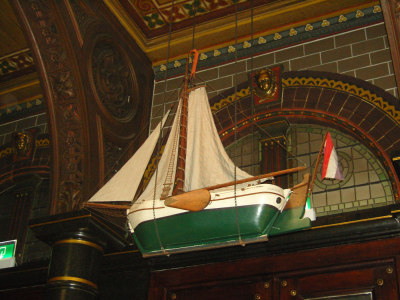
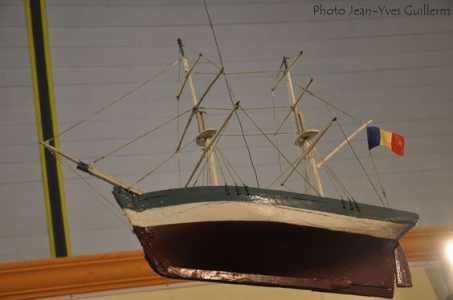
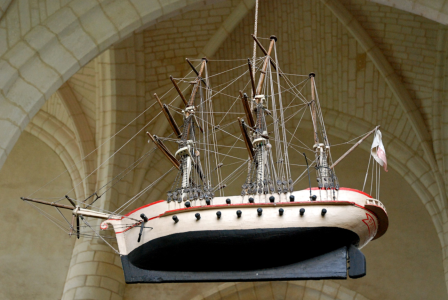
Relying on social media for instruction is a two-edged sword. First, it has a tendency to make you dependent rather than independent on the hobbyist specialty retailers, especially kit manufacturers, who are constrained by profit margins and, assuming that you don't know the answers to the questions you ask online, you never know if the answers are the best ones or just the ego-driven opinions of somebody who doesn't know as much as you do, or even less. There really aren't any "rules" to ship modeling. Basically, it's all about defining what your personal goals are and then pursuing them to produce as perfect a result as you possibly can, hopefully with the goal of each build besting your previous "personal best." A model is a model is a model, though. It can be a high-quality scale model, or it can be a lesser quality "decorator piece," or even a quaint, even crude, piece of folk art. All have their place in the pantheon of ship modeling. "Museum quality" is a meaningless term that kit manufacturers like to throw around to sell their products, but the fact is some of the most treasured models in museum collections are as often as not crude contemporary models which are precious primarily because they are old and all we've got as far as an historical record of a particular vessel type goes. (This is particularly true of the "votive" models which were hung in European churches by mariners as tokens of thanks for a safe voyage pictured below.) And the funny thing is that the models you build early in your "career," imperfect as they may be, seem to become "old friends" you can't part with as time goes on, so just because you didn't spend a couple of grand on a laser-cut Victory as your first effort, doesn't mean a simple little vessel done well can't bring as much satisfaction.


1767237249264.png

1767236998797.png

1767234979381.png

1767235103089.png

1767235996170.png

1767236116158.png

1767237226444.png
 
Last edited:
I'm very much a person who needs a plan. And after reading through the responses, I think I'm formulating one. When I posted I wasn't crazy about the state of the hull, but knew I wasn't happy. I'm not striving for perfection, but I do strive for creating something that reflects the idea in my head.

The "idea in your head" should be "perfection!" :D You'll never hit anything higher than you aim. Sure, nobody's "perfect," and any model I ever built is, in my secret mind, a collection of "I coulda done betters," but the fact that I can recognize my own shortcomings is essential to becoming a better modeler over the course of a lifetime. There are relatively few people who really know squat about what they're looking at when they see a ship model, a fact which keeps the ship model kit manufacturers in business. "Packaged perfection" costs more than the market can bear. That said, if you develop the independence to free yourself from "paint by numbers" kits, perfection, or at least something progressively approaching it ever more closely, becomes easily affordable and attainable.

1. First thing I think I should do is sand down the hull fair. I agree, the 600 grit sand job really does show the hull is not fair. I'll go back to a coraser grit and stop at 220 grit to get the hull fair, even if I get down to bare wood in spots, and get the hull smooth.

When your hull is fair, a slight swipe with 600 grit or with some fine steel wool, or a hand rub with rottenstone and pumice will get you an even reduction in gloss without "hills and valleys" showing up. Take it down with 220 for openers. If you want, put a light wash of color on it and then sand it down, using the color topcoat as your guide. When the color is gone, your surface should be uniformly fair. When you've got it smooth at 220, then sand it with 320, then 400, which should be smooth enough. You really have to get it perfectly smooth, though. If you don't, every defect in the hull surface will show up and it will show up wildly "out of scale," which ruins the whole effect of the illusion you should want to be creating. It's got to be as smooth as a baby's bottom. And when you do, sand evenly. if you just "chase the divots," you will be sanding low spots. One good way to avoid this is to make "sanding boards" out of a piece of flexible material, such as a strip of thin flexible wood, plastic, or springy metal. Fasten a knob or the like to hold onto it at either end and glue your strip of sandpaper to it. Then use the sanding board in all directions, bent on the hull, so that you don't sand "valleys" trying to get rid of uneven surfaces.

If your hull is really rough (it's hard to tell from pictures, trust your fingertips, they are more sensitive than eyes,) you may want to apply a coating os "sanding undercoat" or even "surfacing putty," and then sand that fair. These are materials, the "undercoat being paint with a lot of chalk in it and "surfacing putty" being a toothpaste-consistency goop you trowel on that fills low spots and is very easily sanded to obtain a fair surface. As you may have discovered, sanding built up cured topcoat paint is rather rough going. These products also help avoid having to "sand down to bare wood" to get a uniformly smooth surface. They are readily available at paint stores and auto body and fender materials supplly houses. (The latter often being a good place to shop for finishing materials.)

And, while I'm rambling here, I'll mention that sandpaper and similar abrasive materials are the least expensive by a big margin when purchased in "sleeves" (the cardboard packaging) of 100 sheets (or sometimes 50, as I recall.) Sometimes hardware stores will sell abrasives by the "sleeve," or you can get them online. If you buy "assortments" or packages of five or ten sheets designed for the DIY customers, your wallet will be getting raped. More importantly, you will almost never run out of sandpaper, and you will tend not to waste time and energy trying to sand with worn out sheets when a new one that cuts clean and free is always at hand. It doesn't really pay to cut corners on abrasives. Buy the "good stuff" or close to it. It cuts better and lasts longer and is cheaper in the long run.


2. I'll apply a layer of shellac after sanding. I'm assuming I should thin it out?

If there is bare wood, yes, give it a coat of shellac. Some guys buy shellac flakes and prepare their own. I've always just bought Zinsser's Bulls Eye brand canned premixed shellac. (Not the rattle can!) It runs around $25 a quart (not sure if they sell it in pints) and it has a good shelf life as long as you seal the can well between uses. It is thinned with denatured alcohol, which can be bought at the paint or hardware store. I buy it by the gallon. It's available in quarts, too. A "scratchbuilder's trick" that will save you big bucks is buying stock materials you know you will use in larger quantities. It's always considerably cheaper because you are always paying for the packaging, as well as the additional trips to the hardware or paint store. The alcohol is not only essential for cleaning shellac out of brushes and thinning it, if desired, but will serve a lot of other purposes. For example, it will be needed if you use an acrylic paint that is thinned with alcohol. It can be used to degrease metal parts before "bluing" them in liver of sulfur or prior to silver soldering. Alcohol will also thin epoxy resin and is good for thinning latex house paint for running it through a spray gun, should you have occasion to want to do that. (Worked a treat to do the shutters on my house last summer. Saved me hours of brushing by running the thinned paint through my Binks gun.)

No, there's no need to thin out the shellac "out of the can," although you may wish to do so if the can's been open for a long time and the stuff starts to thicken because the alcohol has evaporated. I've never had a problem with that. Zinsser Bulls Eye is "three pound cut," which means three pounds of shellac flakes are dissolved in each gallon of alcohol. I've always found that to be as thin as I ever needed it to be. Shellac soaks into bare wood like water and is imperceptible after a single coat, but after that coat dries (the alcohol evaporates,) if you put another coat on, it won't soak into the wood anymore, but will lay on top of the first coat and it will be glossy. That's easily solved by a bit of a rub down, but there's no need to build up a shellac coat if you are going to use another coating on top of it. Once coat of shellac is enough.

I see no need to shellac a surface that's already been coated with paint. However, if there are bare patches, it's best to shellac the whole piece.


2. Repaint the hull with a matte black paint. Jaager recommends an enamel-based black matte. I plan to brush it on, not spray. Any favorites?

The first decision you need to make is whether you are going to be an "acrylic guy" or an old school "oil paint guy." The two systems are not compatible. You can't paint one on top of the other. Besides, each has their own particular conditioners... thinners, (either water or alcohol in the case of acrylics and linseed oil and turpentine, mineral spirits, or acetone, etc. for oils,) retarders, accelerants, and flattening agents. Fortunately, shellac as a sealer works well with both acrylics and oils. (Always use a sealer on bare wood!) I prefer oil-based coatings, although acrylics have their place for some applications, such as making scale sails with Silkspan material. It may just be my unscientific prejudice, but I trust the archival properties of quality tubed artists' oils over high quality artists' tubed acrylics and I'm more used to using oils. Either way, you should read up on using tubed paint and do some experimenting with it so you learn to "condition" your paint for application. There is no difference between brushing and spraying. Either, done correctly, will produce a great result and doing either requires the same skill in conditioning the paint for the use intended. This isn't the place to try to teach anybody how to be a great painter, but there are excellent books on the subject and lots of good YouTube videos on using artists' oils for painting miniatures. The "wargamers" that paint plastic fantasy character models have really perfected the techniques and their painting videos are a good place to start.

Experienced modelers use tubes artists' oils instead of bottled premixed "model paint" because it gives greater flexibility and control of the finished product and they are way cheaper than those one- and two-ounce bottles of already thinned paint. Thinners and conditioners are cheap compared to pigments and binders. (Tubed artist's paint colors vary by price depending upon the quality and costs of the pigments.) Tubed paint contains much more pigment, which is what it's all about. You should buy the artists' tubed paint that has the highest and finest ground pigment content you can because you will be thinning them quite a bit. Buy higher quality artists' tubed paint and mix your own colors because these will have the highest quality pigments that are not adulterated. Without getting too far down the rabbit hole here, suffice it to say that not all the same colors are the same. There are cheaper color combinations that yield the same mixed color and if you then try to mix that color with another, you risk getting an unwelcome surprise in the result with some of the oddball color mixing combinations. The better artists' tubed paints will also have pigments that are more colorfast and you won't have to worry about fading colors. All of this is set out in the texts on the subject. One good basic primer on painting is the old Floquil model paint manual. Floquil is no longer made, but their manual can be found in PDF format at https://www.paulbudzik.com/tools-techniques/floquil-paint/Floquil Painting Miniatures.PDF. Read it!

There is one important thing to remember about the reflective qualities of any coating. Most all which do not soak into bare wood will dry with a glossy finish because the binders they use polymerize with very smooth surfaces. If you want a finish that is "duller," be that a total matte finish, a "satin," or an "eggshell," "flattening agents" must be added to the coating. Flattening agents are basically finely ground powdered material that is mixed in suspension in the coating. They serve to thwart the reflective properties of the unflattened binder. You will be able to purchase flattening agent wherever you purchase artists' tube paints. (And you'll need to get the "acrylic version" or the "oil version," depending on the painting system you are using. Premixed "flat," "matte," or "satin" finish paints have the flattener already added to the paint. Keep in mind, however, that any paint which has flattening agent in the mix must be well stirred before (and during, depending on the duration of) application because the flattening agents are only in suspension, not dissolved, so they will settle in the coating container. This is one of the more common novice's pitfalls. They neglect to stir their "matte finish" paint or varnish, which has been sitting on a shelf for ages with all the flattending "dust" settled at the bottom of the container, and, when they apply it "straight out of the bottle or can, they are essentially applying, to one degree or another, coating material without the flattening agent equally mixed, so the material off the top of the bottle or can dries with a gloss finish, or something less that "matte" and, of course, they end up frustrated. Just so you know. ROTF

It always amazes me to see pictures of these guys who have their shop walls lined with dozens, sometimes hundreds, of little bottles of different colored "model paints," all costing five or seven bucks a piece and all slowly skimming over and drying up. I can understand that the model railroaders and military armor modelers want to get exactly correct railroad livery and military colors, so for them it's easier to buy "Wehrmacht feldgrau" or "Pennsylvania Railroad green" or whatever, but ship modelers can mix any color they would possibly need with a palette of six or eight basic colors if they understand the principles. Here is a good example of where craft "cross-pollination" is the modeler's friend. Most all of the skills a modeler needs can be mastered by studying the techniques in other craft contexts and then applying them to modeling. If you want to become a good model painter, one good place to learn how to do that is where "picture painters" go to learn. An entry-level oil painting class at a local junior college adult education program is a great place to learn all you need to know about painting models well, and learn it quickly with somebody who is there to show you, rather than your trying to figure it out from a book alone.

Even if you do just get a bottle of pre-mixed matte black to paint your hull (stirred, not shaken,) remember that the proper brush technique is to apply multiple thin coats, six or eight are required often, of thinned paint. You do not want to build up a thick coating, but rather of build up as dense a pigment layer of thin coatings in total as you possible can. Thick coats not only tend to run, sag, and "curtain," but they also destroy the "crisp" scale detail of a model. As explained in the Floquil manual linked above, you don't want to build a scale model that has an out of scale "three inch thick" scale paint job on it! Here is where your 600 grit sandpaper comes into play. If you do have defects in your finish coats, you can gently sand them off with the fine sandpaper. It is not necessary to sand the hell out of every coat. It's often recommended to "sand between coats to key the surface" to make the next coat stick. This is applicable to high-gloss finish coats to some extent, but not necessary with thin coats of flat paint, the surface of which is sufficiently rough to provide a suitable surface for later coats to stick just fine. What you definitely do not want to do is another novice painters' common mistake: putting down a coat and then sanding most, if not all, of it off to prepare it for the next one. That gets us the question posted, "I've put eight coats down and I still see uneven color. Why isn't my finish coat covering well?" The answer is that you've only got two and a half coats left on the surface, that's why!

And one last thing while I'm at it... (I worked my way through college as a part-time marine teletype operator... so I still type about as fast as I talk...) A finish coat should never be expected to cover an uneven base coat! Always keep this in mind. A base coat of somewhat thick, sandable paint must be a uniform color. It can be any color, although preferably one that the finish coat will covery easily. Finish coats, particularly light-colored ones, aren't designed to "cover" the color beneath them, but rather to serve as a hard topcoat. Light colors like white, particularly, are actually somewhat translucent. A white topcoat over a gray base coat will give you a "greyer" white than if applied over a white basecoat, but what is the most important thing to remember (before you discover it from experience) is that regardless of the topcoat, the basecoat must be of uniform color. A black topcoat will give you the least difficulty in this regard because black covers best of all but be aware of this pitfall generally. Similarly, if you sand and prime your hull and then find defects that you want to fill with surfacing putty and/or sanding basecoat, you should apply shellac over the puttied areas after sanding. The surfacing chalk (much like drywall "mud,") absorbs paint differently than sealed areas, creating a difference in the surface of the topcoat, which will lay on top of the sealed surfaces, but soak into the porous chalky surfacing material. Again, a passing mention, I prefer to use surfacing putties made for marine yacht finishing or automotive painting. Some of these for the auto painting industry are packaged in larger "toothpaste tubes" for small jobs fixing paint dings and the like and are very convenient for modeling. The pints sold in cans in the ship chandleries which we used to get for a reasonable price are for some reason now insanely expensive, so I wouldn't advise using those. Some modelers online will say to use drywall "mud" or plaster for filling. I do not advise using drywall mud for modeling purposes because the grind of the plaster used in the mix is quite coarse and the material is seemingly more absorbent than the automotive and marine painting surfacing putties on the market. When the latter are sanded, a uniformly smooth surface results. The surface of the sanded drywall mud in inherently rougher and less suitable for scale modeling purposes.


3. I need to think about the viewer of the diorama. Bob has great points about scale. I've definitely noticed models that are too detailed when viewed from a certain distance, which makes them look like models or toys. I've already messed up some other parts of the ship by trying to add details that I now see are out of scale. The deck has too much of that with the treenails and seams. I might try and dull the deck and make it a little greyer and also dull some of those details. I also think I've been looking at the ship in the wrong light. I have a small lamp on my work bench, which sits by a window that gets lots of natural light. Pictures of the Endurance in the ice show a very gray/blue environment. The light at my bench is all wrong. I need to set up an area with the proper light, more like where the diorama will be displayed, so I can move back and forth when working on details.

One maxim of good modeling is that if something bugs you while there's still time to rip it out and do it over, that's the time do rip it out and do it over because if you don't, it will probably be impossible or at least impractical to do so later and it will bug you every time you look at the model for the rest of time, even if nobody else notices it. ;) Scale detail is a tricky thing. Creating a compelling impression of reality in a model requires "tricking the brain to see something other than it otherwise knows the eye is seeing." You look at the model and your brain says, "It's three feet away. It's a model." but a really good model causes the viewer's brain to ignore reality and be drawn into thinking, "Wow! What a neat ship!" Anything that is out of scale is like a flashing neon sign screaming at the viewer's brain, "It's just a model!" and the desired compelling impression the modeler seeks to create is destroyed. Fix it now! Take a look at your collection of Endurance photos. Hopefully there's one or two that show the deck. Reproduce that artistically.

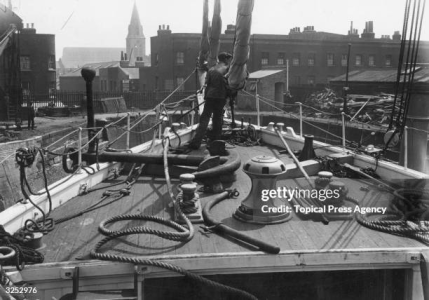
Here's what she looks like on the bottom right now (below) and a couple of photos of her deck. Note the foredeck photo taken at a distance of perhaps twenty-five feet to the foreground of the deck. That's what the eye sees in real life. The brain knows that there are plank seams and fastening plugs on that deck, but the eye doesn't see them. Your brain tells you, "If you want realistic detail, you need to put fastener plugs and plank seams there where you know they are." Wrong! This misunderstanding of detail and the awareness of scale viewing distance in order to trick our viewer's brains to tell them they're looking at a real ship and not a model, or, God forbid, a "toy," is something of a crusade I'm on at the moment, so forgive me if I belabor the point. Just look at the photos of the real thing... or photos of a visual analog of the real thing at scale viewing distance and show that and nothing else. Just don't overdo it. Look how subtle the plank seams appear, and the fastener plugs ar e completely invisible. This is what separates the "artist," from the "paint by numbers" hobbyist, the high-quality scale modeler from the beginning kit builder.

Don't forget that she's been at sea for some time and she's got those sled dog kennels on deck and so on, so the decks will probably be somewhat dirty in the high-traffic areas. When you plan your weathering, you may want to darken the deck in places like in front of the hatches and maybe in front of the dog kennels and around the helm, while a bit less so close to the covering boards where there's less traffic and dirt tracked around.

Do it over. Do it right. You'll be glad you did! Your diorama is a great concept. You have to be exacting on this point if you really want to pull it off with a big "wow!" factor. :oops:

1767246456343.png

1767246728442.png

1767246533488.png

1767246641352.png


4. Seems like no matter if the paint says it's flat or matte, there always seems to be some kind of sheen on it. I love the idea of hand-rubbing the hull with some dental pumice powder to remove any sheen.

There shoudn't be any sheen and the level of matte finish (i.e. lack of reflectiveness) should be uniform if the paint is thoroughly stirred before application and applied in multiple thin coats. Every time you apply a coating or color, you should first test it on a material similar to the model, and let it dry and check the color, as well. (Paints usually will dry looking a bit darker than when they are wet, due to the reflective quality of the wet paint.) As you correctly note, lighting will be a factor as well. Since no model should be displayed for any time in direct sunlight where UV radiation can cause serious deterioration, it's not a bad idea to try to color it in the same light in which it will be displayed. It's not as critical with the blacks, whites, browns, and in-between colors of most ships, as it is with model railroad cars and such, but it's worth taking a look at nonetheless.

There are a number of ways to dull gloss on a finished surface. Very fine steel wool can be used. A fine ScotchBrite pad works well, too. The guys in the boatyards started using ScotchBrite pads to rub down fine varnish jobs between coats. Apparently, 3M got wind of it and they now sell SctochBrite in several grades of coarseness for use as sanding pads. Rottenstone (coarser) and pumice (less coarse,) the traditional tools for the job are sold in paint and hardware stores and work wonderfully if you don't mind the considerable investment in elbow grease! If you have ever had the pleasure to study any of the really fine "builder's models" that were popular around the turn of the 19th century into the middle of the 20th century, you can see what a really well-done hand-rubbed finish looks like. These models were stylized to a certain extent and portrayed iron and steel hulls painted with glossy paint, so they applied a slightly less than dead flat hand-rubbed finish. They're just stunning. The one thing to consider with hand-rubbing, though, is that it's one thing to hand-rub a smooth surface, but it's not really possible to uniformly hand-rub a finish around a lot of detail such as portlight rings and so on, so on a highly-detailed surface, it's best to forego the hand-rubbing and condition your finish paint for the level of matte that you want.


5. After paint, I'm not going to apply anything on top of that. When I first painted the hull, I primed it, then spray painted several layers, then lacquer based on a recommendation. I'll research some weathering techniques to get my Endurance hull to the state it might have looked in its last few days. I'll shoot for subtle, not too detailed. There are lots of good pictures, albeit black and white, of the Endurance in it's last days. I'll have to marry up my weathering techniques with the photos.
If you get the results you desire with your finish paint coats, there should be no reason to put anything over the finish coats. However, you may want to keep in mind that there are clear topcoats made which yield anything from a gloss to a flat matte finish over a glossy finish below. I tend ot avoid them on the theory that the thinner the paint, the more realistic the scale effect, but they do exist and could ge useful if you have an area that has a lot of detail that cannot be hand-rubbed to knock the gloss down. Of course, as said, if you stir your paint well and evenly distribute the flattening agent you should get the even finish effect you are looking for. All of this goes without saying that you must experiment with the materials to see if they do the job you want them to before applying them "for keeps" on the model itself. The last thing you want to do is end up stripping uncured sticky paint or some disaster like that. Always, always, always test to see if one paint will cure if applied over the coat of a different paint that preceded it. For some reasons known to none, sometimes paints are not compatible, and you will get a "crackle finish," or "orange peeling" or paint that just never dries when incompatible paints are applied, so test always.

All in all, my apologies for making what I'm sure you thought was a much less complicated enterprise much more than that. :)
 
I agree with the sentiment that a fine finish is 90% preparation and 10% application. Over the last 35 years I’ve made many solid-hull vessels that all required painting. During this time, I’ve learned a few tricks on finishing the wooden hull but still would not consider myself an expert. Below is the practical approach I take to the hull. It is not appropriate to areas of the model that have a great deal of detail which could be lost as the surface finish builds up.

1) I always use a “sanding sealer” as part of the wooden hull preparation phase, normally when I’m happy with the lines and initial finish. It helps to disclose surface imperfections. I’m sure that shellac would be as good, however one quart of the brushed-on sealer has so far served me well for the last 15 years. My goal is to consolidate the surface to assist in the fine sanding process.

2) in the fine sanding process I use Bondo Glazing Putty. Wherever you think there’s hint of an imperfection, smooth on a tiny amount. Then sand. Repeat until you think the finish is perfect. It won’t be!

3) Apply primer. I use a grey rattle can as I think you can add imperfections through brushing.

4) Repeat step 2. I’ve found that sometimes I need to carry out this cycle three or four times. (At this point some people will say I’m building up too much paint, however 95% of the paint and filler I apply during this work ends up as dust!)

5) Apply your paint. I’m old-school so only use enamels. Although there is a place for brushes, the finest finishes in my opinion come from an airbrush.

6) Where I’m applying different colors to the hull, (anti-fouling, boot top, main color) I use “go faster” striping from an auto parts store to delineate the different areas. It is more flexible than masking tape and there is less seepage at the line. Press it on well then protect the already painted areas with blue painter’s tape.

7) Carefully touch up (or scrape off) any seepage.

8) When you are happy with your hull, spray on Testor’s Dullcote. During the touch-up process, repainting a small area always creates a very slightly different reflectivity. The Dullcote masks that and gives what I think is a really good flat finish.
 
I'm overwhelmed...but that's ok! I'll get there. There is so much great info in these posts I need to read through them a few more times. Model ship building is a journey, not a finished product, and I know I'll learn so much by reading and doing.

As for the 90% preparation, I agree with this philosophy wholeheartedly. Unfortunately, I'm beyond that point with my hull and will have to do my best to make it work.

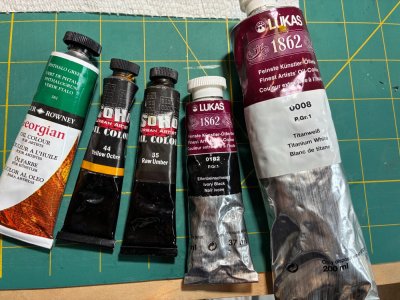
Bob, is this what you mean by paint? I took an oil painting class some time back.
IMG_1279.jpg
 
Bob, is this what you mean by paint? I took an oil painting class some time back.
Yes, indeed. That looks to be oil paint! ;)

Remember that it will have to be conditioned before application and will require a bit of "dryer" added. Artists' oils use raw linseed oil as a binder and little or no dryers so that it will take a long time to polymerize ("dry.") Oil painting artists want their paint to take its time drying so they can blend colors on the canvas while working on a painting over a number of days. These will also probably require a bit of "flattening agent" to be added, as well, as you don't want any gloss on your finish. Dried, glossy finishes can be "flattened" by applying a clear matte varnish or the equivalent, but it's one more coat and it's better to flatten the finish color coat in the first instance and keep the finish coatings as thin as possible. You can get dryer or "flattening" additive and "dryer" (sometimes called "accelerant,") wherever they sell artists' oil paints. Follow the manufacturer's instructions. Knowledgeable staff at any quality art supply store should be able to advise you more specifically if you explain what you want to accomplish.
 
Last edited:
In my experience I have defaulted to matte sheen polyurethane for all applications of surface primer and finish coats. No shellac. I tend to coat pieces/parts with the poly during assembly then apply finish top coats.
 
Lots of great advice here. Learned a couple things.

But putting that aside, already looks nicely weathered to me ... some bare wood showing, some planks smooth, some rough. Some nice grain showing through here and there.

So put some clear matte acrylic on it.

Also - I've noticed that nobody ever looks at the bottom of the hull - at the sides sure, but never at the bottoms. IOW - don't stress over the very bottom. Oh geeze - what am I saying - of course we stress over the bottoms, same as the sides - anyway - looks nicely weathered to me. But I'm a rank amateur.
 
Why protect a painted hull? I sand until fair (unless you want planking lines to show), then brush a coat of matte acrylic varnish for sealer, then sand with very fine sandpaper, then brush a coat of Vallejo Model Color acrylic and that’s usually enough. I have uncased models several years old that are just fine. There are lots of ways (and media) to achieve these ends — and everybody has their favorites (and are opinionated about them, too….).IMG_0819.jpeg
 
With regards to the Endurance the hull below the waterline should probably be red. There is a Frank Hurley photo of the ship heeled over in the ice clearly showing a red lower hull. Hurley was a pioneer in the use of colour plates so the photo is probably genuine rather than a tinted black and white.
 
With regards to the Endurance the hull below the waterline should probably be red. There is a Frank Hurley photo of the ship heeled over in the ice clearly showing a red lower hull. Hurley was a pioneer in the use of colour plates so the photo is probably genuine rather than a tinted black and white.
Hey Harbour Hulk! You wouldn't happen to have that photo, would you? I have a couple of books on the Endurance and have trolled the internet, but have not seen one of Hurley's color photos of the hull. Many black and whites, but no color photos.
 
Back
Top