• Win a Free Custom Engraved Brass Coin!!!
    As a way to introduce our brass coins to the community, we will raffle off a free coin during the month of August. Follow link ABOVE for instructions for entering.
  • PRE-ORDER SHIPS IN SCALE TODAY!

    The beloved Ships in Scale Magazine is back and charting a new course for 2026!
    Discover new skills, new techniques, and new inspirations in every issue.

    NOTE THAT OUR FIRST ISSUE WILL BE JAN/FEB 2026

How to protect a painted hull?

I’ve never tried to do it, but my impression is that a model of a damaged ship is much harder to do than one of an undamaged one. The plastic modelers seem to be much more advanced at weathering. Model railroaders too.

Roger
 
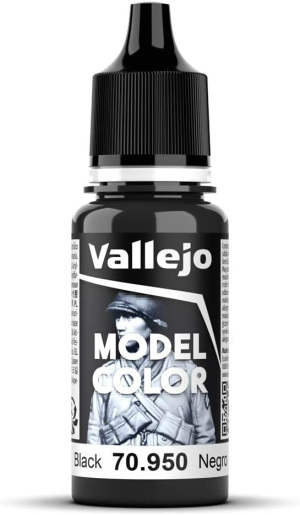
Why protect a painted hull? I sand until fair (unless you want planking lines to show), then brush a coat of matte acrylic varnish for sealer, then sand with very fine sandpaper, then brush a coat of Vallejo Model Color acrylic and that’s usually enough. I have uncased models several years old that are just fine. There are lots of ways (and media) to achieve these ends — and everybody has their favorites (and are opinionated about them, too….).View attachment 568084
Hey Mike. That's the question that kind of started this whole discussion. Do I need to protect a painted hull? And I wasn't happy with the paint job I'd done. So I knew I needed to do something. Tomorrow I'll set up a palette to experiment with different finishes, but I'm leaning towards sanding the hull down to fair, maybe even to the bare wood, and painting again. I'll experiment with Vallejo. Read lots of good things about them.

And Roger brings up a great point in the next post. Model railroads and dioramas (particularly Dungeons and Dragons) do a great job of showing weathering, etc. There's lots of great YouTube channels to watch for this type of work.
 
As a complete novice I have read the above thread with a growing sense of amazement at the depth of knowledge available here. Being a hobby artist the discussion of paint types and finishes makes complete sense but the real bonus for me is the concept of scale viewing distance. To the forum members who have contributed above, a big "thank you".
 
With regards to the Endurance the hull below the waterline should probably be red. There is a Frank Hurley photo of the ship heeled over in the ice clearly showing a red lower hull. Hurley was a pioneer in the use of colour plates so the photo is probably genuine rather than a tinted black and white.

Endurance (originally Polaris) was built in 1912 in Norway. At that time, wooden ships employed copper plate sheathing as an antifouling measure. She embarked on her exploratory voyage in 1914. In 1915, a Danish manufacturer, J. C. Hempel, invented the first antifouling marine paint and it took some time thereafter to come into common use. This paint relied on copper as the active biocidal ingredient and, consequently, this copper content gave this antifouling paint its characteristic "barn red" color. Inasmuch as the first practical copper bottom paint was invented a year after Endurance began her famous voyage, it would appear unlikely that her bottom was painted red. Any reddish color would apparently be a coloration of her copper sheathing which, after a couple of years in the water would be more of a brown or brownish green color than a red color and, even if she were painted with a copper paint, it would after a couple of years have lost any "red" coloration to oxidation and marine growth.
 
Inasmuch as the first practical copper bottom paint was invented a year after Endurance began her famous voyage, it would appear unlikely that her bottom was painted red. Any reddish color would apparently be a coloration of her copper sheathing which,
Interesting stuff. Was red lead oxide paint ever used as a primer? The pigment was known since ancient times, but was it used on ships?

Just asking..

Jim
 
Cap'n Kramer:
You will find a wide range of opinions on various aspects of finishes. It all depends on how you want your model to look. Having written that, your model looks to me like you didn't sand enough because you started with too fine a grit. I would start with 220 grit and work down to finer grits. As far as sealer, some folks like to use a primer. Others prefer to apply the topcoat directly to the wood. If you're referring to a sealer over the color coat, that is usually to be avoided. The more coats of primer, topcoat, and sealer you apply, the more blurring of details. A typical thickness for a coat of paint is 0.0025 inch. At 1:100 scale, that translates to 1/4 inch. In the end, it depends on the type of wood you use and the look you want. When it comes to degree of gloss, there is one strict rule: museum-grade models cannot have gloss finishes. If you want a matte finish, use matte paint. If you want to learn about weathering techniques, observe what modelers have done to plastic models of aircraft, cars and military armor. Some of the work is quite amazing. Weathering is principally applied over base coats of paint.
Fair winds!

Years ago I spent a week at the Smithsonian Museum with the then custodian of the maritime models , during a tour of the restoration area I was told that an eggshell finish is the preferred finish. Its kind of like between matte and flat. I use a mix of 50/50 mix.You have to play around with it to see if you like it. I found that I like flat best. My main scale is 1/8 inch to the foot.

I have used satin finish on larger scales. the choice is yours. Experiment first before painting your model.
 
Red lead oxide was used aboard ship. Here on the Great Lakes which are fresh water it was often used as a bottom paint.

Roger

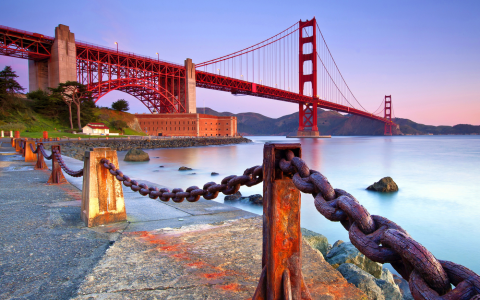
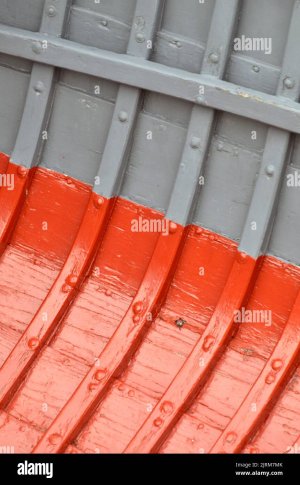
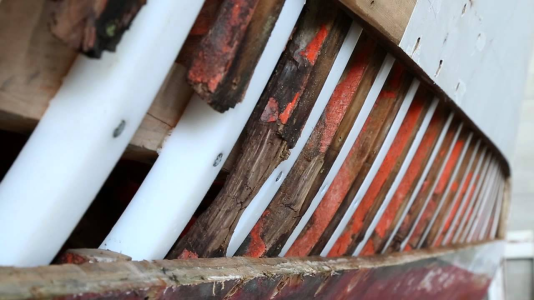
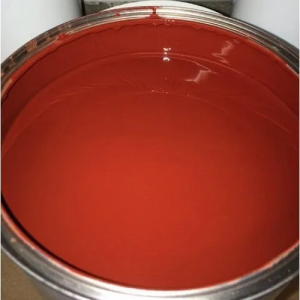
It certainly was! Barrels and barrels of the stuff. Red oxide paint was the preferred primer for wooden boat construction until lead paint virtually taken off the market in the last quarter of the 20th century. It's still favored by some traditionalists, and it can be sourced on special order. Some mistakenly believe it has "magical" properties to inhibit wood decay, but there's nothing magic about it. Red lead primer, which is actually a bright "International Orange" color, was popular only because it was the least expensive quality pigment available at the time. It's a good paint that sticks tenaciously to just about everything. The Golden Gate Bridge was originally primed with the stuff and the primer color was so popular, they decided not to paint another color over it, or so the story goes. Some years back, they figured out that there was so much old lead paint on the beaches below the bridge that it was practically a Super Fund Site, so the lead paint was replaced by a modern coating with even better properties. That was one humongous lead abatement job!
1767782705998.png
1767782179070.jpeg
1767783009114.png
1767783109155.png

1767782311842.png
 
Last edited:
Back
Top