

• SUBSCRIBE TO SHIPS IN SCALE TODAY!

    The beloved Ships in Scale Magazine is back and charting a new course for 2026!
    Discover new skills, new techniques, and new inspirations in every issue.

    NOTE THAT OUR NEXT ISSUE WILL BE July/August 2026
  • Win a Free Custom Engraved Brass Coin!!!
    As a way to introduce our brass coins to the community, we will raffle off a free coin during the month of August. Follow link ABOVE for instructions for entering.

Improved Model Shipways Plank Bender

Joined
Jan 29, 2026
Messages
305
Points
128

Location
Round Rock, TX
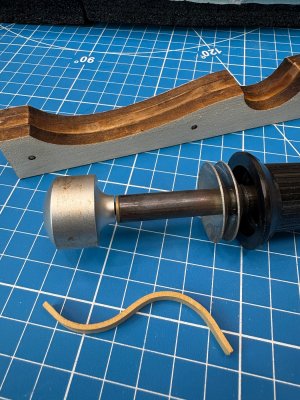
Many of us have invested in this popular tool but I became frustrated with mine as the large circular insert that does the work would never come up to or hold enough heat. This is mainly due to marginal heat conduction between the soldering iron's neck and the insert, where contact is limited to the tips of the two small screws. I see folks use these all the time so maybe I got a lemon. Anyway, I had set it aside and moved to soaking/bending/clamping months ago.
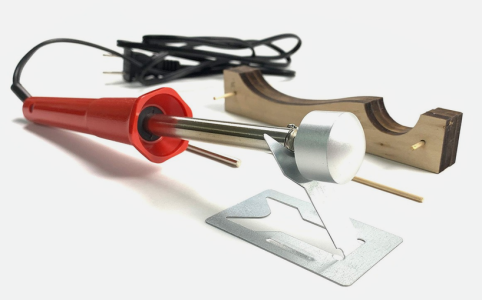
1784757477748.png

Meanwhile, the Clara May English Ketch I'm building uses thick 1.5mm x 5mm Samba planks and they are pretty tough to bend and hold shape. Got curious and pulled out my old soldering iron to compare it to the MS bender. My old iron uses threaded 8-32 inserts to secure the tip, versus external screws (which seems to now be the standard). Hmm...the neck on the MS insert sure looked awfully close in size and sure enough, I was able to easily cut 8-32 threads. Once attached, the insert heated quickly and bending wet test pieces was a breeze. I later shortened and cleaned up the threads (as pictured) in order for the bottom face to make direct contact with the collar of the iron, which most certainly improved conduction even more. Sure I'm only using the insert from the original tool but I can now use it for, wait for it, soldering. :p

Nice to (again) have another bending option!
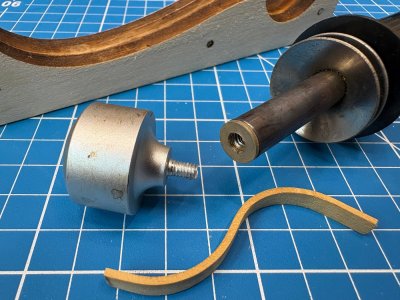
IMG_1362.jpeg IMG_1363.jpeg
 
Last edited:
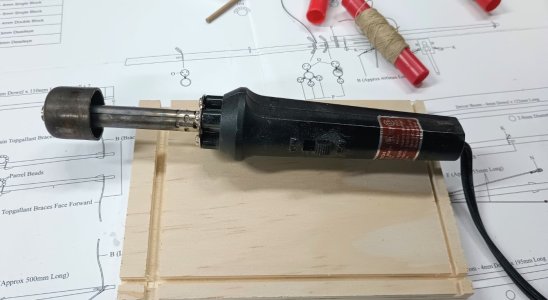
Who will invent a device to edge bend? Broad bending can be done with any hot bar like the one in the photo or even a soldering iron but something for edge bending to prevent lifting would be great. Until then it looks like spiling or numerous home made forms and a hot air gun. :(
 
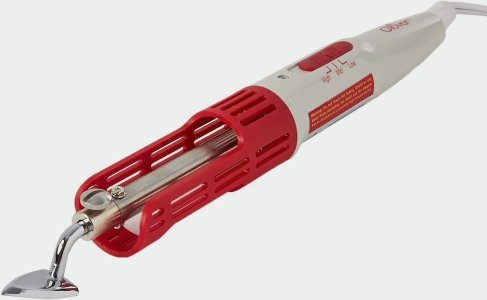
I have recently tried this appliqué iron for plank bending. Image.jpeg

It has 3 temperature settings (up to 400ºF they claim) and heats in ~10 minutes. It's good for bending planks directly on the hull, and the small head lets you get into tight spaces. I also have the Model Expo plank bender. Mine seems to heat up just fine.
 
I have recently tried this appliqué iron for plank bending. It has 3 temperature settings (up to 400ºF they claim) and heats in ~10 minutes. It's good for bending planks directly on the hull, and the small head lets you get into tight spaces. I also have the Model Expo plank bender. Mine seems to heat up just fine.
Thanks, Tom! Interesting device, might have to look closer!
 
I have recently tried this appliqué iron for plank bending. View attachment 621044

It has 3 temperature settings (up to 400ºF they claim) and heats in ~10 minutes. It's good for bending planks directly on the hull, and the small head lets you get into tight spaces. I also have the Model Expo plank bender. Mine seems to heat up just fine.
OH DRAT! I have been using a cone curling iron for hair--the cone gives different sizes like a mandrel for sizing finger rings! I gave the quilting/applique iron to a newbie quilter when she started quilting. I had been using mine mostly for small stitched seams and could use the point of a small travel iron, just as well. This was more appropriate for my friend who wanted to do applique work!

I also have a plank bender that you put the strip in and turn the dial for the strip to go through, to bend it; can take or leave that! LOL!

Blessings,
JJ
 
There seem to be a lot of angst regarding plank bending and search for a magic solution. I have not built a model requiring extensive bending since I built a POF model of a New York Pilot Boat to Chapelle plans in the early 1980’s. Models built since then have been some sort of “solid hull” construction.

The POF Pilot Boat model was planked with “real” boxwood, cut by me from a plank. The planking has an extreme bend and twist at the stern where it flows up to the wing transom. I soaked the boxwood planks in household ammonia. The bend and twist worked perfectly with no cracking. When dry there was no staining of the wood.

More recently I have repaired/rebuilt four antique wood canvas canoes. ( Old Town Type). These are built with 3/16” x2” bent white cedar ribs and planked with 5/32” white cedar planking. The canoe is then covered with canvas and painted. In all cases these projects required extensive bending: new ribs,* new planking, new spruce gunwales, trim, and in some cases ash stems.

Bending this wood was done with a homemade steam box with steam supplied by a Wagner Wallpaper Steamer. Success rate was nearly 100 percent. Again, I was able to source my own lumber and saw it to the required dimensions.

I suspect that much of the problem that kit builders encounter has to do with the quality of the planking supplied.

Roger
 
Last edited:
Bending this wood was done with a homemade steam box with steam supplied by a Wagner Wallpaper Steamer. Success rate was nearly 100 percent. Again, I was able to source my own lumber and saw it to the required dimensions.
Roger,
Did this change the wood enough to edge bend on the hull without lifting or would it still require pre-shaping off the hull?
Allan
 
Back
Top