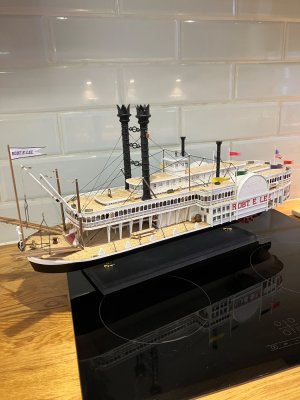
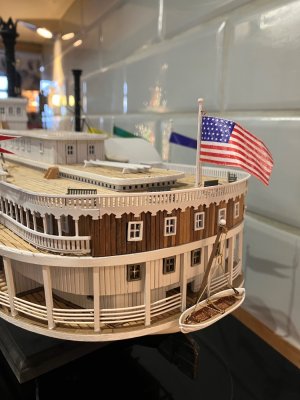
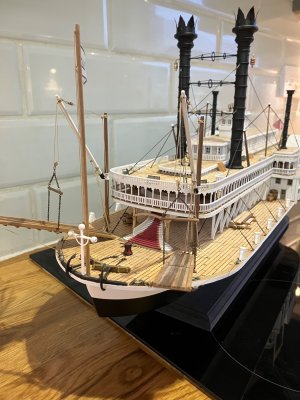
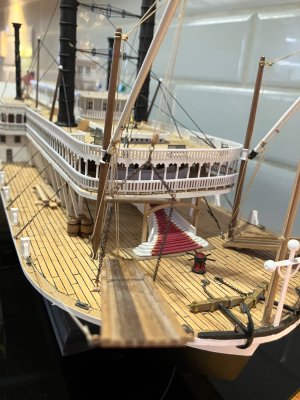
Built by Messrs J I Thornycroft at Woolston, Southampton, Hampshire, and launched on April 4th (Tuesday) or 5th (Wednesday) 1916. She was an enlarged member of the Robust-class, of 1,023 tons. She measured 178 feet overall x 36 feet x 12 feet depth and could travel at 13 knots. It was claimed that she could tow three destroyers at once.
HMS "Pert" was withdrawn and broken up in 1962.
Pert was a Robust Class Royal Navy tug that served in both World Wars in several ports along England's southern coast and flew the Blue Ensign. She was constructed by J Thornycroft and commissioned in 1916 then broken up in 1962. During both wars she carried a Navy QF HA 12 pounder gun which was promptly removed at the end of hostilities both times. Her paddles were independent, driven by two double acting steam engines generating 1000 ihp each. She was 178 feet overall, 36 foot beam, 56 feet across paddle boxes, drew 12 ft of water and displaced 1023 tons.
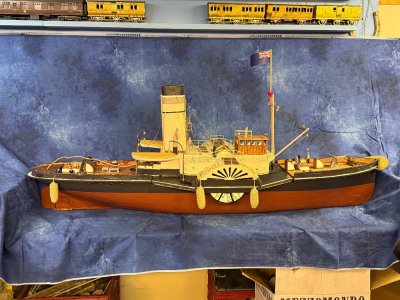
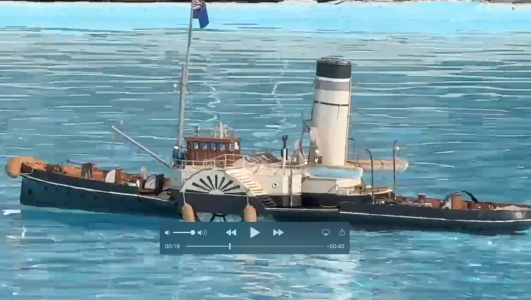
My scratch built pond model of Pert is 47 inches loa, displaces 40 lbs, is "standoff scale" and is radio controlled. Her hull was assembled from one inch thick polystyrene in the bread and butter method then carved and "rasped" to shape. Most of the deck is glued up or soldered from cardstock, foamcore, spruce and brass wire. Resources were mainly a precious few photos but I chanced on four thumbnails at the National Maritime museum in Greenwich and these have proved invaluable. Additional information is apparently available in the reading room but this requires either personal, or hired researcher, attendance. At present she rests on a drydock module on my Scale 7 (7mm to the foot) model railway but once spring is here I will trim her out at the pond.
Update: I spent $500 on a set of blueprints from the National Maritime Museum Greenwich, UK